Category Archives: Journaling

Journal Friday: Solitude

Shadow Selfie

Shadow Selfie

I’ve been making huge leaps this week, but one of the results has been a deep gloom opening up inside me.  The exact opposite of the feeling of exhilaration I SHOULD been feeling when I make massive learning gains with my creativity.

(Did you notice the Bingo! word there – give yourself a pat on the back if you picked out the poisonous SHOULD in that sentence!)

Instead of bouncing around like Tigger on a coke spree, I feel like a sodden blanket.

Why?

Because writing is a solitary art.  And human beings are social animals.

Now don’t get me wrong, I’m the first to admit that I need to be on my own a lot.  I like my own company.  But there are also limits.  If I get left on my own for long periods, I get mournful, bad-tempered, sick of myself, sick of everybody else.  I start feeling like I want to stab myself in the forearms with a compass point.  This is obviously not a good place to be.

Husband has been out pretty much every night this week, playing sports and meeting up with business colleagues.  He has commitments that sometimes pan out like this, and I’m fine with that.  But occasionally it means I get a week like this one.   I’ve been on my own from eight in the morning till eleven at night for four days on the trot.  Thats enough time on my own for me to go slightly round the twist, to over-react to everything, and end up in a grumpy hole.  From whence no writing, or anything positive, emerges.

I’ve spent a lot of time struggling to get out of my grumpy hole.  “I ought to be able to get over this, I SHOULD have worked out strategies by now to combat this,”  I told myself.  (There are two Bingo! words in that sentence, can you spot them?.

But then I thought maybe the thing to do was to allow myself to feel the feeling of misery, and then perhaps it would leave.  In other words, not to fight against it, but to be with it, and see where it took me.  Because lets face it, after 44 years of living with depression, I can safely say that a) the odd blue day is a doddle compared with the major depressions I’ve experienced, and b)  I know I get this when I’ve been on my own too much, so maybe I can work out what its trying to tell me.

It turns out that its trying to tell me that I need to get out more.

I get exhausted.  That is part of my ongoing health problems, and I need to take account of that, but I also need to accept that one of the basic needs I have is for a change of scene, and seeing people.  It doesn’t necessarily have to be conscious socialising.  It can be just getting out into town, seeing other human beings in the street in their infinite variety.  Maybe two days a week would be good maintenance treatment for me.  To get out, to see the world, interract with it.  And rest at home the remainer of the time.

(I should probably point out that I live in the middle of nowhere, literally, and I can go days without seeing anybody, which can be very isolating.  We are two miles from the nearest village, not a distance I can walk, so it is not like I can just pop out to the corner shop for a natter and some social contact.  Given that we can only afford one car, and that Husband’s access to work has to take priority, getting about has to be carefully planned.)

I need to take this awareness of my own needs forward.  I’m enjoying my writing so much, but I need to take care of myself too.  And that means going in to work maybe a day or two a week with Husband, settling down at the library or the cafe, and writing there instead of at home.  So that I see people.  So that I have the stimualtion I need.

Journal Exercise:

You may not have the same ‘shut-in’ issues that I have, but I invite you today to examine the ordinary activities and lifestyle factors that help you to be creative in a regular way.  Do you need to drink more water, take regular walks, get a new chair because the one you have gives you back ache, and makes you reticient to sit in it to draw or write?  Does eating dairy give you sinus headaches so that you feel all fuzzy, and you can’t think straight?  Do you need a holiday, a long bath, a place to work where next door’s dog isn’t barking?  Maybe your partner could look after the baby an hour a week so you can have time on your own, or perhaps you need to get up an hour earlier so you can be peaceful with yourself before the rest of the family rises.

Spend some time exploring in your journal the basic things you need to operate at your best: good food, 8 glasses of water a day, cuddles, exercise, Whatever your core requirements are.

Now write about the little things that you could do for yourself that would help you to function above just the basic level of proficiency that you explored above.  Think about the times when you have been really crackling creatively.  What made those times special?  Are there factors you could replicate, to recapture that sense of being in the flow?  What really makes your motor run?  It could be listening to rock music while you work, hanging out at the cafe, carrot cake, more cuddles, or anything else.

A note of caution:  The whole myth about artists having to be self-destructive is exactly that –  a myth.  Try copying F Scott Fitzgerald or Jack Kerouac, and drinking to promote creativity, and I can guarantee what you will end up with is not increased creativity.  You will just end up being dead.

All the actions you take should be self-caring and self-nurturing.

I hope that you can uncover some new ways to nurture your creative flow, or maybe just work out how you sabotage yourself with having too much of one thing, and not enough of another, as I do.  Writing is a solitary act, but you don’t have to be on your own to do it, as I have been reminded this week.

Take care of yourselves, and happy creating,

EF

Finding the Right Place to Write

Roald Dahl in his writing hut.  From the CBBC website.

Roald Dahl in his writing hut. From the CBBC website.

As regular readers will know, me and my study have a kinda love-hate relationship. In recent months, I’ve been trying to do it up a bit, make it a nice place for me to work, somewhere that reflects who I am and what I want. Somewhere I want to inhabit. Because I really do think that it is important to have ‘A Room of One’s Own’.

The problem is that it doesn’t seem to work for me in practise.

I do most of my writing sitting in my comfy armchair in the living room, with my laptop in my lap (strangely enough!), or writing in notebooks resting on a brilliant drawingboard that I bought from The Art Trading Company. And seriously peeps, this drawingboard is brilliant, and I’m going to get another one for my bedroom so I can be comfortable when I write in bed, because I also write there a lot, especially in my journal.

Now, it has lately occurred to me that this habit was set in stone when I was just a little kid. When I was small, I had a tiny bedroom only just big enough for a not-quite-full-size single bed, and certainly not large enough to include something as luxurious as a table. As I got older, and siblings moved out, I moved into their (larger) bedrooms, but there was never really enough room for a table or desk.

Aha! But I had my trusty piece of board!

Yes, I said ‘board’. It was a thin bit of old chip board, about A3 size, and I used it for hours, sitting on my bed, for drawing and writing, as a working surface for sewing and painting and plasticine and homework, as a play area, and for all kinds of other activities. That board was a miracle. I could have it on my lap when I was snuggled up amidst the sheets, and it kept the ink from getting on the cotton as well as giving me a firm surface to work on. I loved it, and I was never without it until I left home. After that, I think my mother threw it away. But who knows, it might still be in her house, under the spare bed, along with my ‘A’ level art portfolio!

The other day, I was thinking about my lovely old piece of board as I sat in my armchair with my lovely new drawingboard on my lap, and I remembered seeing photographs of Roald Dahl’s writing hut, where he sat in an old armchair with a board on his lap, and wrote the great classic of my childhood, Charlie and the Chocolate Factory. (My husband actually knew the Dahl family and played in that hut at one time, the lucky hound!)

Nicole Kidson as Virginia Woolf inthe film 'The Hours'.

Nicole Kidson as Virginia Woolf inthe film ‘The Hours’.

Then I remembered a scene from the film, ‘The Hours’, in which my heroine, Virginia Woolf, played by Nicole Kidman, sits in an armchair by the window at Hogarth House, with a baize-covered board on her lap, and scratches out the first few lines of ‘Mrs Dalloway’ with her new pen nib. Woolf was actually more inclined to write at a high table, standing up, but the image is potent for me.

It is very nice to have a desk and a study, and sometimes, that is exactly what I need. But I am also fortunate in that I spend a great deal of time having the run of the house to myself, which means that I can write pretty much anywhere I have a suitable work surface, enough light, and where I can get comfortable. I’m not ungrateful to finally have the luxury of my own study, believe me, but having it as made me realise that really, it wasn’t necessary. I was always saying I couldn’t be a proper writer until I had a study of my own, but that just wasn’t true. I have written far more words in my armchair or my bed.

The lesson I have come upon, and the one I wish to communicate to you, Dear Reader, is that actually, once you find the place that suits you, you can write anywhere. You don’t need a study. And if you have one, as I am lucky enough to, you may not end up using it. Don’t beat yourself up about not doing so. Take Woolf’s exhortation to find ‘A Room of One’s Own’ as a wider license to find space of your own. The local Costa Coffee may be your perfect place to write. Or, as for my husband, the comfy chair by the roaring fire of your favourite pub may be just the place. Or you may indeed have your own study and revel in it. The important thing is to get comfortable and have a firm surface to write or type on, so that you are not distracted. It doesn’t matter if its in a caravan or a lorry cab, so long as your imagination can take flight. Because once it flies away to your story world, it doesn’t matter where you are.

Happy Creating,

EF

Inspiration Monday: Whats Inspiring Me Right Now

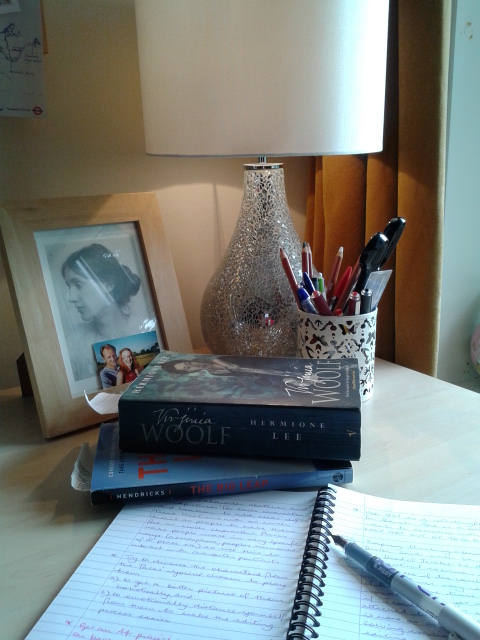
VW desktopFor today’s post, I thought I would bring you a little window into my creative mind.  Here are some of the things that are really getting my brain going at the moment.

This post from Kate Courageous really is causing a revolution inside my skull.  Imagine – learning to accept Nigel instead of kicking him?

Not practising enough?  Susan Piver has some interesting things to say about beating yourself up that are relevant whether you are talking about your meditation or your creative practise.

Found this lovely old post by Holly Becker on Decor8 about visual journals.  I really like this one about creating a lookbook too.

The New York Times on why handwriting matters.  Don’t say I didn’t tell you so.

The Handmade Home geniuses have their new 2015 planner out!  And yes, I am a total planner geek.  See also the fact that I have just discovered how Pinterest can feed my addiction!

I love Brainpickings.

I love iHanna’s blog, but I especially like this post – ‘Glue book where I collect happiness.’  Isn’t that a brilliant idea?  Collecting happiness between the pages of a journal.  Count me in.

This book.  I’ve lost count of how many times I have read this biography of Virginia Woolf, but right now, every time I pick it up, I am filled with a new rush of ideas, inspiration, and fixes for my novel.

I’m loving this book as well.

Well, that should keep us all going for a while.  Hope you have an inspired and creative week,

EF


Journal Friday: Using Memories

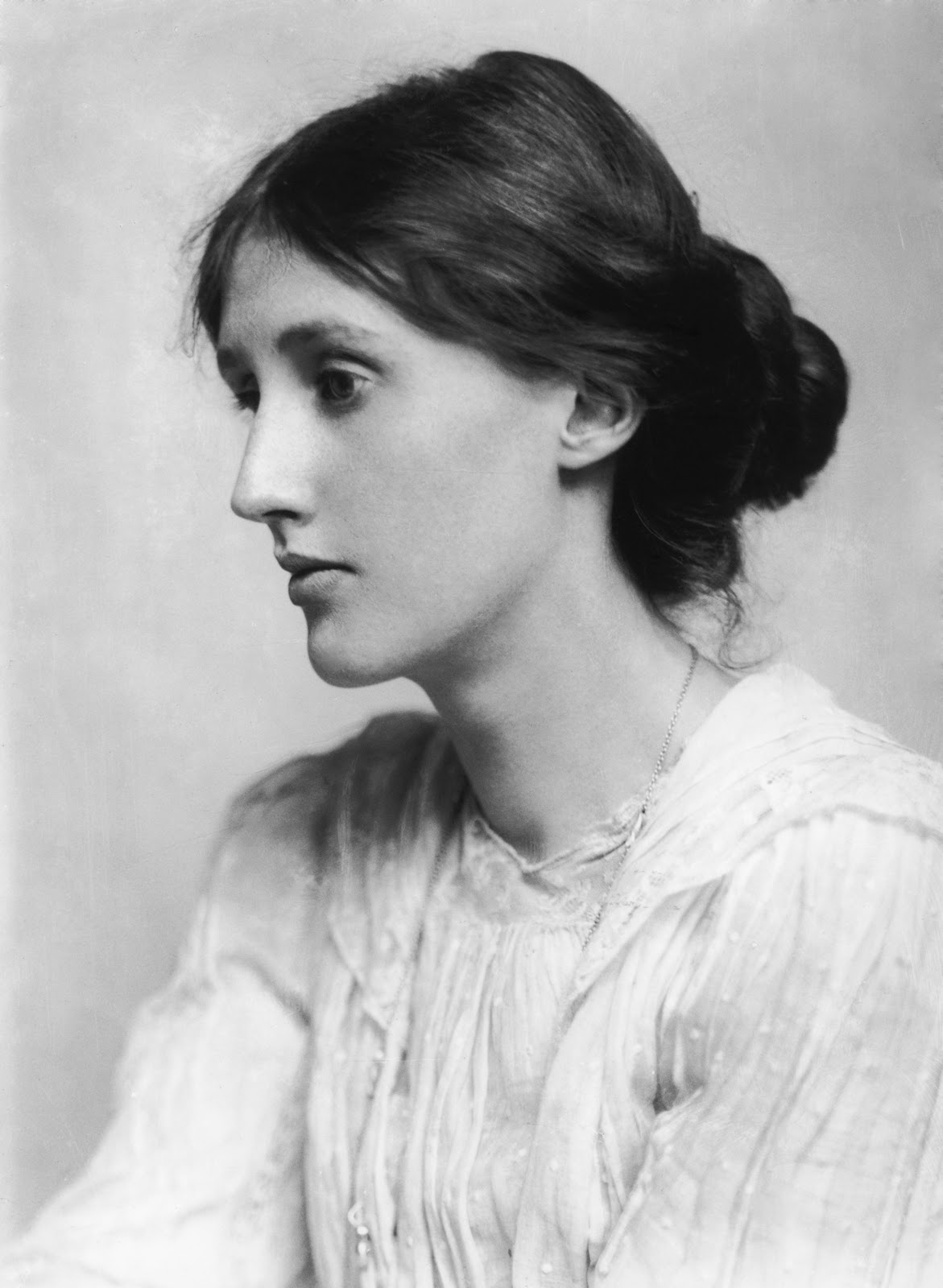
Virginia Woolf as a young woman.  I keep a copy of this portrait on my desk.

Virginia Woolf as a young woman. I keep a copy of this portrait on my desk.

I’ve been reflecting on using memories in my journal lately. This is not something I tend to do readily. I don’t like remembering, mainly because I have a lot of painful memories that I don’t like to revisit. Some people had happy childhoods that they like to relive. I didn’t. I’m always put off when writers encourage their students to draw on their childhoods for material:

“Start with your childhood, I tell them. Plug your nose and jump in, and write down all your memories as truthfully as you can. Flannery O’Connor said that anyone who survived childhood has enough material to write for the rest of his or her life. Maybe your childhood was grim and horrible, but grim and horrible is Okay if it is well done. Don’t worry about doing it well yet, though. Just start getting it down.”

Anne Lamott, Bird by Bird, p4.

That’s all very well, but what if you are not in a mental place where you can face your grim and horrible childhood? And yes, I know I am always ranting on about how creativity heals, but you need to be ready to make that leap, and I’m just not there yet.

What to do?

Well, I’ve been reading a brilliant biography of Virginia Woolf lately, (rereading actually) and its discussion of her reading methods prompted me to think about my own education. And remember.

Musing in my diary, I found memories I felt I could allow myself to revisit. I recalled how I set out to ‘spend three years reading’ – somewhat as Woolf intended to ‘read myself blue in the nose’ – when I embarked on my English and American Studies degree. I wanted the world of literature to open up to me. I wanted to bask in all its wondrous variety, from Spencer’s ‘Faerie Queen’, Alexander Pope’s satire, through the invention of the novel, to the Modernism of Woolf, Joyce and Eliot. I wanted to gulp down Byron and wallow in Shelly. I wanted to lose myself in Fitzgerald, Whitman, Hemingway, the Brontës and George Eliot. I wanted to read The Greats. In short, I wanted a ‘proper’ literary education.

What I got was an itinerary of a book per week for each course, three courses running over three eight week terms per year, for three years. And to about 70% of these books, a 50 minute seminar was allotted.

(Perhaps I was naive.  No, scratch that.  I was definitely naive!)

I remembered not the luxury of three years reading, when I looked back, nor even any real reflections on the books I actually read. It was on this course that I first read Woolf for example, her ground-breaking novel ‘The Waves’ in fact, but I don’t remember what I thought about it. I don’t remember if it moved me, or if I found it difficult. I remember no opinion of it from that time at all. I was too fixated on ploughing through every volume on the booklist, and how I could bluff my way through the seminar if I hadn’t managed to finish each.

I’m not a fast reader either. This scorching schedule of novel after novel, of play after poetry collection after essay collection, left me reeling. I could barely keep up, let alone reflect and absorb. Mainly my memories of this time comprise of the tyranny of the seminar programme, of grinding through every book, and hating the labour instead of loving the words and stories and imagery.

For me as a writer, this memory, or rather the understanding of an absence of memory, is an important one to explore. I was fortunate enough to have an education, but somehow, I kind of blinked and missed it. The lesson I drew as I wrote of my disappointment in my diary is that I will take the memory into the future with me, and use it to inform my future reading. I will never finish a book again without forming my own clear opinion of it – and writing it down. By finding my way back to a memory, I can change my reading practise in the future. And that change will inform my writing. Which is a good reason for reaching back to find this memory.

Using memories in your diary doesn’t have to be a process of self-flagellation. Or at least, not if you don’t want it to be.

You don’t have to write pages in your own blood. You can write down your happiest memories, or the most instructive ones, or you can choose not to use memories at all. Exploring the past can be a useful exercise. It can be a healing exercise, but tacking painful times should only be done when you are ready, and not before. Don’t force yourself.

Instead, write about memories as they occur to you, and explore why they have come up at that particular moment. Yes, record them as vividly as you can, if you can. Find instruction in them. And if the time is right, exorcise your ghosts. But not every entry has to be a process of emotional flaying.

Happy journaling,

EF

Journal Friday: Handwriting

Handwriting in my writers notebook

Handwriting in my writers notebook

I’ve probably banged on about this before, but nevertheless, I’m going to do it again.

Write your diary by hand.

I’m serious about this.  No, really.  There are many reasons.

Yes, you hate writing.  Besides, you’ve got your computer and you can write so much more easily and quickly using a keyboard.  And hell, a laptop or an iPad are so much more portable and….

Wait.  What’s more portable than a little notebook and a pen?

There are reasons why using your hand to make marks on a page in the age-old way are important.

Firstly, writing with your hand will benefit you directly in a psychological way.  You may not agree with my position on Gestalt, but I truly believe that the unconscious or subconscious is locked up in the tissues of your body and needs to speak.  Allow it to, and it will say all the things you can’t bring yourself to acknowledge.  I have personal experience of the incredible efficacy of this, so you’ll just have to trust me.

Using your hand may seem slower, but it will unlock parts of your mind that you have no conscious access to, and allow you to release emotions in a healthy way.  Using your hand to write will heal you in ways you can’t imagine yet.

Using your hand slows things down enough to allow for reflection.  Not everything that is fast is better.  Sometimes you need to stop and think between sentences.  Allowing your eyes to follow the flow of your nib on the page allows your mind the breathing space it needs to move on to the next emotion, memory, image.

Going slower is good.

Another reason to hand write your diary is for beauty’s sake.  Yuck, you may think – Have you seen my handwriting????

Your handwriting may look like crap, but that’s because you don’t use it.

Practise is the key to making anything beautiful, and if you practise your writing, carefully and consciously, you will not only find yourself writing faster, but also more legibly and beautifully.

Again, this is something I know about.  I’ve been keeping a diary since I was seven years old, and looking back through the volumes gives me the chance to see how my own handwriting has evolved.  I have to say that I went through many phases of adopting the styles of others.  Yes, I copied the handwriting of my best friends in order to be more like them.  I’m sure many girls do.  And as a teenager, I adopted some of those silly squiggles and loops that are so common – like drawing a circle instead of a dot on the top of a small case ‘i’, and so on.  Yuck.  Thankfully, I grew out of that one too.  I even learnt to hold my pen in different ways in order to affect particular styles.

Now my handwriting has settled into a more mature, consistent style, although it does vary from day to day depending on my mood.  I have worked on it, crafted it, to make it more attractive, more pleasing to the eye.

I also have two styles for practical purposes, my usual style, and the one I use for writing very quickly, which enables me to take verbatim notes in meetings and such like without having to know shorthand.  Using either, I find that practise makes them more attractive and easier to read.  The more I write, the better I get.  Literally.

Writing is an art form in itself.

The other thing about handwriting is that, like map reading, it is becoming a lost art, and one we will sorely miss when it is gone.  I am a rabid advocate of reading maps, and I object strongly to anyone assuming that I have a satnav I can just plug into.  Satnavs are a disaster because they aren’t intelligent enough to handle the complexities of actual landscapes, and the number of times I’ve got stuck on a country road behind a vast articulated lorry whose driver has blindly followed his satnav’s instructions and then found he can’t escape are countless.

Similarly, handwriting takes account of the subtle nuances of the emotional landscape.  Because my handwriting changes with my mood, it actually speaks as much as the words I record about how I am feeling, in a way that static typefaces never can.

But more than that, if we lose the capacity to write by hand, what would happen if we were suddenly without electricity or technology?  How could we communicate?  If you were stuck in a desert, how could you write on a rock to leave a message for someone trying to find you?  If there were a natural disaster, Gods forbid, how could you leave a last message for your loved ones before you died?  Or more simply, how could you make a quick note of your shopping needs if you lost your phone?

It may seem laborious and a bore, but please use your handwriting, at the very least in your journal.  Not only will you be making a work of art to pass on to posterity, but you will find the simple act of allowing your brain to communicate directly through your arm will unleash creativity and healing undreamt of.

Right now, as I type this, I am actually yearning to pick up a pen and write.  I don’t know what I’ll write.  Anything, probably.  Just a bit of rubbish.  But the act of moving my hand across the page is seductive and addictive in a way that nothing else is, and I long for it.

You can feel this bliss too.  It isn’t hard.  You learnt how to do it at school.

Simply take up your pen and write.

Happy Journalling,

EF

Journal Friday: Taking Stock

I’ve been sitting in the garden today, enjoying the surreally mild February weather, and writing in my diary.  Taking stock.

This is the 8th week of 2014 and I have written virtually nothing apart from blog posts – and they have been rare enough.  I have been very ill, and getting over it has been a long struggle.  We are in the middle of a major life transformation as we care for elders who are coming to the ends of their lives, which requires a lot of travelling and worry.  This year has not been so much about ‘Dare’ so far, as about ‘Coping’.  And as usual, when things are difficult, creativity gets a back seat.

Now I’m feeling much better.  My brain is starting to work again.  I am still in ‘Bear Time’, though, contemplating how to navigate the coming choppy waters, and how this time of resting has helped me.  I want to take that lesson forward.  ‘Daring to rest’ seems appropriate.

I was working in my writer’s notebook yesterday.  Just jotting a few notes.  My poor notebook is getting battered.  Its been carried about in my handbag since September, when I was first trying to get back into keeping a proper writers notebook.  Its been sadly neglected lately, and as I scan the pages, I can see the entries are distinctly intermittent.  It turns out that keeping a notebook has been a really difficult habit to cultivate for me.  I think this is because:

  • I tend to keep ideas in my head (not a very effective way of recording them as they tend to drift into obscurity and get forgotten.
  • I tend to get caught up in the ‘thinking’ mode of trying to organise my ideas by keeping different notebooks for different projects, which means I never have the right notebook on me when I have an idea for that particular project.
  • I worry about the idea of having one notebook for everything, which is the obvious solution.  How will I find anything?  How can I combine my planner pages, my blog ideas and my writing ideas when tabbed sections just put me off?

My old notebook is pretty much full, now. That, at least, feels like an achievement.  Now, as I settle back into my writing groove, I need to get a new one and start using it.  A single notebook for all my ideas and projects.  I wrote long and hard about this in my journal, exploring every possibility, and the only way of dealing with it that I can see is precisely this:  to keep one notebook and to write everything in it, from writing exercises to jotting down quotes and sticking in cuttings.  To keep it by chronological not subject order.  It will be a record of my thoughts as they come to me.n  I’ll try to organise it as much as I can by using different colour pens for different areas of my life, but thats about it.

Now all I have to do it find the perfect notebook.  And that, as we stationery addicts know, is a lifetime’s search!

How do you organise your journals, your writers notebooks or sketchbooks?  Do you go by project or by time?  What format do you use?  Are you a Moleskine addict or a cheap exercise book fan?  Please share your ideas and tips with me in the comments section, I would love to hear from you.

Happy Journalling,

EF

Journal Friday: Lists

Your house and your life will be full of lists.  Most likely shopping lists, most infamously, To Do lists.  We all make them.  They are the most efficient way to remind your brain about the important, and the not-so-important things.

But did you know they can add an extra dimension to your journal practise?

We keep lists because they are an easy way to record a series of items, whether they are things we already possess, things we need to get (like shopping lists),things we need to do, or remember, or worry about, or understand.

Lists also allow us to create hierarchies within them.  You can order your list in terms of importance or urgency.  You can use each item as a heading, and include a sub-list beneath it.  Or you can just scribble items down in the order they come into your head – which is in itself a kind of order, though the meaning of that order may only be understood by you.  And yes, I do use mind maps too, but I don’t find them half so useful, because they don’t have the implied order that a list does.  You have to impose the order on them afterwards, which seems a waste of time to me – why not do it as you go along?

I like using lists in my diary to gather together thoughts that are floating about in my head which don’t really fit anywhere.  For instance, the other day, I made a list of all the items I wanted to buy which would need to be saved for:  new spectacles, a juicer, a steam floor cleaner, and other things.  Each of these items came from a separate train of thought:   ‘I can’t see to read these days, I need to get an eye test’;  ‘Maybe drinking green juice would help me feel better’;  ‘Its really muddy outside and we are trailing a lot of mud into the house, and I am fed up with mopping the floor all the time, maybe there is a quick alternative.’

None of these things really go together.  Normally, I would put them under headings like ‘Health care’, ‘Diet’ and ‘Housecleaning’.  But I don’t have a place to record any of these ideas (I confess – mea maxima culpa – I don’t keep a Home Management binder or a GTD planner, shame on me!)  They are all good ideas, but if I don’t write them down, they will get forgotten, and I will no doubt then waste valuable mental energy thinking them up again, or coming up with new solutions.  Now I have a list recorded, I can forget about it until I need it.

Something else I have been doing for years is using lists to help with emotional challenges.  I frequently get myself into a state of profound anxiety by worrying about half a dozen things at once.  Or sometimes more!  Usually, when I get like this, I find myself struck down with a migraine, so its something I prefer to avoid, if I can.  Out comes the diary, then, and away I go, writing down a list of all the things I am worried about, and why.  I may end up with pages of bullet points.  Then I revue them.  Usually I can see a pattern emerging, and I can work out that there are one or two core issues coming up that the sheer volume of worries are masking.  Once I have identified what is really wrong, I can make a list of things I can do about the problem – because taking action of some kind, however small, always makes me feel better.

When I am feeling completely overwhelmed by everything I feel I have to do, I take the time to make a list of everything.  Then I can identify the SHOULDS I am imposing on myself can rule them out, because they are usually neither Urgent nor Important* in the grand scheme of things.  Also, writing all the things I have to get through somehow makes the mountain less intimidating.  Life seems more manageable when you can get it down on a sheet of paper.

(*Knowing the difference between Urgent and Important is crucial when you have limited resources.  Urgent is something that has to be done NOW.  Important is something which needs to be done as a matter of priority for your future wellbeing/happiness/security etc.  For example, Urgent could be putting the laundry in the machine because you won’t have any clean knickers tomorrow if you don’t.  Important is getting your tax return in to avoid late filing fines.  Of course, tax returns could also be Urgent, if you are within a few hours of the deadline, and the laundry might be Important if tomorrow is also the day when you have an interview for a potentially life-changing new job!  But you can see the difference.  Urgent changes your immediate future, whereas Important is more long term.  Which is why a list helps you to identify which is which!)

I also really like using lists to explore an idea.  I give myself time to visualise the concept in my mind, for example, that of Bear energy, which I was talking about the other day.  Then I do a word association around that idea, writing down all the words and feelings and thoughts that pop into my head in a list which depicts what that idea means to me.  I can then use that list as a starting point for exploring deeper meanings and related areas.

I mainly use lists to dump everything out of my brain because I invariably have a cranium so full of stuff that something has to be offloaded or I will go mad.  Quick, thumbnail sketches of stories, plans, thoughts, worries, household jobs, recipes, things to tell my husband when he gets home, and food items we have just run out of, all end up on lists in my journal.  It has only been through writing this post that I have begun to realise how addicted to lists I actually am!

The other thing about lists is that they are easily accessible when you read them back.  Even a series of one word items can remind you of a whole Mind Palace of thoughts.  And once these thoughts are outside your head, you can use your brain to come up with lots of lovely new ones!  What liberation!

Tips for Keeping Lists:

  • Make sure you label your list especially if it is connected with a word association or particular project.
  • I often scribble lists on loose sheets of paper that I find hanging around the house, and stick them into my diary later – this means I feel I can be as messy as I want with the list because I am not messing up my nice, neat diary page. (When the list is stuck in, I can decorate it and make it nice if I like.)
  • If you make several lists on several sheets, stick them in your journal together so they make sense on reading back.
  • Give yourself space when you make a list.  There will always be something else you want to add!

Journal Exercise:

You could use any of the techniques with lists that I have mentioned above, but you might like to try this one, from the field of Gestalt therapy.

This technique can help you access unconscious feelings that are causing your trouble.

Do you have an ache or pain that has been grumbling away recently?  A dogged headache that resists all medication, a sprained ankle, an aching hip?

Take out your journal and sit quietly, away from noise and distractions.  (Give yourself plenty of time for this.)

Focus your mind now on the part of your body that is troubling you, and really dive deep into experiencing the pain, ache, or discomfort, or whatever feeling is going on there.  Let the feeling fill you up.  Connect with it.

Now take out your pen and, continuing to focus on the feeling.  How would you describe the feeling?  Whatever word first pops into your head, no matter how unlikely it seems, write it down.  Now focus again and look for the next word.  And the next.  Keep going until your mind empties and no more words appear.

Now read back your list.  Are there any words that particularly jump out at you?  Any themes that seem apparent?  Some unlikely or seemingly unconnected words may turn out to be linked to things that are going on in your life, in friendships, your career or family.  They may remind you of emotional issues you have not confronted, or point to something in your life that feels unfinished, unfair or unsatisfying.

Now take some time to journal about the words that seem most meaningful to you.  Allow yourself to explore what comes up and see where it takes you.  You may find yourself planning a new adventure, resolving old conflicts, or seeing situations in a new light.  It can be very enlightening.

You may feel this exercise is a bit mumbo-jumbo, but I assure you, it’s a great way to access things going on in your head ‘behind the scenes’ so to speak, and it can explain a lot.  You may also find it difficult to start off with, but practise and you will find it easier over time.  You might even want to have a friend help you by writing down the words that come up as you concentrate on your own body.  And if you get a recurring pain in the same place, you can go back to your list and do the exercise again, and compare the two to see if something new comes up.  You may even find, as I frequently have, that the pain you focus on is significantly reduced or even disappears as a result of its ‘being heard’.  It’s is a great way to use lists, and I encourage you to have a go.

Happy list-making,

EF

Developing Superpowers

I was reading a post at Rightbrain Planner this morning, and these words jumped out at me:

“Planning habits are part of personal assessment for me.  Part of knowing what my skills are and being my own hero.”

BEING MY OWN HERO.

Those words blew me away.  How is this even possible?  Can I be my own hero?  Can anybody?  And if I were, how would it feel?  Would it feel as incredibly freeing as it sounds?

Blogger and artist Andrea Sher often asks: what is your superpower?

Or as the ancient nun Jiko puts it in Ruth Ozeki’s transcendent novel, A Tale for the Time Being:

“‘Nattchan, I think it would be best for you to have some true power.  I think it would be best for you to have a superpower.’

She was talking in Japanese, but she used the English word, superpower, only when she said it, it sounded like supah-pawah.  Really fast. Supapawa.  Or more like SUPAPAWA-!”

Page 176.

I’d like to have a SUPAPAWA.  I’d like to be my own hero.

Old Jiko teaches her great-granddaughter Nao how to find her SUPAPAWA through sitting Zazen, a Zen Buddhist meditation.  Obviously thats one way to go.  The other seems to be to follow the words painted above the entrance to the sanctuary of the legendary Oracle of Apollo at Delphi:

Know Thyself

I truly believe that the only way to do that is to ruthlessly explore ourselves through creativity.  Through writing and painting, journalling and making, through dance, music, theatre and the culinary arts, and whatever else we can create out of the raw materials of our souls.  That way, by fearlessly adventuring into our creativity, maybe we really can become our own heroes.

If i had to say what my SUPAPAWAs are, I would probably mention two:  the knack I have of making people smile, and writing.

Oh, and I make a really mean gluten-free chocolate brownie!

What are your SUPAPAWAs?  Could you be your own hero?

Happy Creating,

EF

Creative Intentions for 2014: DARE and DEPTH

Getting over our emergency Christmas is proving a longer, harder effort than I had thought.  My brain is a puddle, so don’t ask me if I have written anything or created anything yet this year, because ain’t nothin’ goin’ on up there but clouds.

However.

Just occasionally, I have flashes of conscious thought.

I got into a conversation with Writerfriend on New Year’s Eve about plans for the coming year, as I mentioned previously, and it occurred to me today, while mulling that conversation over, that having a word for the year for my creative endeavours as well might be a good way forward.

Having two might be argued as cheating.  One word should fit all of my life, after all.  And yes, it fits the overview of where I want to go this year, of who I want to be.  My word represents the attitude I want to cultivate throughout the coming year.  It represents my willingness to ‘have a bash’, to move away from a fear and scarcity mindset, away from perfectionism and Nigel.

So maybe a Creative Word isn’t so much a word for the year as a Creative Intention.  A theme.  A direction in which to move.

The word I have chosen is:

DEPTH

I want to deepen my writing, explore a more multi-layered story-world, deeper characters.  I want to write an original work that displays this quality.  In short, I want to get serious.

I suppose this is an extension of the intentions I was nourishing in the Autumn of 2013.  The desire to read more quality fiction, the need to take my writing to the next level.  I am currently making a plan to help me step into this new phase.  It will involve:

  • Reading lots of new, literary fiction (luckily, Santa was kind to me on this front, with a supply of yummy new novels!)
  • Refreshing my basic writing skills
  • Reading works on writing by published authors – A L Kennedy and Paul Auster are first on my list.
  • Writing every day
  • Making better use of my writers notebook.

At present it is quite a sketchy plan, but no doubt it will firm up into clear tasks.  I don’t want it to get too firm.  I want it to evolve and morph with my needs and creative interests.  Nothing too concrete.  It is an intention, a theme, after all.

And no doubt writing blog posts here will be part of that plan, as well as a commentary on progress.

So that’s my Creative Theme/Intention/Word for the year 2014.

What about you?  What do you want to achieve?  Is there a quality you want to invoke into your creative life, or are there specific works you want to make in the coming months?  I’d love to hear about your plans in the comments section.

Happy creating,

EF

Welcome to 2014!

Writer Friend asked me yesterday what my creative plans for the coming year were. (He means to finish the last draft of his novel to his agent’s satisfaction.  Good luck to him, I say.)

Me?  Well, I just stared at him with my lower jaw on my chest.

Plans?  Creativity?  Ideas?  Hell, even original thought?  I beg your pardon?

Let me explain:  Mother-in-law (henceforward referred to as Mother) lives with Aunt-in-law (henceforward referred to as Aunt).  Mother has dementia.  Aunt is profoundly disabled by arthritis.  Aunt is Mother’s carer.  Just before Christmas, Aunt fell on the stairs and was rushed to hospital with suspected broken neck. Cue care crisis.  Luckily, neck was not broken. Result, however, was several days in hospital for Aunt, meaning Mother had no carer.  Husband and I, and rest of family, rushed the three and a half hour drive to take over care.  Aunt comes out of hospital, still needing 24-hour care.

Its a mess.

The upshot of all this is that we spent Christmas nursing, so effectively Christmas didn’t happen.  For ten days, my brain was occupied thusly: 90% firefighting care/nursing issues, 10% ‘ohmygodhowarewegoingtogetthroughthis???????’

We made it home in time to spend an exhausted New Year’s Eve with dear friends, and to stare blankly at the telly for the Sherlock Series Three Episode One premier last night. (Don’t ask me for an opinion, I haven’t got one yet.  I’ll tell you when I get my brain back.)

I haven’t had an original thought to spare for myself for nearly a fortnight.

So the plans I had for writing a jolly, upbeat, ‘these are my creative plans for 2014’ post for you today are wrecked.  I don’t have any plans because I haven’t had time to think about them.  Of course, I will write one, eventually, when my brain is less bombed, and when I have recovered from the bone-deep exhaustion that only an ME sufferer faced with such an emergency can experience.

Why am I telling you all this?  (Apart from to apologise for not writing something you didn’t even know I was going to write?)

Because this is a real-life demonstration of the philosophy this blog was established to promote.

In a minute, I will put away my laptop and excavate my desk from under the heaps of clutter that accumulated there in the chaos before Christmas.  And then I will open my journal, and pick up my pen, and press the nib to the paper.

And then I will find my way back to myself.

Somewhere, buried under the rubble of the last two weeks, is my soul.  My mind.  My creativity.  And my pen will make a line, a track that will lead me back to my soul, my mind, my creativity.

This is why writing is important.  Whether we write a journal or a story, a play or a poem, that line of ink leads us home to ourselves, over and over again.  And if we follow that inky trail, we will never be lost, no matter how difficult and hopeless things seem.

Happy New Year,

With Best Wishes,

EF