Category Archives: Life

Word of the Year 2014

So, we have thought about intentions, and we have begun to consider the words that identify how we want to feel.  Those (five) words are the place from whence our intentions arise.  Because every day we can choose to do things that make us feel that way.

Clever, eh?

But there’s more:

You may have bumped into the idea of having a Word of the Year.  You can find out more about this habit here.

A Word of the Year is a kind of overall intention.  It gives you a direction, a way of formulating how you want to be in the world. It also has an uncanny habit of bringing into your life exactly what it says.

My word for 2013 was

Revolutionary

And oh boy, was it?!

This year has fundamentally changed how I feel about myself.  I have undergone a revolution in my core beliefs and my way of approaching the world.  I have turned my attitudes about my place in the world and, most particularly, in the world of work, on their heads.  In some ways, I have also revolved (the other meaning of revolutionary), coming back full circle to revisit issues that I thought I had dealt with before.

I have revolutionised the way I write and the way I feel about my writing.  I have set up this website and begun to dream new dreams about the kind of things I want to create.  It is exhilarating.

Let me tell you, revolution doesn’t have to be a violent upheaval that ends with tyranny and blood.

I have to confess that when the word first came to me, in the form of just revolution, (while I was still in the malaise of a serious bout of influenza which brought me close to being hospitalised), I was a bit scared.  I knew it was the word I needed, but it sounded frightening, as if I could be inviting an earthquake into my life.  Was I really ready for that much change?  After all, with limited energy, poor health and a susceptibility to anxiety and stress, it didn’t really sound a good idea to invite those kinds of energies into my world.  So I fiddled with it until it felt more friendly, more manageable.  And more appropriate to what I could cope with.  It became:

I AM REVOLUTIONARY

And this year, I have been.

So the question then becomes, what do I want to be next?

I don’t have to stop being revolutionary, of course, but 2014 needs a new word, something that allows new energies into my life, allowing me to blossom and grow in new ways.

I have been sitting with my five words and my journal and calendar, contemplating what I want to be and do next year.  How I want to build on the intentions and lessons that revolutionary brought with it?  I thought about kind, lovingkindness, courage, and strength.  The first two felt too soft, and the last two, too tough.  I needed something flexible, something I can grow with, something I can work with whilst still treating myself with lovingkindess.  And this is what I came up with:

DARE

Dare feels good.  It popped into my head at 2am on the way back to bed after a loo break (TMI), and I knew it was the right word.

Dare is about having a go, putting yourself out there, but not in a way that is perfectionist.  Not in a Nigel way.  Dare means trying something out and seeing if it fits.  It means trying something, and knowing that it doesn’t matter if I fail or if I don’t get it exactly right the first time, or even if it turns out to be the wrong thing after all.  At least I will have tried.  At least I will be in the arena fighting, as Roosevelt would put it.

Journal Exercise:

So, I invite you to take time to sit with your feelings words, with your creative and life intentions, and to consider what word might truly describe and inspire how and who you want to be in 2014.  What feelings and new adventures do you want to manifest in your life?  What energies do you want to invoke?

When you consider this, do it in the spirit of lovingkindness towards yourself.  Look at your life with a gentle hope, not in the spirit of forcing yourself into new contortions.  This is not some New Agey wishing, some pseudo-psychobabble soppy thing.  This is a life affirming way of moving yourself to new levels, of becoming more yourself every day, and of being deeply, affirmatively and satisfyingly creative.

Everyday life is a continual act of creativity.

When I say ‘sit with it’, I mean: allow yourself time to consider.  Allow ideas to filter, percolate and bubble in your mind.  Don’t force it.  It will come to you.  Let it happen.  You know deep inside what you want for yourself as a creative being.  Allow it to emerge.  And then rejoice in it.  Allow it to inspire every corner of your life for the whole year.

I guarantee it will take you places you can’t even begin to imagine right now.

Happy Creating,

EF
How do you want to feel?

“Be willing to look at your own life and want more for yourself without beating yourself up or making it about another self-improvement plan.” -Jennifer Lounden

Jennifer Louden’s recent post about Freedom from Self-Improvement seems completely apposite right now, in the run-up to Christmas, when we are all feeling the ‘we’re not worthys’ very badly.

Everyone else seems to have a nicer house, prettier, more stylish decorations, tastier cocktail treats, better fashion sense, better-behaved kids.  My own melt-down usually comes with present-wrapping.  Everyone these days makes present wrapping into an art form.  Me, I struggle to fold neat corners in my artfully chosen, blends-with-the-bauble-colour-scheme wrapping paper, never mind the hand-cut decorative snowflakes and layers of gauzy ribbon that some people cook up!

Christmas is a bunch of big red emotional triggers for me anyway.  So right now, I am choosing how I want to feel, and doing only those things that make me feel the way I want.

Sounds too good to be true?  Too many SHOULDS on your plate to even think its possible?

Remember, you always, always have a choice.

In the last post, I was talking about Intentions as an alternative to goals.  There is a process to setting intentions, and it starts with this:

How do you want to feel?

I found this exercise in Danielle LaPorte’s excellent book, The Firestarter Sessions.  It is another book I heartily recommend, and if you want to know how to do it properly, I suggest you grab a copy and check out the worksheet on page 73.

Journal Exercise:

Take some time with your journal.  Write about the feelings that give you a sense of wholeness, enoughness, satisfaction, happiness.  How do you want to feel about yourself?  How do you want others to see you?  What qualities do you admire in yourself and others?

Come up with between three and five words that describe how you want to feel/be in your life.

Mine are:

Radiant

Calm

Wise

Joyful

Creative

Take your time over this.  Make a long list, if you like, and sit with it for a while, weeks if necessary.  Then hone it, edit it, pick and choose until you come up with a series of words that describe heart of who you are.  How do you want to feel in the future?  What symphony do you want to start in your heart?

Key to this part of the process is NOT BEATING YOURSELF UP.

Choose words that resonate with you.  Not what other people would like you to be, or what you think you OUGHT to feel.  You are shaping your life, your coming year.  What feelings do you want to feel?

This is not about self improvement.  It is about self-actualisation.  It is about being fully and deeply yourself.  And by being fully yourself, you can let your innate creativity loose.  You can choose your creative direction and flow with it.

For more on this, check out Danielle LaPorte’s website.

In the next post, I will be talking about your word for the New Year

Happy Journaling,

EF

Getting Christmas in Perspective

A woman on the radio was just saying that years ago she was broadcasting a Christmas phone-in show about Christmas wishes.  People were encouraged to ring in and say what they’d really like for Christmas.  Not the latest XBox, or a fur coat, but something real.    Something genuine.  Their true heart’s desire.

The first caller was a woman crippled with arthritis.

She said, ‘I wish I could go downstairs.  I wish my two young daughters could see me in the kitchen and not in bed.’

Merry Christmas,

EF


Owning It

Have you been there too?  That cringe-making moment at a social event when you meet someone new and they ask you what you do.

For me it is a doubly difficult dilemma.

Do I give them one version of the truth:  I haven’t been able to do paid work since 2001 because of chronic health difficulties.  Which either makes me look like I am scrounging off the State, or like a whinging hypochondriac.  Either one pretty much means the end of the conversation.

Or do I say, Oh, I’m a writer and artist.  To which I get the next question:  where can I get your books?  So thats a whole ‘nother minefield.  Yes, I have written seven novels.  No, you cannot buy them in the shops. I publish on the internet.

(Oh, well you aren’t a proper writer, then, are you?  You’re just one of those middle class kept wives who plays at being a creative but is actually too mediocre at it to cut it in the real world.)

Admittedly, this last is probably supplied by Nigel, who is only too happy to make me feel like a loser and a waste of space, so that I will never take any risks or put my work out there.

These days, its even worse if I mention that I write fanfiction, because people have finally heard of it, and they always, always want to talk about 50 Shades of Grey.  Don’t mention that book in front of me.  Please.  (You wouldn’t like me when I’m angry.)

The other day I was at a social event and met someone new.  She was a fascinating person, and great fun.  I liked her a lot.  She asked me what I did.  I said, ‘I’m a writer and artist.’  Cue discussion about novels not yet published, how I am trying to make a go of this website, and why I am interested in creativity, which happened to be her field of research.

All fine.

I came home and felt like a total fraud.

Why is it so difficult to own our creativity?

I may not have had a novel published in conventional form, but then I’ve never really submitted one to a publisher.  I’ve written and published 42 works of fanfiction on the internet, some of which have novel-sized wordcounts.  I get around 100 readers per day of my fictions, and regularly get daily reader numbers over 500, figures that most conventionally published writers would give their eye-teeth for.  This website has over 300 followers.  What is it about these statistics that makes me not a writer?

What really makes me a writer is that I write.  Every day.  Being published does not make me a writer.  Public recognition does not make me a writer.  Having books on the shelves does not make me a writer, if I am not writing.

Being a writer is not something that other people tell you that you are.

Being a writer is what you do.  Day in. Day out.    I write because I need to write, not for the end result.  I write because it comes to me as naturally, and as necessarily, as breathing.

So why can I not own it?  Why do I not feel entitled to it?  Why am I embarassed to say it in front of someone new because Society says I do not tick the boxes required (ie publications, awards etc etc)?  Will I have to wait until I am as old and lauded as the late Nobel Prize laureate Doris Lessing before I can finally say I am a writer, and feel entitled to it?  (I really hope not.)  Do any writers ever feel entitled to the label?

Do you feel entitled to your creativity?  Do you make excuses that you are only a hobbyist painter or dancer, whether to yourself or others?  Do you feel you must keep your creative projects secret for fear that they will not be understood?  And is it really necessary to have public recognition for our art?

I’m not saying there are anwsers, or even right answers.  I think the answer is different for every one of us.  It is a complex tangle.  I simply think we have to address it in some way as artists in whatever medium, if only to find out what stifles or liberates our own voices.

And maybe this time next year, when I meet someone new at a party, I will feel entitled to say: ‘I am a writer’, and own it.

Happy Creating,

EF

Tips on Writing a Eulogy (Because you never know when you might need to.)

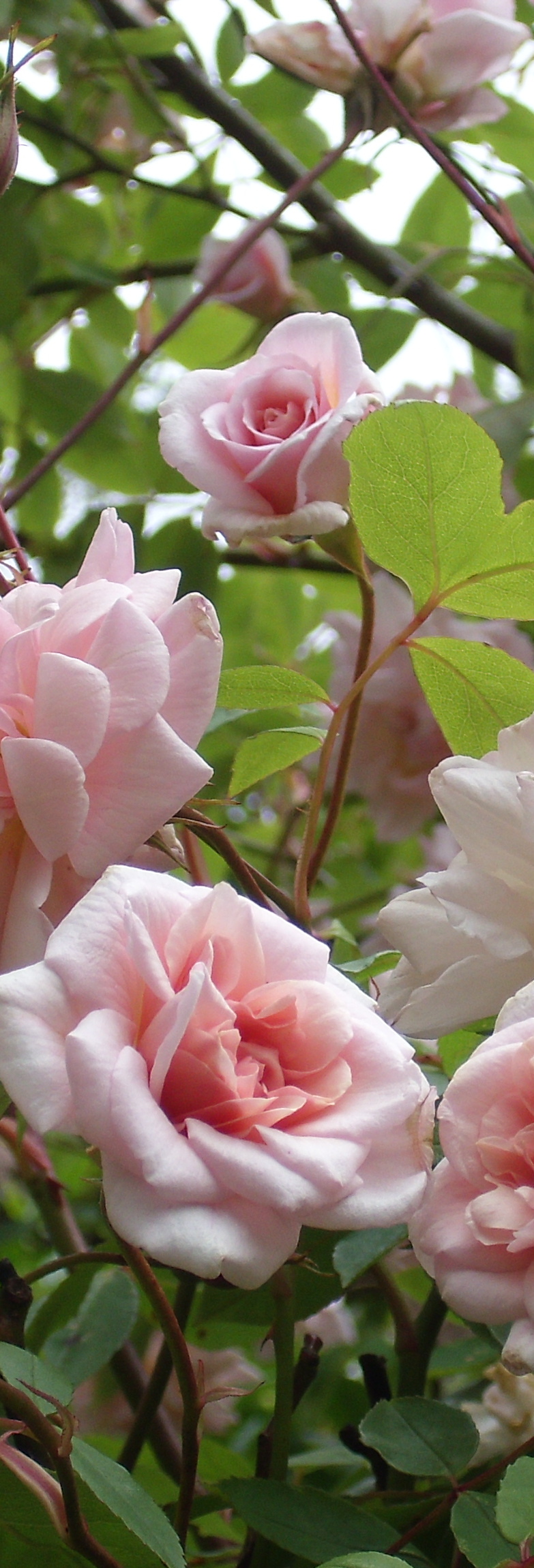
cropped rosesToday’s post is something of a reactive one.

A friend emailed.  He told me that another friend had died suddenly, unexpectedly.  He was in his forties.  My friend has been asked to give the eulogy at his funeral.

‘What do I do?  Where do I start?  You’re the writer, you tell me.’

As it happens, I have written a eulogy myself.  I wanted to give a speech at my step-father’s funeral.  I wanted to talk about how much he meant to me.  In the end, because of family circumstances, this became impossible, so instead I read his favourite poem and luckily, that summed up a lot of what I wanted to say about him anyway.  I still have the speech I wrote, tucked away somewhere.

You never know when you might be called upon to give such a speech.  Unexpected deaths happen all the time, and even if the death is expected, it’s still a tough call when you are asked by the chief mourner to stand up and ‘say a few words’.  That makes it sound so easy, doesn’t it, that phrase?  Like you can just burble out the right thing off the top of your head.  No one does that.  You have to plan.  Here’s a handle on where to start:

  • Think of a list of adjectives that best describe the deceased as you knew them.  Don’t go overboard trying to make a huge list.  Four or five will do.
  • Now think of memories of them which illustrate that quality.  Maybe your adjective is ‘kind’, and the memory might be an occasion when they sat up with you all night after a bad breakup, not really saying anything much, just listening to your sorrow and comforting you with their presence and understanding.  Maybe ‘talented’ is the word, and the memory is of going to hear the premiere of their latest musical composition at a local concert hall.  Perhaps ‘inept’ is the word, and your memory is of them falling into the river whilst trying to row a boat and impress everyone on the bank!
  • Don’t choose too many words and memories.  People at a funeral can’t sit through too much.  Try three, and see if that gives you an overall picture of what meant most to you about the person.
  • Think carefully about the situation.  If someone has died young, or without fulfilling their potential, the audience might appreciate hearing of some lesson the deceased taught you that may serve as evidence of a legacy.
  • People don’t like to hear ill of the dead.  Don’t tell the mourners about the horrendously blue best man’s speech he gave at your wedding, or how she borrowed your best dress and left lipstick stains all over the hem.  They don’t want to hear the small things any more than they want to hear that the deceased was a child-murderer or cheated on their spouse.  We deify the dead, and only get angry at their shortcomings much later in the grieving process.
  • If you are angry at the deceased, reflect on your anger carefully before you give your speech.  If you don’t, your words might come across as bitter.
  • Read your speech out aloud and practise it.  Show it to sympathetic friends who you trust to say ‘you can’t say that!’, or ‘That’s perfect!’
  • Don’t ramble on.  Keep your speech short and to the point.
  • Be fond, and include a gently amusing anecdote if you can.  This diffuses tension and helps mourners think of the happier times.
  • Expect to have a rollercoaster of feelings on the day.  You may have trouble speaking at all without weeping.  Or you may experience a sense of enormous calm descend on you, and give an Oscar-worthy performance.  Or more likely, a bit of both.  Either way, don’t judge yourself.
  • Always try to end on a positive note, emphasising some way in which the deceased enriched the world with their presence, however brief.

That’s a few ideas off the top of my head.  I hope that this is not something you are facing right now. If you are, please be assured you have my deepest sympathies.  If you have written a eulogy yourself and have some tips, do please share them in the comments section.

This post was written with fondest love to Mad Mark the Maniac,

EF