Category Archives: Nurture Yourself

Journal Friday: The Life Organiser

life org pages 2I’ve been enjoying Jennifer Louden’s The Life Organiser for a while now, and I wanted to share it with you.  It is a weekly practise that may offer those who struggle with daily journaling an easier way into self-expression.

Now I have to confess, I’ve got a bit of a thing about the whole Organising scene.  It is definitely a displacement activity for me.  I would much rather go out and drool over new Filofaxes than actually do the work to sort out my office.  I love stationery.  I love notebooks.  I love books about how to organise your life.  I love the websites too.  Call me a GTD addict.  It cons me into thinking I’m actually getting something done.  I am sure many of you can relate to that!

Lately, though, I have been wrestling with something of a mid-life crisis, and that, together with the complexities of actually writing on a regular basis for this website, as focussed my attention on the real core of the whole productivity mindset:

 Intention

Life Coaches and self-development gurus go on about formulating your life goals, having a vision, a mission statement, working towards SMART goals, and all that stuff.  Achievement, in other words.  All of which is great of you actually know where you are going, and what you want.

But what if, like me, you are about to fall off the edge of 45, and still don’t have a clue what you want to do when you grow up?

Deciding what direction you want to push your life in is a huge project.  It can feel overwhelming.  Jennifer Louden’s approach is more subtle and manageable.  Building on her work with The Women’s Comfort Book, and other invaluable tomes, she has written a workbook that gives the reader a chance to get in touch with their essential self, cut down empty busyness and focus on what is really important.  On a week-by-week and day-by-day basis, she encourages you to think about what is going on in your life, here and now, and what you need to help you flourish.  It feels quiet, comforting and manageable.  And it offers you a chance to choose direction and improve the quality of your life in a gentle, incremental way.  So how does it work?

 The Life Organiser Book

The book itself is a delightfully satisfying object to handle, even before you get inside.  It begins with some explanatory chapters, and then sets to work.  Each week of the year has a two page spread, offering journal prompts and questions to contemplate and answer, inspiring quotes and the chance to list things you have to do, would like to do, and can reasonably let go of (the latter is my favourite, because it is the most thought-provoking for me.)  It is all laid out so that you can use the actual book to write in if you like, but there are inspiring examples at the front of how other women have made their own notebooks and digital documents into Life Organisers too.

My Life Organiser Kit

My Life Organiser kit comes in this cute little bag...

My Life Organiser kit comes in this cute little bag…

I was given a little bag which is just the right size to keep my organiser kit in, and my day-to-day dates diary and journal fit in there nicely too.

 I like to use lots of bright colours when I am answering the questions, so I include coloured felt-tipped pens, both fine and brush point, so that I can do that.  I have settled on a colour scheme that I like, with particular colours for certain subjects, and that helps me if I want to check back through the pages of my notebook.

... and here is what's in it!… and here is what’s in it!

The notebook itself is one I bought from WH Smith because I liked the cover.  It has wide-spaced lines and lies open easily, which is great if I want to do a two-page spread for a mind map or such like.

Doing My Organising

I try to do my Organiser on Sundays or Mondays, so I can set a clear intention for myself for the week.

I like to write in my journal or do morning pages before I start on my organiser because it clears my mind, and helps me to focus on my needs rather than my complaints.  I like to check my date diary or calendar before I start too, so I know what appointments I’ve got coming up, and how my time and energy will have to be distributed for the ensuing week.

When I have done that, I put in the date, and then write a section I call:

Where I am right now

This is a way of grounding myself, working out where I am emotionally and physically, and what issues are coming up for me at present.  It isn’t in the Louden version, but I find it useful to do.

Once I know where I am, I start on the actual questions for the week.  I always write out the questions in, in full, in a bright pen.  (This year I am using pink, last year it was orange.) I answer in a kind of stream-of-consciousness.  Sometimes a list comes out, sometimes a paragraph, sometimes a complete rant!  It doesn’t matter what, it is all instructive.  It tells me what is important to me at the moment, what I need to encourage and nourish myself, what I need to take notice of.  From these realisations come the lists of what I could do, must do, and need to let go of.

I have found it is important not to make long lists of things to get done or to force myself to release things.  Once you become prescriptive, these things become OUGHTS, and just make yet more burdens to add to those we have already.  I keep my list of things I could do for the week to a minimum so I don’t pressure myself.  Sometimes it is just a couple of things I could think about.

The lists can then be transferred over into my day to day diary and calendar if appropriate.  I can make appointments to do the self-care things I have identified, and book rest time in, which I need because of my health.  I put my ‘Let Go Of:’ list in the margin of my diary too, so that when I refer to it every day, I reminded of what is important to me.

Life Org pagesI think the Life Organiser is a more mindful way of keeping true to my intentions and needs than the endless To Do lists most productivity tools offer.  It forms a kind of accounting process that lies on top of my journaling, a means of orienting myself in a more concrete way.  Because I do it on a weekly basis, (although sometimes I miss, in which case, I don’t worry about it)  it doesn’t feel so much like a chore, and I look forward to it.  It keeps me in touch with myself and has helped me formulate my dreams and visions into doable agendas in a gentle way that seems far less scary than other methods.

I recommend it.  Get yourself a copy, and have a bash.  You might find it bridges the gap between journaling and Filofaxes that you need!

(You can find out mroe about the amazing Jennifer Louden here.)

Happy journaling

EF
Journal Friday: Outflow – Making Lemonade

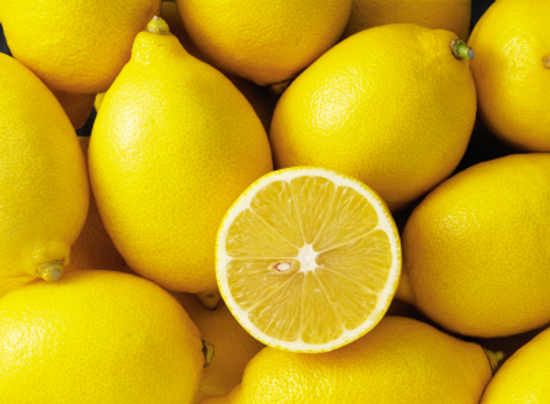
LemonsPart of being a writer is the dance of self-acceptance.

I have to deal with a chronic illness, which has radically altered my life for the last fifteen years, and shows no sign of waning.  This means I have to manage the delicate balance between self-care and doing too much.  When I overdo it, I end up exacerbating my symptoms and have to face extended periods of bed rest and being confined to the house.  Anf brain fog.

So sometimes I can’t write.  And its not that I don’t want to, its just that I literally can’t.

As I have said before, however, that doesn’t mean I’m not writing.  In my head, at least.

Sometimes life deals us lemons, and the lemonade is hard to make.  But even when I feel like I am buried under tonnes of lemons, the dream is still there.  The memory of how fantastic it feels when I am able to write, when the flow is happening and I am submerged in a scene.

This is where my diary comes in.  At times when I can process language, when I can hold my pen, I write in my journal.  It may only be a few lines, a sentence or two, but it is self-expression, getting the feelings out onto the page, and it feels fantastic.

At times when things are tough, my journal is my life raft.

At the moment, as I struggle with another period of sickness, I am working with this book.  When I have finished squeezing every drop of goodness from it, I will tell you how I got on, a little review of sorts.  In the meantime, I offer you this quote, from the marvellous SARK, patron saint of creative women, quoted by the author, Jackee Holder:

“I love journal keeping because it has helped me to discover and uncover myself, to encourage my own bravery, sort out difficulties with other people, to invent new ways of being.”

SARK, Juicy Pens, Thirsty Paper, 2008.

Happy Journalling,

EF

Journal Friday: How to write yourself out of a hole

Lighthouse at Dusk, Islay, Scotland

Lighthouse at Dusk, Islay, Scotland

(DISCLAIMER:  I am not a qualified counsellor, psychiatrist or doctor.  I am just describing what works for me.  If you are suffering with depression I urge you strongly to reach out and get help.  You do not need to suffer.)

I have suffered from bouts of depression since I was a child.  Depression is not having a bad day, or feeling blue, though both of those are unpleasant.  Depression is a soul-crushing, heart-lacerating misery that debilitates and destroys everything in its path.  Do not deny it or under-estimate it.

That said, over the years I have found ways to help myself, and believe me, helping yourself, feeling you have a little control over something that feels like it is controlling you, is a real relief.  Journaling is one of those ways.

So what to do if you find yourself at the bottom of the depression mine shaft?  Or even if you are just having a bit of a black dog kind of day?

How to:

Get out your journal.

Write down how you are feeling RIGHT NOW, in this moment.  As my counsellor often says, you can’t get to Edinburgh if you don’t know where you are now. (Think about trying to plan a journey that way – impossible!)

Be specific.

Stop and take the time to feel what is going on inside your body.  Do you have particular sensations associated with this low mood?  If so, where are they?  Write them down. They may be indicative of trapped emotions.

How are you feeling emotionally?  Write that down too – a list of adjectives if that is all you can face doing.

Does an image that describes how you feel come to mind?  Describe that.  For example, for me a real, deep depression feels as if my ribs have been ripped open, and my heart repeatedly slashed.  I feel it bleeding inside my chest.  Yes, it is a horrible image, but that is exactly how I feel, and describing it, in as much detail as possible, can be a huge relief.

Do not judge your feelings as you record them.  Do not judge yourself as selfish or unfeeling because you resent the fact that your husband is not doing much to help with your crying baby, or that you are angry because your boss does not recognise how hard you are working..  Have a good rant, safe in the knowledge that you don’t have to protect anyone’s feelings.  You are not being a martyr or a victim at this point.  You are just recognising how you feel.  Do not feel bad about what you write.  Admitting these feelings exist to yourself is the first step to healing, and no one else is going to see what you write.

If you don’t feel anything, write that too.  An absence is just as important.  Describe the void in as much detail as you can.  You may even find, as you progress, that you begin to pick up on little gimmers in the abyss, feelings you didn’t know were there.  Write those too.

As you write, you may find other feelings coming up from underneath the ones you are describing.  Get those down.  I often find that underneath my depression is anger, and underneath the anger lies a need not being met.  When I identify what it is I want that I am not getting, I am right in touch with the small child inside that feels unloved, whose needs went unmet.  Do not judge the need.  Simply recognise it.  Is there a way you can get what you need now, in a healthy way?  Now you know what it is, you can ask for it.

Whatever else you do, try to write daily, and get whatever miserable feelings you are having onto the page.  Once you have let them out, keep writing.  You may find more positive stuff coming through behind, and perhaps even ideas of things to do to help, comfort and console yourself.

Above all, be gentle with yourself. 

Show yourself the same compassion you would to a friend in need. (We often don’t do this, conditioned as we are to berate ourselves for the smallest failing.)

What next?

This is a process of continuing orientation and expression.  If you were on a cross-country walk, you would stop regularly to check your map and compass, to be sure where you were, to work out which was the next direction to take.

In the same way, depression is a long journey.  You need to be taking your own emotional temperature, checking your compass, as regularly as possible.  So make time to write often.

In my last spell of depression, I worked in my journal like this three or four times a day, for several days, then continued on a daily basis long after.  That probably sounds like quite a lot of effort.  On the other hand, you might take a pill three or four times a day if told by the doctor that it would make you feel better.  And this will make you feel better.

Why?  Because it gets the toxic feelings out of your body and mind, and puts them somewhere else – onto the page.

NOTE:  Do not reread what you write when you are still ill, or at all.  That would be ruminating on your feelings, and will encourage you to judge, feel guilty or ashamed.  Just get it down.  You are looking for TRUTH, not BEING GOOD.

You may find it helpful to write on loose sheets of paper, rather than in your journal proper.  This way, you could opt to burn the pages, ritually releasing the feelings, and freeing yourself.

Whether you are in the midst of a long bout of clinical depression, or just having a low spell, I encourage you to try this way of journaling.  I hope that it will help you to release your pain and move back into the sunshine.

With love,

EF

Journal Friday: Art in your Journal, or Why I had to lock Nigel in the Garden Shed this Morning.

Diary Page mental energy groundedThe title for this post, “Using images in your journal”, has been in my editorial diary for weeks, swimming around, getting crossed out and rescheduled.  I knew I had to write about it, because Art Journaling is a huge movement, and one everyone can enjoy.

So why couldn’t I bring  myself to write about them?

In a word, Nigel.

Nigel, if you haven’t already come across him on this blog, is the name I have given to my inner critic.  At least its the one only one thats printable!  He is the psycho-demon-fuckwit-critic-from-Hell that sits inside my head, barking orders at me, making sure I keep being a Good Girl so that people will love me.

Yeah.  Right.

In the case of my art, I can identify exactly when my drawing became unacceptable.  Nigel began with the voice of my ‘A’ level art teacher, Bob Taylor.  I had always been a passionate artist, and while I always knew I wanted to be a writer, I felt that earning a living might enable me to use my art skills.  So I took Graphics at ‘A’ level, intending to apply to Art College.  When I told Bob Taylor this, he said the following:

You’re a good draughtsman but you don’t have originality.

Yeah, right.

Looking back on it as a much wiser adult, I can see what he was saying.  My art at that time was very constrained.  I was too busy producing what I thought other people wanted, and not following what I wanted to do, or breaking out and breaking rules.  My art was, frankly, pretty boring.  But being a Good Girl makes for boring.  Regardless of that, its a pretty cruel thing to say to a 17-year-old who has always dreamt of a sunny studio in St ives.  I suppose he was trying to save me many years of misery and disappointment. I just was not ready for Art School.  Or perhaps he had picked up on the vicious Nigel voice inside my head that kept me in check.  Whatever the reason, I quickly lost my passion, and ultimately abandoned my art.

Now I am pretty blocked.  Nigel says I shouldn’t draw unless I can make something perfect and professional, something of the kind I admire in other artists.  Only the best is good enough for me and you, he says.  And if you can’t make it perfect, why do it at all?

This morning, I locked Nigel in the garden shed with a ball gag in his mouth, and got out my diaries.  Because, you see I do draw.  Sometimes.  Where no one can see.  Where no one can judge.  And because a picture, as I learnt so long in Graphics class, can say so much more than words in describing a feeling.  I draw how I am feeling.  Sometimes.  If I am feeling daring, or desperate enough.  In my diary, it doesn’t have to be perfect.  It just has to be got out on paper.

Here are a few of my drawings.  Nigel is very unhappy about my publishing them here, and he wishes me to point out that they are not up to my usual artistic standard.  I would like to point out that you don’t have to be able to draw, let alone draw like Rembrandt, if no one but you will ever see the images!

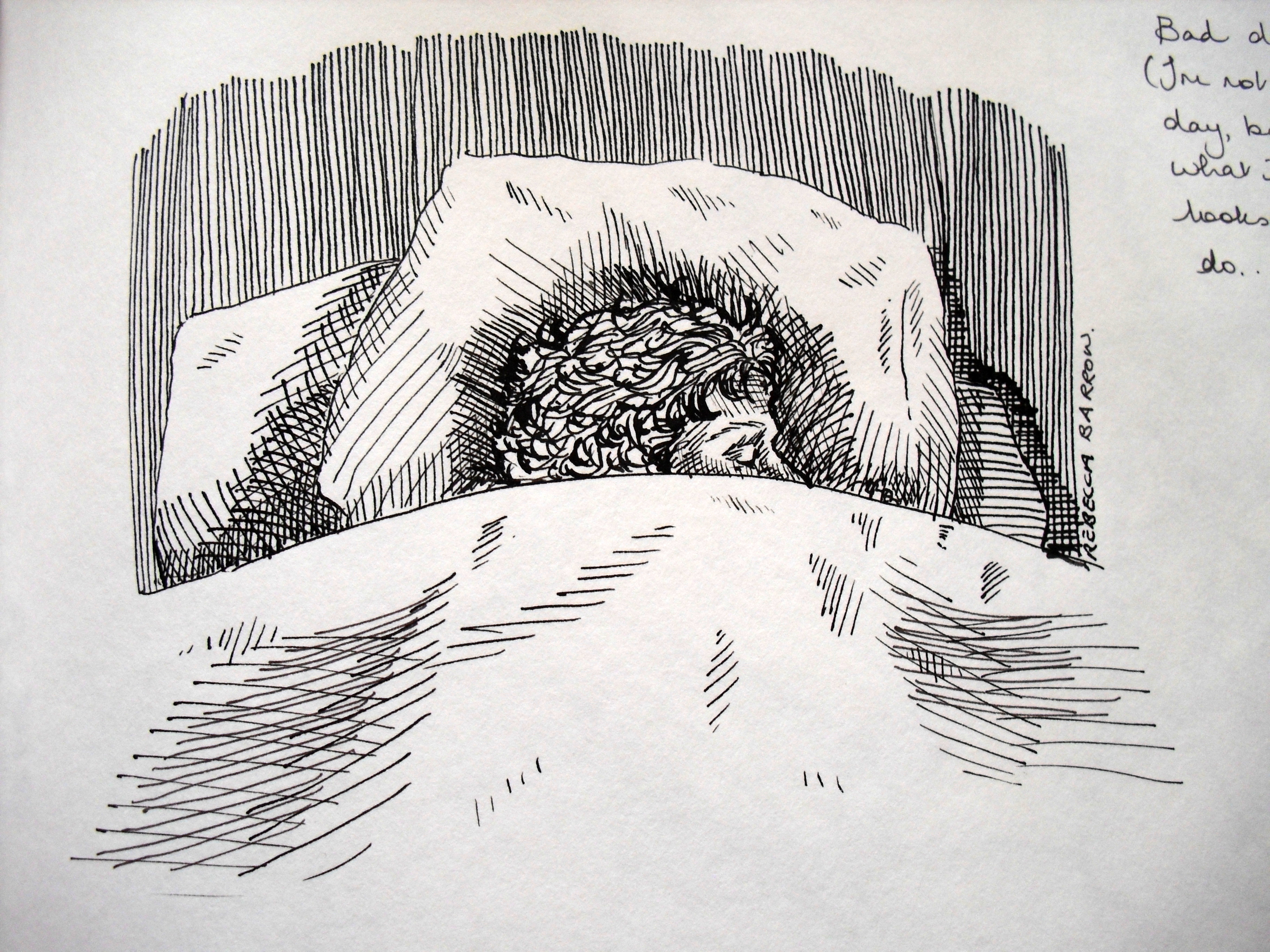
sleep sketchThis one is about my illness and the days I spend unable to get out of bed, which are frequent.

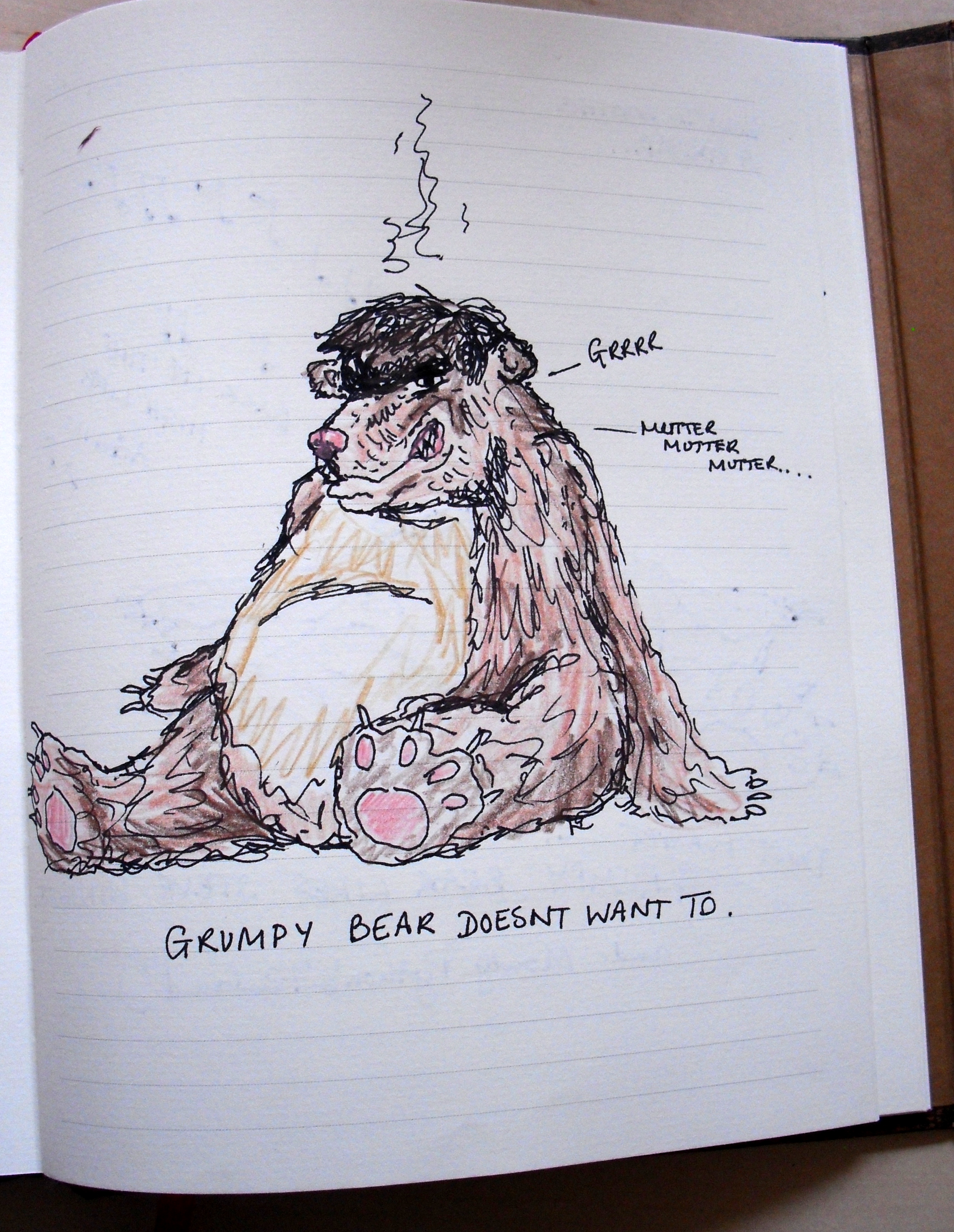
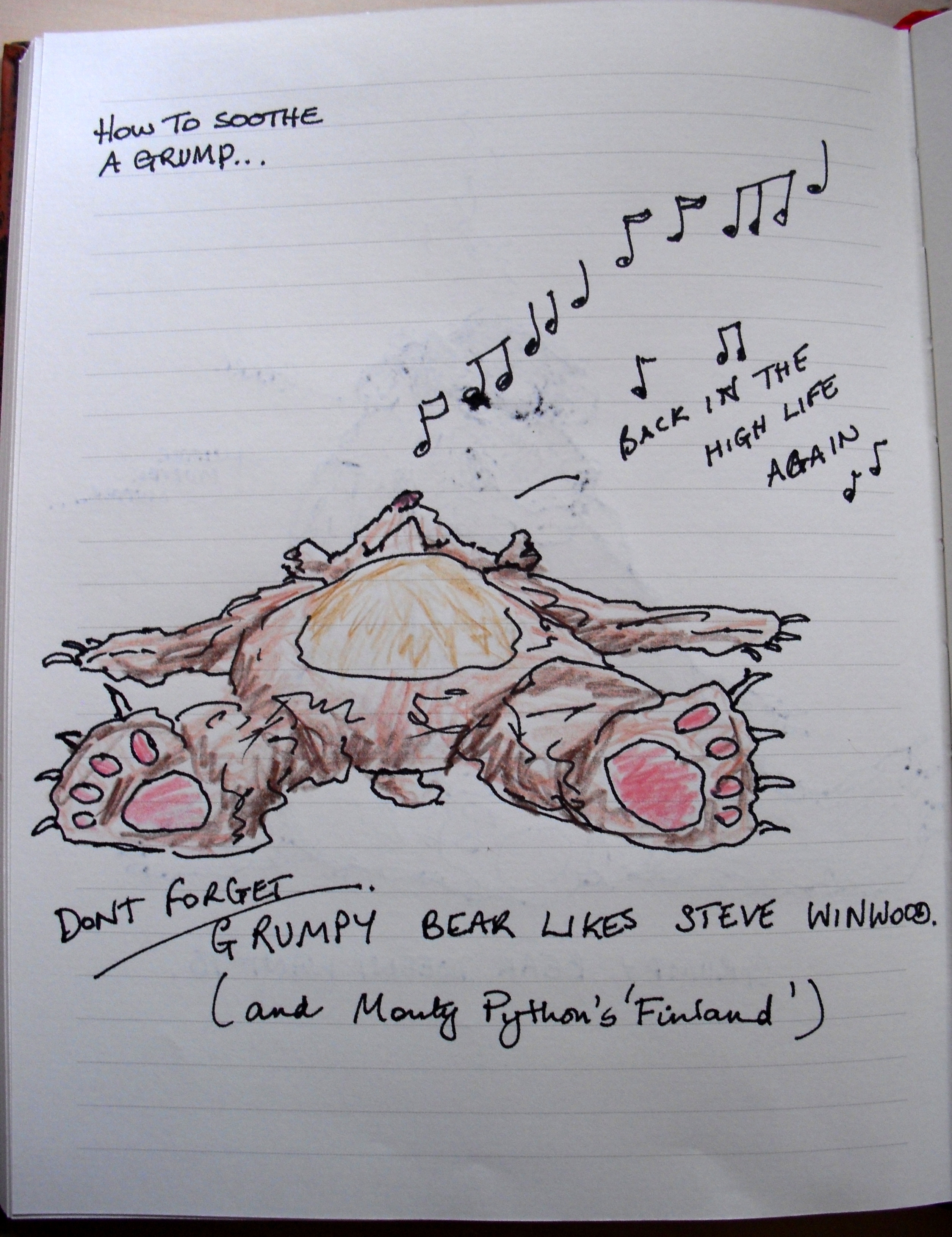
grumpy bear 1 grumpy bear 2

This is a feeling I had one day that I wanted to personify, in the hope of recording how to get rid of it.

hound sketchThis was the product of a night of insomnia.  Once I had drawn this rabid dog, something I felt compelled to do in a literally physical way, the feelings I was struggling with literally dissolved, and I went back to bed and slept for seven hours straight.

The point I want to make is not whether I can draw or not, but that you can use images to express your feelings in your journal without fear of judgement from others.  If you can’t draw, or can’t bring yourself to draw, paste in images cut from magazines, or postcards.  Collage is a great art form you can try without fear of criticism.  There are lots of ways to express what is pent up inside that are nothing to do with words.

Don’t let Nigel limit you.

Journal Exercise:

I am going to talk more about this, as I feel like I have opened up a rich seam, now that I have got over my block about it.  But in the meantime, you get to do some more shopping!  Go and buy yourself some nice coloured pens or pencils.  Sharpie ones are good and bright, but I like Staedtler Triplus fineliners and Berol Colour Brushes.

Reread my previous post about colour, and play with your pens or pencils inside your journal. Makes some marks.  Doodle.  If you fancy drawing, do, but don’t be critical of what you produce.  This is not about getting a grade A.  Just have a play.

What colours and shapes express particular feelings for you?  How do you feel when you use a particular colour?  What do certain shapes mean?

During the week, keep your eyes peeled when browsing newspapers and magazines, or even junk mail.  Pick out images that speak to you.  Pull them or snip them out and stash them in a box for future use, or stick them into the pages of your journal and write about how they speak to you.

Happy Journalling,

EF

Why you need to Moodle

Today, I have been moodling.

Mooching.  Pottering.  Puttering.  Loafing.  Fiddling.  Wandering.  Pootling.

It looks like I am doing nothing very important from the outside, or at least nothing creatively productive.  But that couldn’t be further from the truth.

Brenda Ueland, in her superb book ‘If you want to write’ (hardly bettered since it was published in 1938), calls creative revelations ‘little bombs’.

“You may find that the little bombs quietly burst in you when you are doing other things – sewing, or carpentering, or whittling, or playing golf, or dreamily washing dishes.” (p45)

“…So you see, the imagination needs moodling – long, inefficient, happy idling, dawdling and puttering.  Therse people who are always briskly doing something and as busy as waltzing mice, they have little, sharp, staccato ideas…but they have no slow, big ideas.  And the fewer consoling, noble, shining, free, jovial, magnanimous ideas that come, the more nervously and desperately they rush and run from office to office and up and downstairs, thinking by action at last to make life have some warmth and meaning.” (p32)

Ueland knew that we need to time to contemplate, to think and reflect, to be alone with ourselves, but also time to just let things percolate, soak in and mingle.  We may not look like we are working on our novel when we are washing up.  We may not even be thinking about it consciously.  But there it is, fizzing away behind our eyes, collecting connections, accumulating mass like a growing snowball tumbling down a mountain.

We are incubating miracles.

We need to moodle to charge our brains, to collect impressions, to drink from the well.  However, there is another reason to moodle.  What happens when the well is dry?

This comes back to self care, which I wrote about in an earlier post.  There are always going to be times of creative drought in our lives.  There will be times when life gets in the way, or when we are so busy dealing with our personal stuff that there is no energy left over to flow out into creation.

It is crucial to know that that is alright.  It happens.  It will pass.

And when these droughts occur, and to prevent them if you can, you need to moodle.  Have a nap.  Potter about.  Paint your toenails.  Fix that squeaky gate.  Go window shopping.  Give yourself a break, literally and metaphorically.  Resting will fill the well up again.

This is why I don’t really believe in writers block.  I think that either you are exhausted, or you are stopping yourself from creating out of fear.  If the latter is the case, you need to explore those fears, and work on them in your journal.  If the former, you need to let go of guilt, accept the creative season you are in, and lie around wiggling your toes until your brain is sufficiently rested, and finally ready to come up with a new ‘Aha!’ moment.

I urge you to read Ueland’s peerless book, whether you are a writer or not.  It is full of incredibly sensible advice for anyone who means to create.

I also urge you to take some moodling time this week.  Book it in your diary.  Tell the family to leave you alone in the bath tonight.  Go and lie in the park in the sun.  Not every expedition has to be an Artist Date.  Sometimes, its good just to refill the well.

Happy Moodling,

EF

Outflow: What is Your Definition of Success?

I was having a conversation yesterday with my therapist about the definition of success, and Life Purpose.  If you are a bit of an addict for self-help blogs, as I am, you will be familiar of the idea of Life Purpose.  Everybody talks about it.  Why am I here?  The self help industry wants you to define your Life Purpose, because they say it will help with setting goals and achieving success – yes, there is that word again.  The thing we all want to achieve, or are told we do.

I always believed that my Life Purpose was to write and publish books.

Unfortunately that sentence has a big fat bear trap in it.

When I meet someone new at a party, and they ask me (as people invariably do when they are making small talk with strangers) “what do you do?”, I have always replied:  “I am a writer.”  Two questions then follow:

“What sort of books do you write?”

and, “Can I get your books in Waterstones?” (Insert the name of your local bookseller chain as appropriate).

When I explain that I haven’t been published by a conventional publisher yet, I can see the light die in their eyes.  The words are practically written in neon on their faces:

“Oh, well you aren’t really a writer then, are you?  You’re just one of those hobbyists who likes to talk about themselves like they are the next JK Rowling, but what you actually do is write crap that nobody wants to read!

Society’s definition of success is publication by the conventional publishing trade.  You aren’t a writer till you are in print.

The fact is, I have written seven novels.  I have published nearly thirty short stories and novellas which get an average of 100+ readers a day on the internet, an audience size which most conventionally published writers would kill for.  I have taught writing dayschools, mentored other writers and judged short story competitions.  I have written a monthly column for a paper with a circulation of 7000, and have two academic papers to my name.  And I have kept a diary for more than thirty years.  What part of this does not constitute success?

The more I have written, the more I have realised that my definition of Life Purpose is flawed.  My purpose is not to get published, because that is only half the story, and frankly, its really not the important, interesting or exciting half.  I have realised that the part of writing I really love is the writing part, the process.  I love coming up with new stories and characters.  I love visualising scenes and dialogue.  I love the rush I get when I am in full flow, in the middle of writing a scene or chapter, when I am in the action, experiencing what my characters do, feeling their feelings, seeing through their eyes.  And I love the sense of satisfaction when I come out the other end  and look at what I’ve done.

My purpose is to write.  Simply that.

Because the thing is, you are a writer if you write.

Talking about getting your novels published, dreaming of a bestseller, imagining yourself on talk shows explaining how your stories have been adapted for film or TV – none of these things are what a writer is, although it is true that they may occasionally have to do these things.  To be a writer, you have to love the process enough to do it.

The point I think I am trying to make here is this:  what is your definition of success as a writer (or in whatever art form you choose)?  Are you measuring yourself against society’s outdated or material idea of success, or do you really see what you have achieved, regardless of what other people think?

I struggle continuously with the idea that I have failed in life or as a writer because I am still at the bottom of somebody’s slush pile.  I have to fight constantly against that prejudice within myself, as well as in others.  But the truth is, I am a writer because I write.

These days, when someone asks me what I do at a party, I say:

“I write gay erotic fiction for the Internet.”

This solves both the patronising questions at once, gives me a sense of my own achievement, and also tells me a lot about the person I am talking to, through their response.  Either they blanch and change the subject, or they look fascinated or perplexed, and want to find out more.  And then we really have a conversation worth taking part in!

Happy Creating,

EF

On Process: The Myth of the Suffering Artist

Chatterton 1856 by Henry Wallis 1830-1916(Henry Wallis’s painting of  Thomas Chatterton (20 November 1752 – 24 August 1770), who was an English poet and forger of pseudo-medieval poetry. He died of arsenic poisoning, either from a suicide attempt or self-medication for a venereal disease.)

I was going to start this post with a list of all the Creatives who have damaged themselves for the sake of their art.  I lay in bed the other night, trying to compile a list of them.  There were a lot, and those were just the ones I could come up with at 3am!

And why bother?  We know who they were.  We know the names of Rothko, Hemingway, Woolf, Pollock, Kerouac, Kinski, Dylan Thomas, and so very many others.

We conveniently don’t notice the ones like Grayson Perry, and Tracey Emin, who credit their art with saving them. (I’ve made links to autobiographies here, and I encourage you to read them, as they are enormously inspiring.)

We certainly don’t remember the millions of artists who, over the course of the last two millennia, have lived happy, healthy and fulfilling lives as well as making art of all kinds.

You don’t have to suffer in a garrett to be an artist.  You don’t have to drink yourself to death, take drugs, cut yourself, starve yourself, tolerate life in abusive relationships, live in squallor or destroy your health.  That is not what an artist is.

An artist is someone who makes art.

(Whatever kind of art that is, from writing to painting to dance.)

Just that.  Nothing else.  Just that.

Creativity is the greatest healing force in the Universe.  I know this because I have seen it and felt it for myself.  When you begin to create, you end suffering.  You will feel better.  I promise.

And yes, it will be frustrating at times, and maybe you will cry your way through every chapter, every linocut, every sculpture, every pas de deux, as you work through all the difficult feelings that come up.  Because lets not kid ourselves, people who create great art of all kinds are often driven to do so because of their own difficult pasts.

So maybe writing 500 words a day is like getting blood out of a stone for you?  There are ways to deal with that, but remember that struggle often comes from deep hurts from long ago, from entrenched behaviours that stop you being your most luminous self.  And if you write those words, every day, you will get through those barriers, and you will feel wonderful.

I promise.

I know because it happened to me.  And continues to happen.  Every day.

If you think that you cannot communicate accurately to your readers the misery and suffering of your characters without having lived it yourself, I will tell you the secret of how you can do without nailing yourself to a cross.

Three little words:

Imagination, empathy and research.  And the most important of these is IMAGINATION.

Imagine yourself in their place.  How would you feel?  What would distress you the most about their position.  Read up.  Find out how other people felt who went through similar traumas.

DO NOT TRAUMATISE YOURSELF.

Eat well.  Get enough sleep.  Value yourself.  Work at having loving and fulfilling relationships with others. Exercise.  Meditate.   See the doctor and the dentist if you need to.  Use your art to heal whatever wounds you have.  Care for yourself, and your art will be the better for it.  As will you.

Happy Creating,

EF