Inspiration Monday: Telling Details

sussex church

The Zen of Details

At the moment, I am fascinated by ‘telling details’.

At our writers’ group last week, my friend read out the first pages of her novel, a description of a little girl watching her mother as she used a sewing machine to make a new dress for her little girl.  It took me right back to my childhood, watching my own mother labour over the sewing machine.

It was the little details that transported me.  The jar of spare buttons which the little girl was allowed to play with.  The thunk of the presser foot being let down onto the fabric.  The smell of sewing machine oil and new cloth, unwashed, still fusty from the haberdashery.

I have re-ignited my enthusiasm for my writer’s notebook with these details.  Using the little components of life.  Scribbling them down when I notice them.

The way the local cockerel sounds like he has a sore throat when he crows.

My husband saying ‘Marriage is about sharing’ when he farts.

The dust that builds up in the corners of the treads on the stairs, and how gritty it is.

Puffs of pollen falling off the sunflowers I have rescued from the storm-lashed garden, falling like yellow flour on the tabletop under the vase, powdering a biro that had been abandoned there.

These are the little glimpses of our everyday life that we mostly ignore, but when someone draws our attention to them in prose or art, they enrich our perception, throng our minds with memories, ground us in the present in a way nothing else can.

At the moment I am working on a series of short fanfics that are grounded in these details.  I am trying to use a single detail to spark each story.  Each story then contributes to a wider portrait of a relationship.  This means collecting details. So here I am with my notebook, going back to the very beginning of my writing career, ‘back to basics’ if you like, collecting scraps for here and there and jotting them down.  I feel like a mosaicist building up a mural made of broken pots.

And it is delicious.

 Creative Exercise:  Lists

Unearth your notebook, if you haven’t been using it much recently.  If you are an artist, grab your sketchbook.  Now open your mind.  Start noticing things.  It takes practise to be sufficiently present in life to recognise the tiny details that contribute to the big picture of shared experience, but once you start, you will find them coming thick and fast.

  • Walk around the house and look at the piles of stuff that have built up.  Write down where they are.  Make a list of what is in them.
  • When you visit the bathroom at a friend’s house, look at their lotions and potions.  Make a list to jot down later.  What do the bottles and jars tell you about their life and health?  If you draw, make a sketch of them, or if it’s easier, draw the contents of your own medicine cabinet.
  • Standing in the queue for the checkout, look in other people’s baskets.  What are they buying?  Another list.  What does this say about them?  Can you make a still life that communicates what they are eating, who they are eating it with, and why?

Open your eyes wide.  Your mind is constantly sifting sensory input, picking out things that may or may not be important.  Usually, you toss most of your perceptions aside.  Instead, write down as many as you can.  Use them later in your work.

Happy Creating,

EF

Journal Friday: Wardrobe Planning

More dashBecause I’m ill, I am not able to work, and that means everything I do has to be on a budget – energy-wise and money-wise.  As a result, planning is my friend.  If I have thought about something beforehand, it makes everything so much quicker, easier, and less worrying.  That includes clothes.

I was looking at this fantastic dressing room today, and was shocked that anyone could have that many clothes.  If I did, I’d never get dressed at all because I wouldn’t have the energy to decide what to wear.  I have a small wardrobe, partly on purpose, because cutting down options means less to worry about, but also because of money.  I just can’t afford to spend lots.

Mostly I buy my clothes from my catalogue, on a monthly payment basis, and annually, with my birthday money.  Relatives are kind enough to donate to my clothing fund every year, and I plan very carefully what I am going to spend it on.  I make sure all my big purchases colour co-ordinate, and concentrate on one core colour and two accent colours.

Currently navy is my core, and bright red and bright (lime) green are my accents.  At the moment, though, I am feeling a pull towards charcoal grey, and since I bought a dark grey sweater in the sales a few years ago, I’ve been thinking I might go in that direction a little.  Plus it seems to bring out the colour of my eyes.  (It’s really hard to work out what colours I can wear these days, as I am growing out my coloured hair and letting the grey come through.  I didn’t think this measure, taken because I just can’t be fussed with home dyeing anymore, would make such a big difference to my complexion, but it does.)

grey croppedAnyway, the way my brain is, I can’t keep all this information in my head anymore, so I have started using my journal to plan my outfits.

I have an ulterior motive here too.  I haven’t been able to get past the creative block I have with my art, and I find that if I just do a scribble in my journal, it doesn’t have to perfect.  It is just a gesture drawing with a few colours to note down information in a graphic form, and it cons Nigel into thinking what I am doing is actually not painting at all!  Clever, eh?

black hat litUsing my journal in this way is a helpful planning tool.  It helps me to work out what extras I need in addition to what I already have, and to budget for them.  It also allows me to think through how I really want to look for a particular occasion, such as a wedding.  I am also finding it is changing the way I feel about my clothes.  I’m finally at the age when I can get away with wearing very classic styles, and you can see from my sketches that there is a distinctly ‘50s vibe going on.  I’ve always been in love with Dior’s 1947 New Look, and it looks like that is where I am going.  I’m intend to grow old elegantly as well as disgracefully!

How could you use your journal to plan your life or your look?

Happy journaling,

EF

Smorgesbord

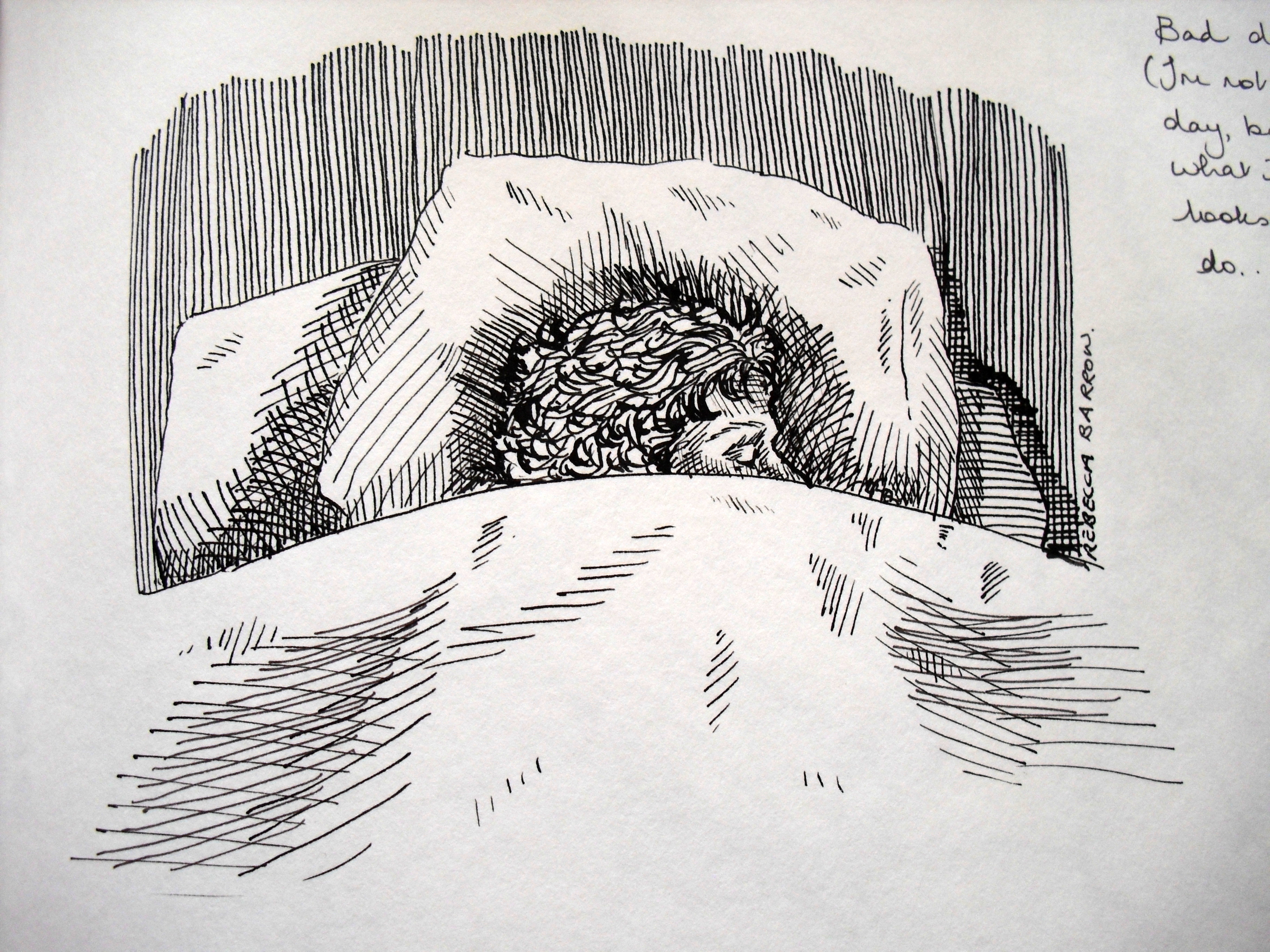
sleep sketchI usually try to post on a Monday, Wednesday and Friday, but this week’s Wednesday post got missed because I was ill.  I’m still ill, but my brain is slightly clearer today and I am giving myself to thinking time.

Thinking about future posts for this blog.  Thinking about writing and notebooking.  Thinking about art.  Thinking about clearing space in my life for more creativity.  Its a luxury I have to lie in bed and consider which direction I am going in creatively, and I recognise that.  Few people get that option.  I may be feeling terrible, but I’m enormously grateful I can use this time to be present with my work.

I thought I’d share a few things I have been mulling over with you.

Here are the thoughts of Elmore Leonard on writing, an enormous inspiration.

Here is Stephen King, saying illuminating things about both ‘The Shining’ and about the attitude of critics, something I really needed to hear this week.

Talking about critics, Jack Vettriano has been savaged by the art establishment over the years, but now he’s having a retrospective at the Kelvingrove.  Oh, the irony!  (And lets just remind ourselves that this man is self-taught, which may be why critics hate him so much.)

If you are interested in art, check out this site.  I love its brightness and enthusiasm.

I want to do this course next.

And to end, a little light reading.  I’m pursuing a new project of short stories and vignettes which explore life inside an established relationship through fanfiction.  The series is called ‘Geography of a Shared Life’.  You can read my latest piece here at A03, and here at FF.net.

Happy creating,

EF

Do you have a Creative Vision?

This man has a vision (click on the link below and watch the film clip):

Portraits of St Davids residents

He knows what his project is.  He knows what he is after.  He is going for it.  The breadth of his vision, as well as the beauty of it, and of his work, is dazzling.

I’ve been thinking a lot about Vision over recent days.  Wondering what I am really after, what I am trying to achieve.  I can’t just be driven by fear anymore.

My fear is that I will die without getting all these pictures out of my head and into the world so that other people can enjoy them as much as I do.  I find the inside of my imagination highly entertaining, and I want to share it.  Does that sound vain?  I don’t know.  All I know is that I feel compelled to transmit the pictures in my head.

I watched the film, ‘The Reader’ the other night, based on the magnificent book by Bernhard Schlink.  It was wonderful.  It stirred up so many complicated and conflicting feelings inside me.  It is a true tragedy in the Greek style, a man forced to face the truth about the love of his life, and her part in unspeakable acts.  So much love.  So much horror.  This story is designed to spur debate about the morality of our actions, about good and evil, about the excuses people give, about love and literature and illiteracy and shame.  You could call it a romance, but thats only a tiny part of the story.  Schlink’s genius is to use romance as the vehicle to consider more difficult moral problems.

After the film had ended, I was getting ready for bed, cleaning my teeth and staring into the mirror, as I mulled over the storm of feelings going on under my ribs.  And I realised something.

This is exactly what I want my readers to feel when they finish reading one of my stories.

Complicated emotions.  The vast, unquenchable yearning of love.  The conflict of being caught in morally complex situations.  The struggle for answers.  And that iresistable siren call of need that drives us towards one another, even when we understand that pain can be the only result.

Is this too big a vision for someone of my talents?  I’m not saying I want to be Dickens, after all.  I guess I am aiming higher than that, in a way.  These issues seem to me to be at the core of our existence as emotional beings.  We struggle with them, just as we struggle with the philosopical questions of why we are here, and whether there is a God.  This is what I want to examine with my writing.

So its more than just getting the pictures out of my head and onto the page.  It is observing the emotions that make us love, too.  Call me a hopeless romantic, but that is what I am interested in, and I think I always have been.  I just never really thought consciously about it before.

I know what I’m trying to achieve now.  The thought has given me purpose.  All I have to do is go out and do it.

Do you have a vision for your creative work?  Maybe its worth thinking about.

Happy Creating,

EF

Tips on Writing a Eulogy (Because you never know when you might need to.)

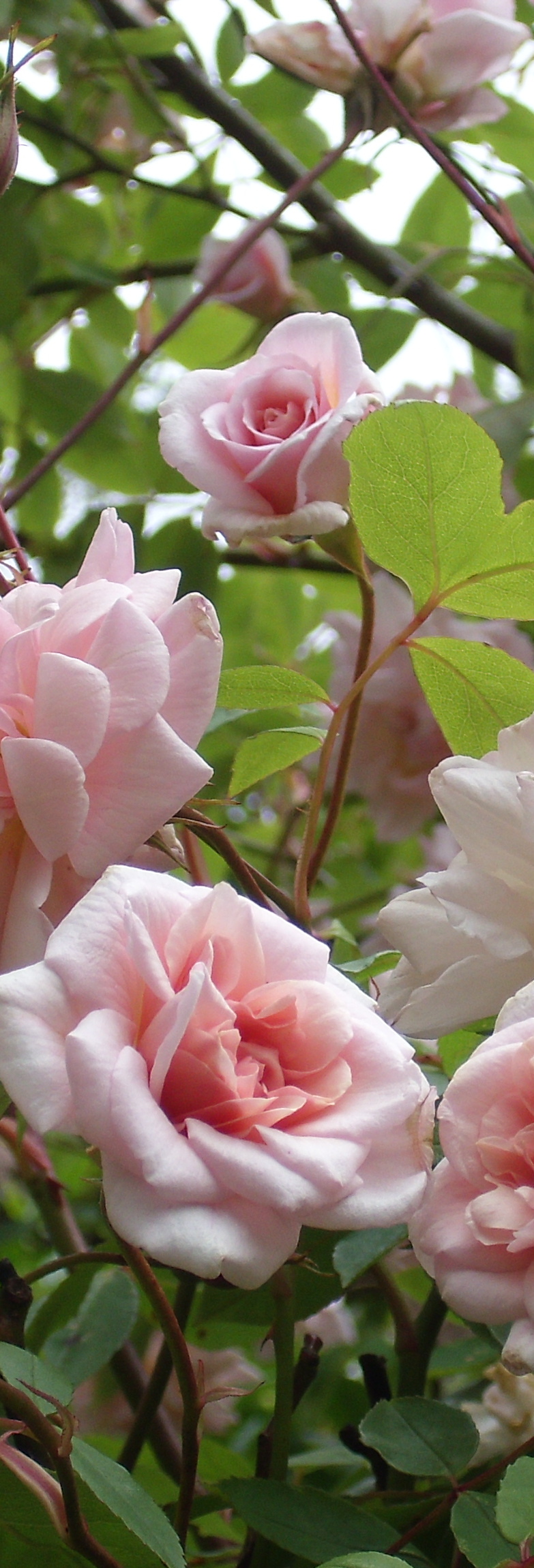
cropped rosesToday’s post is something of a reactive one.

A friend emailed.  He told me that another friend had died suddenly, unexpectedly.  He was in his forties.  My friend has been asked to give the eulogy at his funeral.

‘What do I do?  Where do I start?  You’re the writer, you tell me.’

As it happens, I have written a eulogy myself.  I wanted to give a speech at my step-father’s funeral.  I wanted to talk about how much he meant to me.  In the end, because of family circumstances, this became impossible, so instead I read his favourite poem and luckily, that summed up a lot of what I wanted to say about him anyway.  I still have the speech I wrote, tucked away somewhere.

You never know when you might be called upon to give such a speech.  Unexpected deaths happen all the time, and even if the death is expected, it’s still a tough call when you are asked by the chief mourner to stand up and ‘say a few words’.  That makes it sound so easy, doesn’t it, that phrase?  Like you can just burble out the right thing off the top of your head.  No one does that.  You have to plan.  Here’s a handle on where to start:

  • Think of a list of adjectives that best describe the deceased as you knew them.  Don’t go overboard trying to make a huge list.  Four or five will do.
  • Now think of memories of them which illustrate that quality.  Maybe your adjective is ‘kind’, and the memory might be an occasion when they sat up with you all night after a bad breakup, not really saying anything much, just listening to your sorrow and comforting you with their presence and understanding.  Maybe ‘talented’ is the word, and the memory is of going to hear the premiere of their latest musical composition at a local concert hall.  Perhaps ‘inept’ is the word, and your memory is of them falling into the river whilst trying to row a boat and impress everyone on the bank!
  • Don’t choose too many words and memories.  People at a funeral can’t sit through too much.  Try three, and see if that gives you an overall picture of what meant most to you about the person.
  • Think carefully about the situation.  If someone has died young, or without fulfilling their potential, the audience might appreciate hearing of some lesson the deceased taught you that may serve as evidence of a legacy.
  • People don’t like to hear ill of the dead.  Don’t tell the mourners about the horrendously blue best man’s speech he gave at your wedding, or how she borrowed your best dress and left lipstick stains all over the hem.  They don’t want to hear the small things any more than they want to hear that the deceased was a child-murderer or cheated on their spouse.  We deify the dead, and only get angry at their shortcomings much later in the grieving process.
  • If you are angry at the deceased, reflect on your anger carefully before you give your speech.  If you don’t, your words might come across as bitter.
  • Read your speech out aloud and practise it.  Show it to sympathetic friends who you trust to say ‘you can’t say that!’, or ‘That’s perfect!’
  • Don’t ramble on.  Keep your speech short and to the point.
  • Be fond, and include a gently amusing anecdote if you can.  This diffuses tension and helps mourners think of the happier times.
  • Expect to have a rollercoaster of feelings on the day.  You may have trouble speaking at all without weeping.  Or you may experience a sense of enormous calm descend on you, and give an Oscar-worthy performance.  Or more likely, a bit of both.  Either way, don’t judge yourself.
  • Always try to end on a positive note, emphasising some way in which the deceased enriched the world with their presence, however brief.

That’s a few ideas off the top of my head.  I hope that this is not something you are facing right now. If you are, please be assured you have my deepest sympathies.  If you have written a eulogy yourself and have some tips, do please share them in the comments section.

This post was written with fondest love to Mad Mark the Maniac,

EF

New Fanfic Story: An Anatomy of Intimacy

john and sherlockI am struggling to avoid my brain leaking out of my right eyeball just now because of a migraine, but I felt I needed to post today to say ‘Hi!’, and so I thought I would draw your attention to a new story I have put up!

It’s called ‘An Anatomy of Intimacy’, and is a companion piece to my earlier work, ‘Personal Geography’.

I’ve been playing about with a little toy project, just a bit of fun to keep my brain working.  This involves writing short pieces exploring the reality of John and Sherlock’s life together in an established relationship.  The idea is to create a few little windows into life behind closed doors at 221B.  These aren’t supposed to be regular things, or part of an ongoing story, just an occasional morsel of something intended to illustrate the profound connection between them.

I hope you like them.

Happy reading,

EF

The Wild Donkeys: A Strategy for Choosing a Creative Project

donkey

‘So, how’s the writing going?’

This from a man who is one of the Blessed Few.  A writer whose work was picked up by an agent straight from the much garlanded MA in Creative Writing at the Unversity of East Anglia.  Alumni include Ian McEwan, Rose Tremain, Hanif Kureshi, Tracey Chevalier and, well, you get the picture.  He is in glittering company.

He is also a really lovely man and a dear friend who takes a genuine interest in my work, so I rein in the envy monster and give him the polite and honest answer.

‘Fine.  Well, actually, I’m a bit stuck.’

‘Creative block?’

‘No, too many ideas.  I don’t know where to start.’

‘You should be writing a novel, you know.  I read some of your Sherlock stuff the other day.  It’s really good.’

‘Thank you.  I’ve written seven novels so far.  Writing a novel isn’t the hard part.  Its choosing which one to write that’s difficult.’

‘Well, just pick one and start.’

I love men.  Everything seems so easy to them.  And they are so good at handing out really practical advice.  (You’ll also notice that I don’t ask him how his novel is going.  That’s because I know.  I recognise that pained look.  I’ve seen it in the mirror too many times.)

OK, I know its good advice.  The right advice.

As Leonie Dawson puts it, I need to choose a wild donkey and ride the shit out of it till its done.

Every writer has a place where they habitually get stuck.  A psychological Marianas Trench on the road to getting their work into the readers’ hands, one that they tumble into every time.  For some it is grinding the words out, which for them is like sweating blood.  For others, it is coming up with the idea in the first place.  Some worry when they get to the middle because that’s always where they get bogged down, and some will spend ten years writing the first page.  We all have our Achilles’ heel.

For me, its choosing which idea to stick with.

So I have decided to take September off.  Not from writing; quite the opposite, in fact.  No, I’m taking the month off from worrying which novel to concentrate on.  I’m in a physically stuck place right now, and I need to concentrate on my health, on getting my body moving again after a summer of boom and bust energy.  I’m looking to create a smooth, even flow in my life, in my health, and my art.  I have faith that if I can manage to attain a relative level of consistency in my body, the answer will come to me.  Yes, maybe that sounds mad, but its just how my creative process works.

And in the meantime, I’m refreshing my theory knowledge, reading, working on my notebooking, and bashing out some major fanfiction.  I’m easily distracted, and having short stories and novellas on the go is a great way to handle that.  But sooner or later, I want to create something major.  Something big.  Something that shows both me and you, dear Reader, what I can really do.

Happy creating,

EF

The Only Two Books a Writer Needs (Part 2)

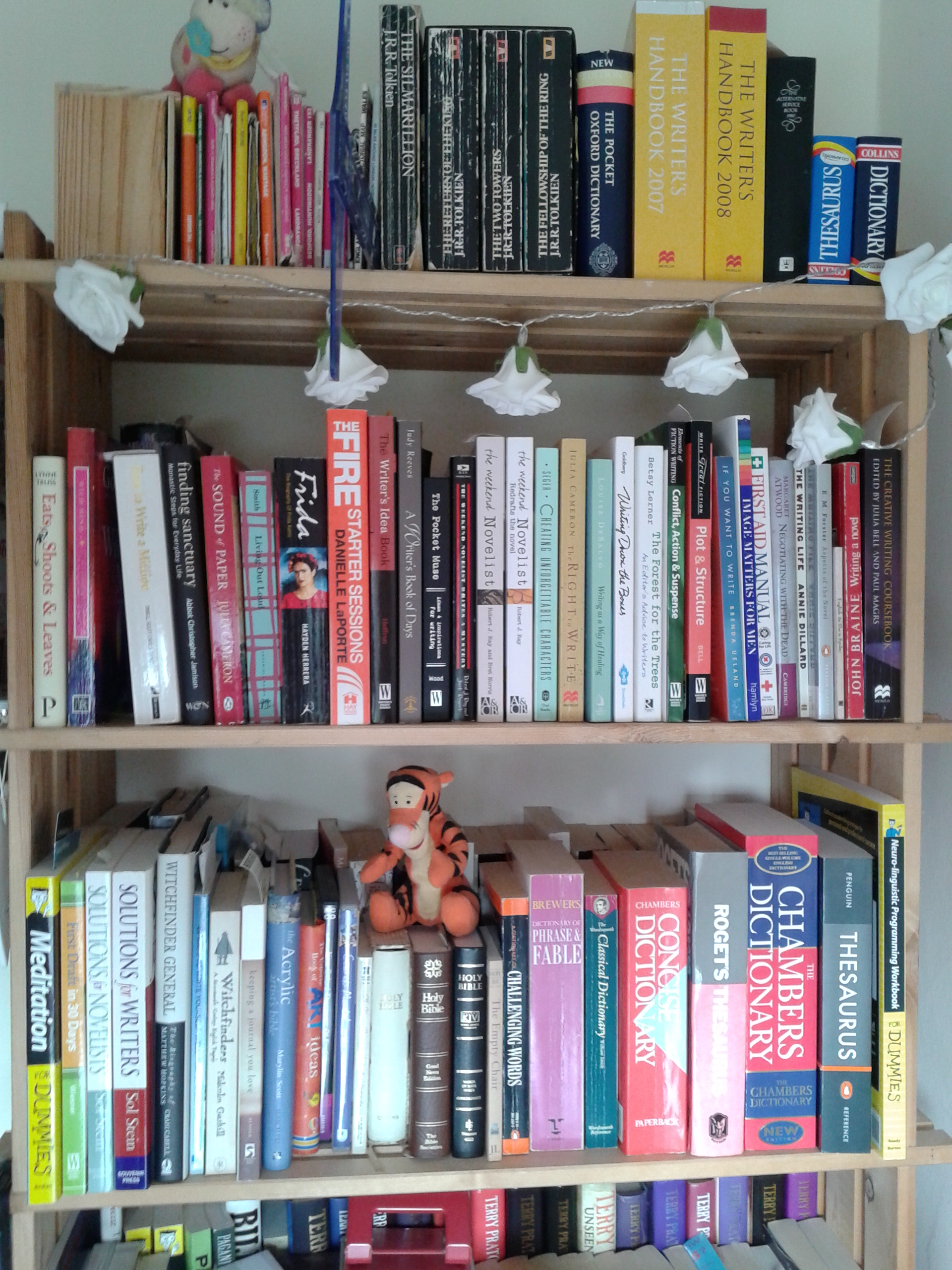
BookshelfIn the last post, I waxed lyrical about why you need a good dictionary on your bookself.  Have it to hand when you are reading.  Reading is an act of Input that every writer needs to undertake.  And no, its not stealing.  Its looking for inspiration, in the same way that artists study and copy the Old Masters in order to improve.  Reading helps you learn what works and what doesn’t, but more on that another day.

So that’s the Input.  What about the Output?  This is where the next book comes in – the writing part.

The Thesaurus

If you aren’t familiar with thesauri, my lovely Chambers Dictionary describes them as:

“…a book with systematically arranged lists of words and their synonyms, antonyms etc, a word-finder; a treasury.”

If you are serious about making your writing more vivid, you’ll need a Thesaurus.  I was introduced to Roget’s Thesaurus, probably the most famous thesaurus, while still at school, but the technique of using it is cumbersome and it completely foxed me.

Now I use a very nice, fat Penguin Thesaurus, which is alphabetical, and quite thorough enough to meet my needs.  I keep my Roget in reserve, just in case.  And yes, I have finally worked out how to use it properly, but it’s a pain, so I keep things simple.

The nice thing about a thesaurus is that it helps when you can’t think of a word (which for me is a lot!), or are looking for a more sumptuous way of explaining something.  You want a word like ‘magician’, for instance, but are looking for something a bit more, well, exotic.  Dip into your ‘thes’ and you will find:

Sorcerer, wizard, warlock, sorceress, witch, enchantress, necromancer, thaumaturge, miracle-worker.

Mmmm.  Never heard of thaumaturge before!  That’s pretty exotic, as exotic goes.  See what I mean?  Grab yourself a thesaurus and have a moodle about within its pages.  Yes, its perhaps just another way of defining words, but it defines around them too, enriching them in unexpected ways.  It will help you widen your vocabulary but also makes your stories more sumptuous.  As with anything rich, however, don’t go overboard.  Too much cream can make you sick.  Too many adjectives and adverbs (especially) will put your reader off completely.  Its a case of using the right word, not lots and lots of words.  Be vivid, not verbose.

The Others

Yes, there are other reference books I rely on on a regular basis.  I wouldn’t be without my Brewer’s Dictionary of Phrase and Fable, for example.  Or The Oxford Companion to English Literature, and the Chambers Biographical Dictionary.  All of them are fascinating and deeply useful – and not just when you are wrestling with a crossword!  But they are not what I could call ‘necessary’.

A dictionary and thesaurus are as necessary to a writer as a saw and chisel are to a carpenter. On a scale of need, they are prerequisites for the writing life.

As you can see from the picture at the top of this post, I have lots of books about writing.  I promise I will tell you about them in another post.  In the meantime, ferret out a good dictionary and thesaurus and keep them close at hand.  Look up any word you don’t recognise, and also those that you think you know what they mean, but have a lingering doubt about whether you are right.  Write down the ones you really love, and use them.    I promise you’ll have no regrets.

Happy wording,

EF

The Only Two Books A Writer Needs (Part 1)

BookshelfThe bookshelf by my desk

It’s that ‘Back to School’ time of year, when I can’t walk past a stationery shop without nearly having a heart attack.  Every time I go to Staples, I feel like I want to rip all the notebooks off the shelves and writhe about in them like an ecstatic horse.  The Martha Stewart Home Office line gives me palpitations.

But there isn’t enough money to buy everything I want, and besides, I have cupboards full of notebooks and pens already – how many does a writer really need?

Need is not something we really think about much these days.  It is not a First World problem, because most of have enough to meet our primary needs, and at that point, the word morphs into that seductive, purple velvet lined entity that is ‘Want’.

Want becomes most acute for me when I am in a book shop.  It is very hard to avoid the conviction that that my life will not be complete until I have the latest edition of wotsit, or that Benedict Cumberbatch will fall in love with me, if only I buy that particular tome.  I’m too much the magpie.  I like the latest sparkling things.  It’s a terrible affliction.

My new office space, and all the decluttering that went with it, has focussed my mind on this issue.  How many books does a writer really need?  And more to the point, how many books on writing does a writer really need?

The truth is, horrible though it may be, I don’t really need every copy of every book about writing that comes out.  I can get them from the library if I want them.  I only really need two books:

The Dictionary

In my opinion, no house or building, or even tent, is complete without a dictionary.  A reasonable one.  I’m not saying you have to go out and buy the full length Oxford English Dictionary, which runs to an insane number of volumes, and which only public institutions and Russian oligarchs are probably capable of affording.  You don’t even have to buy the two-volume Shorter version, which is still prohibitively expensive.  Lets face it, you could probably look up the more obscure words that these monsters contain online.

But you need a dictionary.

A dictionary is your friend.  A dictionary provides meaning in the world.  It provides knowledge.  It makes sense.  Even if English is your mother tongue, and you think you know everything it has to offer, believe me, there will always be a seven letter word beginning with L that turns out to be a seventeenth Hungarian stomach pump that you never knew existed.  That’s why I love the English language.  In all its glory, it is like an endless adventure through the Amazon jungle, where thrilling new words are always lurking under unexpected leaves.  And you never know when they might pop up.

Best to have a dictionary close at hand when you are reading.  You never know.  (You wouldn’t believe the number of times my husband has lost his temper with me in bed at night, when I have been reading my bedtime novel and found a word I don’t know – and asked him what it meant.  He’s got a PhD, and wields words like ‘hermeneutics’ on a daily basis, so I assume he knows everything.  He gets a bit short-tempered when asked about seventeenth century Hungarian stomach pumps when he’s sleepy!)

If you are intent on expanding your vocabulary, as I am, keep a little notebook too, to scribble down new words and meanings so that you remember them.

I have a very nice Chambers Dictionary, which my mother-in-law gave me.  It was second hand, but the meanings it gives are accessible, and it has a wide enough variety of words to satisfy my needs at the moment.  It is also a chunky 5.5cm thick, with nice fine paper, and so is a really satisfying thing to handle too.  You can pick up reasonable dictionaries in stationers and book shops this time of year at great ‘Back to School’ prices, but second hand bookshops and charity shops are always a good bet too, because dictionaries are slow to go out of date, and the basics will always be of use.

(Some readers will be bouncing around in their seats at this point, and crying the praises of online and digital dictionaries.  Yes, I get that they are useful, but they do not have the browsing dimension that real books do, and therefore I still recommend you get the hard copy.)

I originally wrote this as one post, but it got so big I decided to split it.  I think it words better that way, and I hope you agree!  So the next post, on Friday, will be about the second crucial book you need to have on your bookshelf.  The thesaurus.

Meanwhile, Happy wording,

EF

Inspiration Monday: Support your local library

the forum-norwichI am tempted to break into my own, rather wobbly version of Petula Clarke’s ‘Downtown’ here, but slight amendments the eponymous destination.

“When you’re alone

And life is making you lonely

You can always go:

To the Library!”

Okay, it doesn’t work, but you get the idea.  The Library is your friend.  It’s your soulmate.  It’s a world of excitement and adventure cocooned within four walls.  And it’s currently free (at least at the moment it is in the UK– but David Cameron, I’m watching you!)

I have always felt a strange sense of peace amongst books.  Not for me the sudden flash of panic as the realisation dawns that there are never going to be enough hours in one’s life to read everything one wants to.  Books en masse produce in me a kind of nirvana, a bliss, a calm.  It doesn’t matter how bad things are, a library is one of the two places I can go to know peace.  (The other is the beach, in case you were wondering, but that’s another story.)  This is no coincidence.

Jeanette Winterson, in her emotionally complex autobiography, credits working her way (alphabetically – how pragmatic) through her local library with saving her life from a traumatic and abusive childhood.  Books give us the power to escape, to transcend, to find knowledge and wisdom, happiness and peace.

And more than that – Terry Pratchett notes the strange distortion that occurs when books are gathered together.  He calls it L-space, a phenomenon in which the power of knowledge bends the time space continuum so that all places and times are accessible from the magnificent Library of the Unseen University (although travelling in L-space can be dangerous!). This is really just a charming metaphor for what Winterson reports.  Libraries open up unexplored and unimagined realms for us without our ever having to leave their environs.  Although, if you have ever visited Kim’s Bookshop in Arundel, Sussex, you might agree with Pratchett that L-space does indeed exist!

Libraries have changed greatly since the days when my Dad used to take me down to our village library every Friday night with my fist full of little cardboard pockets to exchange with the kindly librarian for books that enchanted and fascinated me all week long.  Now I frequent the UK’s most popular library, the Millennium Library at the Forum, Norwich, which is housed in a breath-taking vision of modern architecture, and has the highest borrowing numbers in the country.  No wonder.  Its great.

My favourite treat is to go to the library without a time limit, and just browse, as if I were in a sweet shop.  I can wander about, dipping into sections, picking out jewels here and there like a magpie.  I can have whatever I want to try, and I don’t have to worry about how much its going to cost me.  Often I find books I have been hanging my nose over on Amazon or favourite blogs, wondering whether I should buy them – with the library I can try them out, and see if they are worth the investment.

I always make sure I browse the ‘Just Returned’ trolleys too.  This is a great way to come across books that you would never have tried otherwise, because they are shelved in sections you would not normally think to visit.  These eclectic shelves are a great way to expand your reading by picking up whatever appeals to you.

Appeal is crucial.  Sometimes I go in with the challenge to choose books on the basis of their covers alone!  This is a fun thing to do with fiction particularly, because you end up not only with a bunch of stuff you would never have found otherwise, but also you get to sample the publishers’ strategies on book design, which is a useful thing to know about if you are a writer or illustrator.

If I find a book that proves especially useful for research purposes, I always make sure I record its Class Number as well as the author and title details in my writers notebook, so that I can find them easily again.

One of my most profound library revelations of recent years is the idea that if I choose a book that it turns out I don’t like, I don’t have to keep it the full three weeks.  Yes, I can take it back the very next day, if I like.  Nobody will judge me.  Its like test driving a car.  If it doesn’t prove useful, its not the end of the world.  I used to have such an investment in choosing the right books to borrow.  But there are so many books to delight in.  Why worry?  Just try a few on for size.  Its not as if you have to pay for them.

Libraries are an enormous resource.  As are librarians.  Many of them are highly trained, and they really love it when a borrower asks them a question which is something more interesting than ‘why won’t my card work in the machine?’  They love to ferret out unusual and rare tomes, and rifle through the vagaries of the inter-library loan system.  They are usually only too happy to help you with your research questions.  There is so much knowledge and expertise on offer, and most of time we don’t even know it is there.

This week, give yourself the best treat ever.  Go and gorge yourself at the library!

Happy browsing,

EF