Category Archives: Healing

Journal Friday: Handwriting

Handwriting in my writers notebook

Handwriting in my writers notebook

I’ve probably banged on about this before, but nevertheless, I’m going to do it again.

Write your diary by hand.

I’m serious about this.  No, really.  There are many reasons.

Yes, you hate writing.  Besides, you’ve got your computer and you can write so much more easily and quickly using a keyboard.  And hell, a laptop or an iPad are so much more portable and….

Wait.  What’s more portable than a little notebook and a pen?

There are reasons why using your hand to make marks on a page in the age-old way are important.

Firstly, writing with your hand will benefit you directly in a psychological way.  You may not agree with my position on Gestalt, but I truly believe that the unconscious or subconscious is locked up in the tissues of your body and needs to speak.  Allow it to, and it will say all the things you can’t bring yourself to acknowledge.  I have personal experience of the incredible efficacy of this, so you’ll just have to trust me.

Using your hand may seem slower, but it will unlock parts of your mind that you have no conscious access to, and allow you to release emotions in a healthy way.  Using your hand to write will heal you in ways you can’t imagine yet.

Using your hand slows things down enough to allow for reflection.  Not everything that is fast is better.  Sometimes you need to stop and think between sentences.  Allowing your eyes to follow the flow of your nib on the page allows your mind the breathing space it needs to move on to the next emotion, memory, image.

Going slower is good.

Another reason to hand write your diary is for beauty’s sake.  Yuck, you may think – Have you seen my handwriting????

Your handwriting may look like crap, but that’s because you don’t use it.

Practise is the key to making anything beautiful, and if you practise your writing, carefully and consciously, you will not only find yourself writing faster, but also more legibly and beautifully.

Again, this is something I know about.  I’ve been keeping a diary since I was seven years old, and looking back through the volumes gives me the chance to see how my own handwriting has evolved.  I have to say that I went through many phases of adopting the styles of others.  Yes, I copied the handwriting of my best friends in order to be more like them.  I’m sure many girls do.  And as a teenager, I adopted some of those silly squiggles and loops that are so common – like drawing a circle instead of a dot on the top of a small case ‘i’, and so on.  Yuck.  Thankfully, I grew out of that one too.  I even learnt to hold my pen in different ways in order to affect particular styles.

Now my handwriting has settled into a more mature, consistent style, although it does vary from day to day depending on my mood.  I have worked on it, crafted it, to make it more attractive, more pleasing to the eye.

I also have two styles for practical purposes, my usual style, and the one I use for writing very quickly, which enables me to take verbatim notes in meetings and such like without having to know shorthand.  Using either, I find that practise makes them more attractive and easier to read.  The more I write, the better I get.  Literally.

Writing is an art form in itself.

The other thing about handwriting is that, like map reading, it is becoming a lost art, and one we will sorely miss when it is gone.  I am a rabid advocate of reading maps, and I object strongly to anyone assuming that I have a satnav I can just plug into.  Satnavs are a disaster because they aren’t intelligent enough to handle the complexities of actual landscapes, and the number of times I’ve got stuck on a country road behind a vast articulated lorry whose driver has blindly followed his satnav’s instructions and then found he can’t escape are countless.

Similarly, handwriting takes account of the subtle nuances of the emotional landscape.  Because my handwriting changes with my mood, it actually speaks as much as the words I record about how I am feeling, in a way that static typefaces never can.

But more than that, if we lose the capacity to write by hand, what would happen if we were suddenly without electricity or technology?  How could we communicate?  If you were stuck in a desert, how could you write on a rock to leave a message for someone trying to find you?  If there were a natural disaster, Gods forbid, how could you leave a last message for your loved ones before you died?  Or more simply, how could you make a quick note of your shopping needs if you lost your phone?

It may seem laborious and a bore, but please use your handwriting, at the very least in your journal.  Not only will you be making a work of art to pass on to posterity, but you will find the simple act of allowing your brain to communicate directly through your arm will unleash creativity and healing undreamt of.

Right now, as I type this, I am actually yearning to pick up a pen and write.  I don’t know what I’ll write.  Anything, probably.  Just a bit of rubbish.  But the act of moving my hand across the page is seductive and addictive in a way that nothing else is, and I long for it.

You can feel this bliss too.  It isn’t hard.  You learnt how to do it at school.

Simply take up your pen and write.

Happy Journalling,

EF

Postcard from the Underworld

There is some weird and funky stuff going on with my energy levels at the moment.  And some strange synchronicities keep happening.  Too many to ignore.

The Universe is sending me messages.

Let me explain:

Since Christmas I’ve been struggling with low energy, pain and brain fog.  Being creative has been an uphill struggle.  Most of the time it has not been happening at all.  I mean, who has the strength to be creative when every step feels like walking on broken glass, or when it’s all you can do to keep your eyes open for an hour at a time?

Then there are the synchronicities that just keep on popping up.  Seriously, it is like the Universe is jumping about and waiving it’s arms, trying to get me to notice.

The Persephone Myth.

Bears.

Hibernation.

These stories and images keep arriving on my desk, my desktop, in magazines, on Facebook, in books and on the TV.

‘The only way out is through.’

Today, I was working with my therapist on all the OUGHTs I have piling up inside my brain.  Nigel has been shouting pretty loudly lately, so the first thing to do was to kick him firmly out of the door, SHOULDS and all.  No more SHOULDS or OUGHTS for me, at least for an afternoon!

I talked about the pain and exhaustion I’ve been experiencing, and then I mentioned the fact that bears have been on my mind lately.

‘Let’s look them up,’ says my ever-resourceful therapist.

Bears, according to Native American theology, are about intuition.  They are about being true to yourself, and trusting your instincts as you go in search of the honey of inner truth.  They are about Shamanic inner journeys, visiting the Dreamlodge, the Otherworld, about contemplation and hibernation and ultimately, rebirth.

Not far away, then, from the myth of Persephone’s journey into Hades, her sojourn in the darkness comforting the souls of the dead and learning inner wisdom, and her return to the surface world in Spring, older and wiser.

Bears are animals that hibernate.  In the depths of winter many beasts, seeds, roots and bulbs in the ground are sleeping in darkness, recharging, waiting for the surge of renewal that comes with the returning sun.

Well, you may not be into New Age symbolism, but these are ancient archetypes of the kind favoured by Jung, and it is not hard to extrapolate from these metaphors to the period of hibernation that my low energy suggests.  Human beings were once small, furry creatures that may have hibernated, and who is to say that some of us don’t still carry the imprint of that behaviour somewhere in the primitive vestiges of our primate brains. Anyone who has suffered from even the mildest symptoms of Seasonal Affective Disorder (SAD) would certainly agree.

So here I am, dug deep in my cave, wrapped up in the comforting furry arms of my bear familiar, letting the energy of hibernation circulate around me.

It is not static energy, oh no.

I may be resting, contemplative, still, but here in my snug little fug, stories are gestating.  Sometimes we need these times of hiatus to feed our creative souls.  It is not just my exhausted body and drained mind that need rest.  My Muse needs to sleep too.  And while she sleeps, babies grow in her belly.

I have realised that pushing myself to climb out into the sun too soon will be a mistake.  All the plans and intentions, those things-I-am-not-calling-goals, will have to wait until I am ready, physically, mentally, and creatively.  I must remind myself not to rush things.  Don’t birth the babies until they are properly ‘cooked’!

Are you in a time of hibernation too?  Were you propelled into 2014 with renewed gusto, or are you like me, groping your way like a blind mole, struggling to hold your head up in the pale wintry light?

If you are the latter, try to forgive yourself.  We cannot make ourselves energetic if the juice just isn’t there, no matter how much Society nags us that it should be.  Tell your Nigel to take a hike.  Snuggle down, like me, in your burrow and nurture your bear energy.  Find out what the stillness of hibernation has to say to you, how it can nourish you for future months.  Don’t force things.  Wait it out.

Spring, with all its creative renewal, will come soon enough.

Happy hibernating,

EF

We NEED to Look After Ourselves

I was going to write some informative writery stuff this morning, but actually, after the week I have had, I feel like there is a pressing need to say something crucial:

We Need to Look After Ourselves

A dear friend of mine wrote in her blog yesterday about how she forgets to take preventative meds for her migraine when she doesn’t sleep well, and the result is, well, a migraine.  She rants in her post at herself because this miserable agony of a head storm is totally preventable.  And I really sympathise.

Because I am lying in bed right now, typing upside down on my laptop because my back is wrecked and my stomach is a painful disaster.  Both entirely preventable conditions.

1) I haven’t done any really consistent yoga since I had flu last Christmas.  I was so ill, and it took me so long to recover, that exercise didn’t seem possible.  Besides, writing has been my priority, so everything else took a back seat.  As a result, I have lost the muscle mass, flexibility and strength inside my torso that is really needed to hold me up and make my limbs work effectively.

2) My posture is just appalling, and it isn’t helped by hunching over in an inadequate office chair at my desk, or slouching on the sofa for hours on end, typing.

3)  I carry the majority of my stress in my spine, which means neck and shoulder pain unless I take time to release the tension by relaxing or stretching.

4) Its so easy to eat rubbish.  I have a delicate gut that is sensitive to all kinds of crud they put in food these days, and I have to be so careful.  But being careful is pretty much a full-time job, and I would rather be writing.  And I can’t be bothered much, either.  I mean, that chocolate ring donut?  Why not? Just one wouldn’t hurt, would it?  So I’m not careful, and then I develop terrible stomach pains, and then I can’t write. (Are you starting to see the pattern here?)

5)  Stress and anxiety play a big part in my ill health, and I know I am better when I meditate.  But I don’t.  Because it takes time, time when my brain isn’t in its dream world, playing with gorgeous men and exciting stories, and generally having more fun than in real life.  I don’t want to expend the energy on being away from my fantasies.  But when i don’t tackle my tension, I end up with debilitating headaches, back pain, anxiety attacks, insomnia and stomach flair-ups.

None of this is rocket science, as they say.  I know what does me good, but I compulsively and consistently fail to do it.  And judging by my friend’s blog post, and comments from others, I am not the only one.

Lying on my back on the bed this week, working my way through various ‘back care’ books gleaned from the library for research, it became clear to me that this back care thing is a lifelong commitment.  It requires me to be present at every moment in my body, to think about the way I stand, move, sit, lift, twist and bend.  It means getting up from my desk every 20 minutes to move around and release muscles.  It requires learning how to sit and stand correctly.

And my guts?  Well, me and my innards have been fighting a war of attrition for four decades, but I think I can say without doubt that these days, my innards are winning.  They need to get what they ask for, because if they don’t, they stop me doing what I want to do.  So I need to commit to making and eating clean, healthy, nondairy, gluten-free food AT ALL TIMES, not just when its convenient.

I know this.

What I didn’t realise is that these commitments are actually part of my commitment to being a writer.  It is as much my job to look after my body and keep it healthy and functioning as it is to back up my computer or buy ink cartridges for my fountain pen.  All that stuff about writers drinking themselves into cirrhosis and death to write great novels is frankly, and not to put too fine a point on it, bollocks.  I’ve been in pain for the last fortnight, and believe me, it isn’t fun and its not a life plan I want to pursue!

The body is not just transport, as dear Sherlock likes to point out.  It is the foundation stone of our beings, and foundations have to be strong and sure to support the growth,power and creativity of which we are all capable.

So here is my commitment:  I am writer.  That means writing.  And it means creating an environment in which writing can happen, both within my home and within my body.  It means my writing MUST be embodied.

I am making self-care part of my job.

(Because if I don’t, the rest of the job can’t happen.)

Happy Healthy Creating,

EF

Outflow: Stand Still and Listen

Shadow Selfie

Shadow Selfie

You didn’t get a post this morning.  You got an empty space where your post should have been.

Sometimes, life gets in the way.

Best Laid Plans, and all that.

I am in The Red Tent.  My Moon Palace.  The Painters have arrived.  Auntie Flo is in town.  And all the other euphemisms you can think of. A weekend spent caring for my elderly and very frail in-laws followed a busy week, alongside a developing cold, has caught up with me, and now my period has arrived.  And there is no juice left.  Nothing spare.  All I can do is lie here and contemplate.  Try to withstand the OUGHTs and the SHOULDs that are crowding my brain right now, pointing their fingers in accusation because of all that is left undone.

Learning to stop is the hardest thing about my illness.

At primary school, our teachers utilised a very simple form of crowd control.  On the first day, we were instructed about the first rule of school.  If the teacher says ‘Stand Still and Listen,’ thats what you do.  You stand where you are, don’t move.  You open your ears and your mind, and wait for the next instuction.  This was ostensibly about the need for safety, but it also meant that we learnt to pay attention.

Over the years, I have forgotten the importance of ‘Stand Still and Listen’.

Today I’ve been wondering whether ‘Stand Still and Listen’ is what my ME is here to teach me.

To listen to my body.

To listen for the pain.

To listen to my life.

To listen to the world and the people around me.

To be still, and know that I Am.

I will be gone soon enough.  We all are, eventually.  Better make the most of it while we are here.  But that doesn’t mean a frenzied whirl of activity, filling every moment with busyness because we are afraid of death.  It means savouring the moment, being mindful of NOW.

I am sure I have spoken on this theme many times on this blog, and I will do so, no doubt, over and over again in future.  I struggle to learn this lesson every day.  And yet, as a writer, I need to Stand Still and Listen even more than most other people.  Because if I do not observe the world around me with quiet reverence, if I do not record it with compassion and objectivity in my mind and in my notebook, then how can I record it in my stories?  How can I make my story worlds into believable places?

Whether you are a writer, an artist, or any other sort of creative, or whether you are someone who does not see themselves as such, take the time over the next week to practise Stand Still and Listen.  Whether you actually physically stand still or not is up to you.  But take a moment to be still and aware, a moment or a day or a week, or however long you need.  Take stock.  Be in the moment.  I promise the world will grow and deepen for you when you do.

With love from the Red Tent,

EF

Journal Friday: Outflow – Making Lemonade

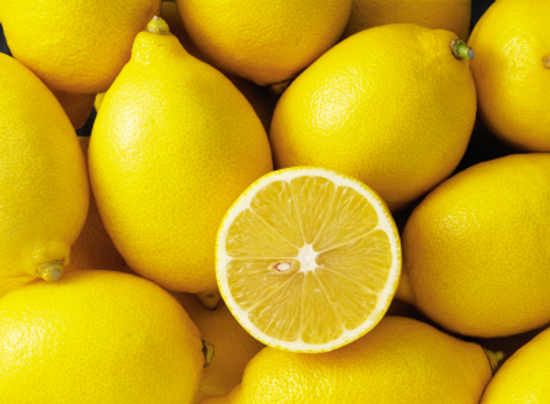
LemonsPart of being a writer is the dance of self-acceptance.

I have to deal with a chronic illness, which has radically altered my life for the last fifteen years, and shows no sign of waning.  This means I have to manage the delicate balance between self-care and doing too much.  When I overdo it, I end up exacerbating my symptoms and have to face extended periods of bed rest and being confined to the house.  Anf brain fog.

So sometimes I can’t write.  And its not that I don’t want to, its just that I literally can’t.

As I have said before, however, that doesn’t mean I’m not writing.  In my head, at least.

Sometimes life deals us lemons, and the lemonade is hard to make.  But even when I feel like I am buried under tonnes of lemons, the dream is still there.  The memory of how fantastic it feels when I am able to write, when the flow is happening and I am submerged in a scene.

This is where my diary comes in.  At times when I can process language, when I can hold my pen, I write in my journal.  It may only be a few lines, a sentence or two, but it is self-expression, getting the feelings out onto the page, and it feels fantastic.

At times when things are tough, my journal is my life raft.

At the moment, as I struggle with another period of sickness, I am working with this book.  When I have finished squeezing every drop of goodness from it, I will tell you how I got on, a little review of sorts.  In the meantime, I offer you this quote, from the marvellous SARK, patron saint of creative women, quoted by the author, Jackee Holder:

“I love journal keeping because it has helped me to discover and uncover myself, to encourage my own bravery, sort out difficulties with other people, to invent new ways of being.”

SARK, Juicy Pens, Thirsty Paper, 2008.

Happy Journalling,

EF

Journal Friday: How to write yourself out of a hole

Lighthouse at Dusk, Islay, Scotland

Lighthouse at Dusk, Islay, Scotland

(DISCLAIMER:  I am not a qualified counsellor, psychiatrist or doctor.  I am just describing what works for me.  If you are suffering with depression I urge you strongly to reach out and get help.  You do not need to suffer.)

I have suffered from bouts of depression since I was a child.  Depression is not having a bad day, or feeling blue, though both of those are unpleasant.  Depression is a soul-crushing, heart-lacerating misery that debilitates and destroys everything in its path.  Do not deny it or under-estimate it.

That said, over the years I have found ways to help myself, and believe me, helping yourself, feeling you have a little control over something that feels like it is controlling you, is a real relief.  Journaling is one of those ways.

So what to do if you find yourself at the bottom of the depression mine shaft?  Or even if you are just having a bit of a black dog kind of day?

How to:

Get out your journal.

Write down how you are feeling RIGHT NOW, in this moment.  As my counsellor often says, you can’t get to Edinburgh if you don’t know where you are now. (Think about trying to plan a journey that way – impossible!)

Be specific.

Stop and take the time to feel what is going on inside your body.  Do you have particular sensations associated with this low mood?  If so, where are they?  Write them down. They may be indicative of trapped emotions.

How are you feeling emotionally?  Write that down too – a list of adjectives if that is all you can face doing.

Does an image that describes how you feel come to mind?  Describe that.  For example, for me a real, deep depression feels as if my ribs have been ripped open, and my heart repeatedly slashed.  I feel it bleeding inside my chest.  Yes, it is a horrible image, but that is exactly how I feel, and describing it, in as much detail as possible, can be a huge relief.

Do not judge your feelings as you record them.  Do not judge yourself as selfish or unfeeling because you resent the fact that your husband is not doing much to help with your crying baby, or that you are angry because your boss does not recognise how hard you are working..  Have a good rant, safe in the knowledge that you don’t have to protect anyone’s feelings.  You are not being a martyr or a victim at this point.  You are just recognising how you feel.  Do not feel bad about what you write.  Admitting these feelings exist to yourself is the first step to healing, and no one else is going to see what you write.

If you don’t feel anything, write that too.  An absence is just as important.  Describe the void in as much detail as you can.  You may even find, as you progress, that you begin to pick up on little gimmers in the abyss, feelings you didn’t know were there.  Write those too.

As you write, you may find other feelings coming up from underneath the ones you are describing.  Get those down.  I often find that underneath my depression is anger, and underneath the anger lies a need not being met.  When I identify what it is I want that I am not getting, I am right in touch with the small child inside that feels unloved, whose needs went unmet.  Do not judge the need.  Simply recognise it.  Is there a way you can get what you need now, in a healthy way?  Now you know what it is, you can ask for it.

Whatever else you do, try to write daily, and get whatever miserable feelings you are having onto the page.  Once you have let them out, keep writing.  You may find more positive stuff coming through behind, and perhaps even ideas of things to do to help, comfort and console yourself.

Above all, be gentle with yourself. 

Show yourself the same compassion you would to a friend in need. (We often don’t do this, conditioned as we are to berate ourselves for the smallest failing.)

What next?

This is a process of continuing orientation and expression.  If you were on a cross-country walk, you would stop regularly to check your map and compass, to be sure where you were, to work out which was the next direction to take.

In the same way, depression is a long journey.  You need to be taking your own emotional temperature, checking your compass, as regularly as possible.  So make time to write often.

In my last spell of depression, I worked in my journal like this three or four times a day, for several days, then continued on a daily basis long after.  That probably sounds like quite a lot of effort.  On the other hand, you might take a pill three or four times a day if told by the doctor that it would make you feel better.  And this will make you feel better.

Why?  Because it gets the toxic feelings out of your body and mind, and puts them somewhere else – onto the page.

NOTE:  Do not reread what you write when you are still ill, or at all.  That would be ruminating on your feelings, and will encourage you to judge, feel guilty or ashamed.  Just get it down.  You are looking for TRUTH, not BEING GOOD.

You may find it helpful to write on loose sheets of paper, rather than in your journal proper.  This way, you could opt to burn the pages, ritually releasing the feelings, and freeing yourself.

Whether you are in the midst of a long bout of clinical depression, or just having a low spell, I encourage you to try this way of journaling.  I hope that it will help you to release your pain and move back into the sunshine.

With love,

EF

Journal Friday: The Gratitude Journal

If you trawl self help and wellbeing blogs like I do, you’ll probably have come across the idea of the Gratitude Journal before.  Lots of people swear by them.  You might think they are a bit of a cheesy idea, writing down what you are grateful for in your life every day.  I mean, isn’t it self-evident?

Maybe not.

Think about all the time you spend moaning and complaining about what is wrong with your life.  Our consumer culture programmes us to always want something else, something more than what we already have.  There might be a reason why all those slum dwellers you see in doumentaries look so happy.  Its not because they are glad to be living in squallor and poverty, that’s for sure.  Maybe it’s because they have so little that they value what they do have.

Let me tell you a story about one of the most inspiring people I have ever known:

My Great Auntie Kitty.

She was in her late 80s and early 90s when I knew her.  I was a small child – I think I was probably about 8 or 10 when she died.  I didn’t know her well because she lived in a town four hours drive from our home, so we were only able to visit her rarely, but she made a big impression.

Auntie Kitty was born disabled as a result of problems with her hips and legs, though I don’t remember specifically what.  Suffice it to say that she had never been able to walk properly and had worn calipers all her life.  By the time I knew her, she was severely crippled with arthritis, in appalling pain, and mostly blind from macular degeneration.  She was also quite deaf.  But she had a brain as sharp as a knife, and wit to match, loved to debate politics, ethics and religion, and kept up to the minute with all the news through her radio.  She also loved talking books, which she listened to continually as well.  She was funny, entertaining, and never let you get away with anything, especially self pity or fuzzy thinking.

Like many younger daughters, she had devoted her life to caring for others in her family, nursing her own parents and siblings through old age and into death.  She was the last of her generation to survive.  She had never married.  She had battled her way through a hard life through sheer force of will.

I remember her telling me this:

Every night, when she lay in the dark after the carer had come to put her to bed, she would think of three things in her life to be grateful for.  Sometimes she was in horrific pain, and thinking of anything to be thankful for was very difficult.  But she told me that no matter what, she could always find something.

Every night for the last thirty years, I have done the same.  Three things.  Just three.  Usually there are plenty more.  I could fill pages!  Some nights, if I’ve had a row with my husband or I’m in a lot of pain, as I sometimes am, I can struggle a bit. It can be pretty rudimentary on those occasions:

1.  I have a roof over my head.

2.  I have a bed to support me.

3.  There is ibuprofen in the cupboard.

Most of the time, there is plenty to be grateful for:

1.  I have a wonderful husband who loves me.

2.  I live in a beautiful place that most people would give a limb to inhabit.

3.  I have lots of friends who care for me very much.

4.  I get to write!!  (And so on)

I do this every night, come what may, partly in remembrance of Auntie Kitty, in celebration of her huge personality and bravery, and partly for myself.  Because it helps.

Being grateful shifts us into awareness, not only of what is real in our lives, but what is important.  Having that latest pair of shoes or the new Clarisonic really is not important compared with the people who we love and who love us.  Unlike the slum dwellers of the Developing World, most of us know we have a safe place to sleep tonight, and food in our bellies.  We have other, First World problems, I suppose, but there is still such a lot to be thankful for.  It is so easy to forget how fortunate we are.  Let’s not.

(I was going to take a picture of my Gratitude Journal to show you, but somehow it felt wrong.  An invasion.  Privacy, remember?  I find my reaction about that interesting itself, and I propose to explore it more in my own journal later, because I wasn’t expecting to feel that way.  Its interesting when you find boundaries you didn’t know were there, don’t you think?)

Journal Exercise:

Okay, you get to go out and indulge in the stationery shop again this week!  Go and choose yourself a nice little notebook, one with small pages.  I use this one.

Every night before you go to bed, get your notebook out and write at least three things that you are grateful for today.  Use a separate page every day, and date each.  Sometimes you will fill the page, and wish you had another.  Maybe you will go on a fill another, that’s up to you.  Some days you will be grumpy and resentful, and won’t feel like doing anything other than having a pity party for yourself.  Regardless, remember: write three things.  Just three.  It will help.

At the end of the first month, go back through your notebook and reflect on the things you have written down.  What are your lists showing about what important to you?  Write about this in your journal, if you like.  How has a daily gratitude practise changed the way you feel about your life?

Happy Journalling,

EF

On Process: The Myth of the Suffering Artist

Chatterton 1856 by Henry Wallis 1830-1916(Henry Wallis’s painting of  Thomas Chatterton (20 November 1752 – 24 August 1770), who was an English poet and forger of pseudo-medieval poetry. He died of arsenic poisoning, either from a suicide attempt or self-medication for a venereal disease.)

I was going to start this post with a list of all the Creatives who have damaged themselves for the sake of their art.  I lay in bed the other night, trying to compile a list of them.  There were a lot, and those were just the ones I could come up with at 3am!

And why bother?  We know who they were.  We know the names of Rothko, Hemingway, Woolf, Pollock, Kerouac, Kinski, Dylan Thomas, and so very many others.

We conveniently don’t notice the ones like Grayson Perry, and Tracey Emin, who credit their art with saving them. (I’ve made links to autobiographies here, and I encourage you to read them, as they are enormously inspiring.)

We certainly don’t remember the millions of artists who, over the course of the last two millennia, have lived happy, healthy and fulfilling lives as well as making art of all kinds.

You don’t have to suffer in a garrett to be an artist.  You don’t have to drink yourself to death, take drugs, cut yourself, starve yourself, tolerate life in abusive relationships, live in squallor or destroy your health.  That is not what an artist is.

An artist is someone who makes art.

(Whatever kind of art that is, from writing to painting to dance.)

Just that.  Nothing else.  Just that.

Creativity is the greatest healing force in the Universe.  I know this because I have seen it and felt it for myself.  When you begin to create, you end suffering.  You will feel better.  I promise.

And yes, it will be frustrating at times, and maybe you will cry your way through every chapter, every linocut, every sculpture, every pas de deux, as you work through all the difficult feelings that come up.  Because lets not kid ourselves, people who create great art of all kinds are often driven to do so because of their own difficult pasts.

So maybe writing 500 words a day is like getting blood out of a stone for you?  There are ways to deal with that, but remember that struggle often comes from deep hurts from long ago, from entrenched behaviours that stop you being your most luminous self.  And if you write those words, every day, you will get through those barriers, and you will feel wonderful.

I promise.

I know because it happened to me.  And continues to happen.  Every day.

If you think that you cannot communicate accurately to your readers the misery and suffering of your characters without having lived it yourself, I will tell you the secret of how you can do without nailing yourself to a cross.

Three little words:

Imagination, empathy and research.  And the most important of these is IMAGINATION.

Imagine yourself in their place.  How would you feel?  What would distress you the most about their position.  Read up.  Find out how other people felt who went through similar traumas.

DO NOT TRAUMATISE YOURSELF.

Eat well.  Get enough sleep.  Value yourself.  Work at having loving and fulfilling relationships with others. Exercise.  Meditate.   See the doctor and the dentist if you need to.  Use your art to heal whatever wounds you have.  Care for yourself, and your art will be the better for it.  As will you.

Happy Creating,

EF