Category Archives: Inspiration Monday

Choosing the Right Words – An Introduction

I want to talk a little bit this week about the idea of choosing the right words when you write.  About thinking carefully about the words you use to express a particular mood, character or action.

This probably seems a ridiculously obvious concept, but to neglect it means abandoning a whole myriad of ways in which you can make your stories deeper, enriching them for your reader.

Think about a man walking.  You could say:

  • He ambled
  • He limped
  • He sashayed
  • He scampered
  • He strode
  • He marched
  • He hobbled
  • He stomped
  • He inched
  • He shuffled
  • He scurried
  • He strolled
  • He paced
  • He sauntered

And these are only a few of the synonyms you could use for the verb ‘to walk’.  Yet, they each tell us something different about the man doing the walking, and raise questions in the reader’s mind about why he is moving in that particular way.

For instance, the man who is limping – Was he born with the limp, or has he acquired it, and if he has, was it recently or a long time ago?  Does he have some physical disability that limits his movement, or has he just this minute been in an accident?

He might, for example be limping because he is very old.

Perhaps he limps as a result of an old war wound – like our friend Dr John Watson.  This introduces a level of poignancy, of heroism wrapped in tragedy, and invokes our sympathy for him.

A man who strides has self confidence.  He holds his head high, intent on getting where he is going.  He may be a man on a mission – and we want to know what that mission is!

A man who sashays might be a bit camp, might be a dancer, might be charming a companion, moving in this way to make her laugh and draw her in.  Is this the start of a big romance?

A man who ambles is in no particular hurry.  He is relaxed.  He has time.  We might think him lazy, perhaps, or more likely, a man on holiday from the usual stresses of his life, sure in the knowledge that everything can happen at his own pace.

Usually we think of ‘Show, Not Tell’, the old writers’ maxim, as something overt.  Don’t tell us how John Watson got his war wound, for example.  Better to show us.  Show us his recurring nightmare of the moment it happened (which also demonstrates to us how he is barely coping with the trauma, as well as showing us the actual trauma itself –two for the price of one!).

By using the right words, evocative and interesting ones, we can communicate to the reader so much  more, and in such a subtle way that they barely even notice being told – which is true writing skill!

Writing Exercise:

Think more about the verbs I have used in the list above, and what they communicate about the man doing the movement.  Choose one and use it as a prompt for a writing exercise.  Take fifteen minutes to free-write in your writers notebook about the man who marches, the man who scampers, or any of the others.  (Come up with some of your own, if you like.)

Make a character sketch.  Who is this man?  What does he look like?  What age is he?  What does he do – and how does the way he dresses and moves communicate that?  Why does he move the way he does?  Where is he going in this particular fashion, and why?  Is anybody with him, and are they affecting his way of moving?

When you have finished, look over what you have written.  Can you see any clichés?  Remember, while clichés are usually clichés because they are true, they don’t have to come across as clichés!  Always be on the lookout for clichés in your writing, so that you can remould them into strange, eye-catching virtues.

You could use this character sketch as the core of a larger piece.  Or you could take the character you have created and write about him moving in another of the ways listed, repeating the exercise to learn more about him.  Why would he change his mode of movement?  Is he responding to the requirements of others, or affecting a certain walk to give a particular impression?  If so, why?

Spend time playing with these verbs, and let them take your imagination where it will.  Most of all, have fun!

(If you want to read the next post in this series, click here.)

Happy Writing,

EF
Inspiration Monday: Planner Smorgesbord

I’m still in the midst of Bear energy at the moment, only more so, because last week, after I wrote my last post, I went down with labyrinthitis, a nasty inflammation of the part of the inner ear that controls balance.  The result is dizziness, nausea and on occasion, terrifying episodes of vertigo. Controllable, as it turns out, but I’ve had better times.  At present, I am living with a kind of low level seasickness which, whilst its not very pleasant, is at least managable.

Reading is intermittently a problem, but I have been surfing the net a bit, and I thought I would share a few pages I have been enjoying lately, just to keep you going until my brain comes back enough to write something  more coherent!   But before we begin, I should start with all my cards on the table:

Confession:  I am a Stationery addict!

I’ve been having a bit of a planner fetish lately.  I’ve always been very fond of Philofaxy, which is the filofax addict’s dream.  Somehow, it doesn’t fulfil my passion for the visual, and I’ve always found filofaxes too rigid in their forms to really work for me.

What delight, then, to discover Staples’ ARC discbound system, which combines the flexibility of a loose leaf format like filofax with the aesthetics and practicality of a notebook.

It is very annoying that the gorgeous Martha Stewart aqua coloured ARC binders that are all over the blogosphere at the moment are not available in the UK.  I’m trying to work out how I can get hold of one.  In the meantime, have a drool at what Jen at IHeart Organizing has done with hers – it is irresistable!  (She does a blog planner too, which I am head-over-heels for.)

I love what Jackie and Michelle at A Creative Operation are doing with theirs!

If you want something more creative and visually oriented than the usual planners, take a peek at Right-Brain Planner.  I’m not sure I could aspire to such heights of visual complexity, but its pretty breathtaking, and shows that you don’t have to conform to what Filofax says your diary should look like.

If you fancy going right back to basics, you can’t do batter than iHanna’s tutorial on how to make your own!

If you want to go the whole hog, and plan your entire 2014, then do what I do and treat yourself to Leonie’s Amazing Biz and Life Planner.  This is the third year I’ve used mine and I really love it as a way of focussing on what you want.

And of course, don’t forget Jennifer Louden’s Life Organiser.  I use it religiously every Sunday.  Fact.

Meanwhile, being a bit compromised in the moving-about-without-falling-over department at the moment, I’ve been hanging my nose over the Organised Portable Home Office at ‘I’m an Organizing Junkie’.  Somehow I have got to make that one work so I don’t spend my whole life struggling up and down the stairs to find notebooks or binders when I’m working on the sofa instead of at my desk!

On that note, dear readers, I am going off to think about what to write about in my next post, but I hope that this one has fed your inner planner addict!

Happy creating,

EF

Inspiration Monday: Commuting

I’ve written already about the wisdom of walking for the creative life.

No reason why I shouldn’t repeat myself, of course.  Especially now we are in a new year, with new Intentions and new opportunities.  I have promised myself I will walk more this year.  Sometimes, this is not an easy promise to fulfil.  There are appointments to be met, after all; there is the filthy English weather (and believe me, filthy is what it is at present), and then there are my physical limitations.

Yet, in spite of the mud and the commitments and my low energy levels, I am trying to get out most days.

And there are so many things to see.  Some of the best walks I’ve ever had have been the repetitive ones to and from work, or school, the continual plodding on the pavements that sets up a meditative rhythm.  This time of year, walking home in twilight is especially evocative.  Not only can you see into other people’s houses as you pass, because many people don’t draw their curtains too early, but the landscape changes when industrial lights are switched on.

As a teenager, my walk home from our nearest bus stop was a route that skirted fields and woods.  Behind those woods, though, lay a huge industrial area, lit by massive floodlights in the dark hours.  The entire night sky glowed with this statement of manmade power over the environment.  To me, it looked uncannily like one of those landing pads on strange planets from the Star Wars films, and it fuelled my imagination continually.

Walking is not the only way to travel home from work, of course.  Sitting on a bus is great for inspiration too.  You can see so much more from the height of a bus seat, and not just into people’s windows, and thus into little vignettes of their lives.  Tableaux of office workers frozen in time as you pass their workplaces will catch your eye: someone handing over a file as the recipient reaches out to take it over a low  desk partition;  a group of besuited workers sitting around a conference table working out details of a deal; a pile of files teetering in an in-tray.  What are they talking about, these people who are so busy?  Whose lives will be changed by the outcome of that meeting, for better or worse?  What details, sinister or otherwise, are contained in those files – the potential for a fraud conviction, or the much-cherished hope of an adopted baby?

On a train, disparate people gather together and ignore one another.  They listen to hissing music on iPods and phones, tap at laptops or iPads, read books and newspapers, stare out of the window or fall asleep.  Each one has a story.  Can you be Sherlock Holmes and deduce their tale?

Viriginia Woolf, my heroine of writers, snatched up just such an opportunity in her short story, ‘An Unwritten Novel’, in which the narrator sits on a train and tries to guess the tale of a woman sitting in her compartment.  If you have never read it, I enthusiastically recommend it, not only as an example of how you can take a moment from your everyday life and make a work of art from it, but also for its fine stream-of-consciousness style and its sheer wit.  People’s occupations on trains may have changed since it was written, but the way we react to them, I should hazard, probably has not.

Creative Exercise:

How do you travel to your daily occupation?  Do you take the bus, train or Tube?  Do you cycle or walk?  Whichever you do, you may view it as a necessary evil, a time to catch up on your email, or some extra sleep.

What about reframing that view?

What if your daily commute to work, college or school became a special time set aside for creativity?

You could take a sketchbook and a biro and draw portraits of your fellow commuters.  This might develop into a whole series of painted portraits that depict your daily travels and those who accompany you on your journey.

You could compose a story about them in your head, and use it as the basis of a short story or novel, as Woolf did.

You could even go all ‘Brief Encounter’ and come up with a passionate love story between two of your fellow travellers!

(Probably best not to do this so much if you drive.  A vehicle is a life-threatening weapon, so you need to be alert and aware when you are in charge of it.  But maybe at traffic lights, you could look into other people’s cars and see what they are up to – applying mascara, fiddling with the radio, texting or picking their noses!)

What do you see as you travel?  What landscapes or buildings do you pass?  What could be going on inside that floodlit brick bunker that looks like a government establishment?  What story is being lived out on each floor of that block of flats you stomp past every morning? (I recommend Alaa Al Aswany’s superb novel, The Yakoubian Building’, for an example of this.)

Take your writers notebook and make notes of the ideas that come to you.  Make this time a time for your imagination to be unleashed.  Make a chore, a daily misery, into the highlight of your working life.

Happy creating,

EF

Inspiration Monday: Observing Roles

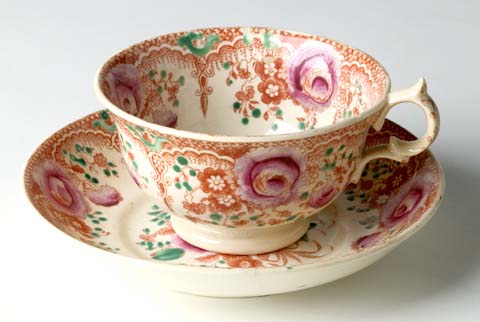
Captain Cook's teacup

Captain Cook’s Teacup

A few days staying with my mother require me to be paraded around the village, being shown off to friends.

I am taken to her oldest friends first:  Husband was close to my father, Wife is my mother’s best friend, and something of a surrogate mother to me.  They are Scottish, loving, hospitable.

My mother sits primly on the sofa while the tea set is laid out, her little legs crossed at the ankles, not quite touching the floor.  We are having the best china, and a freshly baked Victoria Sandwich cake, set on a glass cake stand and dusted with icing sugar.  This is a proper English afternoon tea.

I notice how polite my mother is being.  The way she holds the fork as she eats her cake so delicately.  The way she plucks at her napkin.  The way she stirs her tea with her teaspoon, holding the end like a pen, making the prescribed figure of eight with the bowl, just so.  I notice the way she nods, agrees, doesn’t initiate conversation.  I realise she is being a Good Girl.  Just as her own mother taught her, back before the War, she is behaving politely in order to be accepted.

Our hosts are playing roles too.  She is the Hospitable Hostess, asking kind questions, offering more cake.  Her husband is sitting enthroned in his armchair, interjecting occasionally with amusing quips or information, partly the Wise Sage, and partly the Jester – he always played the Jester to my father’s Straight Man when I was a child.

Then their middle daughter arrives, a beautiful woman a little older than I am, with a grown-up family and a business of her own.  As soon as she walks into the house, though, she adopts the role of Mischievous Daughter, stealing a donut from the kitchen, helping herself to a cup of tea (without a saucer), lounging in an armchair and making us all laugh.

I glance at my mother.  She is laughing politely.  Still being the Good Girl.

And me?  Well, I am the Entertainment.  Which is another way of saying that I am being the Good Girl too.  Pleasing my mother by being polite and charming her friends.  Being a credit to her.  Displaying the manners she taught me.  Sitting up straight, holding my teacup correctly, watching my language, and wishing profoundly that I could play the Mischievous Daughter too, which would be a lot more fun, and more like who I really am.

We all play social roles, in company, with family, with friends, with strangers, colleagues or acquaintances.  Our roles change according to those we are with, and to circumstance.  Sometimes we even change roles within a single situation.  This is not necessarily being inauthentic, or even manipulative.  It is the way human beings function socially together, as all animals who live in groups do.  It began as a means of survival, but today has become a complicated social pas de deux.

And why am I talking about it?  Well, because if we play roles, what about the characters we write?  You may know who your protagonist is, you may have written his back story in detail, and know how he might respond in a given situation, but have you thought about the roles he might play?  Does he play roles to fit in, or does he reject them?  Or does he continually play different roles to get what he wants, to manipulate others?  And if he does the latter, how are you, the writer, going to keep track of who he is underneath those roles?

Writing Exercise

Begin to observe social encounters going on around you as dispassionately as you can.  Can you see what social roles are being played?  Who is being submissive, funny, polite, in order to win friends?  Who is refusing the engage with the social dance?  Who is asserting their dominance as Alpha Male or Female?  Who is the real person under the role?  What are their motivations for choosing the role they do?

Remember to observe without judgement.  This is not about values.  This is about behaviour.

Spend some time writing down the roles you observe, and reflecting on them, in your writers notebook.  Think especially about what lies underneath the role, what event might cause a person to adopt one role rather than another.

Write a scene about some characters you are currently working with.  What roles could be played here?  What non-verbal behaviour communicates that role – or betrays what is going on underneath?  See if you can write your characters functioning at two levels, the role they play, and the real person behind the role.  Explore this difficulty where you can to make your characters more three dimensional.

Meanwhile, I am going back to contemplating the idea that my mother, my dominant, matriarchal mother, could actually play the Good Girl, because its not an idea I have ever entertained before, and its going to take a while to get my head around it!

Happy Writing,

EF

For Creativity, Press The ‘OFF’ Button Now

This morning, my part of the UK was hit by the worst Atlantic storm in some years.  Trees came down, houses flooded, power cables snapped, cars were crushed, trains and planes came to a standstill, and double decker buses were lifted off their wheels.  It was not nice.  Its over now, blazing across the county in under three hours, leaving a trail of destruction in its wake.

Which got me thinking, you will not be surprised to hear.

Husband and I spent most of yesterday glued to various forms of news media, trying to gauge the progress and destructive force of Storm St Jude, working out which hatches to batten down, what damage might ensue, and whether, in Husband’s case, it was sensible to cancel his 9am lecture this morning. (He did, and I think it was the right decision).  The upshot of all this digital frenzy was that I didn’t get anything much done.  Which was an annoying waste of a whole day.  And made me think about something I had read a few days earlier:

I came across the work of Linda Stone, and in particular, her term ‘Continuous Partial Attention’, which is when we multitask cognitive functions such as talking with a friend at coffee whilst checking our email on our android under the table, surfing the internet when we are on the phone, and all those other digital things we do these days that we never used to.  Linda Stone says:

“Continuous Partial Attention involves an artificial sense of constant crisis, of living in a 24/7, always-on world.  It contributes to feeling stressed, overwhelmed, overstimulated and unfulfilled; It compromises our ability to reflect, to make decisions and to think creatively.”

Lindastone.net/qa/continuous-partial-attention quoted in Sharon Salzberg, The Power of Meditation: A 28-Day Programme for Real Happiness, Hay House 2011.

It compromises our ability … to think creatively.

Just think about that for a minute.  I did.

I thought about how long I spend on Facebook every day, how many hours I lose cruising Tumblr and reading fanfics, checking my phone, watching BBC News 24.  These are what Jennifer Louden calls Time Monsters, habits you fall into that eat up the spare time you have and leave you feeling rushed and stressed out because you aren’t left with enough time to do the things you really want or need to do.  I have been known to lose whole weeks to my Time Monsters.  Yesterday, thanks to Storm St Jude, I lost an entire day.

I’m 46!  I don’t want to waste any more time!

Increasingly, I am finding that it is a luxury to switch off my phone and not look at my laptop.  I don’t want it to feel like a luxury to disconnect.  I want it to be the constructive core of my working life as a writer.  I don’t want to have to employ some kind of app to shut me out of the internet in order to finish a story, just because I can’t resist looking at yet another iteration of the same picture of Benedict Cumberbatch.

I want the sense of calm that comes with not knowing what is happening in the outside world.  The same calm I felt lying in bed this morning, listening to the wind riffling the roof tiles, blissfully ignorant of what speed it was going or when the next pulse of the storm was going to hit, courtesy of the Met Office website.

The question is, can I do this?  I caught myself the other day thinking that I couldn’t write down a snatch of dialogue I had going around my head because I didn’t have my laptop open.  As if a pen and paper weren’t good enough.

To be creative, in whatever art form you choose, from cookery and sewing singing, tango, writing or painting, you need time and space.  You need to reflect.  Being connected doesn’t give you that space.

For our own creative self-care, we need to make time to switch off.

I don’t want the stress of Continuous Partial Attention to wreck my creativity through anxiety, perceived comparison or peer pressure, or just from lack of time to create.  I want to make space.  Space to think more, reflect more, make more.

You can too.

Creativity Exercises

1. How do you use your time?  What are your chief Time Monsters?  What are the digital munchers in your life?

2. Once you have identified your Time Monsters, you can decide whether you want to continue feeding them, or jettison them to make room to do the things that really make you happy, instead of just keeping boredom and despair at bay.  Its nice to keep a few on standby, for days when you really are frazzled and just need to stare at the telly and not think, but that shouldn’t have to be every night.  If it is, maybe you need a major rethink.

3.  Consciously switch off.  Turn off the telly, your phone, your lappy.  Sit in an armchair and read a book, bake a cake, go for a walk, paint or garden or see friends.  Do something that involves experiencing the world directly, not digitally.   Use your time to think and create.

4.  Do one thing at a time.  Don’t surf on your phone when you are out with your pals, that’s rude.  Don’t have the telly on when you are painting (a bit of inspiring music might help, but nothing you have to think about.)  When you have a conversation with your mum on the phone, concentrate on her, don’t keep one eye on the news.  If something is worth doing, its worth giving your whole attention to.

I’m not advocating digital purdah, believe me.  The digital world has its place, but it is down to us to keep it in it.  I’m just saying we need to use our time more mindfully.  Which is what, from now on, I am going to try and do.

Happy Creating,

EF

Writing the Senses: Smell

nose by bex

Nose (self portrait) watercolour and pencil

I spoke before about what I call Embodied Writing.  I don’t think you have writing that is truly immediate and visceral without grounding it in the physical.  Using your senses is one way to do this.

I looked up the sense of smell, and was blinded by a great deal of science on the olifactory system.  A couple of little morsels I did manage to glean included:

  • Women have a stronger sense of smell than men, and their sense of smell is most powerful during ovulation.
  • The senses of smell and taste are related, and both depend on responding to volatile chemicals in the atmosphere.  Which is presumably why I sometimes feel like I can ‘taste’ a smell.
  • In the human brain, the temporal lobes, which deal with cognition and memory, and the olifactory bulbs, which handle the perception of smell, are very closely linked.  Scientists have speculated that this is what gave Homo Sapiens the evolutionary advantage over their rivals.  It also means that smell and memory are closely linked, which is why certain smells can take you back to breath-takingly vivid memories of the past.
  • You sense of smell starts deteriorating in your teens, but that said, some pensioners have a better sense of smell than the average twenty-something.  Like taste, though, smell is likely to be something you will lose as you get older.

Smell helps us identify the ripe and healthy food from the rotten.  It helps us select a mate, and stay safe from dangers such as fires and wild animals.  Smells connect us with our past, with positive and negative memories.

Nurses in front line dressing stations in the First World War reported vivid memories of the odors of rotting flesh amongst the casualties; and we all remember that quote from the film ‘Apocalypse Now’ about ‘the smell of napalm in the morning’.

For many of us, the scents of cinnamon and nutmeg instantly transport us to Christmas, and the smell of a favoured sun tan lotion can have us basking on a tropical beach even if we are actually sitting in a park in Barking.  Watching cookery programmes is often so frustrating for this reason too – why doesn’t someone invent ‘Smellivision’?  And if you have ever walked into a supermarket and found yourself drawn to the Bakery, even though you only came in for loo roll, don’t be fooled.  Marketing specialists know how seductive that delicious scent is, so they pump the scent of baking bread through the air conditioning system to coax your brain into feeling hungry – and thus buying more.

Smells are hugely evocative, from the smell of poster paint on our first day at school to the aroma of wet earth after a summer storm, and that is why they are so important in writing.

Writing Exercises:

  • Take out your writing notebook and note down some of your favourite smells.  What are the scents that are the most evocative for you?  Make a list, then choose one and write down the memory that is associated with it, or why you chose it.  Take the time to write in as much detail as you can.  Think up as many adjectives, as many ways of describing the smell as you can.
  • Over the next few days and weeks, make a point of thinking more about your sense of smell, and the smells around you.  If you are like me, and not a perfume wearer, or someone particularly aware of smells, you may have to work at this.  Try to keep it in mind.  Every day, try to pick a particular smell and write about it in your notebook, describing it as much detail as you can, and making connections with its context, or what memories it evokes for you.
  • Take yourself on a ‘Smell Safari’.  Visit a florist’s and smell the flowers.  Hang out at the bakers or in a shop that sells spices.  Health Food shops and New Age shops often have interesting scents.  Walk around the park, or in the country, smelling nice things and the nasty ones. (Don’t get too close to the nasty ones, though, for health reasons!)  Don’t forget to take your notebook and make copious notes.  Don’t limit yourself to nice perfume stores, though they can be interesting in themselves.  There are millions of smells out there to sample, and very few of them are manufactured.
  • Write a few character sketches of people you know, describing them solely by their smells.  What about the characters in the stories you are writing at the moment – what would they smell like?  What smells would they like, and why?
  • Find out more about your sense of smell and how it works.  Maybe you can work out the science better than I have.  Then, test it out.  What smells excite you, what smells depress you?  Do some smells make you fearful?  How do you react emotionally to individual scents?
  • Read Patrick Sűskind’s splendiferous masterpiece, ‘Perfume:  The Story of a Murderer’.  A whole book written about the sense of smell?  Yes, it’s incredible.  You won’t believe your eyes.  Or possibly your nose.
  • Imagine a familiar smell.  Now take out your notebook and write about a context or scene in which that familiar, comforting scent becomes sinister, even terrifying.  Now try it the other way around.

Once you have built up this memory bank of information about smell, think about how you can incorporate it into your writing.  How can you use it to describe your characters, what telling details of scent will be enough to show your reader a person’s nature?

Happy Sniffing,

EF

Inspiration Monday: Telling Details

sussex church

The Zen of Details

At the moment, I am fascinated by ‘telling details’.

At our writers’ group last week, my friend read out the first pages of her novel, a description of a little girl watching her mother as she used a sewing machine to make a new dress for her little girl.  It took me right back to my childhood, watching my own mother labour over the sewing machine.

It was the little details that transported me.  The jar of spare buttons which the little girl was allowed to play with.  The thunk of the presser foot being let down onto the fabric.  The smell of sewing machine oil and new cloth, unwashed, still fusty from the haberdashery.

I have re-ignited my enthusiasm for my writer’s notebook with these details.  Using the little components of life.  Scribbling them down when I notice them.

The way the local cockerel sounds like he has a sore throat when he crows.

My husband saying ‘Marriage is about sharing’ when he farts.

The dust that builds up in the corners of the treads on the stairs, and how gritty it is.

Puffs of pollen falling off the sunflowers I have rescued from the storm-lashed garden, falling like yellow flour on the tabletop under the vase, powdering a biro that had been abandoned there.

These are the little glimpses of our everyday life that we mostly ignore, but when someone draws our attention to them in prose or art, they enrich our perception, throng our minds with memories, ground us in the present in a way nothing else can.

At the moment I am working on a series of short fanfics that are grounded in these details.  I am trying to use a single detail to spark each story.  Each story then contributes to a wider portrait of a relationship.  This means collecting details. So here I am with my notebook, going back to the very beginning of my writing career, ‘back to basics’ if you like, collecting scraps for here and there and jotting them down.  I feel like a mosaicist building up a mural made of broken pots.

And it is delicious.

 Creative Exercise:  Lists

Unearth your notebook, if you haven’t been using it much recently.  If you are an artist, grab your sketchbook.  Now open your mind.  Start noticing things.  It takes practise to be sufficiently present in life to recognise the tiny details that contribute to the big picture of shared experience, but once you start, you will find them coming thick and fast.

  • Walk around the house and look at the piles of stuff that have built up.  Write down where they are.  Make a list of what is in them.
  • When you visit the bathroom at a friend’s house, look at their lotions and potions.  Make a list to jot down later.  What do the bottles and jars tell you about their life and health?  If you draw, make a sketch of them, or if it’s easier, draw the contents of your own medicine cabinet.
  • Standing in the queue for the checkout, look in other people’s baskets.  What are they buying?  Another list.  What does this say about them?  Can you make a still life that communicates what they are eating, who they are eating it with, and why?

Open your eyes wide.  Your mind is constantly sifting sensory input, picking out things that may or may not be important.  Usually, you toss most of your perceptions aside.  Instead, write down as many as you can.  Use them later in your work.

Happy Creating,

EF

Inspiration Monday: Support your local library

the forum-norwichI am tempted to break into my own, rather wobbly version of Petula Clarke’s ‘Downtown’ here, but slight amendments the eponymous destination.

“When you’re alone

And life is making you lonely

You can always go:

To the Library!”

Okay, it doesn’t work, but you get the idea.  The Library is your friend.  It’s your soulmate.  It’s a world of excitement and adventure cocooned within four walls.  And it’s currently free (at least at the moment it is in the UK– but David Cameron, I’m watching you!)

I have always felt a strange sense of peace amongst books.  Not for me the sudden flash of panic as the realisation dawns that there are never going to be enough hours in one’s life to read everything one wants to.  Books en masse produce in me a kind of nirvana, a bliss, a calm.  It doesn’t matter how bad things are, a library is one of the two places I can go to know peace.  (The other is the beach, in case you were wondering, but that’s another story.)  This is no coincidence.

Jeanette Winterson, in her emotionally complex autobiography, credits working her way (alphabetically – how pragmatic) through her local library with saving her life from a traumatic and abusive childhood.  Books give us the power to escape, to transcend, to find knowledge and wisdom, happiness and peace.

And more than that – Terry Pratchett notes the strange distortion that occurs when books are gathered together.  He calls it L-space, a phenomenon in which the power of knowledge bends the time space continuum so that all places and times are accessible from the magnificent Library of the Unseen University (although travelling in L-space can be dangerous!). This is really just a charming metaphor for what Winterson reports.  Libraries open up unexplored and unimagined realms for us without our ever having to leave their environs.  Although, if you have ever visited Kim’s Bookshop in Arundel, Sussex, you might agree with Pratchett that L-space does indeed exist!

Libraries have changed greatly since the days when my Dad used to take me down to our village library every Friday night with my fist full of little cardboard pockets to exchange with the kindly librarian for books that enchanted and fascinated me all week long.  Now I frequent the UK’s most popular library, the Millennium Library at the Forum, Norwich, which is housed in a breath-taking vision of modern architecture, and has the highest borrowing numbers in the country.  No wonder.  Its great.

My favourite treat is to go to the library without a time limit, and just browse, as if I were in a sweet shop.  I can wander about, dipping into sections, picking out jewels here and there like a magpie.  I can have whatever I want to try, and I don’t have to worry about how much its going to cost me.  Often I find books I have been hanging my nose over on Amazon or favourite blogs, wondering whether I should buy them – with the library I can try them out, and see if they are worth the investment.

I always make sure I browse the ‘Just Returned’ trolleys too.  This is a great way to come across books that you would never have tried otherwise, because they are shelved in sections you would not normally think to visit.  These eclectic shelves are a great way to expand your reading by picking up whatever appeals to you.

Appeal is crucial.  Sometimes I go in with the challenge to choose books on the basis of their covers alone!  This is a fun thing to do with fiction particularly, because you end up not only with a bunch of stuff you would never have found otherwise, but also you get to sample the publishers’ strategies on book design, which is a useful thing to know about if you are a writer or illustrator.

If I find a book that proves especially useful for research purposes, I always make sure I record its Class Number as well as the author and title details in my writers notebook, so that I can find them easily again.

One of my most profound library revelations of recent years is the idea that if I choose a book that it turns out I don’t like, I don’t have to keep it the full three weeks.  Yes, I can take it back the very next day, if I like.  Nobody will judge me.  Its like test driving a car.  If it doesn’t prove useful, its not the end of the world.  I used to have such an investment in choosing the right books to borrow.  But there are so many books to delight in.  Why worry?  Just try a few on for size.  Its not as if you have to pay for them.

Libraries are an enormous resource.  As are librarians.  Many of them are highly trained, and they really love it when a borrower asks them a question which is something more interesting than ‘why won’t my card work in the machine?’  They love to ferret out unusual and rare tomes, and rifle through the vagaries of the inter-library loan system.  They are usually only too happy to help you with your research questions.  There is so much knowledge and expertise on offer, and most of time we don’t even know it is there.

This week, give yourself the best treat ever.  Go and gorge yourself at the library!

Happy browsing,

EF

Inspiration Monday: Dreams

angrysea

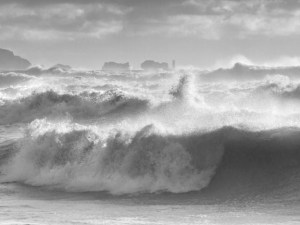
Angry Sea by John Lewis Photography

Everybody dreams.  Maybe you don’t remember all your dreams, but they are there as a window into your own psyche, and to explore as a source of inspiration.  Dreams are a chance for your imagination to go completely wild, places where the impossible really can happen.

I’ve always been very fortunate to dream in vivid technicolour.  Many of my dreams are coherent stories in filmic form.  I am often aware that I am dreaming, and find myself enjoying the stories playing out inside my head.  Maybe you don’t have that capacity, but through the technique of lucid dreaming, you can develop more.  Maybe you only have occasional images, snapshots of your dreamworld.  Even these can be fodder for your art.

One Christmas Eve I had a dream.  I know it was a coherent one, I was aware of it at the time.  When I woke in the morning, I had only one image left in my memory, but it was a compelling one.  Imagine a man, looking very like Richard Armitage, tied to a chair.  A demon stands in front of him and sinks its hand into his chest, and pulls out his still-beating heart.

That was all there was.

No context.  No meaning.  Just this image.

That was where my five book series of Evenlode novels began.  Five novels, which began with one blurrily remembered image from a dream.

Here is the dream I had last night:

Two teenaged boys are living in a run-down, poverty-stricken, former industrial city in the North of England.  They roam a half-derelict, grey landscape pocked with disused steel works and the skeletons of mine engines.

One is tall, dark and skinny, the other short, stocky and blonde.  They are both outsiders, clinging together for support because they have no one else.  They are hunted by a gang of other boys who regularly attack them, and call them names.  They accuse the two friends of being gay.  That is the reason they give for their hatred.

One day, the blonde boy helps his friend through the front door of the dark boy’s parents house.  He has been badly beaten.  His father is at home.  When the father finds out the reason why his son has been beaten, he assumes the accusers are correct.  He starts to beat his son for being gay, for being weak.  His belt will make the boy a proper man, he claims.  The blonde boy stands between father and son.

‘Your son is a proper man.  A real man.  He protects me.  He takes the heat for me, because I am gay, not him.”

The blonde boy has already been rejected by his own family for his sexuality.

Later, broken and despairing, the boys walk, hand in hand, up the hill to where a huge World War Two concrete bunker stands, clinging to the top of a sea cliff above the town.  The sea is rough, the wind strong, the air full of swirling grey drizzle.  The cavernous interior of the bunker has been taken over by the council, and is being used as a reahearsal space for the city’s orchestra.  They are practising a piece as swirling as the tormented weather outside.

Together the boys walk through long dark corridors buried in the hillside, swelling music echoing around them,  until they reach the roof of the bunker, where the Ack-Ack guns were once mounted.  Together, they stand up on the narrow wall around the edge, and kiss.  And then, together to the last, they jump and fall, still holding hands, down the cliff and into the churning seas below.

Yes, it is messy and there are holes and cliches in it.  But that is what I dreamt, in its entirety, as I remember it.  It is atmospheric and tragic, and I don’t even want to think about doing a psychological reading of it.  But wouldn’t it make a great short story?  Or even a short film?

Dreams are a free resource just floating about inside your own head, begging to be used.  Don’t waste a minute.  After all, isn’t that a great excuse to sleep more?

Writing Exercises:

You can find our more about Lucid dreaming here and here.

Keep a notebook by your bed and write down your dreams as soon as you wake.  Don’t wait.  You will forget them.  Write down whatever you can remember, no matter how disjointed it may seem.  Describe what you saw in as much detail as you can.  I get enormous, almost baroque detail in my dreams.  Get as much down as possible, even if it seems too weird, complicated or just completely insane!  You never know what may be useful later.

(I find this technique especially helpful with troubling dreams or nightmares, which I have a lot.  These sorts of dreams can follow me around during the day, filling my waking heart with dread or sadness.  However, I find that once I write them out, their power over me wanes, and I don’t get the ‘after effects’.)

Now, dip into your dream notebook whenever you are looking for an idea or a writing exercise to play with.  Choose a dream, a scene, an image, or a whole story if you get them, and use it as a starting point.  Write stream of consciousness for fifteen or thirty minutes and see what comes out.  Can you use this as the start of a short story?  A screenplay?  Is there an interesting character here for you, as there was with my Christmas Eve dream?

If you are a visual artist, what colour palette comes out of this dream for you?  What striking images, silhouettes, shapes stick in your mind?  For example, in my ‘two boys’ dream, the colour palette was greys and blues, the shapes of derelict buildings were jagged silhouettes against the lowering sky.  Explore the colours you recall in your sketchbook.  What would a painting of your dream look like?

A musician might take from my dream the echoing strings of the orchestra, muffled by the concrete, and backed by the roaring of the waves as they crash against the cliff below, and turn that into some kind of soundtrack.

Where can you take your dreams?  How far can you drive your limitless imagination?

Happy dreaming,

EF

Inspiration Monday: Colour

colorful-paints-WallpaperThe fact that human beings can perceive colour has been a huge influence on our development and our cultures. Colour has helped to protect us from danger, and find good things to eat.  It has helped us to define who we are in relation to others, as well as what we believe.  These days, it is as widely used in marketing and medicine as it always has been in art and fashion.  Colour blindness can prove a significant disability.

Thinking about how we respond to colour can be a rich seam to plunder for creative purposes.  The artists of the Fauvist movement, such as Matisse, and later Abstract Expressionists such like Mark Rothko, used intense shades of colour to convey and provoke emotion.  Both Matisse and Picasso made blue nudes, but look at the images they produced:

blue-nude picasso

Picasso Blue Nude 1902

blue nude Matisse 1952

Matisse Blue Nude 1952

Matisse’s vibrant cutout provokes a very different response to Picasso’s sombre meditation on grief.

Blue is the perfect colour to think about as an example.  It is culturally significant in many ways.  For example, the pigment lapis lazuli, a vibrant blue, was the most expensive pigment available to Medieval and  Renaissance artists, so was reserved for only the most important figures. Thus, the Virgin Mary is always pictured wearing a blue robe.  In Medieval England, blue was worn as an amulet to ward off ill-health, probably because of its Marian associations.  (This is why brides still wear ‘something blue’.)  In contrast, in some cultures, blue is shunned as the token of death, ghosts and bad luck.

We identify blue with calm and peace, and blue light has been used in urban areas with some success to reduce violence.  Blue can also be associated with depression – we talk of ‘having the blues’.

Conversely, red is seen as a vivid, energetic colour, associated with lust and sex.  We speak of the ‘scarlet woman’ for example.  It can also be interpreted as a warning of danger, as in ‘Stop’ signs and traffic lights.  Rooms painted red look smaller to our perception, but also warmer and cosier.  A blue room looks airy and spacious, but can seem rather cold.

Our emotional response to colour is also of interest.  We speak of ‘warm’ and ‘cool’ colours, and choose the clothes we wear by colour according to our mood.  I wear bright red all the time, but my mother accuses me of looking ‘too bright’ when I do!  My sister has such a visceral response to the colour lilac that it actually makes her nauseous.

I never really appreciated the importance of colour in the landscape around me until I moved to East Anglia.  I grew up on the south coast of England, by the sea.  There, the beaches are formed of toffee-coloured flints and broken, bleached shells.  The sea is often edged with emerald green seaweed, and is invariably the colour of cold coffee.  The crumbling sandy cliffs are the colour of ginger, and are held together by clumps of dark green gorse which turns acid yellow in spring.

The colours of the Norfolk coast are much more muted.  The beaches are pale sand, bound with dunes of khaki marram grass.  The sea is often indigo or petrol blue, and the skies are milky even in the most brilliant of summer weather.  Here, the prevailing colours are buff, dun, woad, grey.  They make the south coast seem gaudy by comparison.

As an artist or writer, you can use all this to your advantage.  The psychology and culture of colour can set the scenes for your images and stories.  Imagine a woman walking into a grey room in a scarlet dress?  (Artist Jack Vettriano uses this kind of contrast to huge effect!)  Imagine what people would be whispering behind her back.  Imagine what the response of the man she is meeting for dinner might be.

Creative Exercises:

Spend some time thinking about your own responses to colour.  What colours do you have in your home, and why?  Do they remind you of happy memories, or are they just there?

What are the colours you predominently wear?  How do you feel in them?  Go to the shops and try on garments in colours you would never normally wear.  How do they feel?  Why would you normally shy away from them?  What do you think the colours would say about you if you appeared in public in them?

Spend some time sitting on a bench in the high street, watching passers-by.  Note what colours they are wearing.  Are you drawn to them because of their colour choices, or repelled?  What do you think their colour choices say about them?  And what do you think they are trying to say with colour?

Keep your eyes peeled for colour around you.  What colour is your front door, the doctors’ waiting room, the toilet in your favourite restaurant, the plaster of the building across the road?  What shades are the trees, the earth, the sky?  What do these colours mean to you personally?  How do they make you feel?

You might like to spend some time with your writing notebook.  Choose a colour and write a word association exercise, scribbling all the words that come into your mind in connection with that colour, no matter how outlandish they might seem.  Now go back and examine what you have written.  Does your list suggest an atmosphere, a story, an image?  Play with whatever comes up as a response and see where it takes you.

There are a host of books you might like to read in connection with this subject.  Here are a few:

The Virgin Blue by Tracy Chevalier

The Colour by Rose Tremain

Colour: Travels through the Paintbox by Victoria Finlay

Happy Colouring,

EF