Category Archives: Uncategorized

Embodied Creativity

In my last post, I talked a little about telling details, those tiny things that communicate so much.  Noticing them requires opening the mind.  But there is another rung on the ladder with this:  Opening to the body.

I call this embodied writing.  By this I mean the kind of writing that includes the visceral details of what it is like to inhabit a physical body.  Physical sensation, not just ideas and emotions.

Our bodies are not just the ‘transport’ we inhabit, as dear Sherlock likes to put it.  They interact with the environment in order to gain information about it for survival purposes.  They do this through the medium of the Senses.

  • Touch
  • Taste
  • Sight
  • Smell
  • Hearing

Our eyes, noses, ears, tongues and skins gather data and feed it back to the brain, which sifts it and uses it to build up a picture of the outside world.  This means that our experience of life is formed as much by our body’s external contact as it is by our thoughts and ideas.  As writers particularly, we spend so much time locked inside our heads, submerged in ideas for stories, that we forget we have bodies.  Our bodies get neglected, or worse – sometimes writers abuse their bodies because they actually get in the way of the work by demanding annoying things like food and sleep.  We forget that our bodies are the foundation of our art.

By using the sensations they give us, we can enrich our work exponentially, making it more immediate, tapping into common experience and tissue memory.

Over the next few weeks, I am going to talk about ‘Writing with the Senses’ in an effort to get you and me out of our heads and into our bodies with our writing.  We will be working our way through each of the senses, being mindful of the feedback they give us, using them to ground us in our corporeal selves, and bringing the gorgeous experiences they give us into our creative lives.  I’m doing this myself, because I really need to be present inside my body right now, instead of having my brain flying about sixteen feet from it, attached only by the barest thread of consciousness.  And I thought you might be interested in joining me!

So, in the meantime, do this:

Take a few minutes today, tomorrow, daily if you can.  Just stop.  Take a deep breath and let it out.  Bring your mind inside your body.  What sensations can you feel?  Do you have a pain in your toe, or an itchy insect bite?  Did you eat spinach for tea that left that annoying coating on your teeth?  Is your belt too tight?  There doesn’t have to be any great revelation.  Just notice.

Taking a moment at regular times during the day in order to be present inside your body is an invaluable exercise in grounding yourself and being mindful.  And it is a great prelude to thinking about the Senses.

Happy Creating,

EF

Journal Friday: Wardrobe Planning

More dashBecause I’m ill, I am not able to work, and that means everything I do has to be on a budget – energy-wise and money-wise.  As a result, planning is my friend.  If I have thought about something beforehand, it makes everything so much quicker, easier, and less worrying.  That includes clothes.

I was looking at this fantastic dressing room today, and was shocked that anyone could have that many clothes.  If I did, I’d never get dressed at all because I wouldn’t have the energy to decide what to wear.  I have a small wardrobe, partly on purpose, because cutting down options means less to worry about, but also because of money.  I just can’t afford to spend lots.

Mostly I buy my clothes from my catalogue, on a monthly payment basis, and annually, with my birthday money.  Relatives are kind enough to donate to my clothing fund every year, and I plan very carefully what I am going to spend it on.  I make sure all my big purchases colour co-ordinate, and concentrate on one core colour and two accent colours.

Currently navy is my core, and bright red and bright (lime) green are my accents.  At the moment, though, I am feeling a pull towards charcoal grey, and since I bought a dark grey sweater in the sales a few years ago, I’ve been thinking I might go in that direction a little.  Plus it seems to bring out the colour of my eyes.  (It’s really hard to work out what colours I can wear these days, as I am growing out my coloured hair and letting the grey come through.  I didn’t think this measure, taken because I just can’t be fussed with home dyeing anymore, would make such a big difference to my complexion, but it does.)

grey croppedAnyway, the way my brain is, I can’t keep all this information in my head anymore, so I have started using my journal to plan my outfits.

I have an ulterior motive here too.  I haven’t been able to get past the creative block I have with my art, and I find that if I just do a scribble in my journal, it doesn’t have to perfect.  It is just a gesture drawing with a few colours to note down information in a graphic form, and it cons Nigel into thinking what I am doing is actually not painting at all!  Clever, eh?

black hat litUsing my journal in this way is a helpful planning tool.  It helps me to work out what extras I need in addition to what I already have, and to budget for them.  It also allows me to think through how I really want to look for a particular occasion, such as a wedding.  I am also finding it is changing the way I feel about my clothes.  I’m finally at the age when I can get away with wearing very classic styles, and you can see from my sketches that there is a distinctly ‘50s vibe going on.  I’ve always been in love with Dior’s 1947 New Look, and it looks like that is where I am going.  I’m intend to grow old elegantly as well as disgracefully!

How could you use your journal to plan your life or your look?

Happy journaling,

EF

Tips on Writing a Eulogy (Because you never know when you might need to.)

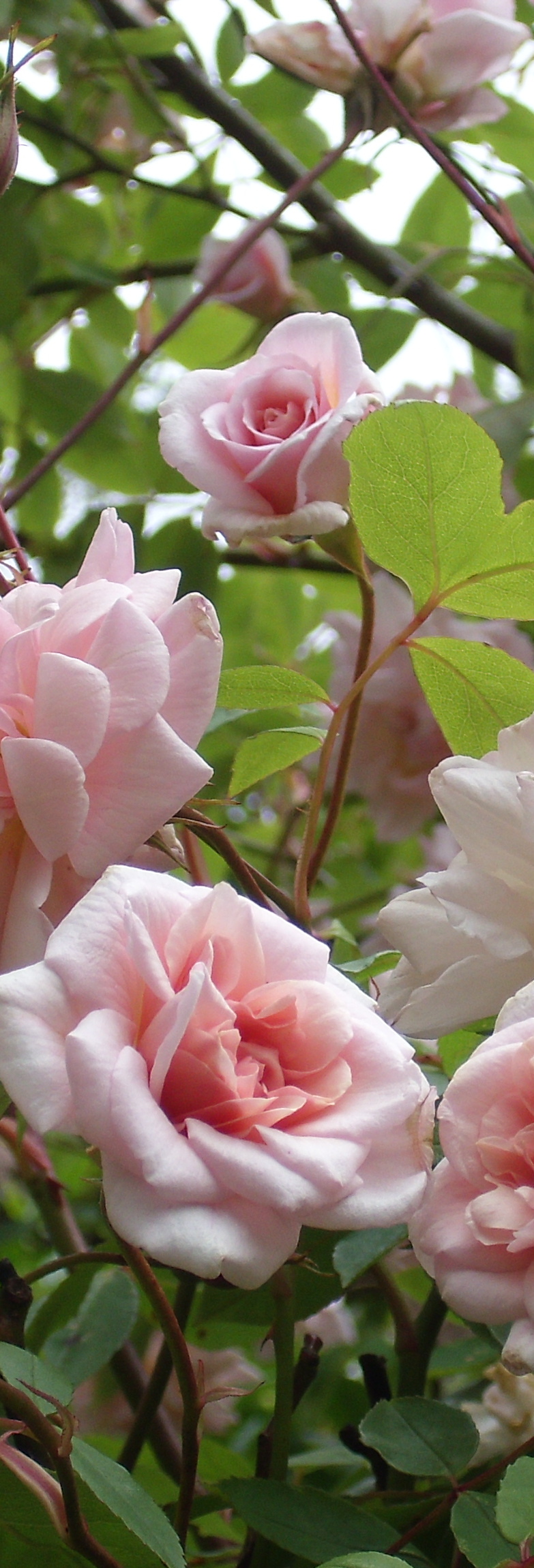
cropped rosesToday’s post is something of a reactive one.

A friend emailed.  He told me that another friend had died suddenly, unexpectedly.  He was in his forties.  My friend has been asked to give the eulogy at his funeral.

‘What do I do?  Where do I start?  You’re the writer, you tell me.’

As it happens, I have written a eulogy myself.  I wanted to give a speech at my step-father’s funeral.  I wanted to talk about how much he meant to me.  In the end, because of family circumstances, this became impossible, so instead I read his favourite poem and luckily, that summed up a lot of what I wanted to say about him anyway.  I still have the speech I wrote, tucked away somewhere.

You never know when you might be called upon to give such a speech.  Unexpected deaths happen all the time, and even if the death is expected, it’s still a tough call when you are asked by the chief mourner to stand up and ‘say a few words’.  That makes it sound so easy, doesn’t it, that phrase?  Like you can just burble out the right thing off the top of your head.  No one does that.  You have to plan.  Here’s a handle on where to start:

  • Think of a list of adjectives that best describe the deceased as you knew them.  Don’t go overboard trying to make a huge list.  Four or five will do.
  • Now think of memories of them which illustrate that quality.  Maybe your adjective is ‘kind’, and the memory might be an occasion when they sat up with you all night after a bad breakup, not really saying anything much, just listening to your sorrow and comforting you with their presence and understanding.  Maybe ‘talented’ is the word, and the memory is of going to hear the premiere of their latest musical composition at a local concert hall.  Perhaps ‘inept’ is the word, and your memory is of them falling into the river whilst trying to row a boat and impress everyone on the bank!
  • Don’t choose too many words and memories.  People at a funeral can’t sit through too much.  Try three, and see if that gives you an overall picture of what meant most to you about the person.
  • Think carefully about the situation.  If someone has died young, or without fulfilling their potential, the audience might appreciate hearing of some lesson the deceased taught you that may serve as evidence of a legacy.
  • People don’t like to hear ill of the dead.  Don’t tell the mourners about the horrendously blue best man’s speech he gave at your wedding, or how she borrowed your best dress and left lipstick stains all over the hem.  They don’t want to hear the small things any more than they want to hear that the deceased was a child-murderer or cheated on their spouse.  We deify the dead, and only get angry at their shortcomings much later in the grieving process.
  • If you are angry at the deceased, reflect on your anger carefully before you give your speech.  If you don’t, your words might come across as bitter.
  • Read your speech out aloud and practise it.  Show it to sympathetic friends who you trust to say ‘you can’t say that!’, or ‘That’s perfect!’
  • Don’t ramble on.  Keep your speech short and to the point.
  • Be fond, and include a gently amusing anecdote if you can.  This diffuses tension and helps mourners think of the happier times.
  • Expect to have a rollercoaster of feelings on the day.  You may have trouble speaking at all without weeping.  Or you may experience a sense of enormous calm descend on you, and give an Oscar-worthy performance.  Or more likely, a bit of both.  Either way, don’t judge yourself.
  • Always try to end on a positive note, emphasising some way in which the deceased enriched the world with their presence, however brief.

That’s a few ideas off the top of my head.  I hope that this is not something you are facing right now. If you are, please be assured you have my deepest sympathies.  If you have written a eulogy yourself and have some tips, do please share them in the comments section.

This post was written with fondest love to Mad Mark the Maniac,

EF

The Only Two Books A Writer Needs (Part 1)

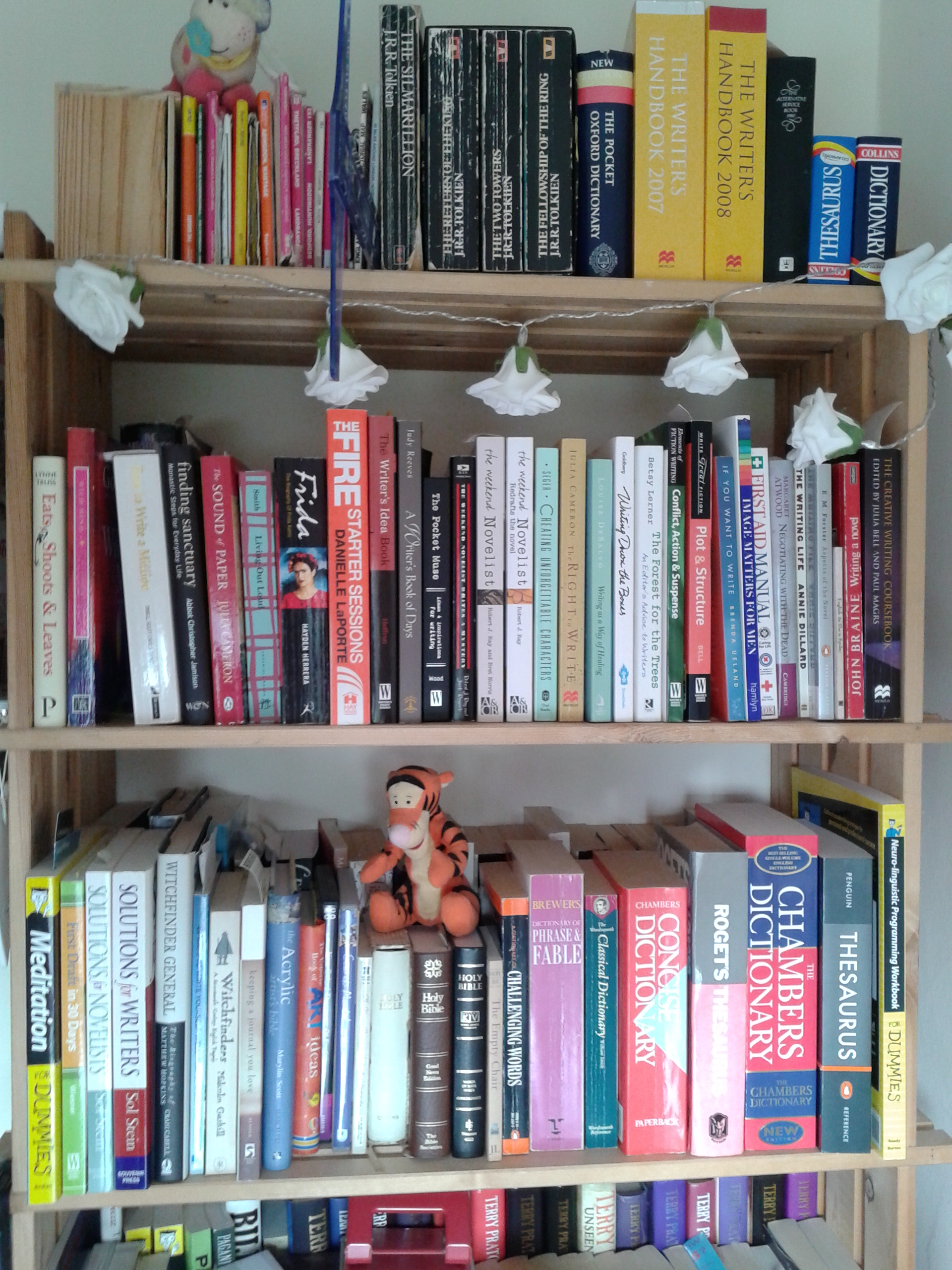
BookshelfThe bookshelf by my desk

It’s that ‘Back to School’ time of year, when I can’t walk past a stationery shop without nearly having a heart attack.  Every time I go to Staples, I feel like I want to rip all the notebooks off the shelves and writhe about in them like an ecstatic horse.  The Martha Stewart Home Office line gives me palpitations.

But there isn’t enough money to buy everything I want, and besides, I have cupboards full of notebooks and pens already – how many does a writer really need?

Need is not something we really think about much these days.  It is not a First World problem, because most of have enough to meet our primary needs, and at that point, the word morphs into that seductive, purple velvet lined entity that is ‘Want’.

Want becomes most acute for me when I am in a book shop.  It is very hard to avoid the conviction that that my life will not be complete until I have the latest edition of wotsit, or that Benedict Cumberbatch will fall in love with me, if only I buy that particular tome.  I’m too much the magpie.  I like the latest sparkling things.  It’s a terrible affliction.

My new office space, and all the decluttering that went with it, has focussed my mind on this issue.  How many books does a writer really need?  And more to the point, how many books on writing does a writer really need?

The truth is, horrible though it may be, I don’t really need every copy of every book about writing that comes out.  I can get them from the library if I want them.  I only really need two books:

The Dictionary

In my opinion, no house or building, or even tent, is complete without a dictionary.  A reasonable one.  I’m not saying you have to go out and buy the full length Oxford English Dictionary, which runs to an insane number of volumes, and which only public institutions and Russian oligarchs are probably capable of affording.  You don’t even have to buy the two-volume Shorter version, which is still prohibitively expensive.  Lets face it, you could probably look up the more obscure words that these monsters contain online.

But you need a dictionary.

A dictionary is your friend.  A dictionary provides meaning in the world.  It provides knowledge.  It makes sense.  Even if English is your mother tongue, and you think you know everything it has to offer, believe me, there will always be a seven letter word beginning with L that turns out to be a seventeenth Hungarian stomach pump that you never knew existed.  That’s why I love the English language.  In all its glory, it is like an endless adventure through the Amazon jungle, where thrilling new words are always lurking under unexpected leaves.  And you never know when they might pop up.

Best to have a dictionary close at hand when you are reading.  You never know.  (You wouldn’t believe the number of times my husband has lost his temper with me in bed at night, when I have been reading my bedtime novel and found a word I don’t know – and asked him what it meant.  He’s got a PhD, and wields words like ‘hermeneutics’ on a daily basis, so I assume he knows everything.  He gets a bit short-tempered when asked about seventeenth century Hungarian stomach pumps when he’s sleepy!)

If you are intent on expanding your vocabulary, as I am, keep a little notebook too, to scribble down new words and meanings so that you remember them.

I have a very nice Chambers Dictionary, which my mother-in-law gave me.  It was second hand, but the meanings it gives are accessible, and it has a wide enough variety of words to satisfy my needs at the moment.  It is also a chunky 5.5cm thick, with nice fine paper, and so is a really satisfying thing to handle too.  You can pick up reasonable dictionaries in stationers and book shops this time of year at great ‘Back to School’ prices, but second hand bookshops and charity shops are always a good bet too, because dictionaries are slow to go out of date, and the basics will always be of use.

(Some readers will be bouncing around in their seats at this point, and crying the praises of online and digital dictionaries.  Yes, I get that they are useful, but they do not have the browsing dimension that real books do, and therefore I still recommend you get the hard copy.)

I originally wrote this as one post, but it got so big I decided to split it.  I think it words better that way, and I hope you agree!  So the next post, on Friday, will be about the second crucial book you need to have on your bookshelf.  The thesaurus.

Meanwhile, Happy wording,

EF

Why you need to Moodle

Today, I have been moodling.

Mooching.  Pottering.  Puttering.  Loafing.  Fiddling.  Wandering.  Pootling.

It looks like I am doing nothing very important from the outside, or at least nothing creatively productive.  But that couldn’t be further from the truth.

Brenda Ueland, in her superb book ‘If you want to write’ (hardly bettered since it was published in 1938), calls creative revelations ‘little bombs’.

“You may find that the little bombs quietly burst in you when you are doing other things – sewing, or carpentering, or whittling, or playing golf, or dreamily washing dishes.” (p45)

“…So you see, the imagination needs moodling – long, inefficient, happy idling, dawdling and puttering.  Therse people who are always briskly doing something and as busy as waltzing mice, they have little, sharp, staccato ideas…but they have no slow, big ideas.  And the fewer consoling, noble, shining, free, jovial, magnanimous ideas that come, the more nervously and desperately they rush and run from office to office and up and downstairs, thinking by action at last to make life have some warmth and meaning.” (p32)

Ueland knew that we need to time to contemplate, to think and reflect, to be alone with ourselves, but also time to just let things percolate, soak in and mingle.  We may not look like we are working on our novel when we are washing up.  We may not even be thinking about it consciously.  But there it is, fizzing away behind our eyes, collecting connections, accumulating mass like a growing snowball tumbling down a mountain.

We are incubating miracles.

We need to moodle to charge our brains, to collect impressions, to drink from the well.  However, there is another reason to moodle.  What happens when the well is dry?

This comes back to self care, which I wrote about in an earlier post.  There are always going to be times of creative drought in our lives.  There will be times when life gets in the way, or when we are so busy dealing with our personal stuff that there is no energy left over to flow out into creation.

It is crucial to know that that is alright.  It happens.  It will pass.

And when these droughts occur, and to prevent them if you can, you need to moodle.  Have a nap.  Potter about.  Paint your toenails.  Fix that squeaky gate.  Go window shopping.  Give yourself a break, literally and metaphorically.  Resting will fill the well up again.

This is why I don’t really believe in writers block.  I think that either you are exhausted, or you are stopping yourself from creating out of fear.  If the latter is the case, you need to explore those fears, and work on them in your journal.  If the former, you need to let go of guilt, accept the creative season you are in, and lie around wiggling your toes until your brain is sufficiently rested, and finally ready to come up with a new ‘Aha!’ moment.

I urge you to read Ueland’s peerless book, whether you are a writer or not.  It is full of incredibly sensible advice for anyone who means to create.

I also urge you to take some moodling time this week.  Book it in your diary.  Tell the family to leave you alone in the bath tonight.  Go and lie in the park in the sun.  Not every expedition has to be an Artist Date.  Sometimes, its good just to refill the well.

Happy Moodling,

EF

Inspiration Monday: Colour

colorful-paints-WallpaperThe fact that human beings can perceive colour has been a huge influence on our development and our cultures. Colour has helped to protect us from danger, and find good things to eat.  It has helped us to define who we are in relation to others, as well as what we believe.  These days, it is as widely used in marketing and medicine as it always has been in art and fashion.  Colour blindness can prove a significant disability.

Thinking about how we respond to colour can be a rich seam to plunder for creative purposes.  The artists of the Fauvist movement, such as Matisse, and later Abstract Expressionists such like Mark Rothko, used intense shades of colour to convey and provoke emotion.  Both Matisse and Picasso made blue nudes, but look at the images they produced:

blue-nude picasso

Picasso Blue Nude 1902

blue nude Matisse 1952

Matisse Blue Nude 1952

Matisse’s vibrant cutout provokes a very different response to Picasso’s sombre meditation on grief.

Blue is the perfect colour to think about as an example.  It is culturally significant in many ways.  For example, the pigment lapis lazuli, a vibrant blue, was the most expensive pigment available to Medieval and  Renaissance artists, so was reserved for only the most important figures. Thus, the Virgin Mary is always pictured wearing a blue robe.  In Medieval England, blue was worn as an amulet to ward off ill-health, probably because of its Marian associations.  (This is why brides still wear ‘something blue’.)  In contrast, in some cultures, blue is shunned as the token of death, ghosts and bad luck.

We identify blue with calm and peace, and blue light has been used in urban areas with some success to reduce violence.  Blue can also be associated with depression – we talk of ‘having the blues’.

Conversely, red is seen as a vivid, energetic colour, associated with lust and sex.  We speak of the ‘scarlet woman’ for example.  It can also be interpreted as a warning of danger, as in ‘Stop’ signs and traffic lights.  Rooms painted red look smaller to our perception, but also warmer and cosier.  A blue room looks airy and spacious, but can seem rather cold.

Our emotional response to colour is also of interest.  We speak of ‘warm’ and ‘cool’ colours, and choose the clothes we wear by colour according to our mood.  I wear bright red all the time, but my mother accuses me of looking ‘too bright’ when I do!  My sister has such a visceral response to the colour lilac that it actually makes her nauseous.

I never really appreciated the importance of colour in the landscape around me until I moved to East Anglia.  I grew up on the south coast of England, by the sea.  There, the beaches are formed of toffee-coloured flints and broken, bleached shells.  The sea is often edged with emerald green seaweed, and is invariably the colour of cold coffee.  The crumbling sandy cliffs are the colour of ginger, and are held together by clumps of dark green gorse which turns acid yellow in spring.

The colours of the Norfolk coast are much more muted.  The beaches are pale sand, bound with dunes of khaki marram grass.  The sea is often indigo or petrol blue, and the skies are milky even in the most brilliant of summer weather.  Here, the prevailing colours are buff, dun, woad, grey.  They make the south coast seem gaudy by comparison.

As an artist or writer, you can use all this to your advantage.  The psychology and culture of colour can set the scenes for your images and stories.  Imagine a woman walking into a grey room in a scarlet dress?  (Artist Jack Vettriano uses this kind of contrast to huge effect!)  Imagine what people would be whispering behind her back.  Imagine what the response of the man she is meeting for dinner might be.

Creative Exercises:

Spend some time thinking about your own responses to colour.  What colours do you have in your home, and why?  Do they remind you of happy memories, or are they just there?

What are the colours you predominently wear?  How do you feel in them?  Go to the shops and try on garments in colours you would never normally wear.  How do they feel?  Why would you normally shy away from them?  What do you think the colours would say about you if you appeared in public in them?

Spend some time sitting on a bench in the high street, watching passers-by.  Note what colours they are wearing.  Are you drawn to them because of their colour choices, or repelled?  What do you think their colour choices say about them?  And what do you think they are trying to say with colour?

Keep your eyes peeled for colour around you.  What colour is your front door, the doctors’ waiting room, the toilet in your favourite restaurant, the plaster of the building across the road?  What shades are the trees, the earth, the sky?  What do these colours mean to you personally?  How do they make you feel?

You might like to spend some time with your writing notebook.  Choose a colour and write a word association exercise, scribbling all the words that come into your mind in connection with that colour, no matter how outlandish they might seem.  Now go back and examine what you have written.  Does your list suggest an atmosphere, a story, an image?  Play with whatever comes up as a response and see where it takes you.

There are a host of books you might like to read in connection with this subject.  Here are a few:

The Virgin Blue by Tracy Chevalier

The Colour by Rose Tremain

Colour: Travels through the Paintbox by Victoria Finlay

Happy Colouring,

EF

On Process: The Myth of the Suffering Artist

Chatterton 1856 by Henry Wallis 1830-1916(Henry Wallis’s painting of  Thomas Chatterton (20 November 1752 – 24 August 1770), who was an English poet and forger of pseudo-medieval poetry. He died of arsenic poisoning, either from a suicide attempt or self-medication for a venereal disease.)

I was going to start this post with a list of all the Creatives who have damaged themselves for the sake of their art.  I lay in bed the other night, trying to compile a list of them.  There were a lot, and those were just the ones I could come up with at 3am!

And why bother?  We know who they were.  We know the names of Rothko, Hemingway, Woolf, Pollock, Kerouac, Kinski, Dylan Thomas, and so very many others.

We conveniently don’t notice the ones like Grayson Perry, and Tracey Emin, who credit their art with saving them. (I’ve made links to autobiographies here, and I encourage you to read them, as they are enormously inspiring.)

We certainly don’t remember the millions of artists who, over the course of the last two millennia, have lived happy, healthy and fulfilling lives as well as making art of all kinds.

You don’t have to suffer in a garrett to be an artist.  You don’t have to drink yourself to death, take drugs, cut yourself, starve yourself, tolerate life in abusive relationships, live in squallor or destroy your health.  That is not what an artist is.

An artist is someone who makes art.

(Whatever kind of art that is, from writing to painting to dance.)

Just that.  Nothing else.  Just that.

Creativity is the greatest healing force in the Universe.  I know this because I have seen it and felt it for myself.  When you begin to create, you end suffering.  You will feel better.  I promise.

And yes, it will be frustrating at times, and maybe you will cry your way through every chapter, every linocut, every sculpture, every pas de deux, as you work through all the difficult feelings that come up.  Because lets not kid ourselves, people who create great art of all kinds are often driven to do so because of their own difficult pasts.

So maybe writing 500 words a day is like getting blood out of a stone for you?  There are ways to deal with that, but remember that struggle often comes from deep hurts from long ago, from entrenched behaviours that stop you being your most luminous self.  And if you write those words, every day, you will get through those barriers, and you will feel wonderful.

I promise.

I know because it happened to me.  And continues to happen.  Every day.

If you think that you cannot communicate accurately to your readers the misery and suffering of your characters without having lived it yourself, I will tell you the secret of how you can do without nailing yourself to a cross.

Three little words:

Imagination, empathy and research.  And the most important of these is IMAGINATION.

Imagine yourself in their place.  How would you feel?  What would distress you the most about their position.  Read up.  Find out how other people felt who went through similar traumas.

DO NOT TRAUMATISE YOURSELF.

Eat well.  Get enough sleep.  Value yourself.  Work at having loving and fulfilling relationships with others. Exercise.  Meditate.   See the doctor and the dentist if you need to.  Use your art to heal whatever wounds you have.  Care for yourself, and your art will be the better for it.  As will you.

Happy Creating,

EF

There’s No Time to Write!

(or paint or draw or sew or dance or make movies or {insert chosen art or craft here}).

Every book or blog about writing (or any art) will tell you that you have to do it.  Practise.  You can’t be a writer unless you write.  You can’t call yourself a dancer unless you dance, or a musician unless you play.  But in our busy modern world, in the midst of a double-dip recession, who the hell can find time to pursue their arts?

My husband says this to me a lot.

“I need at least three hours,” he’ll say.  “I can’t just write in fifteen minutes a day.”

Toni Morrison wrote her novel, ‘Beloved’, by getting up early in the morning and writing for half and hour or so  at the kitchen table while her family were still asleep.  She made time to write.  JK Rowling wrote in an Edinburgh cafe while her baby was napping in the pushchair.

My husband doesn’t make time to write.  He is a talented screenplay writer.  He is also an enthusiastic potter and actor.  He doesn’t do these things.  He works instead (for which I am very grateful, incidentally.) He works pretty much all the hours God sends, so far as I can see.  I am sorry that the world is missing out on his talent.

You may be the same.  There may be no time spare to carve out in your life.  But let me offer you this story to illustrate my point, which is:

Just because you aren’t writing, it doesn’t mean you aren’t writing.

Two years ago, I went down to Hampshire to visit my mother.  My stepfather was very ill and in hospital, so ostensibly I went down for the weekend to help my mother with the stress, and the nearly two hour round trip to the hospital and back every day.

Whilst I was there, my stepfather died.

My siblings were not able to stop work to support her at this time, so I stayed with her for three weeks, helping her with the paperwork, assisting with organising the funeral, comforting her where I could.

As you can imagine, it was a very busy, stressful and distressing time, but I was extremely glad I was there to share it with her, and to be of help.

A family death is an all-consuming experience.  Grief seeps into your very bones.  You think of nothing else.  But even thought I loved my stepfather very deeply, and mourned him intensely,  I realised that I needed some respite from the pain and the busy-ness.  So in the tiny moments I had alone, in the loo or the shower, at night before sleep, I bathed in the world of my stories.  I wrote.  Maybe I didn’t actiually scribble notes down, but I told the stories I needed to tell myself to keep myself calm and sane.   During those three weeks, I organised, plotted, and even wrote parts of a major story in my mind, a story which became ‘A Case of Resurrection’, which deals with grief (unsurprisingly).  It is a work of which I am still proud, written at one of the most difficult, and probably busiest times in my life.

The purpose of this story is not to pluck your heart-strings, but to say that not only can you write when you are busy, but that when you are, writing can become a life raft, an antidote to stress, a way of expressing your feelings when there may be no other way available.  You might remark that I wasn’t actually writing, but I ask you, in response, to expand your definition.  Writing takes a great deal of planning and long hours of thought, as well as lots of typing.  You write it out on the keyboard eventually,  but first you have to think it.

By all means, put writing time into your busy schedule.  Mark it in your filofax or diary.  Make daily time for it.  No one would advocate that more than I. But consider it in a wider scope.  You can write under any circumstances if you really want and need to.