Tag Archives: Creativity

Inspiration Monday: Architecture

Travel Pictures Ltd

Shark House, Oxford

The Inspiration Monday series is designed to give you a selection of places to look for inspiration for whatever art you create, from writing to quilting, from dance to pottery.  There are places and things to inspire you everywhere, no matter how blocked you feel!

Alright, I confess.  I’m a bit of an architecture nut.  I’m lucky.  I live in a country that is just bursting with fabulous buildings, from the modest to the outrageous.  So much has survived from our long past, and so much is being produced now that is thrilling and new.

Architecture provides a great inspiration, even if you are not into history, as I am.  It is especially useful as a starting point for the visual arts (how about making a quilt based on architectural motifs from your local area, especially if you live in a place that has an interesting and original vernacular architecture of its own.)

For a writer, architecture can be more than just set dressing.  Think of the magnificence of the stately home, Brideshead, in Evelyn Waugh’s novel, ‘Brideshead Revisited’, a building whose ornate Catholic imagery permeates the relationships of all the characters.  Or perhaps the dark secrets represented by the rambling corridors of Manderley in Daphne du Maurier’s ‘Rebecca’, where the gothic corners hide secrets that threaten the happiness of the unnamed heroine.

Architecture is not just about the grand mansions of the rich and privileged.  The sqallid, shabby, utilitarian flats of Orwell’s ‘1984’ are just as terrifying as the monumental Ministry of Truth.  Or perhaps the rickety walkways and rookeries of Oliver Twist’s Victorian slum dwellers, or the eponymous ‘L-Shaped Room’ described by Lynne Reid Banks.

Peter Mothersole's House

Peter Mothersole’s House, Norwich

I’ve had a fascination with the building pictured above for some years now.  It’s eccentric and rather alarming pitch to one side only makes me love it more.  I’ve made it the home of one of the characters in my new novel.  In fact, it would not be so far fetched to say that this house has inspired the entire novel.

Compare the pictures below, and consider the kinds of stories that might happen in each, architecturally different, setting:

Speedies

Speedy’s, well known to all ‘Sherlock’ fans.

Greek villa

Greek Holiday Villa, Lesvos

terrace houses

Terraced Houses, Northern UK

awesome-modern-house-mediterranean-coast-1

Modernist Mediterranean house

Architecture can be the starting point for your art and writing.  It can be set dressing, atmosphere, even a character in its own right.  Using architecture as a starting point can ground your work in it’s local context, add weight to the story, place it in a particular time, economic class, religious mode or social millieu.  You can say a great deal about your characters through the kinds of houses they live in, the buildings where they work and worship, and why they choose these and not others.

Writing Exercise:  Look Up

Porch heraldry, Blickling Hall, Norfolk (NT)Porch heraldry, Blickling Hall, Norfolk (NT)

Next time you are walking around town, look up above the shop fronts.  You usually spend your time looking into the plate glass windows at all those gorgeous things you can’t afford.  You may not notice the kinds of buildings they are housed in.

In Britain and across Europe, you may see fascinating architectural details that you never noticed before, even in a street you have walked up all your life.  In other countries, you may see less history, and more the story of the way the architecture is used by it’s inhabitants, the way they have added to it, moulded it to their own needs over time.  What kind of lives are lived out behind these walls?  What stories have these beams and doorframes witnessed?

You might like to learn to read a building, to spend some time researching architecture in your area, the little quirks that are local.  In most countries you will find builders have used the materials that come to hand: wooden logs, local stone, thatch, reeds, brick of different colours, pantiles. What is local to your area?  What is the local style? What shapes do the buildings make – are they low, huddling to the ground against the weather, or do they tower above the streets, dwarfing the inhabitants, statements of power and wealth?  Can you incorporate this into your art?  What does it say about the kinds of lives people live, and have lived, around you?

Happy Creating!

EF

On Process: Your Creative Clock

Ickworth Garden Temple - take a moment to reflect

Ickworth Garden Temple – take a moment to reflect

I don’t think I have ever read a book about how to write (and I’ve read a lot of books about how to write) that didn’t stipulate that writing first thing in the morning, as soon as you get up, is the best thing to do.

Excuse my “French”, but bollocks to that.

I am not a morning person.  Not in any way, shape or form.  I never have been, and I never will be.  In addition to this apparently genetic disadvantage (my mother is terrible in the mornings too), I suffer from a chronic illness which means I need about four hours to get going for the day.  My brain doesn’t normally come online in any meaningful way until about 11am.  And if I try to get going any earlier, I am totalled for days afterwards.

Writing first thing in the morning is never going to happen for me.  Its a biological impossibility.

Ask me about 9.30pm, though.  Yep, by then I am motoring!  I have suffered from insomnia since childhood, when I lay in bed making up stories in the dark to amuse myself while everyone else slept.  I think this is when I became a writer.  I am at my most creative in the hours of darkness, when my mind flies along, pumping out ideas and exciting images like Spielberg on speed.  I even dream in glorious technicolour.

And yes, I write during the day too, but mostly not before about 4pm.  I often have a big pulse of creativity between 4pm and 6pm that is great for finishing stories, and for writing blog posts, which is exactly what I am doing now – its 5.45pm and my brain is firing on all cylinders.

Ask me to invent something at 10am, though, and you are wasting both our times.  Ask me after 10pm and you probably couldn’t stop me with a sledge hammer!

We all have an internal body clock.  Some of us are naturally larks, and some owls.  If you are honest with yourself, you know which you are, when you function best.  You might be brilliant at doing advanced maths in the morning, or you might be better checking your email or dusting the objet d’art.

This doesn’t just apply to the hours of the day, but to your annual clock too.  I find I have a bit of a manic period in March, when the sap starts to rise and I can’t sleep at all because my brain is whirring so frantically with new ideas.  I actually get breathless!  By the time April comes in, I am mentally drained, and can barely come up with an idea for something for tea until July.  July is often my time for last bursts of activity on a project that needs finishing, the final sprint.  But during the summer months, I can safely say there are better things to do than sit inside with a laptop.

Once September comes in, I start to go into my creative cave, a kind of incubation period where I sit with ideas, mull them over, do my planning.  Then during the depths of winter I engage in my deepest writing, my most productive spells, when I can turn out 2-3000 words a day at times.  I find I draw best in the first half of the year, which to me is an exterior time, a period of surging energy.  The second half of the year is for going inside, for living with the images and tales in my head.

I’ve discovered this pattern over the years, observing myself and my creativity and making notes about how I am working in my writing notebooks.  Self reflection is something that helps your creative process and there should always be space in your writing notebooks, sketchbooks and journals for considering how you work best, and what you do when.  These things are important to know, because that way you can optimise your output.   I know, for instance, that there is no need for me to beat myself up in June when I realise I’m not writing.  That’s ok.  Its not the time to do it.  June is when I am out in the world, filling my well.  I know the time will come, and that the downtime in the summer is an important resting and refuelling stop.  Knowing when not to beat yourself up for not being creative is incredibly important for your self confidence and longevity as an artist, and for your mental health.

Writing Exercise:

Take out your notebook, journal or sketchbook – whatever is your creative workbench – and spend some time reflecting on when you have produced your best work, both in terms of the time of day, and of the year.  Do particular seasons have creative resonances for you?  Are the liminal times of dawn or twilight the moments when you come up with your best ideas?  Do you write or paint great stuff in the summer months, or when you are on holiday?  Are you stupified by the cold grey winter skies, or do they encourage you to look within for brighter pictures?

Make sure you take time periodically to reflect on this subject, as it will help you build up a clearer picture of your creative clock.  I like to do it at the beginning of each month, like a review, or quarterly, at the changing of the seasons.  The more you know yourself as a creative person in this way, the more easily you will be able to use your energy for your best work, and to avoid frustration and blocks.

Happy creating!

EF

Outflow: Sticking to the Vision

Shadow Selfie

I have a confession to make.  When I started this blog, I was all business-like.  I made an editorial calendar, and wrote down what I was going to post and when.  I made plans.  I’ve got a really scrummy notebook full of notes on what I am going to write for you.  I researched it all for months.

Because this is what you do.

Professional.  Business-like.

All the things I am not.

It was a huge emotional step to start the site.  It took months to work up the courage to put myself ‘out there’, and I guess you could say that a lot of the research I did was just procrastination – I can’t do it till I know all about x.  And then, when I did it, and go it going, I wondered what the fuss had been all about.

And then the SHOULDs came home to roost.

You do what you think you ought to do, and then somewhere along the way it becomes a chore, a SHOULD.  The only SHOULD there is right now is this one:  I SHOULD have known.  Because if there is one thing I have learnt about myself in this life, its this:

Nothing gets done if it ain’t fun.

I missed my ‘Journal Friday’ post last week, partly because life caught up with me, partly because I was not well (long story), and partly because I realised that it had become a SHOULD, and I didn’t know what to do about it.  And then I found this, my Vision Statement for the site:

“The purpose of Evenlodesfriend.com is:

  • To empower other people to improve their writing, to enjoy and rejoice in their own creativity, and to claim their lives as writers regardless of whether they have been published or not.
  • To promote the idea of writing as a healing process and a psychological tool for wellbeing that anyone can use – and to give readers the confidence to use it.
  • To bring my own writing to others for their enjoyment, for my own voice and independence.”

And it occurred to me that I need to take this as seriously for myself as I would for you.  Which means recognising that part of my creativity is spontaneous outflowing.  Something from the Heart.  My Heart.

So sometimes I plan to break out of the editorial calendar and spread my wings a bit.  Sometimes I will share with you about how my writing is going, what problems I am up against, ideas that I have come across, things I am interested in.  I hope that you will get to know me better (and I know I will get to know me better!).  I hope that you will know I am going through the same struggles as you are.  We are all in this Creativity Boat together. (Actually, I may need to do a cartoon on that, possibly with owls and pussycats included!)

So welcome to a new phase at Evenlodesfriend.  You will get your Monday, Wednesday and Friday posts, I promise.  But I hope you will get a bit more, maybe a bit of reality too.

With all my love and Best Wishes,

Evenlode’s Friend.

Inspiration Monday: On Walking

Footprints Ardnave 1Many great writers have also been great walkers.  Imagine Jane Austen striding across the Hampshire countryside around Chawton, her home village, the hem of her white muslin gown getting stained with mud, or Virginia Woolf stomping over the Sussex Downs, hands buried deep in her pockets, muttering sentences and paragraphs for her current work under her hat brim.  The Romantic poets were famous for striding around the Lake District, soaking up the epic scenery and composing all the while.

There is something meditative about walking, a rhythm that comes with stomping feet, the steady repetition of step after step over the ground.  The act of walking induces a kind of trance, a change in consciousness that opens up our minds.  When I am able to walk, I can exorcize even the foulest of moods, and I always come home with an idea, an image, a sentence at the very least.

Walking gets us close to our environment in a way that travelling by other means can’t.  You cannot see details from a car the way you can on foot.  A cat lazing on a sunny windowsill.  The colour of a starling’s wing.  A family gathered around the kitchen table, enjoying a late sunday lunch together as you pass.  On foot, you can surreptitiously peer in through windows, or linger to observe a view, a cloud or a flower.  We can even listen in to conversations we might miss otherwise:

‘Andrew, did you put the blood and bone tub back in the shed last week, because I can’t find it?’

Walking allows us to observe the world whilst being part of it.  It brings us into Flow, a place where our thoughts smoothe into a creative stream.  We can walk ourselves out of being stuck on a project, and we can walk ourselves into a new one.  Plus, it burns calories and keeps you fit and, well, and who doesn’t love that?

Creative Exercise:

Put a notebook or sketchbook and a pencil in the pocket of your jacket.  You could even take a camera.  Put on a sturdy pair of shoes and go for a walk around your neighbourhood.  Take twenty minutes, more if you have it.  Try to walk with a steady motion, a regular rhythm.  Drum out a beat with your soles. Open your mind to whatever thoughts come up.

Look around you.  What little details, or big stories to you witness?  You can scribble things down on your way, or you can stop, if you have the time, to take notes, draw a sketch or two, snap a few photographs.  You don’t have to photograph people, remember –  a wonky chimney stack or a graffitied sign might spark your interest, perhaps even an interesting pattern made by litter in the gutter.  Take the time to witness and observe.  Combine this with the meditative beat of footsteps.  A treasure trove is outside your door.  Even if you only walk and see, do that much.  When you get home, note down what you have seen for use later, and enjoy feeling refreshed.

Walk twice a week for preference, daily if you can.  Get to know your locale.  Push yourself by walking in new places.  Extend and vary your routes.  Walk whether you feel like it or not.  Especially when not.  Putting one foot in front of another gets your mind to a new place that is always worth exploring.

On Process: A Room of One’s Own

In this new series of posts, On Process, we will talk a little about discovering your own creativity cycles, and how best to optimise them.  We’ll start with the most basic requirement: space.

Virginia Woolf coined the term ‘A Room of One’s Own’ in her book of the same name, in which she explored creativity and feminism.  Her thesis is that in order to be a serious artist, you have to have dedicated private space in which to work.  While I don’t think this is entirely true – many great books have been written at kitchen tables, for instance – I think it is an important consideration, and it really does help.

These days I am lucky enough to have a room of my own.

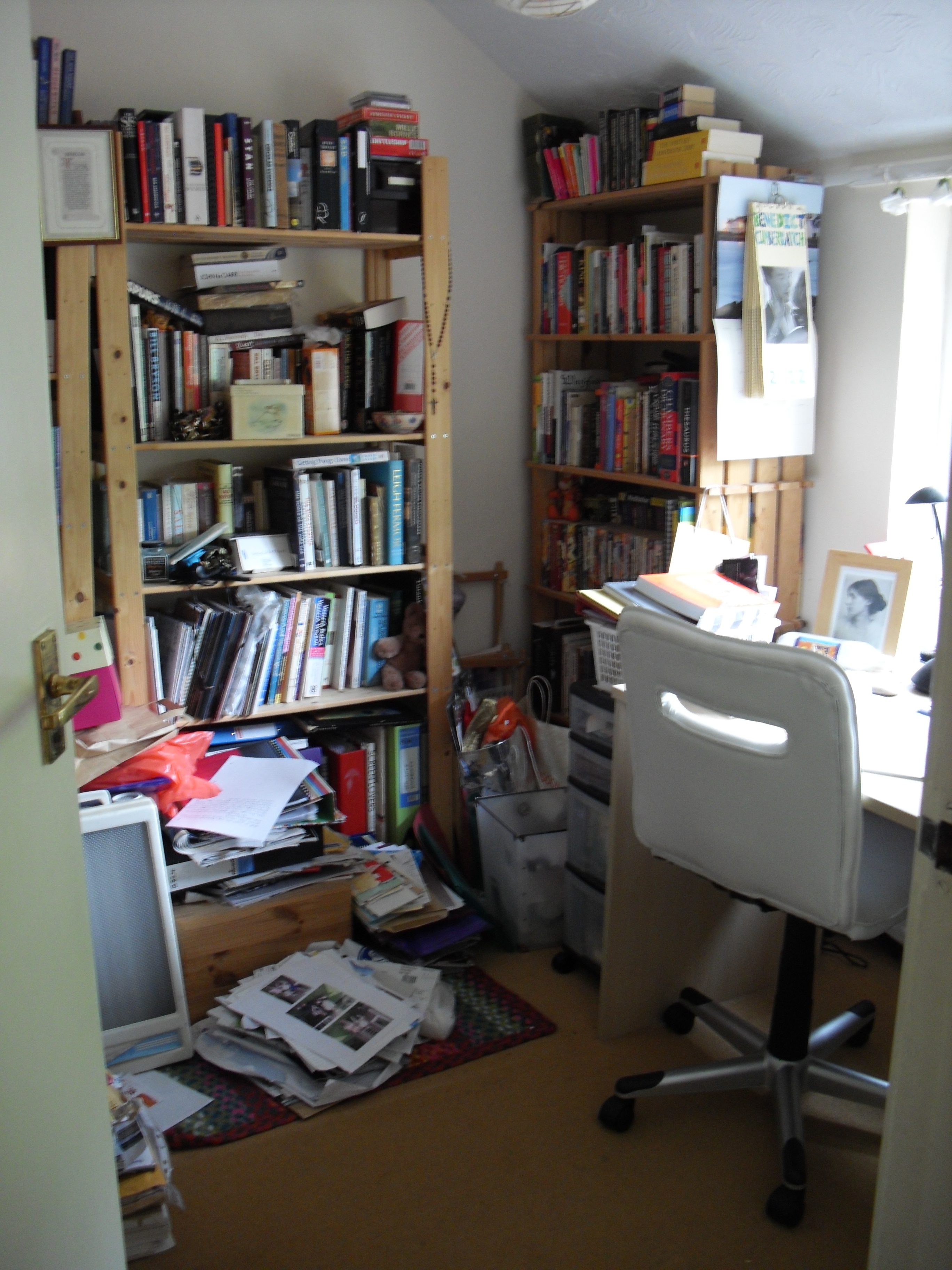
My study 1As you can see, its a mess.  Currently, it has a very nasty case of piles. (Piles of paper and junk, that is.)  The fact that it has become such a dumping ground, to the extent that I am now doing most of my writing sitting downstairs on the sofa, and I’m not doing any painting at all, is an important barometer for how much value I am attaching to my own art and writing practise.  In other words, not much.

One of my goals is to revamp my study.  This is because I need a Room of My Own.  Psychologically, I need to recognise my right to my own creative independence, and that is what my study signifies to me.  I need to make a gift to my creative self of a loving and beautiful space in which to make my dreams happen.  Its hard to claim that right, but I’m working on it.

You may not have the luxury of your own space, in which case, I sympathise because I spent many years in the same position, sharing a desk in the corner of our dining room with my husband.  (Even though he had his own office at work – not that I’m bitter, you understand!)  Still, there are ways to mark out some territory that you can call your own, a space where you feel totally free to create as you want.  That may be a corner of a shared room, the luxury of an actual studio, garden shed or study, or if you are not so territorial as I am, maybe a favourite table at a local cafe where you go to write, think or journal.

Where ever you choose, consider this space as not only a private area, safe from others, but also as sacred to your art – whatever form that takes.  When you go there, it should signal to your Artist Brain  that it is time to create.

Light candles, perhaps, and if you are so inclined, make a little altar to attract creative energy.  Surround yourself with pretty, evocative things.  Get some nice stationary and writing instruments.  A few pebbles can be delicious to handle and look at.  Make some inspiring signs to stick up, to remind yourself that you are entitled to this, that your voice is unique and deserves to be heard.  A painting that you like, objects that have emotional value for you, some nice furniture if you can afford it (I would love a comfy armchair to read in for my study), a noticeboard with inspiring images on it, wll all help to make even a small corner your own.

My Study 2In this picture of my study, you can see some of the things I cherish as part of my creative process.  (Sorry for the small lettering, I haven’t quite got the hang of Paint yet!)

I got the lovely chair for my birthday last year.  I’d never had a special, proper chair for my home office before. It still feels like an outrageous luxury!  There are fairy lights in the shape of roses around the window, which are nice when I am writing at night, as I usually prefer to.  There is my collection of books about writing, and books for reference, my Image Box for inspiration, and of course, my much cherished Benedict Cumberbatch calendar, which my adored niece made by hand for me last year.  On my desk, I keep a framed photograph of Virginia Woolf herself, because she is such an inspiration to me, both as a writer and as a person.

Try to carve out some personal space within your home environment to dedicate to your creativity.  Even if you are only able to keep your journals in a favourite tote bag down the side of the sofa to use when you can, it still counts.  It will help to enhance your creative process, and enable you to battle those critical voices that tell you your work isn’t good enough.

I’ll keep you updated on my efforts to reclaim my study from the mess and make it a place to snuggle down in to create.

Inspiration Monday: Weather

I live in the UK.  We have lots of weather here.  Bucketloads of it!  It comes from having a maritime climate, caught between the cold North Sea and the Atlantic Gulf stream.  It characterizes our nation and our culture.  We are famous for it.

Since I came to live here in Norfolk, I’ve been fascinated by clouds.  Norfolk is famous for ‘Big Skies’.  It impossible to explain that until you have been here and seen the wide open spaces.  Norfolk is not as flat as everyone seems to think – Noel Coward has a lot to answer for, in my opinion – but what it does have is open vistas and large expanses of farm land reclaimed from sea.  The result is fantastic cloudscapes every day.  It colours the way people here live, and the way they view their lives. (If you are interested in how the landscape affects the people here, I can’t recommend highly enough the novel Salt by Jeremy Page.)

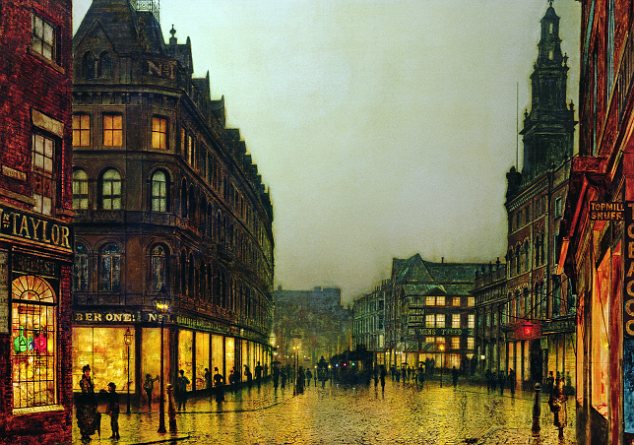
Weather gives atmosphere to writing and painting, as well as to life itself.  Just look at this image by painter John Aitkinson Grimshaw, who specialised in moonlit landscapes.

Boar-Lane-Leeds-1881This one shows a wet day, and the slick cobbles and leaden sky are so evocative.  What secret stories might be happening on those wet pavements, or behind those glowing shop windows?

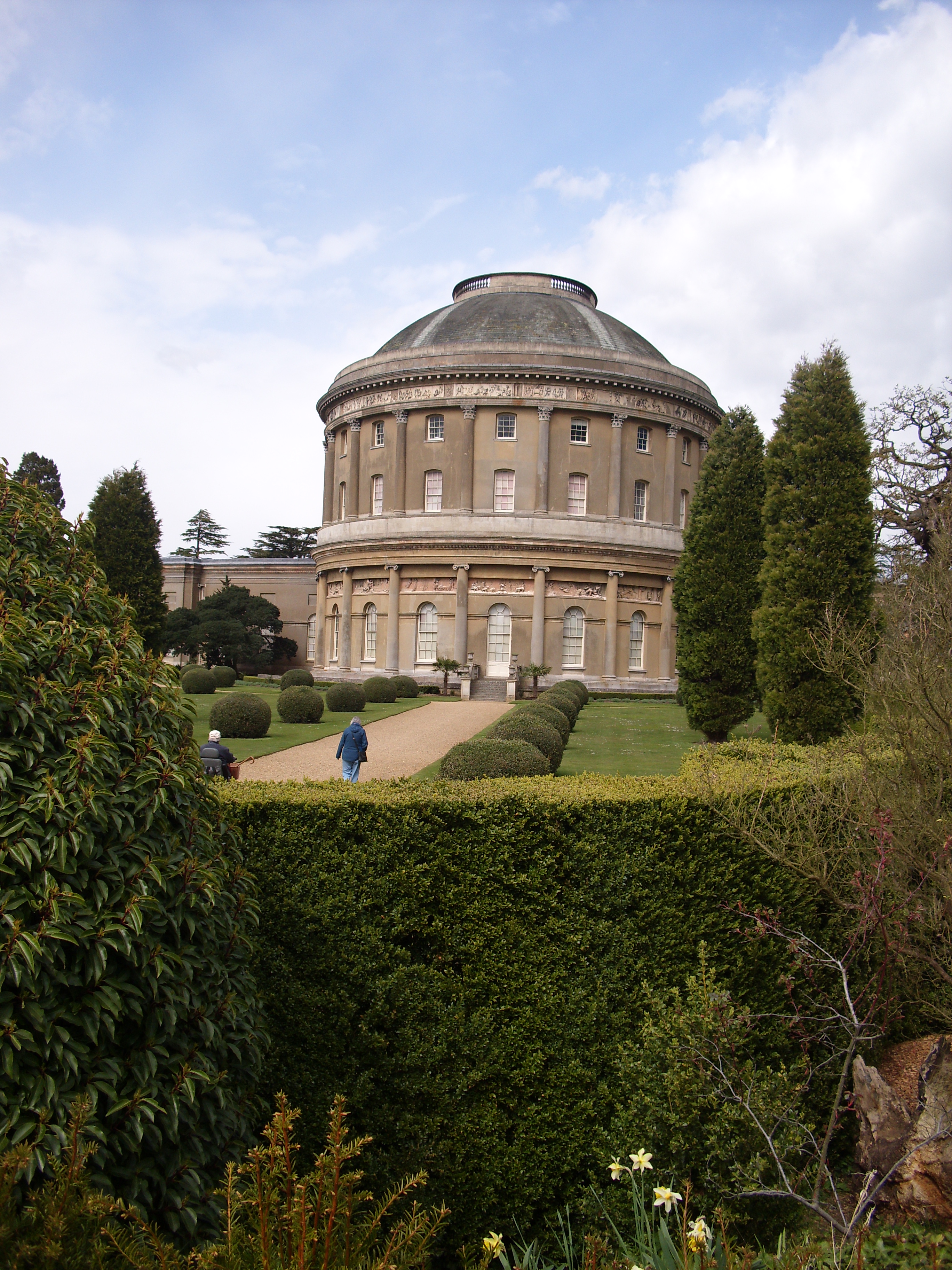
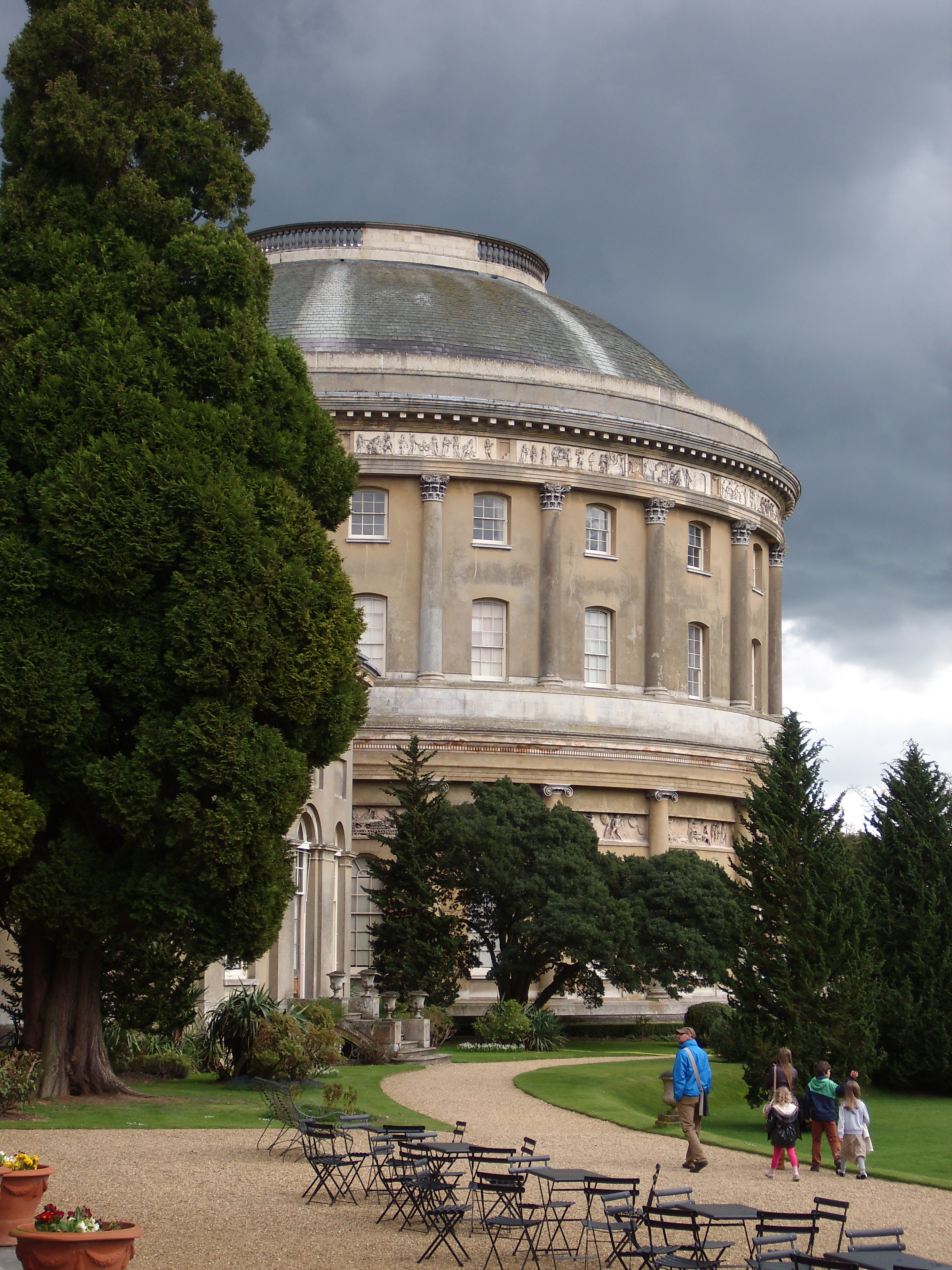
Compare these two images of the same building, the National Trust’s property at Ickworth in Suffolk.

Ickworth sunny Ickworth weather

Granted, the angle is slightly different, but look at the sky – one with glowering cloud, the other with sunshine.  The atmosphere is significantly different in each, a sense of forboding in the right-hand image that simply isn’t there on the left.

You can use weather to prompt your creative work, as Grimshaw did, or you can use it to enhance it.  You can see this is the paintings of John Constable, and the writings of Emily Bronte.

Writing Exercise:

Andrew Cowan, in his brilliant book on Creative Writing, suggests keeping a notebook solely on the weather, noting adjectives and descriptions every day for a year in order to inform your stories.  It is hard to write credibly about a snowy day in a heatwave, for example, or vice versa, so a record of what weather feels, looks and smells like can be incredibly useful!

You might not want to go quite as far as recording the weather every day for a year, but try a writing exercise where you look out of the window – or even better, go outside and experience the weather first hand.  What is the temperature like?  Are there clouds, and if so, what kind?  Is the air moist, crisp, cold, humid?  What does it smell like?  Are there ice crystals on the vegitation, or are the flowers in full and sumptuous bloom?

Record what you see, and then go a step further.  How does this weather make you feel?  What kind of events and interractions might happen on a day like this?  Is it a foggy day for furtive meetings, a dark, moonless night for dastardly deeds, or a hot and sultry afternoon suggestive of languid adultery?

You could use weather to enhance the atmosphere of a scene, or you could contrast it to add clarity to the action.  Imagine a meeting of high ranking spies in a sweltering noon, brows beaded with sweat and shirts stained dark under the arms, whilst all the time, the great business of state is being negotiated.  Spend some time in your notebook playing with weather.  Try out a scene in one kind of weather, then set it in the opposite.  What kinds of problems and interesting ideas does this raise?

Happy Creating!

Inspiration Monday: Images

DSCI3431

My Image Box

Writing exercises are a great way to get yourself going with new writing ideas.  Sometimes it is hard to think up something to write about, and this is where images can be really useful.  If you don’t have time to go out into the world and absorb the landscape, or you don’t feel like listening to music or doing something else that feeds your imagination, images of all kinds can be evocative prompts to get you going.

I keep an ‘Image Box’.  I buy odd postcards when I am visiting shops, art galleries, National Trust properties.  (I even drop leaflets into my image box, knowing the colours used in them can get my juices flowing, and I scour magazines and newspapers for pictures that catch my eye.)

Postcards don’t have to be of anything particular, the places and objects depicted don’t have to be of things you have seen or visited.  They just have to get you started.

When I am stuck, and need to write something fresh, something that comes clean out of the blue, I pull a random image out of my box.  Then I set the timer, and write for fifteen minutes on what the image suggests to me.

Here are a few pictures out of my box:

postcards

Postcards from my Image Box

(clockwise from top left) Sylvia Plath 1959, photographed by Rollie McKenna;   The Forest of Bowland from ‘Our forbidden land’ by Fay Godwin 1989;   ‘Silver Moonlight‘ by John Aitkinson Grimshaw (Harrogate Museums and Arts);    ‘A Norfolk Village’ by Edward Seago (Norwich Castle Museum and Art Gallery);    Sound II sculpture by Anthony Gormley, Permanent Installation in the Crypt at Winchester Cathedral, photograph by Roger Twigg.

These are all striking images, but what stories do they tell?  What do they suggest to you?

Writing Exercises:

1) Start collecting images for an Image Box of your own.  You might like to do it the old fashioned way, as I do, with postcards and pictures cut from newspapers, magazines and Sunday supplements.  Or you might like to use a digital version like Pinterest.  Whichever suits you.

(These days I also keep a private folder of images that I download from Tumblr on my laptop, which also feeds my imagination – I don’t use them for anything other than my own private use, so I hope I’m not infringing any copyright by doing so.)

Keep an eye out for anything really striking – a black and white, chiaroscuro portrait perhaps, or an arresting street image.  Whatever catches your eye.

2) When you have time for a writing exercise, get out your timer and your writing notebook.   Fish out a random image that appeals to you, set the timer for fifteen minutes, and write!

It doesn’t have to be a complete story, remember.  It can just be a sliver of description, a bit of character study, a list of traits or adjectives, or a bit of backstory.  What is going on in the image?  What is the place like? Are there people?  What are they doing, and why?  Is it a portrait like the one of Sylvia Plath above – forget who she is for a moment, and look at the image.  Why might this girl be wistful, a bit sad or worried?  Who could the person in your portrait be?  Why do they look the way they do? Or who is the person doing the looking, taking the picture?  What is their story?

Use your Image Box whenever you are stuck for something to write about.  I have got whole stories out of a single image, like this one, which I wrote from a fanart masterpiece by Marielikestodraw, the doyenne of gorgeous fanart.  You never know what might be sparked off.

Happy notebooking!

Journal Friday: Morning Pages

The Artists Way 2

If you read creative blogs of any kind, you are bound to come across Julia Cameron’s ‘The Artist’s Way’ eventually.  It’s cover bills it as ‘A Course in Discovering and Recovering your Creative Self’, and yes, it does exactly what it says on the tin.  I first completed the whole 12 week course in 2004, and now I am about to embark on a refresher.  I’ve pulled my much loved, somewhat dog-eared copy off the shelf and on Monday 6th May 2013 I shall launch into the unknown once more.

Cameron proposes two tools for this course, Morning Pages and Artist Dates.  No doubt we will talk about Artist Dates at some point soon, but today, let us think about morning pages, because they are enormously beneficial, whether you are a creative or not.

“What are morning pages?  Put simply, the morning pages are three pages of longhand writing, strictly stream-of-consciousness…”

Julia Cameron, ‘The Artist’s Way‘ Pan Boo 1995  pp9-10

Basically, what we are talking about here is three pages of brain dump.  You write them by hand because it enables your subconscious to express itself.  You don’t judge them, you don’t ty to be neat, you don’t reread them.  Cameron suggests doing them on loose sheets of A4/letter size paper, but I prefer to keep them in a notebook, the same kind I use for my writing notebook.

You can whine, complain, rave, drool, scream, laugh, giggle, rant, enthuse, or just repeat ‘I don’t know what to write, I don’t know what to write’ over and over again until something presents itself to be set down. Three pages.  Inane babble or heartfelt planning.  As scribbly as you like. (I realised after I had taken the photo above that this particular example of my pages is considerably neater than my usual.  Believe me, most of it is a real mess!)

Whatever comes out.  Three pages every day, no matter what.  Three pages to ground yourself in the very core of your psyche, to drain out the poison and find the shimmering gold doubloons resting on the sea bed beneath.

I have kept morning pages on and off for 9 years.  I have never reread any of them.  But when I do them, I find myself making sense of the world and my feelings, finding a way to my dreams and interests, naming new ideas and enthusiasms, letting out the bile that is getting in the way of health and healing.

I profoundly believe in the healing power of these pages in draining the poison and pain from life.  I have recommended it to several friends and acquaintences who were struggling with clinical depression.  They have found them enormously beneficial, as do I.  I now recommend them to you, not because I think you need help, but because they will help you find yourself, because they will help you become more of who you really are under all the OUGHTS and SHOULDS.

Journal Exercise:

Set your alarm half an hour earlier this week.  Get yourself a decent large notebook and a pen you like to write with (I do mine with a lovely old Parker fountain pen).  Write your three pages every day.  Do not judge yourself.  Do not censor yourself.  Get the dross and the sparkles alike down on paper.

If you would like to join me on the Artists Way, you are more than welcome.  I shall be writing more about my progress on this blog, and I would love to hear from you in the comments if you are game.