Tag Archives: Writing

The Perils of Getting Lost

There is no SatNav system for the artistic life.

Most of the time, we creative people complain about the problems of not being able to get into the Zone.  Not being able to find the door into the imagination.  Not being able to make our art.

Or we complain about not being able to get out of our own way.  We get hung up on the avoidance tactics and displacement activities we use so we don’t have to think about the empty page, the blank canvas.

Be honest, how many loads of washing have you done to avoid that novel you’ve been meaning to write?  How many drawers and cupboards have you cleaned out as an excuse to get away from your easel or your desk?

Seriously, its amazing how interesting cleaning can become when you need to be doing something else.

However, one of the perils of the artistic life that we rarely talk about, let alone complain about, is that of getting lost.

Lost in your imagination.

Lost in that place where the stories never end.

Lost where the romance and the passion and the adventure and the danger go on and on, and there is never, never washing to be done, unless it is in a picturesque stream with the sun sparkling on its surface, and requires both hero and heroine to divest themselves of their clothes in as romantic/modest/passionate (delete as appropriate) way as possible.

Suddenly you will wake up one morning and realise that you have been trapped on the island of the Lotus Eaters, so lost in the pleasures of your mind that you have forgotten to live.

Marriages founder this way.  Bankruptcies are forged, friendships lost, loved-ones go unmourned.  It happens all the time.

We lose ourselves constantly.  Often it is complusive shopping, gambling, drinking, eating or other drugs that claim us.  Addictions can be apparently harmless.  Surfing the internet seems harmless enough, until you realise you have lost days and weeks of your life doing it.  We lose ourselves in meaningless busyness, in rushing round fulfilling empty tasks, in competing with friends and neighbours, in acquiring the latest TV, sofa, car, clothes.  Modern life encourages us to find an addiction to dull the ennui.

Being present is hard.  Its even harder if you have an over-active imagination.  It is so much nicer to be lost in a story than facing the reality of life.  Doing the work of living.  Being real.  It is so easy to slip away and not come back.

Lately I have been away.  In the last couple of days, I’ve realised that life is tugging at the hem of my skirts, wanting me back, needing my attention.  I’m fighting it.  I don’t want to come back.  I want to stay in my fantasy world.

But life needs living.  We only get one go.  The art needs making, yes.  But our lives are our art too.

Don’t forget to live as well.

Happy Creative Living,

EF

PS – You might like to know that I have a new story out, The Retirement Party, a ‘Lewis’ romance, which you can read here at AO3 and here at FF.net.

When to Share

I’ve been thinking a lot lately about timing.  Specifically, the timing involved in releasing our artistic work into the world.  This may arise from the fact that after nearly two years I am still wrestling with the second part of ‘Three Weddings and an Explosion’, one of my johnlock stories.

My natural writing process is to write a story and then let it sit for a while.  There’s no set time limit in my head.  I just like to let it ‘cook’ for a bit.  Then I can go back to it, and edit with a fresh eye.  By then, I feel so much less attached.  I can pick out most of the typos, and identify the things that really don’t work about the original piece.  Letting your work sit allows space for objectivity.  It’s easier to ‘kill your darlings’ as they say – to cut or change the scenes you are really proud of, but that simply don’t work in their current context.

(That is why my recent series of ‘Friday Quick Fics’ has been such a challenge – they are invariably stories I have knocked off the day before and not allowed to rest, but published immediately instead.  That is a real challenge to my writing confidence, and let me tell you, it takes guts!)

I’m also a huge believer in the idea that our writing helps us explore our own psychodramas.  My story, ‘The Case of the Cuddle’ allowed me to revisit a time when I was starting to deal with a traumatic experience, and much of the reactions of Sherlock in that story are actually my own.  Writing that story allowed me not only to come to terms with the original experience, but also with memories of the distressing period during which I processed it.  It helped profoundly with my own healing.

My stories continue to represent what is going on in my subconscious as well as my conscious mind.  I wrote a very long MPREG story while a close friend was pregnant two years ago, work that enabled me to begin to come to come to terms with my own childlessness.  And only the other day, when I came home from visiting my mother for a few days, I sat down and, in a single sitting, wrote a 2600 word story about Sherlock’s relationship with Mrs Hudson.  After I had finished, I looked it over and thought: ‘Oh, yeah, Mother issues.’

So now perhaps you are sitting there thinking ‘I’d really like to read that MPREG story, why haven’t I seen it?’

The answer is that I am not ready to share it yet.

Perhaps the emotional odyssey of my not being a mother is not over.  Perhaps the issue for me is still too raw.  Or perhaps I am just not artistically satisfied with what I have done.  Either way, I am not yet comfortable with releasing that story into the wild.

The other day I was reading something written by Leonie Dawson about being spiritually ready to share one’s art.  About how she made the decision to put her paintings up for sale only when she felt that they had done their work in her own life.  She made a conscious choice to follow her own instinct about when she was ready to sell.

This is something that is really hard to do.  It takes confidence in your own artistic decisions and your spiritual connection to yourself.  But if you can do it, if you can hold out despite all those voices of readers, hungry for more (which means you are doing your job right, by the way), or buyers wanting your paintings for their own walls, you will open an artistic integrity in your work.  You will know when a piece is ready to leave home.  And you will be happy to let it go, knowing it will go on to do its healing in someone else’s life.

And art is healing, believe me.

When I unleashed ‘The Case of the Cuddle’ on the world, I had a number of emails from readers, saying how it had helped them with their own healing.  The story helped me, and now it continues to do the same for others.  Which, to me, is what art of any kind is for.

Part of the skill of being an artist of any kind, in any medium, is knowing when the time is right to release your work to others.  To know when you are ready to let go.  It is not just about being satisfied that something is finished, or about perfectionism.  (That is a whole ‘nother story!)  It is about being emotionally and spiritually ready too.

Letting go too soon, whether it is because the work is not yet finished to your own standards, or because it is still to raw and personal for you, can be a nightmare, as I discovered this summer when I published a story I loved but was not happy with.  It caused me untold grief.  I learnt my lesson.  The work wasn’t cooked.  It was not ready to leave me.  And I was not ready to leave it.

Try to trust where you are in your artistic life.  Take time to ask yourself whether this is the right time for your work to leave home and begin its new life in the hearts and minds of others.  Maybe you will never be ready to do that – there are plenty of artists if all kinds whose work is never seen in their lifetime.

That’s okay.

Learn to trust the reasons why you release your work in the way you do – or choose not to.  Maybe you choose your timing for purely practical reasons – taking into account such considerations as when you are struggling with a large parallel workload, or major life upheavals such as moving house.  At such times, it may simply not be feasible to expect to present work to the public.  Or maybe the work is too close to raw emotions.  Maybe you just aren’t ready.  Maybe it just isn’t cooked yet.  Trust that.  Sit with it.  When the time is right, you will know.

Happy Creating,

EF

Exploring Character: Handbags and Pockets

EV005075Let me tell you a story.

A long time ago, I bought my first car, a battered old Nissan Cherry.  I loved it, unreliable though it was.  In order to celebrate liberation from the tyranny of bus timetables, my friend and I decided to go on a day trip to Rockingham Castle, about an hour’s drive away.  It was an extremely hot summer’s day and, in the way of ancient cars everywhere, my new chariot broke down.  We sat on the grassy verge, waiting for steam to stop bellowing from under the bonnet, and sweltering in the heat.

My friend, who was a redhead, and thus especially vulnerable to sunburn, turned to me and sighed:  ‘What we really need is some suntan lotion.’

I pulled three bottles out of my handbag.  ‘Do you want Factor 8, 15 or 30?’

By now you will have guessed that I am the sort of person who likes to prepare for every eventuality.  I always have paracetamol in my handbag.  I can always be relied upon to be possessed of optical wipes for cleaning mucky spectacles, spare tissues, chocolate of course, and even echinacea lozenges just in case someone has a sore throat.  This is not because I have children – any mother will tell you that it is necessary to have a handbag full of bandaids, crayons and baby wipes.  It is because I am the sort of person that worries.

I know a man who always carries a length of string in his pocket.  He is a very practical person, and he tells me how useful a spare bit of string can be in unexpected situations.  This always seems a surprise to me, since he travels around the world, fixing nuclear power stations for a living.  Quite apart from the fact that I don’t want to imagine the kind of nuclear power station scenario in which a length of gardeners twine might save the day, I always feel he is the sort of person whom you could reasonably expect to be in possession of a sonic screwdriver.  For real.  The string therefore says a lot about his practical, if eccentric, character.

The things we carry with us say so much about who we are.  Ask a group of female friends to open their handbags and you will find the ones who carry about four different shades of lipstick, a packet of cuppa soup, or a spare bag to pick up dog poop.  Just look at the handbags, too.  There are those who insist on the vast sacks that are so fashionable these days, the ones who like bags with lots of pockets to organise things (and the ones with pocket bags who can never find anything inside the vast number of pockets), and the austerely practical ones who favour a tiny, cross-body pouch barely big enough to hold a purse, phone and keys.

Mens’ pocket contents are just as informative.  My husband’s pockets are always full of folded pieces of copier paper, on the outside of which he has made cryptic notes in his other-worldly, hieroglyphic handwriting.  He sheds them at the end of the day, leaving piles of folds on the dining room table.  I bought him a notebook once, but he rarely used it.  His paper folds reflect his scattered mode of thinking, and the fact that he is always thinking about something, even in the midst of something else.

Character could also undoubtedly be read in manbags, laptop bags, briefcases, breast pockets and poachers pockets in coats and suit jackets.  Each is a map to an individual’s mind, habits, and priorities as unique as its owner.

Writing Exercise:

This exercise is probably as old as the hills, and I have no idea who originally came up with it, but it always strikes gold for me when I am writing a new character.

Take out your notebook, and start a fresh page (of course).  Give yourself a few minutes to imagine the character you want to work with.  Picture them in your mind in as much detail as you can.  Clothes, smell, tone of voice and stance.  Now get them to empty out their pockets – or their handbag (or equivalent).

What items are so essential to them that they always have to carry them around?

Do they keep sentimental items on them, perhaps a pendant that belonged to an old lover, an outdated student ID card, a rosary or St Christopher.

My father always carried a crisply ironed gentlemens handkerchief of pure white cotton, fresh every day.  Is your character the kind that carries tissues, a handkerchief, or wipes their nose on their cuff?

This is a little like a writer’s version of Kim’s Game, except that each article you choose, from the broken crumbs of a forgotten polo mint to the famous sonic screwdriver, says something important about your character.  Why do they carry these things?  Is it for practical, spiritual or even superstitious reasons?  Are they carrying the past to motivate them in the present, or do they keep an array of useful bits close, just in case?

You could even expand this exercise to include car glove compartments and boots (trunks).

This exercise should give you a great start when you are working with a new character.  You will find out so many things about them that you never would have imagined possible.  Let them dance before your eyes, peeling off elements of themselves as if performing the Dance of the Seven Veils.  It’s so exciting when a new person reveals themselves to you.

And remember, once you know who they are, you will know how they behave.  And it is their behaviour that will make your plot.

Happy Writing,

EF

Inspiration Monday: Observing Roles

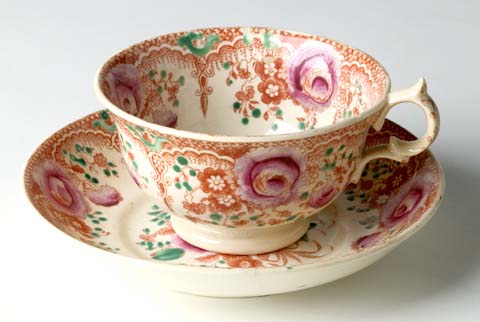
Captain Cook's teacup

Captain Cook’s Teacup

A few days staying with my mother require me to be paraded around the village, being shown off to friends.

I am taken to her oldest friends first:  Husband was close to my father, Wife is my mother’s best friend, and something of a surrogate mother to me.  They are Scottish, loving, hospitable.

My mother sits primly on the sofa while the tea set is laid out, her little legs crossed at the ankles, not quite touching the floor.  We are having the best china, and a freshly baked Victoria Sandwich cake, set on a glass cake stand and dusted with icing sugar.  This is a proper English afternoon tea.

I notice how polite my mother is being.  The way she holds the fork as she eats her cake so delicately.  The way she plucks at her napkin.  The way she stirs her tea with her teaspoon, holding the end like a pen, making the prescribed figure of eight with the bowl, just so.  I notice the way she nods, agrees, doesn’t initiate conversation.  I realise she is being a Good Girl.  Just as her own mother taught her, back before the War, she is behaving politely in order to be accepted.

Our hosts are playing roles too.  She is the Hospitable Hostess, asking kind questions, offering more cake.  Her husband is sitting enthroned in his armchair, interjecting occasionally with amusing quips or information, partly the Wise Sage, and partly the Jester – he always played the Jester to my father’s Straight Man when I was a child.

Then their middle daughter arrives, a beautiful woman a little older than I am, with a grown-up family and a business of her own.  As soon as she walks into the house, though, she adopts the role of Mischievous Daughter, stealing a donut from the kitchen, helping herself to a cup of tea (without a saucer), lounging in an armchair and making us all laugh.

I glance at my mother.  She is laughing politely.  Still being the Good Girl.

And me?  Well, I am the Entertainment.  Which is another way of saying that I am being the Good Girl too.  Pleasing my mother by being polite and charming her friends.  Being a credit to her.  Displaying the manners she taught me.  Sitting up straight, holding my teacup correctly, watching my language, and wishing profoundly that I could play the Mischievous Daughter too, which would be a lot more fun, and more like who I really am.

We all play social roles, in company, with family, with friends, with strangers, colleagues or acquaintances.  Our roles change according to those we are with, and to circumstance.  Sometimes we even change roles within a single situation.  This is not necessarily being inauthentic, or even manipulative.  It is the way human beings function socially together, as all animals who live in groups do.  It began as a means of survival, but today has become a complicated social pas de deux.

And why am I talking about it?  Well, because if we play roles, what about the characters we write?  You may know who your protagonist is, you may have written his back story in detail, and know how he might respond in a given situation, but have you thought about the roles he might play?  Does he play roles to fit in, or does he reject them?  Or does he continually play different roles to get what he wants, to manipulate others?  And if he does the latter, how are you, the writer, going to keep track of who he is underneath those roles?

Writing Exercise

Begin to observe social encounters going on around you as dispassionately as you can.  Can you see what social roles are being played?  Who is being submissive, funny, polite, in order to win friends?  Who is refusing the engage with the social dance?  Who is asserting their dominance as Alpha Male or Female?  Who is the real person under the role?  What are their motivations for choosing the role they do?

Remember to observe without judgement.  This is not about values.  This is about behaviour.

Spend some time writing down the roles you observe, and reflecting on them, in your writers notebook.  Think especially about what lies underneath the role, what event might cause a person to adopt one role rather than another.

Write a scene about some characters you are currently working with.  What roles could be played here?  What non-verbal behaviour communicates that role – or betrays what is going on underneath?  See if you can write your characters functioning at two levels, the role they play, and the real person behind the role.  Explore this difficulty where you can to make your characters more three dimensional.

Meanwhile, I am going back to contemplating the idea that my mother, my dominant, matriarchal mother, could actually play the Good Girl, because its not an idea I have ever entertained before, and its going to take a while to get my head around it!

Happy Writing,

EF

Writers: Know Your Limits! (or why I’m not doing NaNoWriMo again this year)

Husband and I often share a giggle over this Harry Enfield sketch when we talk about my limitations:

Yes, well, thank goodness its not so much like that anymore!

Women are especially bad at knowing their limits because we are brought up to be martyrs, to sacrifice our own well-being before that of others.  I’m no exception.  I’m useless at boundaries, and having ME has made me even worse for committing to something that I have no earthly hope of carrying through because of my  fluctuating energy and pain levels.  I continue to have expectations of myself that fall way beyond my capacities.

Anyway, a little while back I had this brainwave:  “I know,” I thought, with all the enthusiasm of a labrador puppy.  ‘I’ll do NaNoWriMo in November, and I’ll use the month to get the basis of my Viking novel done, and then I’ll have a book I can edit up and sell in the new year via Kindle.”

Great wheeze, No?

Hmm.  The thing is, November is always a really busy month for me.  Its the run-up to Christmas, which means getting the present shopping in early because I have to pace myself with all that trudging around the shops.  It usually involves an extended visit to elderly parents, taking a week out during which there is no spare time, and no internet access.  It is also the real onset of the bad weather, which always has a deleterious effect on my health. And if there is one thing I can always be sure of, its that I can never be sure when I am going to capable of getting out of bed in the morning!

I’d really like to do NaNoWriMo.    Its not that I am not capable of writing 1700 words a day.  I’m lucky in that, unlike many writers, I can crack through 3-5000 words a day when I’m well.  But writing 50,000 in under 3 weeks is probably beyond even me.

So with a sigh of realism, I have relinquished my claim on that November novel.  Another year will go by without me being a NaNoWriMo winner.

Instead, I have come up with another, more achievable goal, an ebook that I hope to bring you in the run-up to Christmas, so I hope that you’ll stay tuned to this blog to find out more about that.  I know you’ll love it!

In the meantime, here are a few ideas on how to judge whether you are over-reaching yourself on a creative project:

1. Be realistic about how much time it will take.  If you can, divide the task into measureable units, the way NaNoWriMo does with the word count.  How long does a unit take?  If you need three hours a day to write 1700 words or make a preparatory sketch, can you afford to carve out that time daily, or are you only likely to manage 3 hours once or twice a week?

2.  Schedule your units of time into your diary or planner and keep a date with yourself.  This might mean working other activities around them, bartering childcare with friends who are also mums, asking husband/partner or housemate to help out with basic chores.  But making an appointment with yourself to create, however much subtle manoevring it takes, will help you finish your project more easily in the long run.

3.  Expect the unexpected.  Be prepared for life to throw a spanner in the works (or, if you are like me, an entire socket set!).  Remember Murphy’s Law:  Anything that can go wrong, will go wrong.   So have a back-up plan.  Either that, or don’t get too wedded to a deadline, or you may find yourself disappointed, which could put you off for good.

If you are tackling NaNoWriMo this year, I wish you the best of luck!  If you have chosen to do something else, like me, then good luck with that too,  The point is to know how much, realistically, you can take on, and be at peace with that.

Happy Creating,

EF

We NEED to Look After Ourselves

I was going to write some informative writery stuff this morning, but actually, after the week I have had, I feel like there is a pressing need to say something crucial:

We Need to Look After Ourselves

A dear friend of mine wrote in her blog yesterday about how she forgets to take preventative meds for her migraine when she doesn’t sleep well, and the result is, well, a migraine.  She rants in her post at herself because this miserable agony of a head storm is totally preventable.  And I really sympathise.

Because I am lying in bed right now, typing upside down on my laptop because my back is wrecked and my stomach is a painful disaster.  Both entirely preventable conditions.

1) I haven’t done any really consistent yoga since I had flu last Christmas.  I was so ill, and it took me so long to recover, that exercise didn’t seem possible.  Besides, writing has been my priority, so everything else took a back seat.  As a result, I have lost the muscle mass, flexibility and strength inside my torso that is really needed to hold me up and make my limbs work effectively.

2) My posture is just appalling, and it isn’t helped by hunching over in an inadequate office chair at my desk, or slouching on the sofa for hours on end, typing.

3)  I carry the majority of my stress in my spine, which means neck and shoulder pain unless I take time to release the tension by relaxing or stretching.

4) Its so easy to eat rubbish.  I have a delicate gut that is sensitive to all kinds of crud they put in food these days, and I have to be so careful.  But being careful is pretty much a full-time job, and I would rather be writing.  And I can’t be bothered much, either.  I mean, that chocolate ring donut?  Why not? Just one wouldn’t hurt, would it?  So I’m not careful, and then I develop terrible stomach pains, and then I can’t write. (Are you starting to see the pattern here?)

5)  Stress and anxiety play a big part in my ill health, and I know I am better when I meditate.  But I don’t.  Because it takes time, time when my brain isn’t in its dream world, playing with gorgeous men and exciting stories, and generally having more fun than in real life.  I don’t want to expend the energy on being away from my fantasies.  But when i don’t tackle my tension, I end up with debilitating headaches, back pain, anxiety attacks, insomnia and stomach flair-ups.

None of this is rocket science, as they say.  I know what does me good, but I compulsively and consistently fail to do it.  And judging by my friend’s blog post, and comments from others, I am not the only one.

Lying on my back on the bed this week, working my way through various ‘back care’ books gleaned from the library for research, it became clear to me that this back care thing is a lifelong commitment.  It requires me to be present at every moment in my body, to think about the way I stand, move, sit, lift, twist and bend.  It means getting up from my desk every 20 minutes to move around and release muscles.  It requires learning how to sit and stand correctly.

And my guts?  Well, me and my innards have been fighting a war of attrition for four decades, but I think I can say without doubt that these days, my innards are winning.  They need to get what they ask for, because if they don’t, they stop me doing what I want to do.  So I need to commit to making and eating clean, healthy, nondairy, gluten-free food AT ALL TIMES, not just when its convenient.

I know this.

What I didn’t realise is that these commitments are actually part of my commitment to being a writer.  It is as much my job to look after my body and keep it healthy and functioning as it is to back up my computer or buy ink cartridges for my fountain pen.  All that stuff about writers drinking themselves into cirrhosis and death to write great novels is frankly, and not to put too fine a point on it, bollocks.  I’ve been in pain for the last fortnight, and believe me, it isn’t fun and its not a life plan I want to pursue!

The body is not just transport, as dear Sherlock likes to point out.  It is the foundation stone of our beings, and foundations have to be strong and sure to support the growth,power and creativity of which we are all capable.

So here is my commitment:  I am writer.  That means writing.  And it means creating an environment in which writing can happen, both within my home and within my body.  It means my writing MUST be embodied.

I am making self-care part of my job.

(Because if I don’t, the rest of the job can’t happen.)

Happy Healthy Creating,

EF

Retreat Debriefing

The house is cold and damp, and the fridge is empty.  Coming home from a retreat can feel a bit like being marooned on the shores of real life after a blissful dream.  It is wonderful to have your own space, and three two-course meals a day, plus a continual stream of tea and cake, laid on for you.  I feel as fat as a walrus.  Two and a half days with nothing to do except write, and talk about writing with your writing friends – it’s hard to beat.

As idyllic as it sounds, it can come as a bit of a shock to start with.  I woke up on Saturday morning and immediately plummeted into a panic attack of ‘Oh, Gods, I can’t do this!’  The day stretched out before me, packets of emptiness between appointments with the dining rooms.  Just me and my four walls, my pen, paper and laptop.  Suddenly writing was inescapable.  No more displacement activities.  There are only so many indulgent baths and long, breezy walks you can have before you can no longer avoid the inevitable contact of nib with paper.

By about 11.30am on Saturday morning, I had done every displacement activity available to me, and there was no choice but to get down to it.  I opened a fresh page of my notebook and off I went.

And it was wonderful.

I wrote and wrote and wrote.  I didn’t judge or edit myself.  I put down everything that came into my head, page after page of it.  Story after story fell onto the paper.  My two favourite pens ran out in the course of the weekend.  By afternoon tea at 3.30pm, I had 12 pages of A4 paper covered with my spindly scribble, and I had discovered things about my new hero that I had never dreamt of.  By supper time, I had two pages of polished script to read out at our evening meeting, where we gather to share our progress so far.  On Sunday morning, again about 11.30am, I started again, and by lunchtime had an idea of what research I would need to do, and a list of indigenous names for my characters, gleaned from the one book I had bought with me for research purposes.  By tea time I was exhausted but happy.  I had worked so much out.  I had a better idea of what needed doing next.  And I had learned to write lying down on my back (which became necessary because my back has really been playing up the last few days, and sitting up proved a nightmare).

I felt a bit dazed when I got home.  I stared at the telly for a couple of hours and then went to bed.  This morning, when I woke up, I felt slightly hung-over.   Just as you can eat and drink too much, it seems you can write too much too.

So I am having a bit of a day off.  I am just lolling about, digesting the weekend, getting my head around this week’s diary appointments, catching up on the laundry, and reading comforting books.

Tomorrow I will start again.  I will get back to my blank A4 pages and start downloading backstory with my biro, and my soul will soar.  In the meantime, I think a little time on the yoga mat may be what my back needs!

Happy creating,

EF

Preparing for a Writing Retreat

I’m so excited.  I’m going on a writing retreat!

This weekend, my writers group is convening at a nearby conference centre for a weekend of writing and eating and talking about writing and eating some more, and maybe a little bit of dozing or walking, and then some more writing.

We normally do this once a year, but this year, we enjoyed ourselves so much we thought we’d do it again at the end of the year.  So here I am, thinking about a weekend spent solely with my friends and the Work.

Over years of doing this, I’ve found I need to do a few things to prepare myself so that I get the most out of the time:

Plan:

I usually like to sit down with my writers notebook or my journal, and think about two things:

  • where I am, and
  • where I want to be.

This year I am thinking about the goals or intentions I have set myself for this website, for my publications, and for moving my writing on to the next level.  Its one of the few truly extended, uninterrupted periods I get to just write, so I like to choose a project that I can get my teeth into, but also one that really needs to be tackled.   Something pressing.

This year, I am toying with the idea of doing NaNoWriMo, because I want to crank out a novel as fast as possible.  So I have decided to lay the groundwork on this new idea, and throw myself into it, immerse myself in it as much as I can.  In previous years, I have redrafted novels or short stories, polished specific sections of a novel, worked specifically on character, or redrawn a dodgey plot.

My goal this year is especially fuelled with the knowledge that I need to be writing something original, something other than fanfiction.  Nothing wrong with fanfiction.  Its given me marvellous confidence in my work, and I love writing it.  I just think I need push myself, to do something new.

Manage expectations: 

I’m not going to finish an entire novel in a weekend.  I may even get no further than writing 500 words.  And I am okay with that.

When I first started going on retreats, I had HUGE expectations of myself and what I could achieve.  I thought I could crank out 20,000 words in two days, a third of a novel.  I thought I could create publisher-ready prose.  The truth is that even on retreat, there is only a limited amount of time, and making really good prose takes time.  A lot of time.  I have only learnt this with experience.

There have been several retreats where I have slept badly on the first night, or felt ill, and as a result have really been unable to do anything much at all apart from eat, sleep, talk with my fellow writers, and be.  Sometimes that is what a retreat is for.  I have gained from those experiences.  These days I am ready to allow my retreat to be whatever it needs to be, and to trust that whatever happens is part of the process.

So I make plans, but I don’t get too attached to them.

Be present:

Being aware of my physical wellbeing is very important on retreat, and not simply because I suffer from chronic illness.  I need to be present in my body, so I do yoga and meditate, go for walks, stand in the shower and feel the water on my skin, and take naps.  (One friend uses the annual retreat to undulge in long, hot, scented baths because she doesn’t have a tub at home!)  This might all seem time away from writing, but it is crucial.  Self care is part of retreating.  Doing these things allows me time to think about the writing, to form scenes and sentences in my head.  But it also allows me to come to the laptop refreshed afterwards.  So it is an investment in my writing, as well as my body.

Packing: 

As a result, packing right is really important.  I always make sure I take warm, snuggly clothes, my yoga mat and yoga clothes, a hot water bottle, walking boots and, on occasion, even a teddy bear for cuddling purposes.  And because I have weird dietary issues, I make sure I take an extra supply of good, healthy foods and my favourite herbal teas too.  The centre staff are really great in catering for my diet, but there are those in-between-meals moments, when what you really need to fuel the Muse is your own favourite brand of chocolate!

Be absent: 

I get very anxious when I am away from home.  I need to be grounded in my safe environment in order for my imagination to work properly.  It helps that we have been going on retreat to the same place for years, and also that it really isn’t very far from my own home, so I feel like I am on home turf.  Other people find their imagination is stimulated by unfamiliar territory.  Mine just shuts down so that my emotional system can cope with the panic attacks.

To counter this, I take music and listen to it doggedly in order to transport me to safe psychic territory.  I put on my headphones, close my eyes and fly away.  And then I can write.

It is a major diffence to how I normally write, which is in silence.  So part of my preparation ritual is to gather music around me.  I make playlists for different characters, delve into iTunes and my CD collection,  choose music that evokes particular memories or landscapes for me, or none at all.

Allow it: 

Going on retreat is supposed to be calming, an activity to feed your soul.  Its supposed to be downtime from your usual life.  As a result it is easy to get really wound up about how good it is going to be, and then find yourself disappointed.  To feel like you just aren’t calm enough, or getting enough done, or maybe even that you are wasting time that should be spent looking after the kids, doing the washing or writing that sales report.  This harks back to managing expectations.  But it also has a deeper meaning.

you are allowed to have time to yourself

You aren’t being selfish.  Leave all your SHOULDS and OUGHTS at home.  You deserve to have this time spent solely with yourself, doing something you love.  I continue to struggle with this.  I tend to make retreat a time which is about productivity rather than identity – about being myself and giving myself what I need.  When you accept retreat as a gift to yourself, managing expectations becomes easier.  And that precious dimension of writing that no one seems to talk about – moodling – becomes possible.  Have a weekend’s moodle.  Because you are worth it.

I heartily recommend going on a retreat if you can manage it.  Maybe for a day, or even overnight.  Maybe just for an afternoon.  If you are looking for ideas and guidance, I also recommend Judy Reeves’ wonderful ‘A Writers Retreat Kit:  A Guide for Creative Exploration and Personal Expression’, which I ordered recently from Amazon in preparation for this weekend.

Now I had better get back to my packing!

Happy writing (and moodling)

EF

Journal Friday: The Emotional Swingometer

go away bagThe Creative Life is a carnival ride.  Don’t let anyone tell you otherwise.

Right now I am on the rollercoaster.

Thank goodness for my diary.  If it were not for that little Moleskine notebook, I would be a complete basketcase.  Actually, I’m probably still a complete basketcase, but I feel better about it, because I write it all down.

The days when I am completely sure I have squeezed every last drop of juice out of Johnlock.

They days when I can’t stop writing Johnlock.

The days when I have so many ideas for stories that I don’t know what to do with them all.

The days when my imagination is a barren wasteland.

The days when one comment has convinced me that my work is utter crap and I owe it to the world to never write again.

The days when a stroppy comment has filled me with so much anger and resentment and martyrdom that I am going to passive-aggressively hold the entire fandom to ransom by never publishing another Johnlock story again because frankly those bitches are all so ungrateful.  (as if they’d even notice.)

The days when that novel I am writing is the greatest thing ever written.

The days when that novel is so bad I am ashamed to even walk into the same room as my laptop.

The days when reviews flood in, and I am Queen of the World and Goddess of All Writing and my ego is the size of Jupiter.

The days when the reviews flood in, and they just aren’t praising me enough, they’ll never say enough good things about me because I am so bloody wonderful, which of course means that secretly I know without doubt that I am an absolute fraud and completely useless.

The days when the reviews flood in, and I am cowering under my desk in shame that anybody could think that story I wrote is readable.

The days when I am satisfied because I have written something that I think is good.  Good in the way that tapping on solid mahogany with your knuckles is good.  Something that is out of my own real, original voice.  Something that I am satisfied with.

The days when the fandom bores me to tears, or irritates the hell out of me, and so does my writing.

The days when I know my writing is completely stagnant, and I need to progress onto the next stage but I don’t know where to start.

And the days when I just sit down and write.

Before, or after I have written some fiction, I take a little time to reflect.  Sometimes I write in my journal to get my juices flowing, the way Morning Pages are supposed to.  Sometimes I write afterwards, to reflect on where I am going, on my emotional equilibrium (or lack of it).

Usually, when I have published a story, I watch the comments coming in, and try to write through my responses, the paranoid ones and the egotistical ones, the happy, the grateful and the furious.

My journal helps me keep my writing experience in perspective.  There isn’t a lot of perspective about our own creativity, lets face it.  We are all reared to be perfectionists, to rule ourselves out in the basis of not being Picasso, or to believe ourselves to be Dickens without needing to do the hard work.  It is so hard to be objective.

My journal helps me remember that the only life I am saving when I write is my own.  In the great scheme of things, this is not battlefield surgery.  Or, if it is, it is on my emotions alone.  That is why objectivity is important.

I need to remember that my writing is not about what other people think.  It’s about me.  At its very core, it is about healing my own wounds. 

Even if I never publish another word, I will still keep writing, partly because it’s a compulsion, and partly because it mends my soul.

That is why keeping a journal is crucial for every creative person, whether you are amateur or professional.  It reminds you of the WHY.

How do you use your journal in your creative process?

Happy journaling,

EF

Embodied Creativity

In my last post, I talked a little about telling details, those tiny things that communicate so much.  Noticing them requires opening the mind.  But there is another rung on the ladder with this:  Opening to the body.

I call this embodied writing.  By this I mean the kind of writing that includes the visceral details of what it is like to inhabit a physical body.  Physical sensation, not just ideas and emotions.

Our bodies are not just the ‘transport’ we inhabit, as dear Sherlock likes to put it.  They interact with the environment in order to gain information about it for survival purposes.  They do this through the medium of the Senses.

  • Touch
  • Taste
  • Sight
  • Smell
  • Hearing

Our eyes, noses, ears, tongues and skins gather data and feed it back to the brain, which sifts it and uses it to build up a picture of the outside world.  This means that our experience of life is formed as much by our body’s external contact as it is by our thoughts and ideas.  As writers particularly, we spend so much time locked inside our heads, submerged in ideas for stories, that we forget we have bodies.  Our bodies get neglected, or worse – sometimes writers abuse their bodies because they actually get in the way of the work by demanding annoying things like food and sleep.  We forget that our bodies are the foundation of our art.

By using the sensations they give us, we can enrich our work exponentially, making it more immediate, tapping into common experience and tissue memory.

Over the next few weeks, I am going to talk about ‘Writing with the Senses’ in an effort to get you and me out of our heads and into our bodies with our writing.  We will be working our way through each of the senses, being mindful of the feedback they give us, using them to ground us in our corporeal selves, and bringing the gorgeous experiences they give us into our creative lives.  I’m doing this myself, because I really need to be present inside my body right now, instead of having my brain flying about sixteen feet from it, attached only by the barest thread of consciousness.  And I thought you might be interested in joining me!

So, in the meantime, do this:

Take a few minutes today, tomorrow, daily if you can.  Just stop.  Take a deep breath and let it out.  Bring your mind inside your body.  What sensations can you feel?  Do you have a pain in your toe, or an itchy insect bite?  Did you eat spinach for tea that left that annoying coating on your teeth?  Is your belt too tight?  There doesn’t have to be any great revelation.  Just notice.

Taking a moment at regular times during the day in order to be present inside your body is an invaluable exercise in grounding yourself and being mindful.  And it is a great prelude to thinking about the Senses.

Happy Creating,

EF