Category Archives: Journaling

Word of the Year 2014

So, we have thought about intentions, and we have begun to consider the words that identify how we want to feel.  Those (five) words are the place from whence our intentions arise.  Because every day we can choose to do things that make us feel that way.

Clever, eh?

But there’s more:

You may have bumped into the idea of having a Word of the Year.  You can find out more about this habit here.

A Word of the Year is a kind of overall intention.  It gives you a direction, a way of formulating how you want to be in the world. It also has an uncanny habit of bringing into your life exactly what it says.

My word for 2013 was

Revolutionary

And oh boy, was it?!

This year has fundamentally changed how I feel about myself.  I have undergone a revolution in my core beliefs and my way of approaching the world.  I have turned my attitudes about my place in the world and, most particularly, in the world of work, on their heads.  In some ways, I have also revolved (the other meaning of revolutionary), coming back full circle to revisit issues that I thought I had dealt with before.

I have revolutionised the way I write and the way I feel about my writing.  I have set up this website and begun to dream new dreams about the kind of things I want to create.  It is exhilarating.

Let me tell you, revolution doesn’t have to be a violent upheaval that ends with tyranny and blood.

I have to confess that when the word first came to me, in the form of just revolution, (while I was still in the malaise of a serious bout of influenza which brought me close to being hospitalised), I was a bit scared.  I knew it was the word I needed, but it sounded frightening, as if I could be inviting an earthquake into my life.  Was I really ready for that much change?  After all, with limited energy, poor health and a susceptibility to anxiety and stress, it didn’t really sound a good idea to invite those kinds of energies into my world.  So I fiddled with it until it felt more friendly, more manageable.  And more appropriate to what I could cope with.  It became:

I AM REVOLUTIONARY

And this year, I have been.

So the question then becomes, what do I want to be next?

I don’t have to stop being revolutionary, of course, but 2014 needs a new word, something that allows new energies into my life, allowing me to blossom and grow in new ways.

I have been sitting with my five words and my journal and calendar, contemplating what I want to be and do next year.  How I want to build on the intentions and lessons that revolutionary brought with it?  I thought about kind, lovingkindness, courage, and strength.  The first two felt too soft, and the last two, too tough.  I needed something flexible, something I can grow with, something I can work with whilst still treating myself with lovingkindess.  And this is what I came up with:

DARE

Dare feels good.  It popped into my head at 2am on the way back to bed after a loo break (TMI), and I knew it was the right word.

Dare is about having a go, putting yourself out there, but not in a way that is perfectionist.  Not in a Nigel way.  Dare means trying something out and seeing if it fits.  It means trying something, and knowing that it doesn’t matter if I fail or if I don’t get it exactly right the first time, or even if it turns out to be the wrong thing after all.  At least I will have tried.  At least I will be in the arena fighting, as Roosevelt would put it.

Journal Exercise:

So, I invite you to take time to sit with your feelings words, with your creative and life intentions, and to consider what word might truly describe and inspire how and who you want to be in 2014.  What feelings and new adventures do you want to manifest in your life?  What energies do you want to invoke?

When you consider this, do it in the spirit of lovingkindness towards yourself.  Look at your life with a gentle hope, not in the spirit of forcing yourself into new contortions.  This is not some New Agey wishing, some pseudo-psychobabble soppy thing.  This is a life affirming way of moving yourself to new levels, of becoming more yourself every day, and of being deeply, affirmatively and satisfyingly creative.

Everyday life is a continual act of creativity.

When I say ‘sit with it’, I mean: allow yourself time to consider.  Allow ideas to filter, percolate and bubble in your mind.  Don’t force it.  It will come to you.  Let it happen.  You know deep inside what you want for yourself as a creative being.  Allow it to emerge.  And then rejoice in it.  Allow it to inspire every corner of your life for the whole year.

I guarantee it will take you places you can’t even begin to imagine right now.

Happy Creating,

EF
How do you want to feel?

“Be willing to look at your own life and want more for yourself without beating yourself up or making it about another self-improvement plan.” -Jennifer Lounden

Jennifer Louden’s recent post about Freedom from Self-Improvement seems completely apposite right now, in the run-up to Christmas, when we are all feeling the ‘we’re not worthys’ very badly.

Everyone else seems to have a nicer house, prettier, more stylish decorations, tastier cocktail treats, better fashion sense, better-behaved kids.  My own melt-down usually comes with present-wrapping.  Everyone these days makes present wrapping into an art form.  Me, I struggle to fold neat corners in my artfully chosen, blends-with-the-bauble-colour-scheme wrapping paper, never mind the hand-cut decorative snowflakes and layers of gauzy ribbon that some people cook up!

Christmas is a bunch of big red emotional triggers for me anyway.  So right now, I am choosing how I want to feel, and doing only those things that make me feel the way I want.

Sounds too good to be true?  Too many SHOULDS on your plate to even think its possible?

Remember, you always, always have a choice.

In the last post, I was talking about Intentions as an alternative to goals.  There is a process to setting intentions, and it starts with this:

How do you want to feel?

I found this exercise in Danielle LaPorte’s excellent book, The Firestarter Sessions.  It is another book I heartily recommend, and if you want to know how to do it properly, I suggest you grab a copy and check out the worksheet on page 73.

Journal Exercise:

Take some time with your journal.  Write about the feelings that give you a sense of wholeness, enoughness, satisfaction, happiness.  How do you want to feel about yourself?  How do you want others to see you?  What qualities do you admire in yourself and others?

Come up with between three and five words that describe how you want to feel/be in your life.

Mine are:

Radiant

Calm

Wise

Joyful

Creative

Take your time over this.  Make a long list, if you like, and sit with it for a while, weeks if necessary.  Then hone it, edit it, pick and choose until you come up with a series of words that describe heart of who you are.  How do you want to feel in the future?  What symphony do you want to start in your heart?

Key to this part of the process is NOT BEATING YOURSELF UP.

Choose words that resonate with you.  Not what other people would like you to be, or what you think you OUGHT to feel.  You are shaping your life, your coming year.  What feelings do you want to feel?

This is not about self improvement.  It is about self-actualisation.  It is about being fully and deeply yourself.  And by being fully yourself, you can let your innate creativity loose.  You can choose your creative direction and flow with it.

For more on this, check out Danielle LaPorte’s website.

In the next post, I will be talking about your word for the New Year

Happy Journaling,

EF

Reflecting on our Creative Achievements

2010-12-25 13.48.32

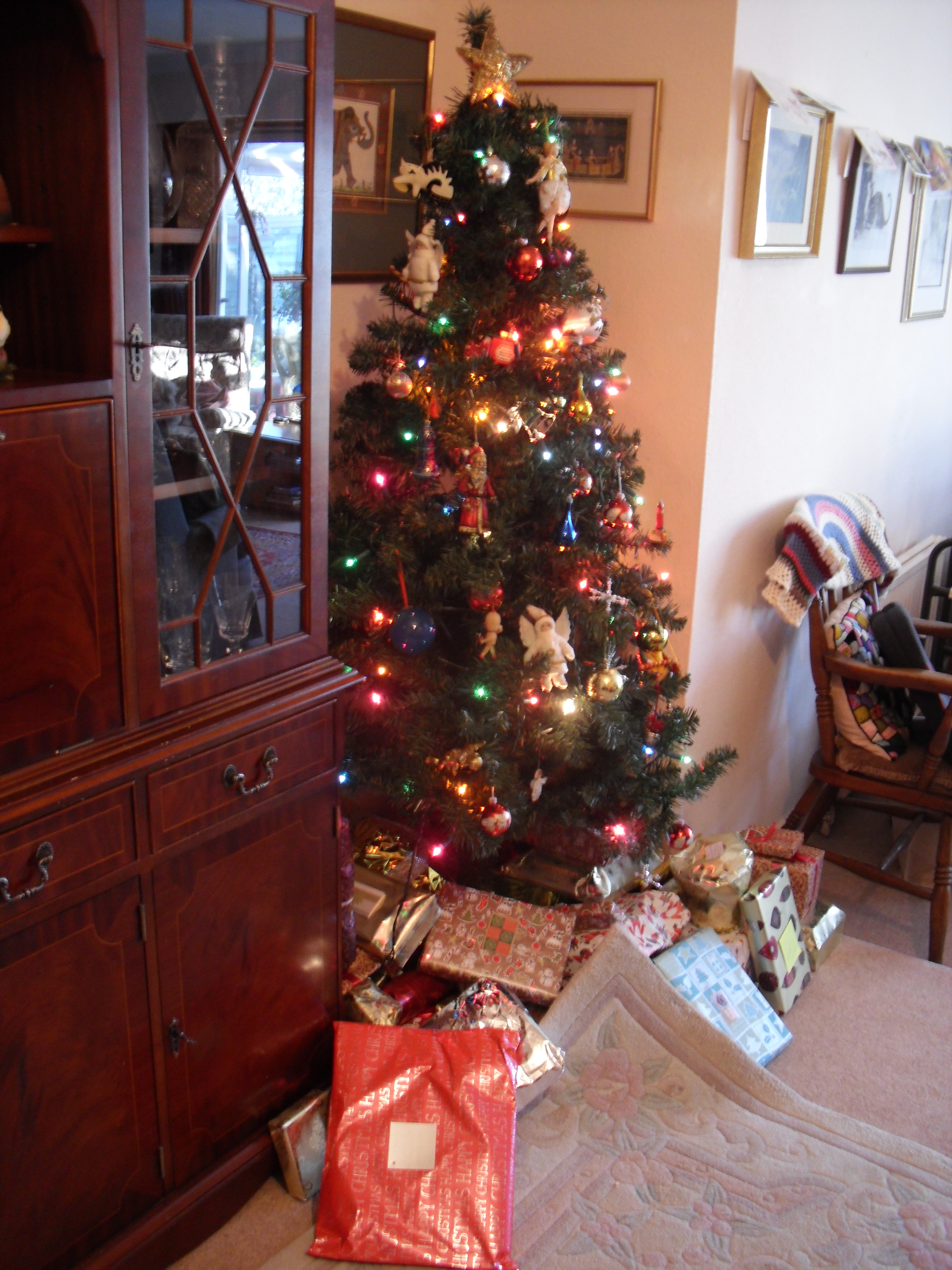
My mother-in-law’s mad Christmas tree. Apologies that the carpet is all ruckled up!

Christmas is coming.  We are all rushing around panicking about what to buy Great Auntie Flossie, trying to get trees up and mince pies made.  And once all the kerfuffle dies down, we’ll be trying to formulate New Year’s Resolutions while our heads are still spinning from the tinselly onslaught.

The blogs I follow are already jam-packed with ideas for resolutions and how to plan your goals for next year.

Aren’t we exhausted enough?

Let’s just take some time to stop and reflect.  To consider what we have achieved this year, before we start pushing ourselves about next.

I don’t think we take enough time to recognise and celebrate what we achieve. We are constantly encouraged to move on to the next thing, the next goal, always more, more, more!

Because we are never enough.

Yesterday I came across Dr Brene Brown’s book, ‘Daring Greatly’, in the library.  I have read and benefitted greatly from her earlier works, but I had avoided this one because for some reason I had got it into my head that it was about parenting, which isn’t exactly relevant to me.  I was wrong.  The first chapter, on Scarcity, had my head spinning!  I highly recommend you read it.

As writers, scarcity is a constant problem.  After all, in such a subjective realm, how can you measure enough?  I wrote recently about the problem of owning yourself as creative.  This is intimately linked to the problem of enough.  How can you know when you have done enough, produced enough, published enough?

I think one way to tackle this sense of dearth is to recognise and celebrate what we have done.

This year I have started this website, something I really didn’t think I had the guts to do.  This is my 86th post.  That’s a whole lot of words.  A big achievement?  You’d better believe it!  I have published over 40 fanfics too.  I have put myself out there.

This is not blowing my own trumpet.  This is stating the facts.

I am proud of what I have made this year.  It may not tally with the list of goals I made in January, but I’m okay with that – I’ll tell you why in the next post.  I’ve been telling myself I didn’t achieve a lot this year, but actually when I sit down and reflect on what I’ve done, I’ve moved mountains!

Journal Exercise:

Before you get too lost in the melee of Christmas, set aside some time to take stock.  Sit down with your journal, and a glass of wine if you like.  Perhaps light a candle, and put on some gentle music.

Think about what you have done this year.  Don’t look at your list of goals and resolutions.  Don’t think about all the things you planned to do, and didn’t.  Think about all the things that did get done, and the unexpected achievements too, things that came out of nowhere, the gifts the Universe has given you.

Count everything, from getting to see your favourite actor in a play, to passing that exam, from painting your biggest picture yet, to being in the village Christmas Panto.  Maybe you had a poetry collection or a novel published, exhibited your art, won a competition, or maybe you read out your first poem in public, or tried painting or drawing for the first time.  No matter how big all small, list everything.  Think about all the creative things you did, the cakes you made, the dances you went to, the pumpkin you carved, the costume you made for your kid’s school play.

Be proud of yourself, of where you are now.  Do it for yourself.  Savour it.

Because you are enough.

Happy Reflecting,

EF

Journal Friday (or rather, Thursday): Samhain

treepumpkinHappy Halloween everybody!

This week, and today in particular, journalling seems to be a particularly apposite subject, which is why you are getting a Thursday post instead of a Friday one!

In ancient tradition, the festival of Samhain, or Halloween as we now call it, was not simply a Feast of the Dead.  There is so much more to it than that.

Our ancestors celebrated the last harvest festival at this time, the final moment before the real onset of winter in Northern Europe.  The main crop  harvests had been gathered in.  Now was the time to choose which of the beasts on the farm was likely to survive the winter, and which were too old or too sick to waste valuable fodder on.  Food had to be laid in for the coming cold months, for the next crops might not be ready until June or July at the earliest.  So the animals that had outlived their usefulness had to be slaughtered and salted for meat, and the perishable parts eaten quickly.

It was not just the animals that faced mortality at this time.  For the majority of human history, we have faced high mortality rates in winter, and even now, you are more likely to die in January than August (click here.)

As the weather deteriorated, and darkness closed in, people were forced inside to do more meditative tasks.  Winter is necessarily a more interior time, and this means both literally and metaphorically.  There is even an energy change – plants retract as greenery dies off, while the roots go dormant in the cold soil, recharging in preparation for the growth spurt of Spring.  Some animals hiberate, and for good reason.  It is no coincidence that there are many myths associated with this process, most notably that of Persephone’s sojourn in the Underworld.

We live in a 24/7 world adorned with electric light and heating, but if you suffer from Seasonal Affective Disorder, you will understand how human biorhythms fluctuate over the seasons, despite our best efforts to pretend we are immune.  Most of us cannot afford to spend 6 months of the year in warmer climes, and if we could, it would not necessarily be good for us.  We need downtime too, just like the plants and animals from which we have evolved.

We need to withdraw into our interiors, our homes and our souls, to curl up beside a crackling fire under fluffy blankets, with hot drinks, to rest our bones.

The active, exterior period of the year is over.  Now we concentrate on the swift approach of Christmas, a time for family, and New Year, and time for assessing our lives and where we want to take them next.  Prior to the rush, it is good to set some time aside to contemplate our dark interiors, to work out what we really want, and perhaps, what we are most afraid of.  Some elements of our lives naturally die off, whilst others are hibernating, or are seeds lying in the ground awaiting the rush of Spring.

We usually choose New Year in January to make resolutions and start new habits, but for the Ancient Celts, Samhain was the new year, and they valued this time of contemplation and stillness.  The Scandanavian Viking cultures observed ‘Winter Finding’, also a period of contemplation.   Instead of letting your plans arise out of the post-Christmas exhaustion and a haze of overindulgence, October/November can offer more time and space to think.

Samhain Journal Exercises:

Make space to be alone.  Settle down in a warm room, light a candle, put on some soft music if you like, and have a glass of apple juice or red wine handy, along with your journal and favourite pen.  Rest and relax.  There is no pressure.  This is time for you.

Think over the past year.  What were your goals?  What were your successes?  Did you experiences failures or losses? Write about them – and what you have learnt from them.

Samhain is a time of natural wastage, of matter decomposing to feed future growth, a time of endings that feed beginnings.  What has died for you this year?  What relationships, habits, activities have fallen away?  Are there elements in your life that you would like to release?  Write about them.

If you have lost a loved one, take time to remember them in your journal, to write down your favourite memories.  If you had a difficult relationship with them, write about your ambivalent feelings.  People say it is wrong to speak ill of the dead, but it is far more damaging in my experience to deify them into saints that they were not.  Do not judge yourself as you write.  Lay your pain, your loss, your grief, on the page if you need to.

The apple is the fruit of Samhain.  Inside its tasty flesh are five seeds.  What seeds would you like to plant into the dark earth for the coming year?  Take time over this – it may take you the whole of ‘Winter Finding’, or the run-up to Christmas, to decide what new dreams you wish to plant.  Don’t rush it.  You are setting your intentions for coming months.  You may like to think about this post from Kelly Rae Roberts as inspiration.

Draw or collage pages to represent the past year, and what you hope for in the coming year.  Don’t worry about how good your pictures are – they are for your eyes only.  The point is to root images of your intention in your subconscious, which doesn’t care if you are Rembrandt or not!

Happy journalling,

EF

Journal Friday: Derek Jarman’s Sketchbooks

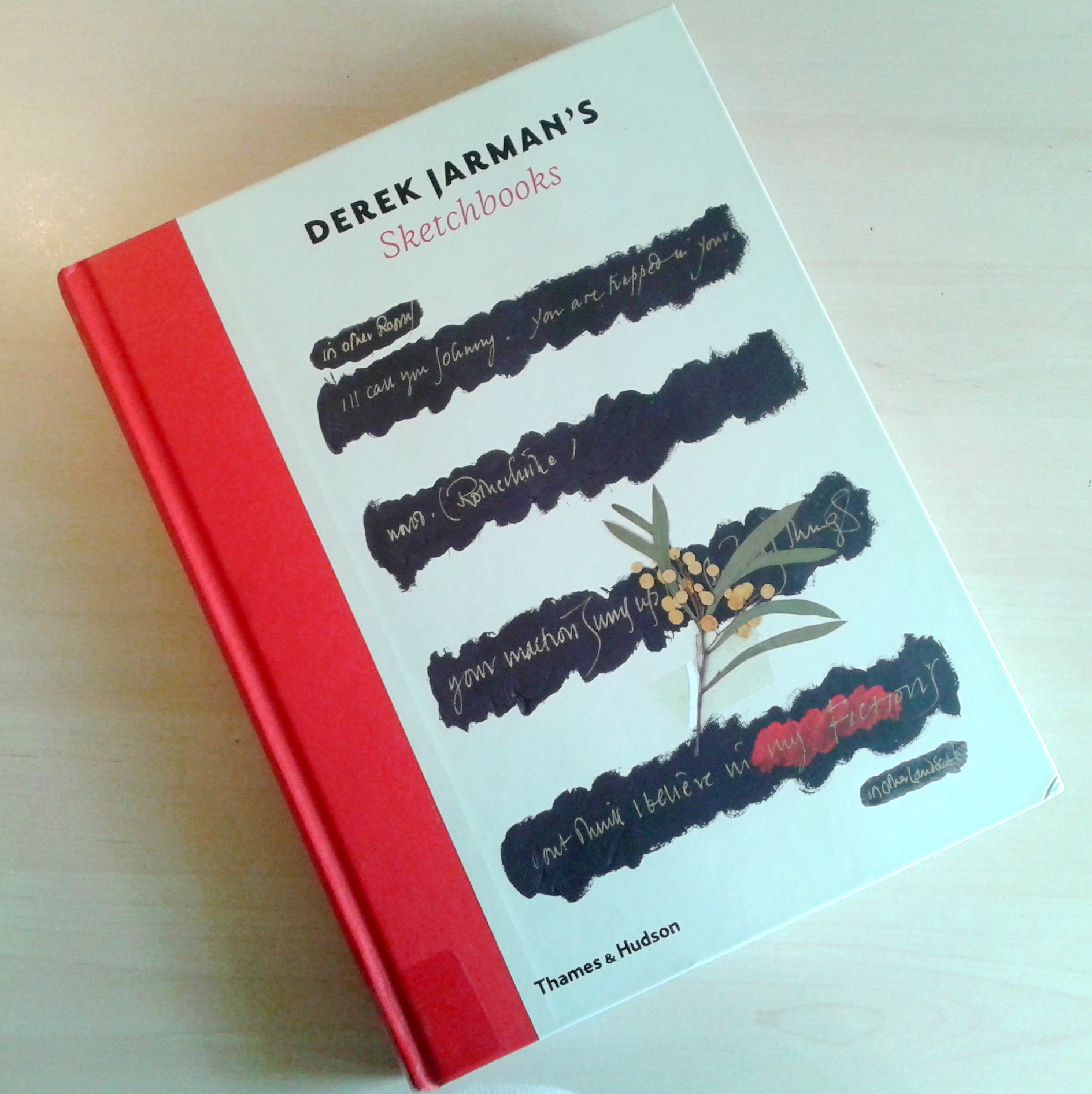
jarman diariesIt’s been a very busy week, and I’ve been diving into all kinds of exciting new and inspirational activities, including the UEA Literary Festival.  I’ve also been submerged in the magical world of Derek Jarman’s Sketchbooks, edited by Stephen Farthing and Ed Webb-Ingall, and I want to share the inspiration I’ve found in them with you.

derek_jarmanIn case you have never heard of Derek Jarman, he was a fabulously talented artist, film-maker, designer, writer, gardener and Gay Rights activist whose career was tragically cut short by AIDS in 1994, aged 52.  He directed music videos for the Pet Shop Boys and designed the sets for Ken Russell’s landmark 1971 film, ‘The Devils’.  At his home in Dungeness, he created one of the most haunting modern gardens in Britain, one that I am deeply in love with.

I first became aware of Jarman when I saw his film, Caravaggio (1986), starring Nigel Terry, Sean Bean, and Tilda Swinton in her first film role.  Later, in 1991, I wept my way through his heart-breaking ‘Edward II’, an adaptation of Marlowe’s play that spoke of Jarman’s outrage at homophobia in Thatcherite Britain.  These are not easy and accessible films.  They are, however, fabulous to look at, and very moving.

When I came across this edition of the sketchbooks in the library the other day, quite by chance, I had no idea that Jarman was a committed visual diarist.  The sketchbooks themselves are large – family photo album sized – and each cover is decorated in black and gold, making a slightly varied but pleasing continuity.  Inside them, Jarman uses ephemera, calligraphy, drawing and painting, poetry, pages of film scripts, actors’ head shots from casting sessions, clippings from newspapers, reviews, photographs of friends and colleagues, bits of feathers and pressed flowers to document his life and each of his projects.  The sketchbooks contain his thoughts on everything from his garden (there is a carefully drawn planting plan), to his illness, to sex, history and death.

Jarman made a series of paintings, the ‘GBH’ series, of black on gold abstracts, inspired by Goya’s Black paintings, and a film called ‘Imagining October’, which arose from finding Sergei Eisenstein’s own copy of ‘Ten Days that Shook the World’, the famous book on the Russian Revolition, and on which Eisenstein had based his ground-breaking film, ‘Battleship Potemkin’.  Jarman had been shocked to discover how much of the book had been redacted with blacked-out text by the Communist authorities.  Both of these concepts are reflected in the sketchbooks, where you can see Jarman working on the idea of black bars with gold writing, seen on the cover of the volume.  Jarman’s anger at the political situation for Gays in the UK shines through these blackened pages.

One of the things that particularly strikes me is the simplicity of the layouts he uses.  Even when he is writing pages of text, making notes or journalling, there is a sense of space.  Nothing is cramped.  He spreads out, not denying himself room to work, enjoying the clarity of white space around his words and images.  This is something I will definitely take away. My diaries always feel cramped.  I always feel that every inch of space must be used, because materials are scarce.  This denial of room to grow is cramping my creativity, something I need to break out of.

I want to draw inspiration from the sheer range of activities Jarman undertook, too.  For him, there is no line in his sketchbooks between diary, writer’s notebook, sketchbook, planner or scrapbook, anymore than there were boundaries between the creative areas he worked in.  Although he was primarily a film-maker, he was so many other things as well.  Jarman teaches me that I don’t just have to stick to writing.  I can follow where ever my Muse leads me.

There are no limits to what we can create, only the ones we impose on ourselves.

Things to try:

  • See if you can get hold of a copy of Jarman’s sketchbooks.  It isn’t cheap – £28 – so maybe you can order it from your library.  You may not like his style of modernist art, but you can appreciate how he puts every aspect of his life into these visual journals to make a record of his thinking.
  • Use your own sketchbook or diary as a kind of studio to record everything you do and think about a particular project.
  • Collect clips, postcards, photos, anything relevant to stick in – Jarman even stuck a ten pound note into his!
  • Luxuriate in space.  Allow each of your drawings, paragraphs, or collaged pieces to bask in a frame of white space, so that they can shine out, and be seen for what they are.  Don’t fall into my scarcity trap – there will always be more paper.
  • Decorate the covers of your sketchbooks or journals in a similar way, as Jarman did, each one slightly different, but using the same colours or materials.  Maybe you could do ‘series’ of notebooks, with matching covers, for different projects.  Don’t be precious about them, however.  Jarman once stuck a heavy bronze seal on the front of one of his books, but it was too heavy to carry and got in the way, so he ended up prizing it off.  The scarred gold cover is even more interesting as a result.

Happy journalling,

EF

Journal Friday: The Emotional Swingometer

go away bagThe Creative Life is a carnival ride.  Don’t let anyone tell you otherwise.

Right now I am on the rollercoaster.

Thank goodness for my diary.  If it were not for that little Moleskine notebook, I would be a complete basketcase.  Actually, I’m probably still a complete basketcase, but I feel better about it, because I write it all down.

The days when I am completely sure I have squeezed every last drop of juice out of Johnlock.

They days when I can’t stop writing Johnlock.

The days when I have so many ideas for stories that I don’t know what to do with them all.

The days when my imagination is a barren wasteland.

The days when one comment has convinced me that my work is utter crap and I owe it to the world to never write again.

The days when a stroppy comment has filled me with so much anger and resentment and martyrdom that I am going to passive-aggressively hold the entire fandom to ransom by never publishing another Johnlock story again because frankly those bitches are all so ungrateful.  (as if they’d even notice.)

The days when that novel I am writing is the greatest thing ever written.

The days when that novel is so bad I am ashamed to even walk into the same room as my laptop.

The days when reviews flood in, and I am Queen of the World and Goddess of All Writing and my ego is the size of Jupiter.

The days when the reviews flood in, and they just aren’t praising me enough, they’ll never say enough good things about me because I am so bloody wonderful, which of course means that secretly I know without doubt that I am an absolute fraud and completely useless.

The days when the reviews flood in, and I am cowering under my desk in shame that anybody could think that story I wrote is readable.

The days when I am satisfied because I have written something that I think is good.  Good in the way that tapping on solid mahogany with your knuckles is good.  Something that is out of my own real, original voice.  Something that I am satisfied with.

The days when the fandom bores me to tears, or irritates the hell out of me, and so does my writing.

The days when I know my writing is completely stagnant, and I need to progress onto the next stage but I don’t know where to start.

And the days when I just sit down and write.

Before, or after I have written some fiction, I take a little time to reflect.  Sometimes I write in my journal to get my juices flowing, the way Morning Pages are supposed to.  Sometimes I write afterwards, to reflect on where I am going, on my emotional equilibrium (or lack of it).

Usually, when I have published a story, I watch the comments coming in, and try to write through my responses, the paranoid ones and the egotistical ones, the happy, the grateful and the furious.

My journal helps me keep my writing experience in perspective.  There isn’t a lot of perspective about our own creativity, lets face it.  We are all reared to be perfectionists, to rule ourselves out in the basis of not being Picasso, or to believe ourselves to be Dickens without needing to do the hard work.  It is so hard to be objective.

My journal helps me remember that the only life I am saving when I write is my own.  In the great scheme of things, this is not battlefield surgery.  Or, if it is, it is on my emotions alone.  That is why objectivity is important.

I need to remember that my writing is not about what other people think.  It’s about me.  At its very core, it is about healing my own wounds. 

Even if I never publish another word, I will still keep writing, partly because it’s a compulsion, and partly because it mends my soul.

That is why keeping a journal is crucial for every creative person, whether you are amateur or professional.  It reminds you of the WHY.

How do you use your journal in your creative process?

Happy journaling,

EF

Journal Friday: Wardrobe Planning

More dashBecause I’m ill, I am not able to work, and that means everything I do has to be on a budget – energy-wise and money-wise.  As a result, planning is my friend.  If I have thought about something beforehand, it makes everything so much quicker, easier, and less worrying.  That includes clothes.

I was looking at this fantastic dressing room today, and was shocked that anyone could have that many clothes.  If I did, I’d never get dressed at all because I wouldn’t have the energy to decide what to wear.  I have a small wardrobe, partly on purpose, because cutting down options means less to worry about, but also because of money.  I just can’t afford to spend lots.

Mostly I buy my clothes from my catalogue, on a monthly payment basis, and annually, with my birthday money.  Relatives are kind enough to donate to my clothing fund every year, and I plan very carefully what I am going to spend it on.  I make sure all my big purchases colour co-ordinate, and concentrate on one core colour and two accent colours.

Currently navy is my core, and bright red and bright (lime) green are my accents.  At the moment, though, I am feeling a pull towards charcoal grey, and since I bought a dark grey sweater in the sales a few years ago, I’ve been thinking I might go in that direction a little.  Plus it seems to bring out the colour of my eyes.  (It’s really hard to work out what colours I can wear these days, as I am growing out my coloured hair and letting the grey come through.  I didn’t think this measure, taken because I just can’t be fussed with home dyeing anymore, would make such a big difference to my complexion, but it does.)

grey croppedAnyway, the way my brain is, I can’t keep all this information in my head anymore, so I have started using my journal to plan my outfits.

I have an ulterior motive here too.  I haven’t been able to get past the creative block I have with my art, and I find that if I just do a scribble in my journal, it doesn’t have to perfect.  It is just a gesture drawing with a few colours to note down information in a graphic form, and it cons Nigel into thinking what I am doing is actually not painting at all!  Clever, eh?

black hat litUsing my journal in this way is a helpful planning tool.  It helps me to work out what extras I need in addition to what I already have, and to budget for them.  It also allows me to think through how I really want to look for a particular occasion, such as a wedding.  I am also finding it is changing the way I feel about my clothes.  I’m finally at the age when I can get away with wearing very classic styles, and you can see from my sketches that there is a distinctly ‘50s vibe going on.  I’ve always been in love with Dior’s 1947 New Look, and it looks like that is where I am going.  I’m intend to grow old elegantly as well as disgracefully!

How could you use your journal to plan your life or your look?

Happy journaling,

EF

The Need for Habit

calendarI’m crabby.  It’s been two days, and I’m not fit to know.  This should not be happening.  I’ve had a lovely holiday, nearly two weeks with the Husband at home, sunshine, dear friends and family visiting, trips to the beach and great food.  Yesterday, even the Husband noticed I was out of sorts, which is saying something!

This morning I was fed up to the back teeth with myself.  I really hate feeling like this.  Stale.  I sat down with my journal and worked it out.  What is it that is making me so grumpy?

Turns out, it’s the very thing that should be making me happy.  My holiday.

The critical mass of creativity has now built up to such an extent that I need to get back to work.  Holidays are great, and important times for reflection and rest.  Don’t get me wrong.  But I’m ready to get back to it now.

What I’ve been saying all along is true.  You need the Habit of Art.

Well, I need it, in any case.

I need to get back into my routine.  I need the Husband to go back to work so I can have the house to myself.  I need my thinking time, my moodling time, and I can’t have that with someone else in the house, no matter how much I love them (and I do), because my first reflex is always to consider them first, and put myself and my art second.  Even inside my head.  I find myself resenting the people I love, and my family and friendship commitments, if I don’t have this mental and creative space.  My well has been filled, my Muse is ready to let rip, and I am bubbling with ideas.  What I need is the time and space to get to it.

I need my routine back.

I can’t do this yet.  I’ve a bunch of things to get through first.  Lots of socialising with dear friends.  There will be more trips to the beach, and strawberries to eat in the garden in the sun.  My Muse can get as grumpy as she likes, but I can’t let her out just yet.

It’s not long now, though.

And it’s great to know, thanks to my journal, that it’s not the fact that I have run out of ideas that is making me a bad-tempered cow.  My creative juices haven’t run stale.  It’s just that there is no space right now to get the words or paint on the page.  I must be patient.  The time will come.  I have had my rest, refilled the well, and now I am revving at the start of this new race!

And then, come the green light, and Hooray for the Habit of Art!

Happy creating and holidaying, whichever you are doing,

EF

Journal Friday: The Structuring Absence

elephantWhen I did my English degree, way back in the late ‘80s, Literary Theory was all the rage.  I don’t know if they even study it now, but it was the thing then.  Literary theory is the place where literary criticism, philosophy and linguistics meet.  Throw in a good handful of politics, sexual politics and psychology and you have a seething mass of academic pretentiousness that no one with a reasonable sense of humour should be subjected to.  Literary Theory goes in fashions like everything else, and the Next Big Thing then was Postmodernism, which leant heavily on Poststructuralism and the work of theorists like Jacques Derrida and Roland Barthes. We read Thomas Pynchon and Paul Auster and pretended to know what they were on about.  We were encouraged to use words like signifier (word), signified (meaning), and problematize (make something difficult).  I find it deeply satisfying that Roland Barthes’s death resulted from being run over by a milk float.  It couldn’t be more pedestrian (sorry for the pun), or ironic, could it?

Now why am I ranting on about all this pretentious bollocks when I should be talking about journaling?  Well, let me explain the one phrase that poststructuralism gave me which I still cherish today:

The Structuring or Signifying Absence

This is actually another way of saying ‘The Elephant in the Room’.  It is the thing that is never spoken of, yet which underlies and give shape to everything that happens around it.  It is the empty space which is significant, which speaks of something profound.

It is ‘that which is left unsaid.’

Take a very simple example.  In Daphne du Maurier’s novel ‘Rebecca’, the character of Rebecca de Winter and her untimely death are the signifying absence.  Rebecca structures the whole novel, and the behaviour of all the characters revolves around her, even to the extent that we never learn the heroine’s name, because Rebecca is more important in everyone’s mind, including her own.  Rebecca is a tangible presence, even though she no longer exists.

Actually, this isn’t strictly a good example because its too overt.  Take the Wooster novels of P G Wodehouse.  Set in the 1920’s and ‘30’s England, they almost never mention the Great Depression or the First or Second World Wars, and yet the fact that as readers we know that the ridiculous events are going on against this backdrop makes them all the more ludicrous.  Wodehouse does lampoon the figure of fascist leader Oswald Moseley at one point, but basically, his choice is to exclude politics.

The point of the structuring absence is this:  that what the writer chooses to exclude is just, if not more, significant than what is left in.

How does this relate to writing a diary?

I am thinking right now of gaps.  I have been keeping a journal for nearly 40 years now (ouch!), but there are plenty of gaps.  And I am sure those gaps say as much about my life as the parts where I was writing.  They usually happened for two reasons:

  1. I was having a brilliant time and was too busy living life to bother writing everything, or anything, down.  My honeymoon is a great example of this.  I was determined I was going to record every detail of our tour across the south of England, but when it came to it, I was having too much fun!  So all I have is the photos we took.  And I think that is very significant.
  2. I was in a state of such terrible depression that I was incapable of writing.  This is far more common.  There are several gaps of months in my diary during my early 20s, when I was struggling with clinical depression so profound that it threatened my life, and it was impossible for me to write at that time.  So I didn’t.

What we don’t write about in our diaries is just as significant as what we do.  Every diary entry is an act of self-censorship, whether we know it or not.  By choosing what we write about, even if the choice is unconscious, we are in fact editing, fashioning a narrative of our lives structured by our choices and the responses we have to our life events.  Just as Wodehouse chose, out of what I believe was sheer political naiveté, not to write about politics (to his great cost as it turned out), we may choose not to write about our cancer, our son coming out as gay, our struggles with debt, even though these are massive issues which shape our lives in profound ways.  We may even choose at times simply not to write at all.

When I don’t write in my diary, I am always aware that something is going on for me.  I may be in denial about some issue that is obsessing me, or I am too sick to write, which is an issue in itself.  Either way, the gaps between dates in my journal are a red flag.

But they are not a reason for self-flagellation.

When I was a kid, I thought that you had to write a diary every single day.  A lot of people believe this, but very few manage it, and most give up because of this misconception.  Don’t beat yourself up when you have non-writing periods.  Accept these empty spaces as significant, as structuring absences, and consider what they might mean for you.  Above all:

Write when you need to write.

Journal Exercise:

At the moment a big gap is developing between today’s date, and the last one I wrote in my journal.  I know why this is.  I am ill.  Staring into space or lying on the sofa watching Harry Potter yet again is about as profound as I can manage right now, and I’m okay with that.  I will go back to it when I am ready, and because I don’t make a big deal about it, I won’t be creating any blocks, so the gap will be much smaller than it would have been otherwise.

Are you creating a journal gap, a structuring absence, consciously or not?  Take some time to contemplate why this might be happening for you – you don’t have to write about it in your journal, just allow it some kind and accepting thought.  It may because you are hung up on ‘doing it right’.  It may be because there is a HUGE elephant in your life that you are simply not ready to address yet.  It may just be because you are present in your life, too busy or, what a delight, having too much fun!

Whatever is going on for you with this, make peace with it.  Be accepting of yourself.  You might even want to write something in your journal to that effect:

‘I am not writing much here at the moment and I’m okay with that.  I’ll get to it when I need to.’

You may not want to write in the ‘why’.  Perhaps that is better left until you are ready to write again.

And if you are writing regularly, and getting lots out of it, make sure you relax into it and don’t make it an OUGHT.

Happy journaling,

EF

Journal Friday: Reflecting on Creative Blocks

paintbox

So, if you read my last post, you will know that I am increasingly drawn towards drawing and painting at the moment.  This is my current creative season and I want to honour it.  So today, no doubt, you will be expecting me to deluge you with jpegs of the beautiful pictures I have been creating.

Yeah, Right.

Nigel has been hard at work again.  I have produced the sum total of zero drawings in the last two days.  Yesterday I couldn’t even bring myself to go into the study to get out my sketchbook and paints.  The blank page suddenly seems terrifying.  I can’t even doodle.  How the hell have I lost the ability to doodle, for Gods’ sakes?

Bit not good.

This, my friends, is where the journal really comes into play.  I sat down with my trusty moleskine and pen, and thought about my childhood memories of drawing.

I used to draw all the time.  It was what I was known for, amongst family and friends.  I was never without a piece of paper and a pencil.  I made little books and illustrated them.  I wrote stories and illustrated them.  I wrote stories about my favourite TV programmes, like ‘Blakes 7’ (remember that one?  I had a terrible crush on Paul Darrow) and drew the characters all the time.  (If only I had known about fanfiction and fanart then!)  I was obsessed at one point with the Tudor monarchs, and copied their opulent portraits and clothes with fibre tipped colouring pens.  Then I got into the Ancient Egyptians, and copied their sideways style of representation.  I even copied the drawings of E.H Shepherd in the beautiful edition of Kenneth Graham’s ‘The Wind in the Willows’, which my father gave me – it was his favourite book.  And I painstakingly illustrated all my school work (except the Maths, of course, because that was too serious, which was probably why I was never any good at it.)  In other words, I spent hours absorbed in transferring images from my head onto the page.

What happened?  Senior school art classes.  Hours of drawing still lives of pots and pans. Teachers who made us draw boring subjects, and never gave us any information about technique.  I’ve learn everything I have ever learnt about art and how to use paint from copying, which my art teachers said was the worst possible sin.

(But I am getting ahead of myself, I’m supposed to be thinking about my childhood drawing.)

As a kid, art was my obsession, but it requires materials, and they were in short supply.  For paper, my dad bought home gash computer paper from work, the perforated kind that comes in a concertina, with holes along the edges, and with about the same handling quality as IZAL toilet paper.  I was occasionally bought coloured felt-tipped pens but in the 1970s they were rubbish, and the black ones were invariably dried out before they were even used.  At least 25% of the pens in the pack didn’t work within about two days of having them, and you had to conserve those that did with fiendish vigilance.  There were occasional gifts of watercolour pan boxes, but they were very low pigment, and anyway, painting in your bedroom is frowned upon by most mothers because it is messy.  And there wasn’t anywhere else to paint.  What I am trying to say is that I grew up yearning for those huge bottles of poster colour paint that stood on the trolley in school.  The thought of being able to just splash paint about willy-nilly was ridiculous.  My parents wanted to encourage my artistic side, but they didn’t have the disposable income or the mindset to invest in good raw materials for it.

The result is that the scarcity of my childhood has bloomed into a scarcity paranoia in adulthood.  As soon as I was earning, I went out and bought decent art materials, but then I couldn’t make myself use them.  I have drawers and boxes full of sketchbooks, pastels, inks and paint tubes that have never been opened because I still have the mindset that they have to be conserved.  I can’t waste a thing.  To the point where I can’t use a thing.

None of this would I know and understand, were it not for exploring it in my journal.  And in my journal have come the little glimmers of a solution, a plan to tackle my stuckness with baby steps so minute that I can fool Nigel into thinking I’m not even putting pen to paper at all!  Slowly and gently, I will con myself into the belief that making a tiny drawing is safe.  And then I will con myself into making a bigger one.  Until one day I will fulfil my dream of illustrating my own novels, and making huge abstract expressionist canvases like Rothko and Pollock.  But not yet.  To begin with, I will throw out everything I learnt in art class, scrunch up my eyes and begin again, as a child.  It will be hard, but I can do it.  I did it with the writing, after all…

Journal Exercise:

Are you also struggling with a creative block?  Is there something you used to do, and would like to do again, but are afraid to?  Perhaps you are just stuck and you can’t get out of your own way.  You probably don’t even know why.

Get out your journal and take a few deep breaths.  Close your eyes and let yourself fall backwards through time. Feel yourself become a child, doing that thing you loved do and don’t do anymore, whatever it is.  Immerse yourself in that memory.  How did it feel?  What was so satisfying, enticing, transcendently joyful or just effortless about it?  How did splashing paint on paper, sewing a doll’s dress or dancing to the radio help you express yourself?  Connect with the fun, the pleasure, the satisfaction.

Now write about it.  Take time to write out all you can remember about doing that creative activity, and take the memory from as early an age as possible.

Now take another deep breath and continue to write, this time about when you stopped pursuing that activity.  What happened?  What age where you?  Was there criticism from parents or responsible adults?  Or was it competition with other children who you regarded as being better at the skill than you?  Perhaps you reached puberty and decided that form of creativity was childish and no longer for you?  Or you felt you couldn’t go any further with it because you couldn’t make a living at it?  Whatever the reason, explore your memories of it.  Be as thorough as you can.

Give yourself some time to sit with these memories, to contemplate them.  Decide what aspects are still stopping you.  Are you, like me, fearful that your work won’t be ‘GOOD ENOUGH’ (thanks, Nigel), or still carrying that fear that there isn’t paper to waste?  Will doing this activity make you vulnerable in some way?  (If so, you don’t have to show it to anybody, just keep it for yourself.)

(If some major trauma is involved, it is wise to seek professional help.  A therapist is invaluable, and those who specialise in expressive arts or Gestalt might be just what you need.  Don’t suffer flashbacks alone as a result of this exercise.  Self care should always be the first rule of creative expression.)

Think about ways to ease yourself through these issues.  Maybe taking a beginners or taster course, where everyone will be fumbling about at the same starter level, could encourage you that what you make doesn’t have to be perfect.  Perhaps an online course that you can follow in private, and at your own pace (Alisa Burke has some brilliant art and sewing courses.)  Or you could buy some kids art materials and use them with your own kids (or borrow someone else’s for an afternoon).  Watch how kids are completely free of judgement when they make art.  They are just having fun.  You can, too.  (Actually, I think I may have to borrow some children and do this myself!)

Trust that what comes up in writing your journal is from deep within, an inner wisdom that will guide you back to your creative centre.  Above all, be gentle with yourself as your formulate your action plan, and give yourself as much time as you need.  You don’t have to become Picasso or Nijinsky overnight.

Happy Creating,

EF