Category Archives: Notebook

Nuts ‘N’ Bolts: Writing Exercises

writing notebook Firstly, an apology.  Observant readers will note that today is Thursday.  Yes, I am a day late in posting.  Sorry.  Life got in the way, in the shape of a migraine, and it’s not funny trying to write with tunnel vision and the pain equivalent of a knitting needle stuck through your eyeball.  I figured I might sound somewhat distracted (as indeed I was), so in the spirit of demonstrating how important self care is, I bugged off and went to bed.  Today’s post is something of a restart.

For a while I have been feeling the itch to get back to writing original fiction.  I’ve been working on fanfiction almost exclusively for a couple of years now, and while it has been hugely instructive in terms of both technique and confidence, I feel like it is time to start making some personal headway again.  Hence the restart.

Getting back to basics is one way to do this if, like me, you are feeling a little at sea when it comes to what to write about.  And one of the best basics to get back to is the marvellous tool that is the writing exercise.

Writing exercises are based on the idea of stream-of-consciousness and free association.  You sit down with your notebook and write for a set amount of time, without judgement or criticism.  You are free to make mistakes, try stuff out, experiment with new words, phrases, images, metaphors.  This is a free-form space where there are no mistakes, only ideas tried on for fit and comfort.

What you need:

  • An allowance of time (10 minutes, 15, half an hour if you have it, or the luxury of more.)
  • A notebook (maybe your writing notebook, or one you keep specially for exercises).
  • A good pen that you can write easily with.
  • A timer.
  • A quiet space to work.
  • A prompt.

What to do:

Maybe you sit down to write at your desk, and your brain goes blank, or worse, is crowded with too many ideas that are too big to fit into 10 minutes or whoever long you have got, and you freeze.

Say hello to your little friend, the prompt.

A prompt is a word, sentence or idea that you use to start you off.  Write it in your notebook.  You may like to start a fresh page, thus allowing yourself a psychological fresh start.  Set your timer to your allotted amount of time, and off you go.

You start writing whatever comes into your head.  You might be writing about yourself, the way you would in your journal, or you might be writing about a character, or from a character’s point of view.  You might describe a scene or an experience.  Keep writing.  Whatever appears on the movie screen of your brain, write it down. And the next thing.  And the next thing.  Keep going until the bell rings and your time is up.

This is a great way of generating material, especially if you are the kind of writer who finds building up words a process of torture.  It is also good for exploring the backstory of your characters, finding out what makes them tick.  And of course, you will occasionally find yourself coming back to reality in the middle of a short story that you didn’t even know you had in you, as I often do.

I like to do two or three 15 minute exercises at one sitting, which allows me to really get into the groove.  You may not have time for that, and that’s okay.  The important thing is that you do the exercises.  And do one daily.  Limber up.  Get into the Habit of Art.

If you find it hard to get yourself into the mood, or to make time, writing exercises are a great tool to use with others.  Arrange to meet up with a writing pal at the local café, and do a few prompts together.  You don’t have to share what you have written if you don’t want to, but if you make an appointment with someone else, you are more likely to show up at the page and do the work.

Where to find prompts:

Ah! I hear you cry.  But where am I supposed to find these fabled prompts?

Well, there are plenty of books around that offer just these kinds of starting grounds.  I am very fond of the following:

‘A Writer’s Book of Days’ by Judy Reeves

‘The Writer’s Block’ by Jason Rekulak

‘The Writer’s Idea Book’ by Jack Heffron.

Search the internet for ‘writers prompts’, or check out http://creativewritingprompts.com/, which is a delight.

In the meantime, here are a few to get you started:

  • What does your character carry in their pockets and why?
  • I woke with a start…
  • Heat
  • My first pet
  • A favourite meal

Happy Writing!

EF

Inspiration Monday: Dreams

angrysea

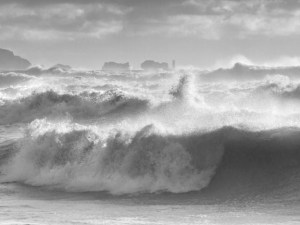
Angry Sea by John Lewis Photography

Everybody dreams.  Maybe you don’t remember all your dreams, but they are there as a window into your own psyche, and to explore as a source of inspiration.  Dreams are a chance for your imagination to go completely wild, places where the impossible really can happen.

I’ve always been very fortunate to dream in vivid technicolour.  Many of my dreams are coherent stories in filmic form.  I am often aware that I am dreaming, and find myself enjoying the stories playing out inside my head.  Maybe you don’t have that capacity, but through the technique of lucid dreaming, you can develop more.  Maybe you only have occasional images, snapshots of your dreamworld.  Even these can be fodder for your art.

One Christmas Eve I had a dream.  I know it was a coherent one, I was aware of it at the time.  When I woke in the morning, I had only one image left in my memory, but it was a compelling one.  Imagine a man, looking very like Richard Armitage, tied to a chair.  A demon stands in front of him and sinks its hand into his chest, and pulls out his still-beating heart.

That was all there was.

No context.  No meaning.  Just this image.

That was where my five book series of Evenlode novels began.  Five novels, which began with one blurrily remembered image from a dream.

Here is the dream I had last night:

Two teenaged boys are living in a run-down, poverty-stricken, former industrial city in the North of England.  They roam a half-derelict, grey landscape pocked with disused steel works and the skeletons of mine engines.

One is tall, dark and skinny, the other short, stocky and blonde.  They are both outsiders, clinging together for support because they have no one else.  They are hunted by a gang of other boys who regularly attack them, and call them names.  They accuse the two friends of being gay.  That is the reason they give for their hatred.

One day, the blonde boy helps his friend through the front door of the dark boy’s parents house.  He has been badly beaten.  His father is at home.  When the father finds out the reason why his son has been beaten, he assumes the accusers are correct.  He starts to beat his son for being gay, for being weak.  His belt will make the boy a proper man, he claims.  The blonde boy stands between father and son.

‘Your son is a proper man.  A real man.  He protects me.  He takes the heat for me, because I am gay, not him.”

The blonde boy has already been rejected by his own family for his sexuality.

Later, broken and despairing, the boys walk, hand in hand, up the hill to where a huge World War Two concrete bunker stands, clinging to the top of a sea cliff above the town.  The sea is rough, the wind strong, the air full of swirling grey drizzle.  The cavernous interior of the bunker has been taken over by the council, and is being used as a reahearsal space for the city’s orchestra.  They are practising a piece as swirling as the tormented weather outside.

Together the boys walk through long dark corridors buried in the hillside, swelling music echoing around them,  until they reach the roof of the bunker, where the Ack-Ack guns were once mounted.  Together, they stand up on the narrow wall around the edge, and kiss.  And then, together to the last, they jump and fall, still holding hands, down the cliff and into the churning seas below.

Yes, it is messy and there are holes and cliches in it.  But that is what I dreamt, in its entirety, as I remember it.  It is atmospheric and tragic, and I don’t even want to think about doing a psychological reading of it.  But wouldn’t it make a great short story?  Or even a short film?

Dreams are a free resource just floating about inside your own head, begging to be used.  Don’t waste a minute.  After all, isn’t that a great excuse to sleep more?

Writing Exercises:

You can find our more about Lucid dreaming here and here.

Keep a notebook by your bed and write down your dreams as soon as you wake.  Don’t wait.  You will forget them.  Write down whatever you can remember, no matter how disjointed it may seem.  Describe what you saw in as much detail as you can.  I get enormous, almost baroque detail in my dreams.  Get as much down as possible, even if it seems too weird, complicated or just completely insane!  You never know what may be useful later.

(I find this technique especially helpful with troubling dreams or nightmares, which I have a lot.  These sorts of dreams can follow me around during the day, filling my waking heart with dread or sadness.  However, I find that once I write them out, their power over me wanes, and I don’t get the ‘after effects’.)

Now, dip into your dream notebook whenever you are looking for an idea or a writing exercise to play with.  Choose a dream, a scene, an image, or a whole story if you get them, and use it as a starting point.  Write stream of consciousness for fifteen or thirty minutes and see what comes out.  Can you use this as the start of a short story?  A screenplay?  Is there an interesting character here for you, as there was with my Christmas Eve dream?

If you are a visual artist, what colour palette comes out of this dream for you?  What striking images, silhouettes, shapes stick in your mind?  For example, in my ‘two boys’ dream, the colour palette was greys and blues, the shapes of derelict buildings were jagged silhouettes against the lowering sky.  Explore the colours you recall in your sketchbook.  What would a painting of your dream look like?

A musician might take from my dream the echoing strings of the orchestra, muffled by the concrete, and backed by the roaring of the waves as they crash against the cliff below, and turn that into some kind of soundtrack.

Where can you take your dreams?  How far can you drive your limitless imagination?

Happy dreaming,

EF

Inspiration Monday: Art

I’ve talked a bit about using images for inspiration before, here.  Today, I want to say a little about the inspiration specific pieces of art can offer.

Girl with a Pearl Earring by Johannes Vermeer

Girl with a Pearl Earring by Johannes Vermeer

I hope you have seen the film ‘The Girl with a Pearl Earring’ with Colin Firth and Scarlett Johannson.  But have you read the incredible book on which it is based, by Tracy Chevalier?  Chevalier’s work is spare and beautiful, as atmospheric as the eerily beautiful painting which inspired it.

The Nightwatch by Rembrandt van Rijn

The Nightwatch by Rembrandt van Rijn

A film I sincerely doubt you have seen unless you are a particularly rabid Martin Freeman fan, or a Peter Greenaway fanatic, is ‘Nightwatching’, which deals with the events behind the making of Rembrandt van Rijn’s most famous work, The Night Watch, above.  While it is a stagey and self-aware production, typical of Greenaway’s work, Freeman’s performance as Rembrandt is devastating, for if ever there was a part he was born to play, it is this one.  Greenaway takes the making of the painting, and interweaves it with conspiracy, murder and an ironic portrait of seventeenth century Dutch life and commerce.  Add to this the tragic downfall of the artist with which the picture is associated, and you can see how a single painting can be the starting point for a many-faceted new artistic endeavour.

Coal Face Drawers by Oliver Kilbourn

Coal Face Drawers by Oliver Kilbourn

‘The Pitmen Painters’ by Lee Hall, is not specifically inspired by an individual work, but by the collective experience of a group of miners  from Ashington, near Newcastle upon Tyne, who set up a long-lived and much praised art group.  It is as inspiring a piece of theatre as I have seen, and  brings proper credit to the work of the pioneering men who took up painting against society’s expectations in the 1930s.  The fascinating painting above is Coal Face Drawers, by Oliver Kilbourn, a scene from a miner’s own life.

Rothko Seagram Murals

When I was seventeen, I visited the Tate Gallery for the first time.  The Tate Modern had not yet been created, and the fabulous Seagram Murals by Mark Rothko were at the old Tate Gallery, what is now Tate Britain.  The Murals now have an area designed to Rothko’s original specifications in the Tate Modern, but then, they were in a much smaller, but still impressive room.  I sat there amidst these vast panels of claret and black for nearly two hours, completely mesmerised.  Rothko’s huge blocks of colour have been much derided by those who dislike abstract art, but his work is about the effects of colour on the emotions, and I can definitely tell you that those paintings had an intense effect on my teenage brain that day that I will never forget.  I have never felt so calm, so peaceful, so at one with myself and the world, and I have spent my life since chasing after that feeling, hoping somehow to replicate it.

As a result I became interested not only in Rothko’s work, but in other abstract artists and their theories.  I read Kandinsky’s ‘Concerning the Spiritual in Art’, and was intrigued by the idea of the painter imbuing a work with some kind of spiritual presence.  Eventually I used this idea for a novel, in which a much-coveted and rare painting is imbued with occult properties that devastate the lives of its owners.

It is important to state that I am not encouraging you to steal other people’s art.

Proper credit MUST be given.  We must always acknowledge where we come from, and the ideas that have influenced us along the way.  That is part of being an artist, in whatever medium.

What I am suggesting here is that the great works of those who have gone before us can inspire original and unique responses of our own.  It would not be so far from the truth to say that this is what fanfiction is – and if you are sceptical about fanfiction, I refer you to the literary responses to great art that are much lauded:  Jean Rhys’s novel, ‘Wide Sargasso Sea’, which is a retelling of Charlotte Bronte’s Jane Eyre, or perhaps ‘Death Comes to Pemberley’, PD James’s sequel to Jane Austen’s ‘Pride and Prejudice’.  Milton’s ‘Paradise Lost’ is inspired by the Bible, so don’t be sniffy about your inspiration!

Creative Exercises:

Visit an art gallery.  You would be amazed what fabulous works of art are available to view in your local county town or art sellers.  Treat yourself to a big trip, and visit a major city where you can enjoy a large museum.  Take time to wander about and figure out what you like and why.  Buy postcards of your favourite pieces.  Do a bit of research about the artist and their ideas.  Salt this inspiration away for future reference in your writing notebook and your image box, or let it fizz away in your brain like a vortex, spitting out new ideas as debris as it spins.

Alternatively, you could check out the suggestions above, watch the DVD of ‘Girl with a Pearl Earring’ or ‘Nightwatching’, or read Chevalier’s wonderful novel, and see where they take you.

Happy Creating,

EF

Inspiration Monday: Colour

colorful-paints-WallpaperThe fact that human beings can perceive colour has been a huge influence on our development and our cultures. Colour has helped to protect us from danger, and find good things to eat.  It has helped us to define who we are in relation to others, as well as what we believe.  These days, it is as widely used in marketing and medicine as it always has been in art and fashion.  Colour blindness can prove a significant disability.

Thinking about how we respond to colour can be a rich seam to plunder for creative purposes.  The artists of the Fauvist movement, such as Matisse, and later Abstract Expressionists such like Mark Rothko, used intense shades of colour to convey and provoke emotion.  Both Matisse and Picasso made blue nudes, but look at the images they produced:

blue-nude picasso

Picasso Blue Nude 1902

blue nude Matisse 1952

Matisse Blue Nude 1952

Matisse’s vibrant cutout provokes a very different response to Picasso’s sombre meditation on grief.

Blue is the perfect colour to think about as an example.  It is culturally significant in many ways.  For example, the pigment lapis lazuli, a vibrant blue, was the most expensive pigment available to Medieval and  Renaissance artists, so was reserved for only the most important figures. Thus, the Virgin Mary is always pictured wearing a blue robe.  In Medieval England, blue was worn as an amulet to ward off ill-health, probably because of its Marian associations.  (This is why brides still wear ‘something blue’.)  In contrast, in some cultures, blue is shunned as the token of death, ghosts and bad luck.

We identify blue with calm and peace, and blue light has been used in urban areas with some success to reduce violence.  Blue can also be associated with depression – we talk of ‘having the blues’.

Conversely, red is seen as a vivid, energetic colour, associated with lust and sex.  We speak of the ‘scarlet woman’ for example.  It can also be interpreted as a warning of danger, as in ‘Stop’ signs and traffic lights.  Rooms painted red look smaller to our perception, but also warmer and cosier.  A blue room looks airy and spacious, but can seem rather cold.

Our emotional response to colour is also of interest.  We speak of ‘warm’ and ‘cool’ colours, and choose the clothes we wear by colour according to our mood.  I wear bright red all the time, but my mother accuses me of looking ‘too bright’ when I do!  My sister has such a visceral response to the colour lilac that it actually makes her nauseous.

I never really appreciated the importance of colour in the landscape around me until I moved to East Anglia.  I grew up on the south coast of England, by the sea.  There, the beaches are formed of toffee-coloured flints and broken, bleached shells.  The sea is often edged with emerald green seaweed, and is invariably the colour of cold coffee.  The crumbling sandy cliffs are the colour of ginger, and are held together by clumps of dark green gorse which turns acid yellow in spring.

The colours of the Norfolk coast are much more muted.  The beaches are pale sand, bound with dunes of khaki marram grass.  The sea is often indigo or petrol blue, and the skies are milky even in the most brilliant of summer weather.  Here, the prevailing colours are buff, dun, woad, grey.  They make the south coast seem gaudy by comparison.

As an artist or writer, you can use all this to your advantage.  The psychology and culture of colour can set the scenes for your images and stories.  Imagine a woman walking into a grey room in a scarlet dress?  (Artist Jack Vettriano uses this kind of contrast to huge effect!)  Imagine what people would be whispering behind her back.  Imagine what the response of the man she is meeting for dinner might be.

Creative Exercises:

Spend some time thinking about your own responses to colour.  What colours do you have in your home, and why?  Do they remind you of happy memories, or are they just there?

What are the colours you predominently wear?  How do you feel in them?  Go to the shops and try on garments in colours you would never normally wear.  How do they feel?  Why would you normally shy away from them?  What do you think the colours would say about you if you appeared in public in them?

Spend some time sitting on a bench in the high street, watching passers-by.  Note what colours they are wearing.  Are you drawn to them because of their colour choices, or repelled?  What do you think their colour choices say about them?  And what do you think they are trying to say with colour?

Keep your eyes peeled for colour around you.  What colour is your front door, the doctors’ waiting room, the toilet in your favourite restaurant, the plaster of the building across the road?  What shades are the trees, the earth, the sky?  What do these colours mean to you personally?  How do they make you feel?

You might like to spend some time with your writing notebook.  Choose a colour and write a word association exercise, scribbling all the words that come into your mind in connection with that colour, no matter how outlandish they might seem.  Now go back and examine what you have written.  Does your list suggest an atmosphere, a story, an image?  Play with whatever comes up as a response and see where it takes you.

There are a host of books you might like to read in connection with this subject.  Here are a few:

The Virgin Blue by Tracy Chevalier

The Colour by Rose Tremain

Colour: Travels through the Paintbox by Victoria Finlay

Happy Colouring,

EF

Journal Friday: The Gratitude Journal

If you trawl self help and wellbeing blogs like I do, you’ll probably have come across the idea of the Gratitude Journal before.  Lots of people swear by them.  You might think they are a bit of a cheesy idea, writing down what you are grateful for in your life every day.  I mean, isn’t it self-evident?

Maybe not.

Think about all the time you spend moaning and complaining about what is wrong with your life.  Our consumer culture programmes us to always want something else, something more than what we already have.  There might be a reason why all those slum dwellers you see in doumentaries look so happy.  Its not because they are glad to be living in squallor and poverty, that’s for sure.  Maybe it’s because they have so little that they value what they do have.

Let me tell you a story about one of the most inspiring people I have ever known:

My Great Auntie Kitty.

She was in her late 80s and early 90s when I knew her.  I was a small child – I think I was probably about 8 or 10 when she died.  I didn’t know her well because she lived in a town four hours drive from our home, so we were only able to visit her rarely, but she made a big impression.

Auntie Kitty was born disabled as a result of problems with her hips and legs, though I don’t remember specifically what.  Suffice it to say that she had never been able to walk properly and had worn calipers all her life.  By the time I knew her, she was severely crippled with arthritis, in appalling pain, and mostly blind from macular degeneration.  She was also quite deaf.  But she had a brain as sharp as a knife, and wit to match, loved to debate politics, ethics and religion, and kept up to the minute with all the news through her radio.  She also loved talking books, which she listened to continually as well.  She was funny, entertaining, and never let you get away with anything, especially self pity or fuzzy thinking.

Like many younger daughters, she had devoted her life to caring for others in her family, nursing her own parents and siblings through old age and into death.  She was the last of her generation to survive.  She had never married.  She had battled her way through a hard life through sheer force of will.

I remember her telling me this:

Every night, when she lay in the dark after the carer had come to put her to bed, she would think of three things in her life to be grateful for.  Sometimes she was in horrific pain, and thinking of anything to be thankful for was very difficult.  But she told me that no matter what, she could always find something.

Every night for the last thirty years, I have done the same.  Three things.  Just three.  Usually there are plenty more.  I could fill pages!  Some nights, if I’ve had a row with my husband or I’m in a lot of pain, as I sometimes am, I can struggle a bit. It can be pretty rudimentary on those occasions:

1.  I have a roof over my head.

2.  I have a bed to support me.

3.  There is ibuprofen in the cupboard.

Most of the time, there is plenty to be grateful for:

1.  I have a wonderful husband who loves me.

2.  I live in a beautiful place that most people would give a limb to inhabit.

3.  I have lots of friends who care for me very much.

4.  I get to write!!  (And so on)

I do this every night, come what may, partly in remembrance of Auntie Kitty, in celebration of her huge personality and bravery, and partly for myself.  Because it helps.

Being grateful shifts us into awareness, not only of what is real in our lives, but what is important.  Having that latest pair of shoes or the new Clarisonic really is not important compared with the people who we love and who love us.  Unlike the slum dwellers of the Developing World, most of us know we have a safe place to sleep tonight, and food in our bellies.  We have other, First World problems, I suppose, but there is still such a lot to be thankful for.  It is so easy to forget how fortunate we are.  Let’s not.

(I was going to take a picture of my Gratitude Journal to show you, but somehow it felt wrong.  An invasion.  Privacy, remember?  I find my reaction about that interesting itself, and I propose to explore it more in my own journal later, because I wasn’t expecting to feel that way.  Its interesting when you find boundaries you didn’t know were there, don’t you think?)

Journal Exercise:

Okay, you get to go out and indulge in the stationery shop again this week!  Go and choose yourself a nice little notebook, one with small pages.  I use this one.

Every night before you go to bed, get your notebook out and write at least three things that you are grateful for today.  Use a separate page every day, and date each.  Sometimes you will fill the page, and wish you had another.  Maybe you will go on a fill another, that’s up to you.  Some days you will be grumpy and resentful, and won’t feel like doing anything other than having a pity party for yourself.  Regardless, remember: write three things.  Just three.  It will help.

At the end of the first month, go back through your notebook and reflect on the things you have written down.  What are your lists showing about what important to you?  Write about this in your journal, if you like.  How has a daily gratitude practise changed the way you feel about your life?

Happy Journalling,

EF

Inspiration Monday: Architecture

Travel Pictures Ltd

Shark House, Oxford

The Inspiration Monday series is designed to give you a selection of places to look for inspiration for whatever art you create, from writing to quilting, from dance to pottery.  There are places and things to inspire you everywhere, no matter how blocked you feel!

Alright, I confess.  I’m a bit of an architecture nut.  I’m lucky.  I live in a country that is just bursting with fabulous buildings, from the modest to the outrageous.  So much has survived from our long past, and so much is being produced now that is thrilling and new.

Architecture provides a great inspiration, even if you are not into history, as I am.  It is especially useful as a starting point for the visual arts (how about making a quilt based on architectural motifs from your local area, especially if you live in a place that has an interesting and original vernacular architecture of its own.)

For a writer, architecture can be more than just set dressing.  Think of the magnificence of the stately home, Brideshead, in Evelyn Waugh’s novel, ‘Brideshead Revisited’, a building whose ornate Catholic imagery permeates the relationships of all the characters.  Or perhaps the dark secrets represented by the rambling corridors of Manderley in Daphne du Maurier’s ‘Rebecca’, where the gothic corners hide secrets that threaten the happiness of the unnamed heroine.

Architecture is not just about the grand mansions of the rich and privileged.  The sqallid, shabby, utilitarian flats of Orwell’s ‘1984’ are just as terrifying as the monumental Ministry of Truth.  Or perhaps the rickety walkways and rookeries of Oliver Twist’s Victorian slum dwellers, or the eponymous ‘L-Shaped Room’ described by Lynne Reid Banks.

Peter Mothersole's House

Peter Mothersole’s House, Norwich

I’ve had a fascination with the building pictured above for some years now.  It’s eccentric and rather alarming pitch to one side only makes me love it more.  I’ve made it the home of one of the characters in my new novel.  In fact, it would not be so far fetched to say that this house has inspired the entire novel.

Compare the pictures below, and consider the kinds of stories that might happen in each, architecturally different, setting:

Speedies

Speedy’s, well known to all ‘Sherlock’ fans.

Greek villa

Greek Holiday Villa, Lesvos

terrace houses

Terraced Houses, Northern UK

awesome-modern-house-mediterranean-coast-1

Modernist Mediterranean house

Architecture can be the starting point for your art and writing.  It can be set dressing, atmosphere, even a character in its own right.  Using architecture as a starting point can ground your work in it’s local context, add weight to the story, place it in a particular time, economic class, religious mode or social millieu.  You can say a great deal about your characters through the kinds of houses they live in, the buildings where they work and worship, and why they choose these and not others.

Writing Exercise:  Look Up

Porch heraldry, Blickling Hall, Norfolk (NT)Porch heraldry, Blickling Hall, Norfolk (NT)

Next time you are walking around town, look up above the shop fronts.  You usually spend your time looking into the plate glass windows at all those gorgeous things you can’t afford.  You may not notice the kinds of buildings they are housed in.

In Britain and across Europe, you may see fascinating architectural details that you never noticed before, even in a street you have walked up all your life.  In other countries, you may see less history, and more the story of the way the architecture is used by it’s inhabitants, the way they have added to it, moulded it to their own needs over time.  What kind of lives are lived out behind these walls?  What stories have these beams and doorframes witnessed?

You might like to learn to read a building, to spend some time researching architecture in your area, the little quirks that are local.  In most countries you will find builders have used the materials that come to hand: wooden logs, local stone, thatch, reeds, brick of different colours, pantiles. What is local to your area?  What is the local style? What shapes do the buildings make – are they low, huddling to the ground against the weather, or do they tower above the streets, dwarfing the inhabitants, statements of power and wealth?  Can you incorporate this into your art?  What does it say about the kinds of lives people live, and have lived, around you?

Happy Creating!

EF

On Process: Your Creative Clock

Ickworth Garden Temple - take a moment to reflect

Ickworth Garden Temple – take a moment to reflect

I don’t think I have ever read a book about how to write (and I’ve read a lot of books about how to write) that didn’t stipulate that writing first thing in the morning, as soon as you get up, is the best thing to do.

Excuse my “French”, but bollocks to that.

I am not a morning person.  Not in any way, shape or form.  I never have been, and I never will be.  In addition to this apparently genetic disadvantage (my mother is terrible in the mornings too), I suffer from a chronic illness which means I need about four hours to get going for the day.  My brain doesn’t normally come online in any meaningful way until about 11am.  And if I try to get going any earlier, I am totalled for days afterwards.

Writing first thing in the morning is never going to happen for me.  Its a biological impossibility.

Ask me about 9.30pm, though.  Yep, by then I am motoring!  I have suffered from insomnia since childhood, when I lay in bed making up stories in the dark to amuse myself while everyone else slept.  I think this is when I became a writer.  I am at my most creative in the hours of darkness, when my mind flies along, pumping out ideas and exciting images like Spielberg on speed.  I even dream in glorious technicolour.

And yes, I write during the day too, but mostly not before about 4pm.  I often have a big pulse of creativity between 4pm and 6pm that is great for finishing stories, and for writing blog posts, which is exactly what I am doing now – its 5.45pm and my brain is firing on all cylinders.

Ask me to invent something at 10am, though, and you are wasting both our times.  Ask me after 10pm and you probably couldn’t stop me with a sledge hammer!

We all have an internal body clock.  Some of us are naturally larks, and some owls.  If you are honest with yourself, you know which you are, when you function best.  You might be brilliant at doing advanced maths in the morning, or you might be better checking your email or dusting the objet d’art.

This doesn’t just apply to the hours of the day, but to your annual clock too.  I find I have a bit of a manic period in March, when the sap starts to rise and I can’t sleep at all because my brain is whirring so frantically with new ideas.  I actually get breathless!  By the time April comes in, I am mentally drained, and can barely come up with an idea for something for tea until July.  July is often my time for last bursts of activity on a project that needs finishing, the final sprint.  But during the summer months, I can safely say there are better things to do than sit inside with a laptop.

Once September comes in, I start to go into my creative cave, a kind of incubation period where I sit with ideas, mull them over, do my planning.  Then during the depths of winter I engage in my deepest writing, my most productive spells, when I can turn out 2-3000 words a day at times.  I find I draw best in the first half of the year, which to me is an exterior time, a period of surging energy.  The second half of the year is for going inside, for living with the images and tales in my head.

I’ve discovered this pattern over the years, observing myself and my creativity and making notes about how I am working in my writing notebooks.  Self reflection is something that helps your creative process and there should always be space in your writing notebooks, sketchbooks and journals for considering how you work best, and what you do when.  These things are important to know, because that way you can optimise your output.   I know, for instance, that there is no need for me to beat myself up in June when I realise I’m not writing.  That’s ok.  Its not the time to do it.  June is when I am out in the world, filling my well.  I know the time will come, and that the downtime in the summer is an important resting and refuelling stop.  Knowing when not to beat yourself up for not being creative is incredibly important for your self confidence and longevity as an artist, and for your mental health.

Writing Exercise:

Take out your notebook, journal or sketchbook – whatever is your creative workbench – and spend some time reflecting on when you have produced your best work, both in terms of the time of day, and of the year.  Do particular seasons have creative resonances for you?  Are the liminal times of dawn or twilight the moments when you come up with your best ideas?  Do you write or paint great stuff in the summer months, or when you are on holiday?  Are you stupified by the cold grey winter skies, or do they encourage you to look within for brighter pictures?

Make sure you take time periodically to reflect on this subject, as it will help you build up a clearer picture of your creative clock.  I like to do it at the beginning of each month, like a review, or quarterly, at the changing of the seasons.  The more you know yourself as a creative person in this way, the more easily you will be able to use your energy for your best work, and to avoid frustration and blocks.

Happy creating!

EF

Inspiration Monday: On Walking

Footprints Ardnave 1Many great writers have also been great walkers.  Imagine Jane Austen striding across the Hampshire countryside around Chawton, her home village, the hem of her white muslin gown getting stained with mud, or Virginia Woolf stomping over the Sussex Downs, hands buried deep in her pockets, muttering sentences and paragraphs for her current work under her hat brim.  The Romantic poets were famous for striding around the Lake District, soaking up the epic scenery and composing all the while.

There is something meditative about walking, a rhythm that comes with stomping feet, the steady repetition of step after step over the ground.  The act of walking induces a kind of trance, a change in consciousness that opens up our minds.  When I am able to walk, I can exorcize even the foulest of moods, and I always come home with an idea, an image, a sentence at the very least.

Walking gets us close to our environment in a way that travelling by other means can’t.  You cannot see details from a car the way you can on foot.  A cat lazing on a sunny windowsill.  The colour of a starling’s wing.  A family gathered around the kitchen table, enjoying a late sunday lunch together as you pass.  On foot, you can surreptitiously peer in through windows, or linger to observe a view, a cloud or a flower.  We can even listen in to conversations we might miss otherwise:

‘Andrew, did you put the blood and bone tub back in the shed last week, because I can’t find it?’

Walking allows us to observe the world whilst being part of it.  It brings us into Flow, a place where our thoughts smoothe into a creative stream.  We can walk ourselves out of being stuck on a project, and we can walk ourselves into a new one.  Plus, it burns calories and keeps you fit and, well, and who doesn’t love that?

Creative Exercise:

Put a notebook or sketchbook and a pencil in the pocket of your jacket.  You could even take a camera.  Put on a sturdy pair of shoes and go for a walk around your neighbourhood.  Take twenty minutes, more if you have it.  Try to walk with a steady motion, a regular rhythm.  Drum out a beat with your soles. Open your mind to whatever thoughts come up.

Look around you.  What little details, or big stories to you witness?  You can scribble things down on your way, or you can stop, if you have the time, to take notes, draw a sketch or two, snap a few photographs.  You don’t have to photograph people, remember –  a wonky chimney stack or a graffitied sign might spark your interest, perhaps even an interesting pattern made by litter in the gutter.  Take the time to witness and observe.  Combine this with the meditative beat of footsteps.  A treasure trove is outside your door.  Even if you only walk and see, do that much.  When you get home, note down what you have seen for use later, and enjoy feeling refreshed.

Walk twice a week for preference, daily if you can.  Get to know your locale.  Push yourself by walking in new places.  Extend and vary your routes.  Walk whether you feel like it or not.  Especially when not.  Putting one foot in front of another gets your mind to a new place that is always worth exploring.

Inspiration Monday: Weather

I live in the UK.  We have lots of weather here.  Bucketloads of it!  It comes from having a maritime climate, caught between the cold North Sea and the Atlantic Gulf stream.  It characterizes our nation and our culture.  We are famous for it.

Since I came to live here in Norfolk, I’ve been fascinated by clouds.  Norfolk is famous for ‘Big Skies’.  It impossible to explain that until you have been here and seen the wide open spaces.  Norfolk is not as flat as everyone seems to think – Noel Coward has a lot to answer for, in my opinion – but what it does have is open vistas and large expanses of farm land reclaimed from sea.  The result is fantastic cloudscapes every day.  It colours the way people here live, and the way they view their lives. (If you are interested in how the landscape affects the people here, I can’t recommend highly enough the novel Salt by Jeremy Page.)

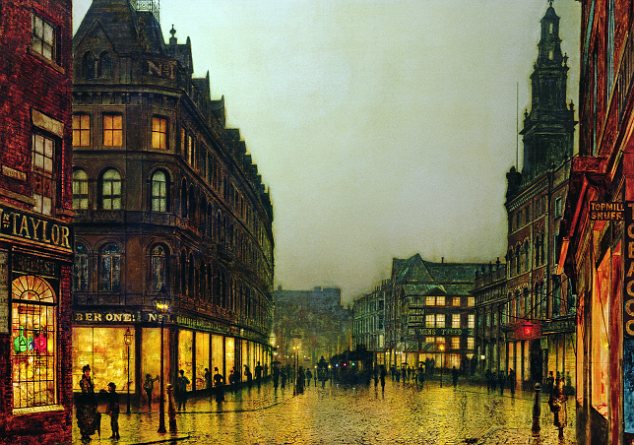
Weather gives atmosphere to writing and painting, as well as to life itself.  Just look at this image by painter John Aitkinson Grimshaw, who specialised in moonlit landscapes.

Boar-Lane-Leeds-1881This one shows a wet day, and the slick cobbles and leaden sky are so evocative.  What secret stories might be happening on those wet pavements, or behind those glowing shop windows?

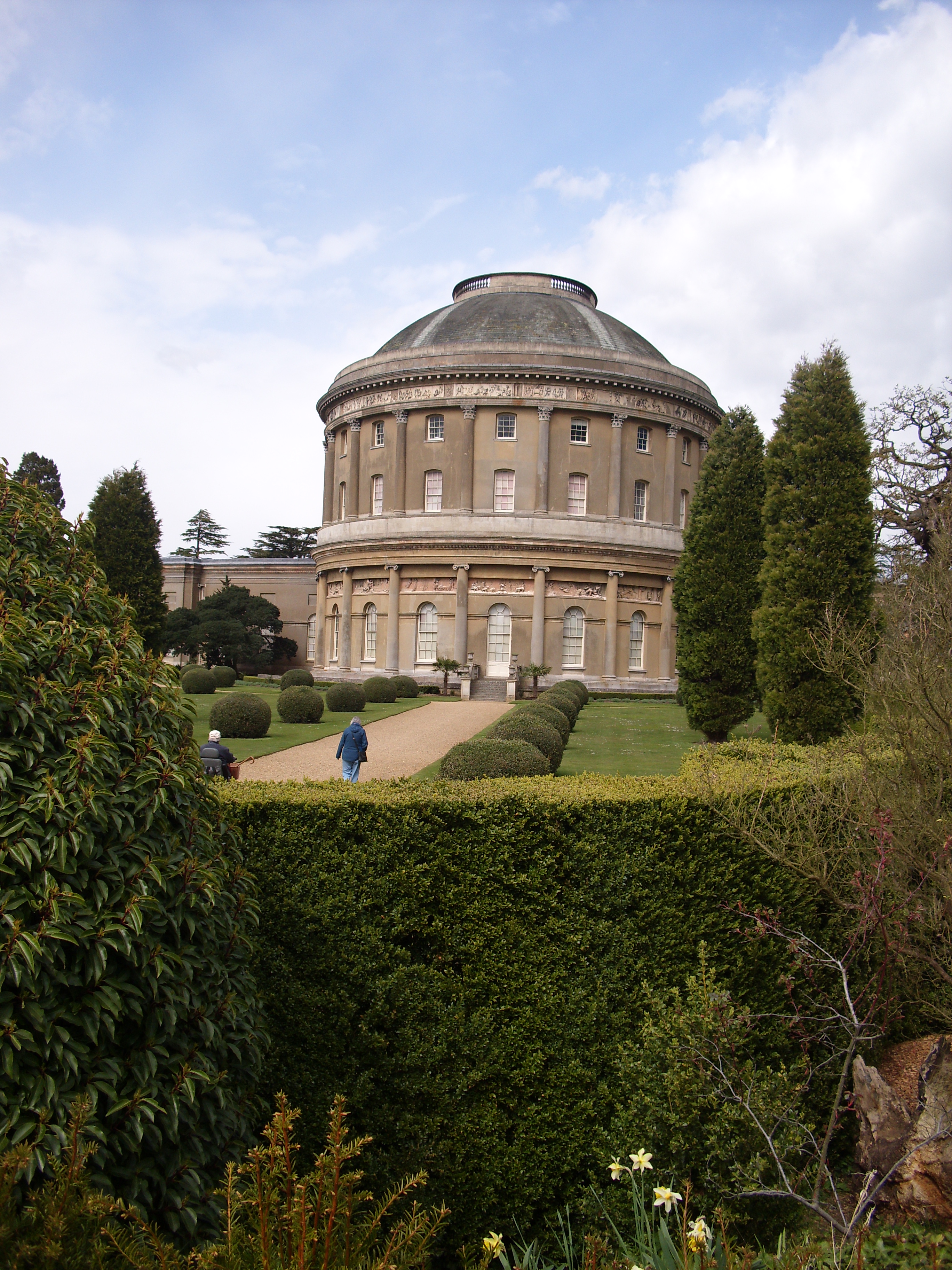
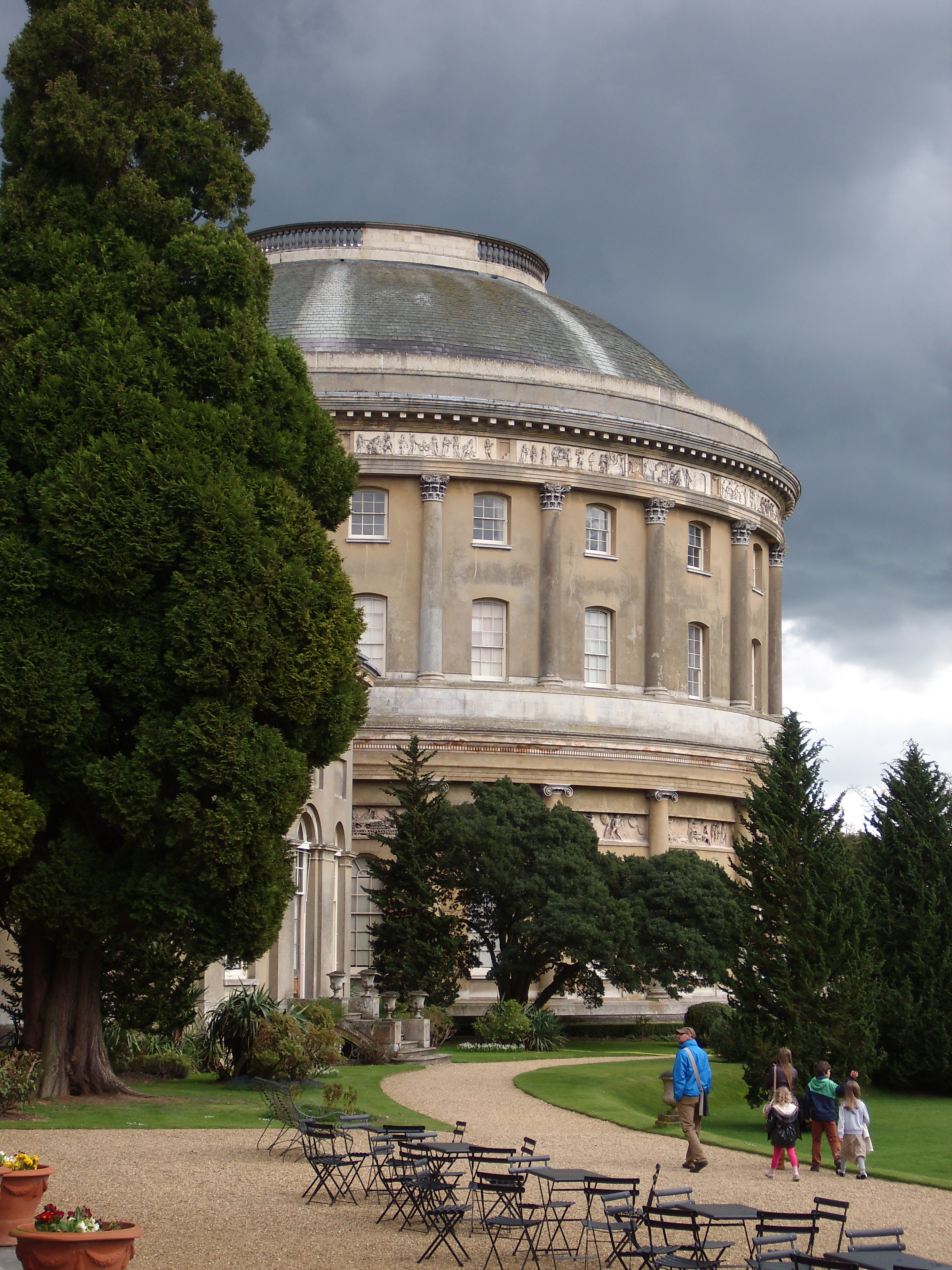
Compare these two images of the same building, the National Trust’s property at Ickworth in Suffolk.

Ickworth sunny Ickworth weather

Granted, the angle is slightly different, but look at the sky – one with glowering cloud, the other with sunshine.  The atmosphere is significantly different in each, a sense of forboding in the right-hand image that simply isn’t there on the left.

You can use weather to prompt your creative work, as Grimshaw did, or you can use it to enhance it.  You can see this is the paintings of John Constable, and the writings of Emily Bronte.

Writing Exercise:

Andrew Cowan, in his brilliant book on Creative Writing, suggests keeping a notebook solely on the weather, noting adjectives and descriptions every day for a year in order to inform your stories.  It is hard to write credibly about a snowy day in a heatwave, for example, or vice versa, so a record of what weather feels, looks and smells like can be incredibly useful!

You might not want to go quite as far as recording the weather every day for a year, but try a writing exercise where you look out of the window – or even better, go outside and experience the weather first hand.  What is the temperature like?  Are there clouds, and if so, what kind?  Is the air moist, crisp, cold, humid?  What does it smell like?  Are there ice crystals on the vegitation, or are the flowers in full and sumptuous bloom?

Record what you see, and then go a step further.  How does this weather make you feel?  What kind of events and interractions might happen on a day like this?  Is it a foggy day for furtive meetings, a dark, moonless night for dastardly deeds, or a hot and sultry afternoon suggestive of languid adultery?

You could use weather to enhance the atmosphere of a scene, or you could contrast it to add clarity to the action.  Imagine a meeting of high ranking spies in a sweltering noon, brows beaded with sweat and shirts stained dark under the arms, whilst all the time, the great business of state is being negotiated.  Spend some time in your notebook playing with weather.  Try out a scene in one kind of weather, then set it in the opposite.  What kinds of problems and interesting ideas does this raise?

Happy Creating!

Inspiration Monday: Images

DSCI3431

My Image Box

Writing exercises are a great way to get yourself going with new writing ideas.  Sometimes it is hard to think up something to write about, and this is where images can be really useful.  If you don’t have time to go out into the world and absorb the landscape, or you don’t feel like listening to music or doing something else that feeds your imagination, images of all kinds can be evocative prompts to get you going.

I keep an ‘Image Box’.  I buy odd postcards when I am visiting shops, art galleries, National Trust properties.  (I even drop leaflets into my image box, knowing the colours used in them can get my juices flowing, and I scour magazines and newspapers for pictures that catch my eye.)

Postcards don’t have to be of anything particular, the places and objects depicted don’t have to be of things you have seen or visited.  They just have to get you started.

When I am stuck, and need to write something fresh, something that comes clean out of the blue, I pull a random image out of my box.  Then I set the timer, and write for fifteen minutes on what the image suggests to me.

Here are a few pictures out of my box:

postcards

Postcards from my Image Box

(clockwise from top left) Sylvia Plath 1959, photographed by Rollie McKenna;   The Forest of Bowland from ‘Our forbidden land’ by Fay Godwin 1989;   ‘Silver Moonlight‘ by John Aitkinson Grimshaw (Harrogate Museums and Arts);    ‘A Norfolk Village’ by Edward Seago (Norwich Castle Museum and Art Gallery);    Sound II sculpture by Anthony Gormley, Permanent Installation in the Crypt at Winchester Cathedral, photograph by Roger Twigg.

These are all striking images, but what stories do they tell?  What do they suggest to you?

Writing Exercises:

1) Start collecting images for an Image Box of your own.  You might like to do it the old fashioned way, as I do, with postcards and pictures cut from newspapers, magazines and Sunday supplements.  Or you might like to use a digital version like Pinterest.  Whichever suits you.

(These days I also keep a private folder of images that I download from Tumblr on my laptop, which also feeds my imagination – I don’t use them for anything other than my own private use, so I hope I’m not infringing any copyright by doing so.)

Keep an eye out for anything really striking – a black and white, chiaroscuro portrait perhaps, or an arresting street image.  Whatever catches your eye.

2) When you have time for a writing exercise, get out your timer and your writing notebook.   Fish out a random image that appeals to you, set the timer for fifteen minutes, and write!

It doesn’t have to be a complete story, remember.  It can just be a sliver of description, a bit of character study, a list of traits or adjectives, or a bit of backstory.  What is going on in the image?  What is the place like? Are there people?  What are they doing, and why?  Is it a portrait like the one of Sylvia Plath above – forget who she is for a moment, and look at the image.  Why might this girl be wistful, a bit sad or worried?  Who could the person in your portrait be?  Why do they look the way they do? Or who is the person doing the looking, taking the picture?  What is their story?

Use your Image Box whenever you are stuck for something to write about.  I have got whole stories out of a single image, like this one, which I wrote from a fanart masterpiece by Marielikestodraw, the doyenne of gorgeous fanart.  You never know what might be sparked off.

Happy notebooking!