Category Archives: Writing

Reflecting on our Creative Achievements

2010-12-25 13.48.32

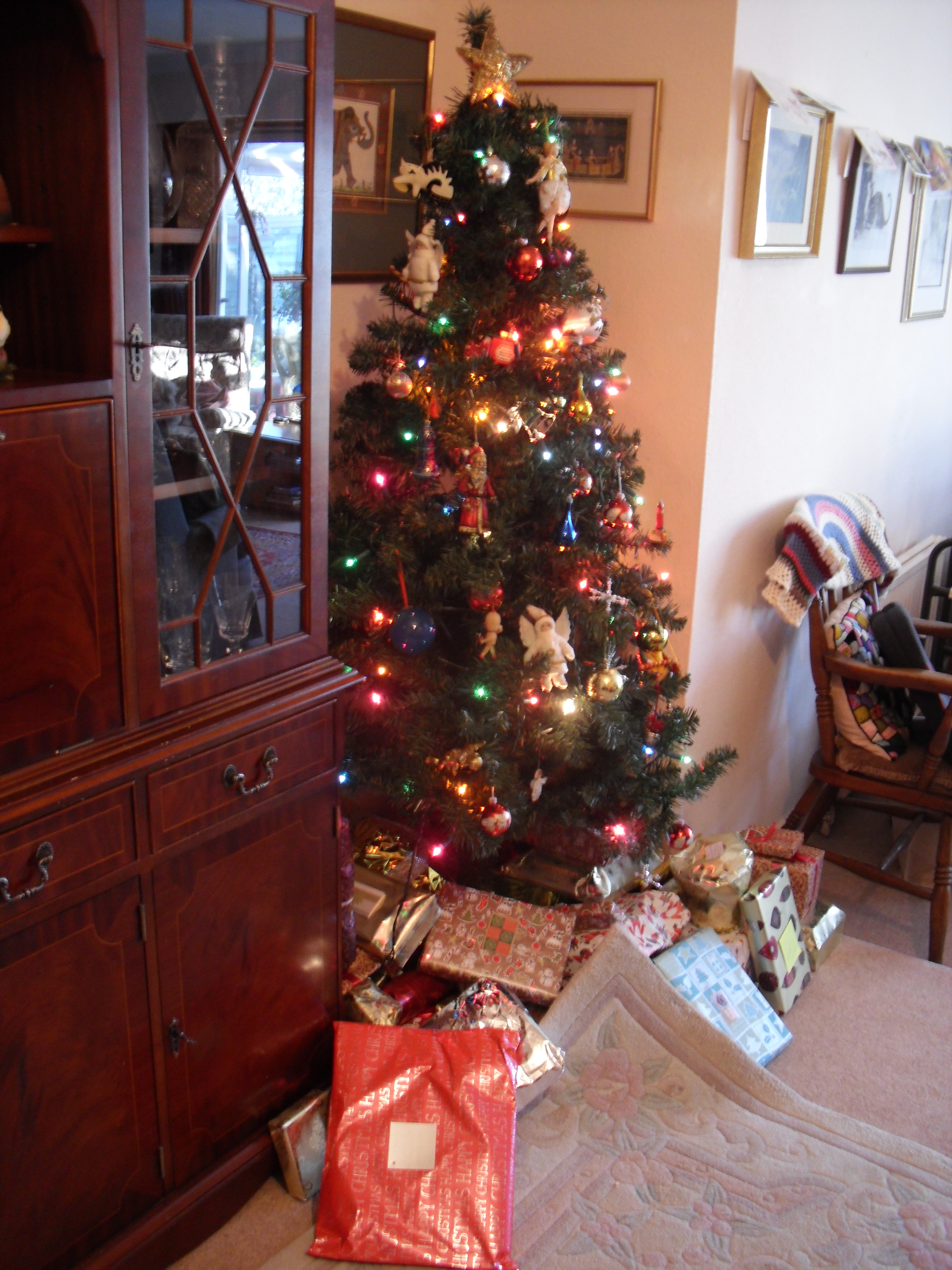
My mother-in-law’s mad Christmas tree. Apologies that the carpet is all ruckled up!

Christmas is coming.  We are all rushing around panicking about what to buy Great Auntie Flossie, trying to get trees up and mince pies made.  And once all the kerfuffle dies down, we’ll be trying to formulate New Year’s Resolutions while our heads are still spinning from the tinselly onslaught.

The blogs I follow are already jam-packed with ideas for resolutions and how to plan your goals for next year.

Aren’t we exhausted enough?

Let’s just take some time to stop and reflect.  To consider what we have achieved this year, before we start pushing ourselves about next.

I don’t think we take enough time to recognise and celebrate what we achieve. We are constantly encouraged to move on to the next thing, the next goal, always more, more, more!

Because we are never enough.

Yesterday I came across Dr Brene Brown’s book, ‘Daring Greatly’, in the library.  I have read and benefitted greatly from her earlier works, but I had avoided this one because for some reason I had got it into my head that it was about parenting, which isn’t exactly relevant to me.  I was wrong.  The first chapter, on Scarcity, had my head spinning!  I highly recommend you read it.

As writers, scarcity is a constant problem.  After all, in such a subjective realm, how can you measure enough?  I wrote recently about the problem of owning yourself as creative.  This is intimately linked to the problem of enough.  How can you know when you have done enough, produced enough, published enough?

I think one way to tackle this sense of dearth is to recognise and celebrate what we have done.

This year I have started this website, something I really didn’t think I had the guts to do.  This is my 86th post.  That’s a whole lot of words.  A big achievement?  You’d better believe it!  I have published over 40 fanfics too.  I have put myself out there.

This is not blowing my own trumpet.  This is stating the facts.

I am proud of what I have made this year.  It may not tally with the list of goals I made in January, but I’m okay with that – I’ll tell you why in the next post.  I’ve been telling myself I didn’t achieve a lot this year, but actually when I sit down and reflect on what I’ve done, I’ve moved mountains!

Journal Exercise:

Before you get too lost in the melee of Christmas, set aside some time to take stock.  Sit down with your journal, and a glass of wine if you like.  Perhaps light a candle, and put on some gentle music.

Think about what you have done this year.  Don’t look at your list of goals and resolutions.  Don’t think about all the things you planned to do, and didn’t.  Think about all the things that did get done, and the unexpected achievements too, things that came out of nowhere, the gifts the Universe has given you.

Count everything, from getting to see your favourite actor in a play, to passing that exam, from painting your biggest picture yet, to being in the village Christmas Panto.  Maybe you had a poetry collection or a novel published, exhibited your art, won a competition, or maybe you read out your first poem in public, or tried painting or drawing for the first time.  No matter how big all small, list everything.  Think about all the creative things you did, the cakes you made, the dances you went to, the pumpkin you carved, the costume you made for your kid’s school play.

Be proud of yourself, of where you are now.  Do it for yourself.  Savour it.

Because you are enough.

Happy Reflecting,

EF

Its Never Too Late…

Whenever I see an article in the paper about some young person who has won an important first novel award, or got a massive advance on their first book, I have a mini meltdown.  Its not that I would take their achievement away from them.  Its just that I am now 46, and still struggling to finish a book that I am happy enough with to publish.

But how old is too old?

I could probably quote a dozen examples of authors who didn’t publish their first book until they were in their 60s or 70s.  There are always the exceptions.  I keep telling myself that its never too late to fulfil the dream of that first novel I wrote at the age of 16.  But you have to really understand the fact in your heart, as well as in  head.

Let me tell you a little story about fulfilling your dreams at any age.

The other day I went to my first Masked Ball.  I’m not a dancer by any stretch of the imagination, but we had been invited to go by friends who are.  It was an event run by the dancing school our friends attend, and as part of the entertainment, several of the school’s students danced exhibition dances.  To uproarious applause, there were paso dobles and waltzes and tangos.  (And there were lots of sparkles too, and I just love sparkles!)

Marvellous.

And then a tiny little old lady in a lacy top and a bow in her hair got up, and danced the foxtrot with her lady teacher.  And it was lovely.  She got the biggest round of applause of the night.

Then the evening’s compere told us about her.  How she had fulfilled a lifetime’s ambition recently by dancing in the British Ballroom Championships at the legendary Tower Ballroom in Blackpool.

Turns out, this lady, who reminded me a great deal of Mrs Pepperpot (if you remember her), was 86.

Eighty-six years old and still ballroom dancing.  Competitively.  Eighty-six years old and still pursuing her creativity.  Eight-six years old and still fulfilling her dreams.

How old is too old?

Ask me when I get to 87.

Happy Creating,

EF


The Perils of Getting Lost

There is no SatNav system for the artistic life.

Most of the time, we creative people complain about the problems of not being able to get into the Zone.  Not being able to find the door into the imagination.  Not being able to make our art.

Or we complain about not being able to get out of our own way.  We get hung up on the avoidance tactics and displacement activities we use so we don’t have to think about the empty page, the blank canvas.

Be honest, how many loads of washing have you done to avoid that novel you’ve been meaning to write?  How many drawers and cupboards have you cleaned out as an excuse to get away from your easel or your desk?

Seriously, its amazing how interesting cleaning can become when you need to be doing something else.

However, one of the perils of the artistic life that we rarely talk about, let alone complain about, is that of getting lost.

Lost in your imagination.

Lost in that place where the stories never end.

Lost where the romance and the passion and the adventure and the danger go on and on, and there is never, never washing to be done, unless it is in a picturesque stream with the sun sparkling on its surface, and requires both hero and heroine to divest themselves of their clothes in as romantic/modest/passionate (delete as appropriate) way as possible.

Suddenly you will wake up one morning and realise that you have been trapped on the island of the Lotus Eaters, so lost in the pleasures of your mind that you have forgotten to live.

Marriages founder this way.  Bankruptcies are forged, friendships lost, loved-ones go unmourned.  It happens all the time.

We lose ourselves constantly.  Often it is complusive shopping, gambling, drinking, eating or other drugs that claim us.  Addictions can be apparently harmless.  Surfing the internet seems harmless enough, until you realise you have lost days and weeks of your life doing it.  We lose ourselves in meaningless busyness, in rushing round fulfilling empty tasks, in competing with friends and neighbours, in acquiring the latest TV, sofa, car, clothes.  Modern life encourages us to find an addiction to dull the ennui.

Being present is hard.  Its even harder if you have an over-active imagination.  It is so much nicer to be lost in a story than facing the reality of life.  Doing the work of living.  Being real.  It is so easy to slip away and not come back.

Lately I have been away.  In the last couple of days, I’ve realised that life is tugging at the hem of my skirts, wanting me back, needing my attention.  I’m fighting it.  I don’t want to come back.  I want to stay in my fantasy world.

But life needs living.  We only get one go.  The art needs making, yes.  But our lives are our art too.

Don’t forget to live as well.

Happy Creative Living,

EF

PS – You might like to know that I have a new story out, The Retirement Party, a ‘Lewis’ romance, which you can read here at AO3 and here at FF.net.

Friday Quickfic: Flashmob

Sometimes, the Muse is lazy, lolling about on her couch and refusing to do any work unless I prod her with a sharp stick. Occasionally, she jumps out on me in her Ninja gear and beats me over the head with an idea.  Today’s Quickfic is one of these.  It happened yesterday, after I had watched the teaser trailer for Sherlock Series 3.  Three hours from inception to completion, and very sore fingers from typing nearly 2000 words in such a short space of time.  But I enjoyed it.  It made me happy.  I hope it makes you happy too.

*****

Twitter Feed: #sherlocklives

#sapiosexual:  flashmob at following address Saturday 3pm prompt. Wait for taxi with white roses in window to find out the truth.

Text messages

From G Lestrade: So what about the match Saturday?

From JH Watson: Yeah, come over, Mary is making chilli.

From G Lestrade: Be there about 2.30 ok?

From JH Watson: Bring beer.  Loadsa beer.  You are going down, mate!


2.44pm

It started with a single girl.  Probably in her late teens, although it was hard to tell, because she was wearing a great deal of makeup, and her long curtain of hair was a very unlikely shade of claret.

‘John?’

‘Yeah, love?’

‘If you can drag yourself away from the telly for a sec, can you tell me why there is a Goth standing on the other side of the road, staring at our house?’

To read the rest on AO3, click here.

*****

Happy Creating,

EF

When to Share

I’ve been thinking a lot lately about timing.  Specifically, the timing involved in releasing our artistic work into the world.  This may arise from the fact that after nearly two years I am still wrestling with the second part of ‘Three Weddings and an Explosion’, one of my johnlock stories.

My natural writing process is to write a story and then let it sit for a while.  There’s no set time limit in my head.  I just like to let it ‘cook’ for a bit.  Then I can go back to it, and edit with a fresh eye.  By then, I feel so much less attached.  I can pick out most of the typos, and identify the things that really don’t work about the original piece.  Letting your work sit allows space for objectivity.  It’s easier to ‘kill your darlings’ as they say – to cut or change the scenes you are really proud of, but that simply don’t work in their current context.

(That is why my recent series of ‘Friday Quick Fics’ has been such a challenge – they are invariably stories I have knocked off the day before and not allowed to rest, but published immediately instead.  That is a real challenge to my writing confidence, and let me tell you, it takes guts!)

I’m also a huge believer in the idea that our writing helps us explore our own psychodramas.  My story, ‘The Case of the Cuddle’ allowed me to revisit a time when I was starting to deal with a traumatic experience, and much of the reactions of Sherlock in that story are actually my own.  Writing that story allowed me not only to come to terms with the original experience, but also with memories of the distressing period during which I processed it.  It helped profoundly with my own healing.

My stories continue to represent what is going on in my subconscious as well as my conscious mind.  I wrote a very long MPREG story while a close friend was pregnant two years ago, work that enabled me to begin to come to come to terms with my own childlessness.  And only the other day, when I came home from visiting my mother for a few days, I sat down and, in a single sitting, wrote a 2600 word story about Sherlock’s relationship with Mrs Hudson.  After I had finished, I looked it over and thought: ‘Oh, yeah, Mother issues.’

So now perhaps you are sitting there thinking ‘I’d really like to read that MPREG story, why haven’t I seen it?’

The answer is that I am not ready to share it yet.

Perhaps the emotional odyssey of my not being a mother is not over.  Perhaps the issue for me is still too raw.  Or perhaps I am just not artistically satisfied with what I have done.  Either way, I am not yet comfortable with releasing that story into the wild.

The other day I was reading something written by Leonie Dawson about being spiritually ready to share one’s art.  About how she made the decision to put her paintings up for sale only when she felt that they had done their work in her own life.  She made a conscious choice to follow her own instinct about when she was ready to sell.

This is something that is really hard to do.  It takes confidence in your own artistic decisions and your spiritual connection to yourself.  But if you can do it, if you can hold out despite all those voices of readers, hungry for more (which means you are doing your job right, by the way), or buyers wanting your paintings for their own walls, you will open an artistic integrity in your work.  You will know when a piece is ready to leave home.  And you will be happy to let it go, knowing it will go on to do its healing in someone else’s life.

And art is healing, believe me.

When I unleashed ‘The Case of the Cuddle’ on the world, I had a number of emails from readers, saying how it had helped them with their own healing.  The story helped me, and now it continues to do the same for others.  Which, to me, is what art of any kind is for.

Part of the skill of being an artist of any kind, in any medium, is knowing when the time is right to release your work to others.  To know when you are ready to let go.  It is not just about being satisfied that something is finished, or about perfectionism.  (That is a whole ‘nother story!)  It is about being emotionally and spiritually ready too.

Letting go too soon, whether it is because the work is not yet finished to your own standards, or because it is still to raw and personal for you, can be a nightmare, as I discovered this summer when I published a story I loved but was not happy with.  It caused me untold grief.  I learnt my lesson.  The work wasn’t cooked.  It was not ready to leave me.  And I was not ready to leave it.

Try to trust where you are in your artistic life.  Take time to ask yourself whether this is the right time for your work to leave home and begin its new life in the hearts and minds of others.  Maybe you will never be ready to do that – there are plenty of artists if all kinds whose work is never seen in their lifetime.

That’s okay.

Learn to trust the reasons why you release your work in the way you do – or choose not to.  Maybe you choose your timing for purely practical reasons – taking into account such considerations as when you are struggling with a large parallel workload, or major life upheavals such as moving house.  At such times, it may simply not be feasible to expect to present work to the public.  Or maybe the work is too close to raw emotions.  Maybe you just aren’t ready.  Maybe it just isn’t cooked yet.  Trust that.  Sit with it.  When the time is right, you will know.

Happy Creating,

EF

Friday QuickFic: Oh, What Would a Man Not Do for Love?

Benedict Cumberbatch as Julian Assange in 'The Fifth Estate'

Benedict Cumberbatch as Julian Assange in ‘The Fifth Estate’

Today’s quickfic is a shortie I wrote ages back, when the first pictures of Benedict Cumberbatch in ‘The Fifth Estate’ appeared.  That white-blonde wig and those bleached eyebrows were deeply disturbing to me, but they coalesced along with a line spoken by James Frain as the Spanish Ambassador, Don Alvaro de Quadra in the dazzling film, Elizabeth:

‘Oh, what would a man not do for love?’

*****

Once upon a time, Sherlock Holmes fell deeply in love with a man called John Watson.  So deeply in love that he had to kill himself.

Oh, what would a man not do for love?

Sherlock did it.  Sherlock did it all.

He saved his lover, but at the cost of himself.

Eight months is a long time when you are mourning.  Two men grieving on opposite sides of a door, a wall, a world.

*****

Sherlock turned up again, eight months later, frightened, exhausted, emaciated and with a sniper hot on his tail.

He waited to knock until he saw Mrs Hudson go out to her regular Bingo.  He knew John would be up in the flat, settling down to watch the afternoon match with a beer or two.  The Irregulars had warned him that sometimes Lestrade had taken to joining John, keeping him company.  The Inspector had been seen coming and going regularly.  Keeping an eye on him, they said.  But he was not there that day.

Sherlock was leaning on the door frame when John opened up.  The little doctor let out a cry of shock, and Sherlock slumped forward, no longer able to hold himself up.  He was faintly aware of the door closing as John’s arms folded around him, breaking his fall.  Then there was just the gloom of the familiar entrance hall, the hideous wallpaper (he had forgotten how much he hated that wallpaper), and John’s sweet smell.

*****

John sat with his back resting against the wall, and Sherlock’s head in his lap.  Sometimes his fingers slipped gently through Sherlock’s tragic hair – what had not been wrecked by the bleach had been finished off by hormones and straightening irons.  Sometimes he sighed and stared at the wall.  And in time, his palm came to rest on Sherlock’s distended belly.

‘How long?’ he whispered, as if he was afraid of the sound of his own voice, when it was really the answer he dreaded.

‘When we were last together.’  Sherlock tried to get up, but his body felt too heavy.  He had run too far and slept too little.  He had struggled too long alone.  He had no strength left in him now.

John’s hand circled a little.

And something underneath it moved.

‘He knows his daddy,’ Sherlock smiled.

Then John turned his sad eyes on him, wretched haunted eyes.

‘Did you know?  When you fell, did you-‘

‘If I had, I would never have jumped, I swear.  I would have tried to find some other way.’

John’s lip began to tremble.  ‘Just tell me why?’

And he did.

*****

The words were halting, sticking to his tongue.  He fought his way through the labyrinth, through the remorse and the guilt, through John’s tears too, when they finally came, when he realised his lover had no choice at the last.  The leaden weight finally lifted, the burden at last shared.  And then he closed his eyes and turned his face to John’s warm body, his home.

*****

Happy Creating,

EF

Owning It

Have you been there too?  That cringe-making moment at a social event when you meet someone new and they ask you what you do.

For me it is a doubly difficult dilemma.

Do I give them one version of the truth:  I haven’t been able to do paid work since 2001 because of chronic health difficulties.  Which either makes me look like I am scrounging off the State, or like a whinging hypochondriac.  Either one pretty much means the end of the conversation.

Or do I say, Oh, I’m a writer and artist.  To which I get the next question:  where can I get your books?  So thats a whole ‘nother minefield.  Yes, I have written seven novels.  No, you cannot buy them in the shops. I publish on the internet.

(Oh, well you aren’t a proper writer, then, are you?  You’re just one of those middle class kept wives who plays at being a creative but is actually too mediocre at it to cut it in the real world.)

Admittedly, this last is probably supplied by Nigel, who is only too happy to make me feel like a loser and a waste of space, so that I will never take any risks or put my work out there.

These days, its even worse if I mention that I write fanfiction, because people have finally heard of it, and they always, always want to talk about 50 Shades of Grey.  Don’t mention that book in front of me.  Please.  (You wouldn’t like me when I’m angry.)

The other day I was at a social event and met someone new.  She was a fascinating person, and great fun.  I liked her a lot.  She asked me what I did.  I said, ‘I’m a writer and artist.’  Cue discussion about novels not yet published, how I am trying to make a go of this website, and why I am interested in creativity, which happened to be her field of research.

All fine.

I came home and felt like a total fraud.

Why is it so difficult to own our creativity?

I may not have had a novel published in conventional form, but then I’ve never really submitted one to a publisher.  I’ve written and published 42 works of fanfiction on the internet, some of which have novel-sized wordcounts.  I get around 100 readers per day of my fictions, and regularly get daily reader numbers over 500, figures that most conventionally published writers would give their eye-teeth for.  This website has over 300 followers.  What is it about these statistics that makes me not a writer?

What really makes me a writer is that I write.  Every day.  Being published does not make me a writer.  Public recognition does not make me a writer.  Having books on the shelves does not make me a writer, if I am not writing.

Being a writer is not something that other people tell you that you are.

Being a writer is what you do.  Day in. Day out.    I write because I need to write, not for the end result.  I write because it comes to me as naturally, and as necessarily, as breathing.

So why can I not own it?  Why do I not feel entitled to it?  Why am I embarassed to say it in front of someone new because Society says I do not tick the boxes required (ie publications, awards etc etc)?  Will I have to wait until I am as old and lauded as the late Nobel Prize laureate Doris Lessing before I can finally say I am a writer, and feel entitled to it?  (I really hope not.)  Do any writers ever feel entitled to the label?

Do you feel entitled to your creativity?  Do you make excuses that you are only a hobbyist painter or dancer, whether to yourself or others?  Do you feel you must keep your creative projects secret for fear that they will not be understood?  And is it really necessary to have public recognition for our art?

I’m not saying there are anwsers, or even right answers.  I think the answer is different for every one of us.  It is a complex tangle.  I simply think we have to address it in some way as artists in whatever medium, if only to find out what stifles or liberates our own voices.

And maybe this time next year, when I meet someone new at a party, I will feel entitled to say: ‘I am a writer’, and own it.

Happy Creating,

EF

Exploring Character: Handbags and Pockets

EV005075Let me tell you a story.

A long time ago, I bought my first car, a battered old Nissan Cherry.  I loved it, unreliable though it was.  In order to celebrate liberation from the tyranny of bus timetables, my friend and I decided to go on a day trip to Rockingham Castle, about an hour’s drive away.  It was an extremely hot summer’s day and, in the way of ancient cars everywhere, my new chariot broke down.  We sat on the grassy verge, waiting for steam to stop bellowing from under the bonnet, and sweltering in the heat.

My friend, who was a redhead, and thus especially vulnerable to sunburn, turned to me and sighed:  ‘What we really need is some suntan lotion.’

I pulled three bottles out of my handbag.  ‘Do you want Factor 8, 15 or 30?’

By now you will have guessed that I am the sort of person who likes to prepare for every eventuality.  I always have paracetamol in my handbag.  I can always be relied upon to be possessed of optical wipes for cleaning mucky spectacles, spare tissues, chocolate of course, and even echinacea lozenges just in case someone has a sore throat.  This is not because I have children – any mother will tell you that it is necessary to have a handbag full of bandaids, crayons and baby wipes.  It is because I am the sort of person that worries.

I know a man who always carries a length of string in his pocket.  He is a very practical person, and he tells me how useful a spare bit of string can be in unexpected situations.  This always seems a surprise to me, since he travels around the world, fixing nuclear power stations for a living.  Quite apart from the fact that I don’t want to imagine the kind of nuclear power station scenario in which a length of gardeners twine might save the day, I always feel he is the sort of person whom you could reasonably expect to be in possession of a sonic screwdriver.  For real.  The string therefore says a lot about his practical, if eccentric, character.

The things we carry with us say so much about who we are.  Ask a group of female friends to open their handbags and you will find the ones who carry about four different shades of lipstick, a packet of cuppa soup, or a spare bag to pick up dog poop.  Just look at the handbags, too.  There are those who insist on the vast sacks that are so fashionable these days, the ones who like bags with lots of pockets to organise things (and the ones with pocket bags who can never find anything inside the vast number of pockets), and the austerely practical ones who favour a tiny, cross-body pouch barely big enough to hold a purse, phone and keys.

Mens’ pocket contents are just as informative.  My husband’s pockets are always full of folded pieces of copier paper, on the outside of which he has made cryptic notes in his other-worldly, hieroglyphic handwriting.  He sheds them at the end of the day, leaving piles of folds on the dining room table.  I bought him a notebook once, but he rarely used it.  His paper folds reflect his scattered mode of thinking, and the fact that he is always thinking about something, even in the midst of something else.

Character could also undoubtedly be read in manbags, laptop bags, briefcases, breast pockets and poachers pockets in coats and suit jackets.  Each is a map to an individual’s mind, habits, and priorities as unique as its owner.

Writing Exercise:

This exercise is probably as old as the hills, and I have no idea who originally came up with it, but it always strikes gold for me when I am writing a new character.

Take out your notebook, and start a fresh page (of course).  Give yourself a few minutes to imagine the character you want to work with.  Picture them in your mind in as much detail as you can.  Clothes, smell, tone of voice and stance.  Now get them to empty out their pockets – or their handbag (or equivalent).

What items are so essential to them that they always have to carry them around?

Do they keep sentimental items on them, perhaps a pendant that belonged to an old lover, an outdated student ID card, a rosary or St Christopher.

My father always carried a crisply ironed gentlemens handkerchief of pure white cotton, fresh every day.  Is your character the kind that carries tissues, a handkerchief, or wipes their nose on their cuff?

This is a little like a writer’s version of Kim’s Game, except that each article you choose, from the broken crumbs of a forgotten polo mint to the famous sonic screwdriver, says something important about your character.  Why do they carry these things?  Is it for practical, spiritual or even superstitious reasons?  Are they carrying the past to motivate them in the present, or do they keep an array of useful bits close, just in case?

You could even expand this exercise to include car glove compartments and boots (trunks).

This exercise should give you a great start when you are working with a new character.  You will find out so many things about them that you never would have imagined possible.  Let them dance before your eyes, peeling off elements of themselves as if performing the Dance of the Seven Veils.  It’s so exciting when a new person reveals themselves to you.

And remember, once you know who they are, you will know how they behave.  And it is their behaviour that will make your plot.

Happy Writing,

EF

Friday QuickFic: Ravioli

Prosciutto and Mushroom Ravioli Recipe, click for source

Prosciutto and Mushroom Ravioli Recipe, click for source

“John is late home from a long stint at the clinic. He has picked up his favourite meal on the way home, at the Tesco metro round the corner.”

November is proving to be more of a struggle healthwise than I had expected. Laid up again with stomach problems, I am behind with all the things I wanted to achieve this month, not least of which are my blog posts.  In an effort to make it up to my darling readers, here is a little morsel that I hope you will enjoy.

Click here to read ‘Ravioli’ at A03.

Happy Creating,

EF

Inspiration Monday: Observing Roles

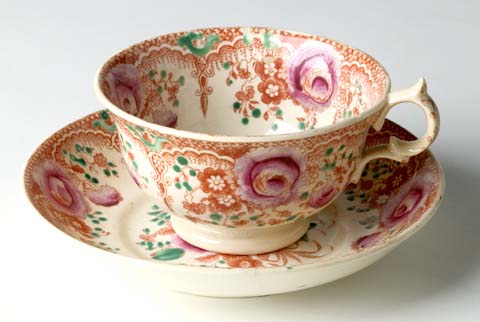
Captain Cook's teacup

Captain Cook’s Teacup

A few days staying with my mother require me to be paraded around the village, being shown off to friends.

I am taken to her oldest friends first:  Husband was close to my father, Wife is my mother’s best friend, and something of a surrogate mother to me.  They are Scottish, loving, hospitable.

My mother sits primly on the sofa while the tea set is laid out, her little legs crossed at the ankles, not quite touching the floor.  We are having the best china, and a freshly baked Victoria Sandwich cake, set on a glass cake stand and dusted with icing sugar.  This is a proper English afternoon tea.

I notice how polite my mother is being.  The way she holds the fork as she eats her cake so delicately.  The way she plucks at her napkin.  The way she stirs her tea with her teaspoon, holding the end like a pen, making the prescribed figure of eight with the bowl, just so.  I notice the way she nods, agrees, doesn’t initiate conversation.  I realise she is being a Good Girl.  Just as her own mother taught her, back before the War, she is behaving politely in order to be accepted.

Our hosts are playing roles too.  She is the Hospitable Hostess, asking kind questions, offering more cake.  Her husband is sitting enthroned in his armchair, interjecting occasionally with amusing quips or information, partly the Wise Sage, and partly the Jester – he always played the Jester to my father’s Straight Man when I was a child.

Then their middle daughter arrives, a beautiful woman a little older than I am, with a grown-up family and a business of her own.  As soon as she walks into the house, though, she adopts the role of Mischievous Daughter, stealing a donut from the kitchen, helping herself to a cup of tea (without a saucer), lounging in an armchair and making us all laugh.

I glance at my mother.  She is laughing politely.  Still being the Good Girl.

And me?  Well, I am the Entertainment.  Which is another way of saying that I am being the Good Girl too.  Pleasing my mother by being polite and charming her friends.  Being a credit to her.  Displaying the manners she taught me.  Sitting up straight, holding my teacup correctly, watching my language, and wishing profoundly that I could play the Mischievous Daughter too, which would be a lot more fun, and more like who I really am.

We all play social roles, in company, with family, with friends, with strangers, colleagues or acquaintances.  Our roles change according to those we are with, and to circumstance.  Sometimes we even change roles within a single situation.  This is not necessarily being inauthentic, or even manipulative.  It is the way human beings function socially together, as all animals who live in groups do.  It began as a means of survival, but today has become a complicated social pas de deux.

And why am I talking about it?  Well, because if we play roles, what about the characters we write?  You may know who your protagonist is, you may have written his back story in detail, and know how he might respond in a given situation, but have you thought about the roles he might play?  Does he play roles to fit in, or does he reject them?  Or does he continually play different roles to get what he wants, to manipulate others?  And if he does the latter, how are you, the writer, going to keep track of who he is underneath those roles?

Writing Exercise

Begin to observe social encounters going on around you as dispassionately as you can.  Can you see what social roles are being played?  Who is being submissive, funny, polite, in order to win friends?  Who is refusing the engage with the social dance?  Who is asserting their dominance as Alpha Male or Female?  Who is the real person under the role?  What are their motivations for choosing the role they do?

Remember to observe without judgement.  This is not about values.  This is about behaviour.

Spend some time writing down the roles you observe, and reflecting on them, in your writers notebook.  Think especially about what lies underneath the role, what event might cause a person to adopt one role rather than another.

Write a scene about some characters you are currently working with.  What roles could be played here?  What non-verbal behaviour communicates that role – or betrays what is going on underneath?  See if you can write your characters functioning at two levels, the role they play, and the real person behind the role.  Explore this difficulty where you can to make your characters more three dimensional.

Meanwhile, I am going back to contemplating the idea that my mother, my dominant, matriarchal mother, could actually play the Good Girl, because its not an idea I have ever entertained before, and its going to take a while to get my head around it!

Happy Writing,

EF