Friday QuickFic: Oh, What Would a Man Not Do for Love?

Benedict Cumberbatch as Julian Assange in 'The Fifth Estate'

Benedict Cumberbatch as Julian Assange in ‘The Fifth Estate’

Today’s quickfic is a shortie I wrote ages back, when the first pictures of Benedict Cumberbatch in ‘The Fifth Estate’ appeared.  That white-blonde wig and those bleached eyebrows were deeply disturbing to me, but they coalesced along with a line spoken by James Frain as the Spanish Ambassador, Don Alvaro de Quadra in the dazzling film, Elizabeth:

‘Oh, what would a man not do for love?’

*****

Once upon a time, Sherlock Holmes fell deeply in love with a man called John Watson.  So deeply in love that he had to kill himself.

Oh, what would a man not do for love?

Sherlock did it.  Sherlock did it all.

He saved his lover, but at the cost of himself.

Eight months is a long time when you are mourning.  Two men grieving on opposite sides of a door, a wall, a world.

*****

Sherlock turned up again, eight months later, frightened, exhausted, emaciated and with a sniper hot on his tail.

He waited to knock until he saw Mrs Hudson go out to her regular Bingo.  He knew John would be up in the flat, settling down to watch the afternoon match with a beer or two.  The Irregulars had warned him that sometimes Lestrade had taken to joining John, keeping him company.  The Inspector had been seen coming and going regularly.  Keeping an eye on him, they said.  But he was not there that day.

Sherlock was leaning on the door frame when John opened up.  The little doctor let out a cry of shock, and Sherlock slumped forward, no longer able to hold himself up.  He was faintly aware of the door closing as John’s arms folded around him, breaking his fall.  Then there was just the gloom of the familiar entrance hall, the hideous wallpaper (he had forgotten how much he hated that wallpaper), and John’s sweet smell.

*****

John sat with his back resting against the wall, and Sherlock’s head in his lap.  Sometimes his fingers slipped gently through Sherlock’s tragic hair – what had not been wrecked by the bleach had been finished off by hormones and straightening irons.  Sometimes he sighed and stared at the wall.  And in time, his palm came to rest on Sherlock’s distended belly.

‘How long?’ he whispered, as if he was afraid of the sound of his own voice, when it was really the answer he dreaded.

‘When we were last together.’  Sherlock tried to get up, but his body felt too heavy.  He had run too far and slept too little.  He had struggled too long alone.  He had no strength left in him now.

John’s hand circled a little.

And something underneath it moved.

‘He knows his daddy,’ Sherlock smiled.

Then John turned his sad eyes on him, wretched haunted eyes.

‘Did you know?  When you fell, did you-‘

‘If I had, I would never have jumped, I swear.  I would have tried to find some other way.’

John’s lip began to tremble.  ‘Just tell me why?’

And he did.

*****

The words were halting, sticking to his tongue.  He fought his way through the labyrinth, through the remorse and the guilt, through John’s tears too, when they finally came, when he realised his lover had no choice at the last.  The leaden weight finally lifted, the burden at last shared.  And then he closed his eyes and turned his face to John’s warm body, his home.

*****

Happy Creating,

EF

Owning It

Have you been there too?  That cringe-making moment at a social event when you meet someone new and they ask you what you do.

For me it is a doubly difficult dilemma.

Do I give them one version of the truth:  I haven’t been able to do paid work since 2001 because of chronic health difficulties.  Which either makes me look like I am scrounging off the State, or like a whinging hypochondriac.  Either one pretty much means the end of the conversation.

Or do I say, Oh, I’m a writer and artist.  To which I get the next question:  where can I get your books?  So thats a whole ‘nother minefield.  Yes, I have written seven novels.  No, you cannot buy them in the shops. I publish on the internet.

(Oh, well you aren’t a proper writer, then, are you?  You’re just one of those middle class kept wives who plays at being a creative but is actually too mediocre at it to cut it in the real world.)

Admittedly, this last is probably supplied by Nigel, who is only too happy to make me feel like a loser and a waste of space, so that I will never take any risks or put my work out there.

These days, its even worse if I mention that I write fanfiction, because people have finally heard of it, and they always, always want to talk about 50 Shades of Grey.  Don’t mention that book in front of me.  Please.  (You wouldn’t like me when I’m angry.)

The other day I was at a social event and met someone new.  She was a fascinating person, and great fun.  I liked her a lot.  She asked me what I did.  I said, ‘I’m a writer and artist.’  Cue discussion about novels not yet published, how I am trying to make a go of this website, and why I am interested in creativity, which happened to be her field of research.

All fine.

I came home and felt like a total fraud.

Why is it so difficult to own our creativity?

I may not have had a novel published in conventional form, but then I’ve never really submitted one to a publisher.  I’ve written and published 42 works of fanfiction on the internet, some of which have novel-sized wordcounts.  I get around 100 readers per day of my fictions, and regularly get daily reader numbers over 500, figures that most conventionally published writers would give their eye-teeth for.  This website has over 300 followers.  What is it about these statistics that makes me not a writer?

What really makes me a writer is that I write.  Every day.  Being published does not make me a writer.  Public recognition does not make me a writer.  Having books on the shelves does not make me a writer, if I am not writing.

Being a writer is not something that other people tell you that you are.

Being a writer is what you do.  Day in. Day out.    I write because I need to write, not for the end result.  I write because it comes to me as naturally, and as necessarily, as breathing.

So why can I not own it?  Why do I not feel entitled to it?  Why am I embarassed to say it in front of someone new because Society says I do not tick the boxes required (ie publications, awards etc etc)?  Will I have to wait until I am as old and lauded as the late Nobel Prize laureate Doris Lessing before I can finally say I am a writer, and feel entitled to it?  (I really hope not.)  Do any writers ever feel entitled to the label?

Do you feel entitled to your creativity?  Do you make excuses that you are only a hobbyist painter or dancer, whether to yourself or others?  Do you feel you must keep your creative projects secret for fear that they will not be understood?  And is it really necessary to have public recognition for our art?

I’m not saying there are anwsers, or even right answers.  I think the answer is different for every one of us.  It is a complex tangle.  I simply think we have to address it in some way as artists in whatever medium, if only to find out what stifles or liberates our own voices.

And maybe this time next year, when I meet someone new at a party, I will feel entitled to say: ‘I am a writer’, and own it.

Happy Creating,

EF

Exploring Character: Handbags and Pockets

EV005075Let me tell you a story.

A long time ago, I bought my first car, a battered old Nissan Cherry.  I loved it, unreliable though it was.  In order to celebrate liberation from the tyranny of bus timetables, my friend and I decided to go on a day trip to Rockingham Castle, about an hour’s drive away.  It was an extremely hot summer’s day and, in the way of ancient cars everywhere, my new chariot broke down.  We sat on the grassy verge, waiting for steam to stop bellowing from under the bonnet, and sweltering in the heat.

My friend, who was a redhead, and thus especially vulnerable to sunburn, turned to me and sighed:  ‘What we really need is some suntan lotion.’

I pulled three bottles out of my handbag.  ‘Do you want Factor 8, 15 or 30?’

By now you will have guessed that I am the sort of person who likes to prepare for every eventuality.  I always have paracetamol in my handbag.  I can always be relied upon to be possessed of optical wipes for cleaning mucky spectacles, spare tissues, chocolate of course, and even echinacea lozenges just in case someone has a sore throat.  This is not because I have children – any mother will tell you that it is necessary to have a handbag full of bandaids, crayons and baby wipes.  It is because I am the sort of person that worries.

I know a man who always carries a length of string in his pocket.  He is a very practical person, and he tells me how useful a spare bit of string can be in unexpected situations.  This always seems a surprise to me, since he travels around the world, fixing nuclear power stations for a living.  Quite apart from the fact that I don’t want to imagine the kind of nuclear power station scenario in which a length of gardeners twine might save the day, I always feel he is the sort of person whom you could reasonably expect to be in possession of a sonic screwdriver.  For real.  The string therefore says a lot about his practical, if eccentric, character.

The things we carry with us say so much about who we are.  Ask a group of female friends to open their handbags and you will find the ones who carry about four different shades of lipstick, a packet of cuppa soup, or a spare bag to pick up dog poop.  Just look at the handbags, too.  There are those who insist on the vast sacks that are so fashionable these days, the ones who like bags with lots of pockets to organise things (and the ones with pocket bags who can never find anything inside the vast number of pockets), and the austerely practical ones who favour a tiny, cross-body pouch barely big enough to hold a purse, phone and keys.

Mens’ pocket contents are just as informative.  My husband’s pockets are always full of folded pieces of copier paper, on the outside of which he has made cryptic notes in his other-worldly, hieroglyphic handwriting.  He sheds them at the end of the day, leaving piles of folds on the dining room table.  I bought him a notebook once, but he rarely used it.  His paper folds reflect his scattered mode of thinking, and the fact that he is always thinking about something, even in the midst of something else.

Character could also undoubtedly be read in manbags, laptop bags, briefcases, breast pockets and poachers pockets in coats and suit jackets.  Each is a map to an individual’s mind, habits, and priorities as unique as its owner.

Writing Exercise:

This exercise is probably as old as the hills, and I have no idea who originally came up with it, but it always strikes gold for me when I am writing a new character.

Take out your notebook, and start a fresh page (of course).  Give yourself a few minutes to imagine the character you want to work with.  Picture them in your mind in as much detail as you can.  Clothes, smell, tone of voice and stance.  Now get them to empty out their pockets – or their handbag (or equivalent).

What items are so essential to them that they always have to carry them around?

Do they keep sentimental items on them, perhaps a pendant that belonged to an old lover, an outdated student ID card, a rosary or St Christopher.

My father always carried a crisply ironed gentlemens handkerchief of pure white cotton, fresh every day.  Is your character the kind that carries tissues, a handkerchief, or wipes their nose on their cuff?

This is a little like a writer’s version of Kim’s Game, except that each article you choose, from the broken crumbs of a forgotten polo mint to the famous sonic screwdriver, says something important about your character.  Why do they carry these things?  Is it for practical, spiritual or even superstitious reasons?  Are they carrying the past to motivate them in the present, or do they keep an array of useful bits close, just in case?

You could even expand this exercise to include car glove compartments and boots (trunks).

This exercise should give you a great start when you are working with a new character.  You will find out so many things about them that you never would have imagined possible.  Let them dance before your eyes, peeling off elements of themselves as if performing the Dance of the Seven Veils.  It’s so exciting when a new person reveals themselves to you.

And remember, once you know who they are, you will know how they behave.  And it is their behaviour that will make your plot.

Happy Writing,

EF

Friday QuickFic: Ravioli

Prosciutto and Mushroom Ravioli Recipe, click for source

Prosciutto and Mushroom Ravioli Recipe, click for source

“John is late home from a long stint at the clinic. He has picked up his favourite meal on the way home, at the Tesco metro round the corner.”

November is proving to be more of a struggle healthwise than I had expected. Laid up again with stomach problems, I am behind with all the things I wanted to achieve this month, not least of which are my blog posts.  In an effort to make it up to my darling readers, here is a little morsel that I hope you will enjoy.

Click here to read ‘Ravioli’ at A03.

Happy Creating,

EF

Inspiration Monday: Observing Roles

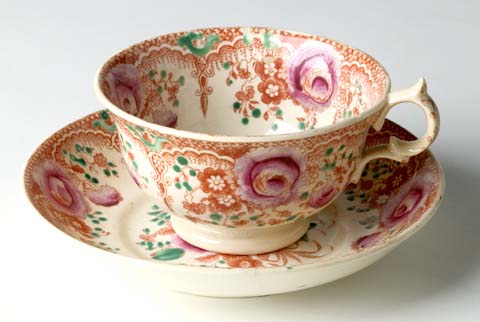
Captain Cook's teacup

Captain Cook’s Teacup

A few days staying with my mother require me to be paraded around the village, being shown off to friends.

I am taken to her oldest friends first:  Husband was close to my father, Wife is my mother’s best friend, and something of a surrogate mother to me.  They are Scottish, loving, hospitable.

My mother sits primly on the sofa while the tea set is laid out, her little legs crossed at the ankles, not quite touching the floor.  We are having the best china, and a freshly baked Victoria Sandwich cake, set on a glass cake stand and dusted with icing sugar.  This is a proper English afternoon tea.

I notice how polite my mother is being.  The way she holds the fork as she eats her cake so delicately.  The way she plucks at her napkin.  The way she stirs her tea with her teaspoon, holding the end like a pen, making the prescribed figure of eight with the bowl, just so.  I notice the way she nods, agrees, doesn’t initiate conversation.  I realise she is being a Good Girl.  Just as her own mother taught her, back before the War, she is behaving politely in order to be accepted.

Our hosts are playing roles too.  She is the Hospitable Hostess, asking kind questions, offering more cake.  Her husband is sitting enthroned in his armchair, interjecting occasionally with amusing quips or information, partly the Wise Sage, and partly the Jester – he always played the Jester to my father’s Straight Man when I was a child.

Then their middle daughter arrives, a beautiful woman a little older than I am, with a grown-up family and a business of her own.  As soon as she walks into the house, though, she adopts the role of Mischievous Daughter, stealing a donut from the kitchen, helping herself to a cup of tea (without a saucer), lounging in an armchair and making us all laugh.

I glance at my mother.  She is laughing politely.  Still being the Good Girl.

And me?  Well, I am the Entertainment.  Which is another way of saying that I am being the Good Girl too.  Pleasing my mother by being polite and charming her friends.  Being a credit to her.  Displaying the manners she taught me.  Sitting up straight, holding my teacup correctly, watching my language, and wishing profoundly that I could play the Mischievous Daughter too, which would be a lot more fun, and more like who I really am.

We all play social roles, in company, with family, with friends, with strangers, colleagues or acquaintances.  Our roles change according to those we are with, and to circumstance.  Sometimes we even change roles within a single situation.  This is not necessarily being inauthentic, or even manipulative.  It is the way human beings function socially together, as all animals who live in groups do.  It began as a means of survival, but today has become a complicated social pas de deux.

And why am I talking about it?  Well, because if we play roles, what about the characters we write?  You may know who your protagonist is, you may have written his back story in detail, and know how he might respond in a given situation, but have you thought about the roles he might play?  Does he play roles to fit in, or does he reject them?  Or does he continually play different roles to get what he wants, to manipulate others?  And if he does the latter, how are you, the writer, going to keep track of who he is underneath those roles?

Writing Exercise

Begin to observe social encounters going on around you as dispassionately as you can.  Can you see what social roles are being played?  Who is being submissive, funny, polite, in order to win friends?  Who is refusing the engage with the social dance?  Who is asserting their dominance as Alpha Male or Female?  Who is the real person under the role?  What are their motivations for choosing the role they do?

Remember to observe without judgement.  This is not about values.  This is about behaviour.

Spend some time writing down the roles you observe, and reflecting on them, in your writers notebook.  Think especially about what lies underneath the role, what event might cause a person to adopt one role rather than another.

Write a scene about some characters you are currently working with.  What roles could be played here?  What non-verbal behaviour communicates that role – or betrays what is going on underneath?  See if you can write your characters functioning at two levels, the role they play, and the real person behind the role.  Explore this difficulty where you can to make your characters more three dimensional.

Meanwhile, I am going back to contemplating the idea that my mother, my dominant, matriarchal mother, could actually play the Good Girl, because its not an idea I have ever entertained before, and its going to take a while to get my head around it!

Happy Writing,

EF

Monday Quick Fic: Wings

john and sherlockI was having a bit of a crisis last week, and the adorable agnesanutter was so kind and sweet and supportive.  I promised to write her something.  A Johnlock, which I had thought, in the midst of my meltdown, that I would never manage to write again.  I made this today.  Its a little along the lines of ‘Shark’, but longer and deeper. A little more angsty perhaps.

Dear Agnes, I hope you like it.

  ” They had been sharing the Baker Street flat for a month when Sherlock finally challenged him.  John was amazed it had taken him that long.

            ‘I never see you naked,’ he said, out of the blue.

            ‘Don’t pussy about, Sherlock.  Just say what you think, never mind about holding back and considering my feelings!’

            ‘Feelings have nothing to do with it.  Why do you keep yourself covered all the time?’”

Read the rest here.

Happy Creating,

EF

Journal Friday (or rather, Thursday): Samhain

treepumpkinHappy Halloween everybody!

This week, and today in particular, journalling seems to be a particularly apposite subject, which is why you are getting a Thursday post instead of a Friday one!

In ancient tradition, the festival of Samhain, or Halloween as we now call it, was not simply a Feast of the Dead.  There is so much more to it than that.

Our ancestors celebrated the last harvest festival at this time, the final moment before the real onset of winter in Northern Europe.  The main crop  harvests had been gathered in.  Now was the time to choose which of the beasts on the farm was likely to survive the winter, and which were too old or too sick to waste valuable fodder on.  Food had to be laid in for the coming cold months, for the next crops might not be ready until June or July at the earliest.  So the animals that had outlived their usefulness had to be slaughtered and salted for meat, and the perishable parts eaten quickly.

It was not just the animals that faced mortality at this time.  For the majority of human history, we have faced high mortality rates in winter, and even now, you are more likely to die in January than August (click here.)

As the weather deteriorated, and darkness closed in, people were forced inside to do more meditative tasks.  Winter is necessarily a more interior time, and this means both literally and metaphorically.  There is even an energy change – plants retract as greenery dies off, while the roots go dormant in the cold soil, recharging in preparation for the growth spurt of Spring.  Some animals hiberate, and for good reason.  It is no coincidence that there are many myths associated with this process, most notably that of Persephone’s sojourn in the Underworld.

We live in a 24/7 world adorned with electric light and heating, but if you suffer from Seasonal Affective Disorder, you will understand how human biorhythms fluctuate over the seasons, despite our best efforts to pretend we are immune.  Most of us cannot afford to spend 6 months of the year in warmer climes, and if we could, it would not necessarily be good for us.  We need downtime too, just like the plants and animals from which we have evolved.

We need to withdraw into our interiors, our homes and our souls, to curl up beside a crackling fire under fluffy blankets, with hot drinks, to rest our bones.

The active, exterior period of the year is over.  Now we concentrate on the swift approach of Christmas, a time for family, and New Year, and time for assessing our lives and where we want to take them next.  Prior to the rush, it is good to set some time aside to contemplate our dark interiors, to work out what we really want, and perhaps, what we are most afraid of.  Some elements of our lives naturally die off, whilst others are hibernating, or are seeds lying in the ground awaiting the rush of Spring.

We usually choose New Year in January to make resolutions and start new habits, but for the Ancient Celts, Samhain was the new year, and they valued this time of contemplation and stillness.  The Scandanavian Viking cultures observed ‘Winter Finding’, also a period of contemplation.   Instead of letting your plans arise out of the post-Christmas exhaustion and a haze of overindulgence, October/November can offer more time and space to think.

Samhain Journal Exercises:

Make space to be alone.  Settle down in a warm room, light a candle, put on some soft music if you like, and have a glass of apple juice or red wine handy, along with your journal and favourite pen.  Rest and relax.  There is no pressure.  This is time for you.

Think over the past year.  What were your goals?  What were your successes?  Did you experiences failures or losses? Write about them – and what you have learnt from them.

Samhain is a time of natural wastage, of matter decomposing to feed future growth, a time of endings that feed beginnings.  What has died for you this year?  What relationships, habits, activities have fallen away?  Are there elements in your life that you would like to release?  Write about them.

If you have lost a loved one, take time to remember them in your journal, to write down your favourite memories.  If you had a difficult relationship with them, write about your ambivalent feelings.  People say it is wrong to speak ill of the dead, but it is far more damaging in my experience to deify them into saints that they were not.  Do not judge yourself as you write.  Lay your pain, your loss, your grief, on the page if you need to.

The apple is the fruit of Samhain.  Inside its tasty flesh are five seeds.  What seeds would you like to plant into the dark earth for the coming year?  Take time over this – it may take you the whole of ‘Winter Finding’, or the run-up to Christmas, to decide what new dreams you wish to plant.  Don’t rush it.  You are setting your intentions for coming months.  You may like to think about this post from Kelly Rae Roberts as inspiration.

Draw or collage pages to represent the past year, and what you hope for in the coming year.  Don’t worry about how good your pictures are – they are for your eyes only.  The point is to root images of your intention in your subconscious, which doesn’t care if you are Rembrandt or not!

Happy journalling,

EF

Writers: Know Your Limits! (or why I’m not doing NaNoWriMo again this year)

Husband and I often share a giggle over this Harry Enfield sketch when we talk about my limitations:

Yes, well, thank goodness its not so much like that anymore!

Women are especially bad at knowing their limits because we are brought up to be martyrs, to sacrifice our own well-being before that of others.  I’m no exception.  I’m useless at boundaries, and having ME has made me even worse for committing to something that I have no earthly hope of carrying through because of my  fluctuating energy and pain levels.  I continue to have expectations of myself that fall way beyond my capacities.

Anyway, a little while back I had this brainwave:  “I know,” I thought, with all the enthusiasm of a labrador puppy.  ‘I’ll do NaNoWriMo in November, and I’ll use the month to get the basis of my Viking novel done, and then I’ll have a book I can edit up and sell in the new year via Kindle.”

Great wheeze, No?

Hmm.  The thing is, November is always a really busy month for me.  Its the run-up to Christmas, which means getting the present shopping in early because I have to pace myself with all that trudging around the shops.  It usually involves an extended visit to elderly parents, taking a week out during which there is no spare time, and no internet access.  It is also the real onset of the bad weather, which always has a deleterious effect on my health. And if there is one thing I can always be sure of, its that I can never be sure when I am going to capable of getting out of bed in the morning!

I’d really like to do NaNoWriMo.    Its not that I am not capable of writing 1700 words a day.  I’m lucky in that, unlike many writers, I can crack through 3-5000 words a day when I’m well.  But writing 50,000 in under 3 weeks is probably beyond even me.

So with a sigh of realism, I have relinquished my claim on that November novel.  Another year will go by without me being a NaNoWriMo winner.

Instead, I have come up with another, more achievable goal, an ebook that I hope to bring you in the run-up to Christmas, so I hope that you’ll stay tuned to this blog to find out more about that.  I know you’ll love it!

In the meantime, here are a few ideas on how to judge whether you are over-reaching yourself on a creative project:

1. Be realistic about how much time it will take.  If you can, divide the task into measureable units, the way NaNoWriMo does with the word count.  How long does a unit take?  If you need three hours a day to write 1700 words or make a preparatory sketch, can you afford to carve out that time daily, or are you only likely to manage 3 hours once or twice a week?

2.  Schedule your units of time into your diary or planner and keep a date with yourself.  This might mean working other activities around them, bartering childcare with friends who are also mums, asking husband/partner or housemate to help out with basic chores.  But making an appointment with yourself to create, however much subtle manoevring it takes, will help you finish your project more easily in the long run.

3.  Expect the unexpected.  Be prepared for life to throw a spanner in the works (or, if you are like me, an entire socket set!).  Remember Murphy’s Law:  Anything that can go wrong, will go wrong.   So have a back-up plan.  Either that, or don’t get too wedded to a deadline, or you may find yourself disappointed, which could put you off for good.

If you are tackling NaNoWriMo this year, I wish you the best of luck!  If you have chosen to do something else, like me, then good luck with that too,  The point is to know how much, realistically, you can take on, and be at peace with that.

Happy Creating,

EF

For Creativity, Press The ‘OFF’ Button Now

This morning, my part of the UK was hit by the worst Atlantic storm in some years.  Trees came down, houses flooded, power cables snapped, cars were crushed, trains and planes came to a standstill, and double decker buses were lifted off their wheels.  It was not nice.  Its over now, blazing across the county in under three hours, leaving a trail of destruction in its wake.

Which got me thinking, you will not be surprised to hear.

Husband and I spent most of yesterday glued to various forms of news media, trying to gauge the progress and destructive force of Storm St Jude, working out which hatches to batten down, what damage might ensue, and whether, in Husband’s case, it was sensible to cancel his 9am lecture this morning. (He did, and I think it was the right decision).  The upshot of all this digital frenzy was that I didn’t get anything much done.  Which was an annoying waste of a whole day.  And made me think about something I had read a few days earlier:

I came across the work of Linda Stone, and in particular, her term ‘Continuous Partial Attention’, which is when we multitask cognitive functions such as talking with a friend at coffee whilst checking our email on our android under the table, surfing the internet when we are on the phone, and all those other digital things we do these days that we never used to.  Linda Stone says:

“Continuous Partial Attention involves an artificial sense of constant crisis, of living in a 24/7, always-on world.  It contributes to feeling stressed, overwhelmed, overstimulated and unfulfilled; It compromises our ability to reflect, to make decisions and to think creatively.”

Lindastone.net/qa/continuous-partial-attention quoted in Sharon Salzberg, The Power of Meditation: A 28-Day Programme for Real Happiness, Hay House 2011.

It compromises our ability … to think creatively.

Just think about that for a minute.  I did.

I thought about how long I spend on Facebook every day, how many hours I lose cruising Tumblr and reading fanfics, checking my phone, watching BBC News 24.  These are what Jennifer Louden calls Time Monsters, habits you fall into that eat up the spare time you have and leave you feeling rushed and stressed out because you aren’t left with enough time to do the things you really want or need to do.  I have been known to lose whole weeks to my Time Monsters.  Yesterday, thanks to Storm St Jude, I lost an entire day.

I’m 46!  I don’t want to waste any more time!

Increasingly, I am finding that it is a luxury to switch off my phone and not look at my laptop.  I don’t want it to feel like a luxury to disconnect.  I want it to be the constructive core of my working life as a writer.  I don’t want to have to employ some kind of app to shut me out of the internet in order to finish a story, just because I can’t resist looking at yet another iteration of the same picture of Benedict Cumberbatch.

I want the sense of calm that comes with not knowing what is happening in the outside world.  The same calm I felt lying in bed this morning, listening to the wind riffling the roof tiles, blissfully ignorant of what speed it was going or when the next pulse of the storm was going to hit, courtesy of the Met Office website.

The question is, can I do this?  I caught myself the other day thinking that I couldn’t write down a snatch of dialogue I had going around my head because I didn’t have my laptop open.  As if a pen and paper weren’t good enough.

To be creative, in whatever art form you choose, from cookery and sewing singing, tango, writing or painting, you need time and space.  You need to reflect.  Being connected doesn’t give you that space.

For our own creative self-care, we need to make time to switch off.

I don’t want the stress of Continuous Partial Attention to wreck my creativity through anxiety, perceived comparison or peer pressure, or just from lack of time to create.  I want to make space.  Space to think more, reflect more, make more.

You can too.

Creativity Exercises

1. How do you use your time?  What are your chief Time Monsters?  What are the digital munchers in your life?

2. Once you have identified your Time Monsters, you can decide whether you want to continue feeding them, or jettison them to make room to do the things that really make you happy, instead of just keeping boredom and despair at bay.  Its nice to keep a few on standby, for days when you really are frazzled and just need to stare at the telly and not think, but that shouldn’t have to be every night.  If it is, maybe you need a major rethink.

3.  Consciously switch off.  Turn off the telly, your phone, your lappy.  Sit in an armchair and read a book, bake a cake, go for a walk, paint or garden or see friends.  Do something that involves experiencing the world directly, not digitally.   Use your time to think and create.

4.  Do one thing at a time.  Don’t surf on your phone when you are out with your pals, that’s rude.  Don’t have the telly on when you are painting (a bit of inspiring music might help, but nothing you have to think about.)  When you have a conversation with your mum on the phone, concentrate on her, don’t keep one eye on the news.  If something is worth doing, its worth giving your whole attention to.

I’m not advocating digital purdah, believe me.  The digital world has its place, but it is down to us to keep it in it.  I’m just saying we need to use our time more mindfully.  Which is what, from now on, I am going to try and do.

Happy Creating,

EF

We NEED to Look After Ourselves

I was going to write some informative writery stuff this morning, but actually, after the week I have had, I feel like there is a pressing need to say something crucial:

We Need to Look After Ourselves

A dear friend of mine wrote in her blog yesterday about how she forgets to take preventative meds for her migraine when she doesn’t sleep well, and the result is, well, a migraine.  She rants in her post at herself because this miserable agony of a head storm is totally preventable.  And I really sympathise.

Because I am lying in bed right now, typing upside down on my laptop because my back is wrecked and my stomach is a painful disaster.  Both entirely preventable conditions.

1) I haven’t done any really consistent yoga since I had flu last Christmas.  I was so ill, and it took me so long to recover, that exercise didn’t seem possible.  Besides, writing has been my priority, so everything else took a back seat.  As a result, I have lost the muscle mass, flexibility and strength inside my torso that is really needed to hold me up and make my limbs work effectively.

2) My posture is just appalling, and it isn’t helped by hunching over in an inadequate office chair at my desk, or slouching on the sofa for hours on end, typing.

3)  I carry the majority of my stress in my spine, which means neck and shoulder pain unless I take time to release the tension by relaxing or stretching.

4) Its so easy to eat rubbish.  I have a delicate gut that is sensitive to all kinds of crud they put in food these days, and I have to be so careful.  But being careful is pretty much a full-time job, and I would rather be writing.  And I can’t be bothered much, either.  I mean, that chocolate ring donut?  Why not? Just one wouldn’t hurt, would it?  So I’m not careful, and then I develop terrible stomach pains, and then I can’t write. (Are you starting to see the pattern here?)

5)  Stress and anxiety play a big part in my ill health, and I know I am better when I meditate.  But I don’t.  Because it takes time, time when my brain isn’t in its dream world, playing with gorgeous men and exciting stories, and generally having more fun than in real life.  I don’t want to expend the energy on being away from my fantasies.  But when i don’t tackle my tension, I end up with debilitating headaches, back pain, anxiety attacks, insomnia and stomach flair-ups.

None of this is rocket science, as they say.  I know what does me good, but I compulsively and consistently fail to do it.  And judging by my friend’s blog post, and comments from others, I am not the only one.

Lying on my back on the bed this week, working my way through various ‘back care’ books gleaned from the library for research, it became clear to me that this back care thing is a lifelong commitment.  It requires me to be present at every moment in my body, to think about the way I stand, move, sit, lift, twist and bend.  It means getting up from my desk every 20 minutes to move around and release muscles.  It requires learning how to sit and stand correctly.

And my guts?  Well, me and my innards have been fighting a war of attrition for four decades, but I think I can say without doubt that these days, my innards are winning.  They need to get what they ask for, because if they don’t, they stop me doing what I want to do.  So I need to commit to making and eating clean, healthy, nondairy, gluten-free food AT ALL TIMES, not just when its convenient.

I know this.

What I didn’t realise is that these commitments are actually part of my commitment to being a writer.  It is as much my job to look after my body and keep it healthy and functioning as it is to back up my computer or buy ink cartridges for my fountain pen.  All that stuff about writers drinking themselves into cirrhosis and death to write great novels is frankly, and not to put too fine a point on it, bollocks.  I’ve been in pain for the last fortnight, and believe me, it isn’t fun and its not a life plan I want to pursue!

The body is not just transport, as dear Sherlock likes to point out.  It is the foundation stone of our beings, and foundations have to be strong and sure to support the growth,power and creativity of which we are all capable.

So here is my commitment:  I am writer.  That means writing.  And it means creating an environment in which writing can happen, both within my home and within my body.  It means my writing MUST be embodied.

I am making self-care part of my job.

(Because if I don’t, the rest of the job can’t happen.)

Happy Healthy Creating,

EF