Journal Friday: Reflecting on Creative Blocks

paintbox

So, if you read my last post, you will know that I am increasingly drawn towards drawing and painting at the moment.  This is my current creative season and I want to honour it.  So today, no doubt, you will be expecting me to deluge you with jpegs of the beautiful pictures I have been creating.

Yeah, Right.

Nigel has been hard at work again.  I have produced the sum total of zero drawings in the last two days.  Yesterday I couldn’t even bring myself to go into the study to get out my sketchbook and paints.  The blank page suddenly seems terrifying.  I can’t even doodle.  How the hell have I lost the ability to doodle, for Gods’ sakes?

Bit not good.

This, my friends, is where the journal really comes into play.  I sat down with my trusty moleskine and pen, and thought about my childhood memories of drawing.

I used to draw all the time.  It was what I was known for, amongst family and friends.  I was never without a piece of paper and a pencil.  I made little books and illustrated them.  I wrote stories and illustrated them.  I wrote stories about my favourite TV programmes, like ‘Blakes 7’ (remember that one?  I had a terrible crush on Paul Darrow) and drew the characters all the time.  (If only I had known about fanfiction and fanart then!)  I was obsessed at one point with the Tudor monarchs, and copied their opulent portraits and clothes with fibre tipped colouring pens.  Then I got into the Ancient Egyptians, and copied their sideways style of representation.  I even copied the drawings of E.H Shepherd in the beautiful edition of Kenneth Graham’s ‘The Wind in the Willows’, which my father gave me – it was his favourite book.  And I painstakingly illustrated all my school work (except the Maths, of course, because that was too serious, which was probably why I was never any good at it.)  In other words, I spent hours absorbed in transferring images from my head onto the page.

What happened?  Senior school art classes.  Hours of drawing still lives of pots and pans. Teachers who made us draw boring subjects, and never gave us any information about technique.  I’ve learn everything I have ever learnt about art and how to use paint from copying, which my art teachers said was the worst possible sin.

(But I am getting ahead of myself, I’m supposed to be thinking about my childhood drawing.)

As a kid, art was my obsession, but it requires materials, and they were in short supply.  For paper, my dad bought home gash computer paper from work, the perforated kind that comes in a concertina, with holes along the edges, and with about the same handling quality as IZAL toilet paper.  I was occasionally bought coloured felt-tipped pens but in the 1970s they were rubbish, and the black ones were invariably dried out before they were even used.  At least 25% of the pens in the pack didn’t work within about two days of having them, and you had to conserve those that did with fiendish vigilance.  There were occasional gifts of watercolour pan boxes, but they were very low pigment, and anyway, painting in your bedroom is frowned upon by most mothers because it is messy.  And there wasn’t anywhere else to paint.  What I am trying to say is that I grew up yearning for those huge bottles of poster colour paint that stood on the trolley in school.  The thought of being able to just splash paint about willy-nilly was ridiculous.  My parents wanted to encourage my artistic side, but they didn’t have the disposable income or the mindset to invest in good raw materials for it.

The result is that the scarcity of my childhood has bloomed into a scarcity paranoia in adulthood.  As soon as I was earning, I went out and bought decent art materials, but then I couldn’t make myself use them.  I have drawers and boxes full of sketchbooks, pastels, inks and paint tubes that have never been opened because I still have the mindset that they have to be conserved.  I can’t waste a thing.  To the point where I can’t use a thing.

None of this would I know and understand, were it not for exploring it in my journal.  And in my journal have come the little glimmers of a solution, a plan to tackle my stuckness with baby steps so minute that I can fool Nigel into thinking I’m not even putting pen to paper at all!  Slowly and gently, I will con myself into the belief that making a tiny drawing is safe.  And then I will con myself into making a bigger one.  Until one day I will fulfil my dream of illustrating my own novels, and making huge abstract expressionist canvases like Rothko and Pollock.  But not yet.  To begin with, I will throw out everything I learnt in art class, scrunch up my eyes and begin again, as a child.  It will be hard, but I can do it.  I did it with the writing, after all…

Journal Exercise:

Are you also struggling with a creative block?  Is there something you used to do, and would like to do again, but are afraid to?  Perhaps you are just stuck and you can’t get out of your own way.  You probably don’t even know why.

Get out your journal and take a few deep breaths.  Close your eyes and let yourself fall backwards through time. Feel yourself become a child, doing that thing you loved do and don’t do anymore, whatever it is.  Immerse yourself in that memory.  How did it feel?  What was so satisfying, enticing, transcendently joyful or just effortless about it?  How did splashing paint on paper, sewing a doll’s dress or dancing to the radio help you express yourself?  Connect with the fun, the pleasure, the satisfaction.

Now write about it.  Take time to write out all you can remember about doing that creative activity, and take the memory from as early an age as possible.

Now take another deep breath and continue to write, this time about when you stopped pursuing that activity.  What happened?  What age where you?  Was there criticism from parents or responsible adults?  Or was it competition with other children who you regarded as being better at the skill than you?  Perhaps you reached puberty and decided that form of creativity was childish and no longer for you?  Or you felt you couldn’t go any further with it because you couldn’t make a living at it?  Whatever the reason, explore your memories of it.  Be as thorough as you can.

Give yourself some time to sit with these memories, to contemplate them.  Decide what aspects are still stopping you.  Are you, like me, fearful that your work won’t be ‘GOOD ENOUGH’ (thanks, Nigel), or still carrying that fear that there isn’t paper to waste?  Will doing this activity make you vulnerable in some way?  (If so, you don’t have to show it to anybody, just keep it for yourself.)

(If some major trauma is involved, it is wise to seek professional help.  A therapist is invaluable, and those who specialise in expressive arts or Gestalt might be just what you need.  Don’t suffer flashbacks alone as a result of this exercise.  Self care should always be the first rule of creative expression.)

Think about ways to ease yourself through these issues.  Maybe taking a beginners or taster course, where everyone will be fumbling about at the same starter level, could encourage you that what you make doesn’t have to be perfect.  Perhaps an online course that you can follow in private, and at your own pace (Alisa Burke has some brilliant art and sewing courses.)  Or you could buy some kids art materials and use them with your own kids (or borrow someone else’s for an afternoon).  Watch how kids are completely free of judgement when they make art.  They are just having fun.  You can, too.  (Actually, I think I may have to borrow some children and do this myself!)

Trust that what comes up in writing your journal is from deep within, an inner wisdom that will guide you back to your creative centre.  Above all, be gentle with yourself as your formulate your action plan, and give yourself as much time as you need.  You don’t have to become Picasso or Nijinsky overnight.

Happy Creating,

EF

Outflow: My Creativity Right Now

Picasso ceramicsWe are having a heatwave here in the UK, and I’m not very good in hot weather.  The result is that my brain has gone on strike, as has much of my body.  Which makes me think about ‘creative seasons’ and the Habit of Art.

My ongoing health problems taught me long ago to have peace with the days when I can’t do anything beyond lie on the sofa and practise my groaning. ( I’m getting quite good at groaning, I have to say.)  Chronic Illness is, however, a bit of an extreme way of forcing oneself to recognise one’s creative cycles, and not one I would recommend.

There are lots of creativity gurus who are adamant that turning up at the page, or the canvas, and making yourself do the work is the only way forward, and for the most part, I would agree.  But what do you do on the days, like today, when it just ain’t gonna happen?

Take note, that’s what.

I find my creativity goes in bursts, as I have mentioned before, and in recent years I have noticed that my writing seagues slowly into art in the summer months.  Writing is a great thing to be doing when the weather is cold and wet, and all you want to do is curl up in the warm.  In the summer, though, the urge to get out there into the landscape and experience the world is almost irresistible, as anyone who has ever worked through the summer in an office will agree.  Right now I am experiencing the difficult-to-ignore urge to paint rather than write.

And I am OK with that.

Yes, I am feeling a bit frustrated that I can’t settle to the writing projects I want to progress, but I can’t force it, or I will get resentful, and probably produce pages of complete drivel that I’ll hate later.  The urge to be creative is still with me, though.  It is just taking a different, more exterior form.  I want to draw, paint, decorate pottery, make cushion covers, garden, and bake cupcakes.  So that’s what I’m going to do – at least as soon as the weather cools down and my brain starts functioning again!

There is a tension between turning up to create and the creative seasons themselves, and the skill of a true creative is to be able to accept the difference between a) the resistance to sitting at the desk and working, which is procrastination and stopping oneself being all one can be, and b) the natural flow of creativity as it morphs from one season to the next.  There is much to be said for making yourself sit down to create every day, but using it as a stick to beat yourself with is not helpful.  We need to be aware of when our creativity transforms, and to trust it enough to go with the flow.  This doesn’t mean I am abandoning my writing for good, simply that I know that right now, that isn’t where my best work will come.

The image in my head to illustrate this is when Picasso discovered the provencale village of Vallauris and threw himself into the art of ceramics.  I have no doubt there were those who worried that his canvas days were over, but that was far from the truth.  Instead, he trusted his creative urges enough to know that ceramics was a road he had to walk at that point in his life.

So I am trying to emulate Picasso, and to be at peace with where my creative road is taking me.  It’s not easy, and Nigel has a lot to say about not having the gumption to get on with the novel, but frankly, STUFF NIGEL!  Lets get out in the sun, eat ice cream, and do creativity the way we need to right now!

Happy sun-bathing and creating,

EF

The Writing Life: Writers Groups

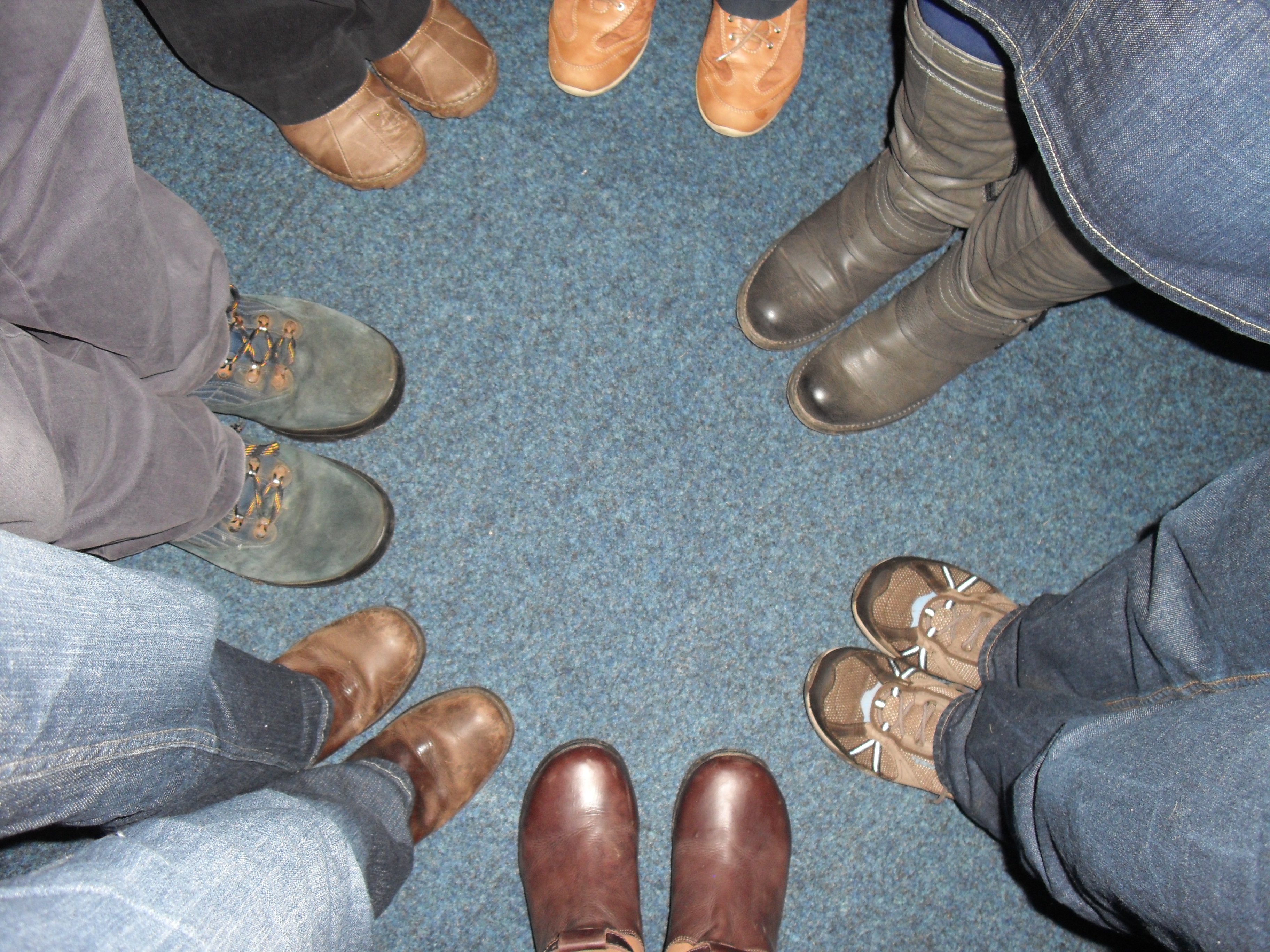
DSCI2689

I belong to a writers group.  And it’s great!

It all began years ago, when I started the Diploma in Creative Writing at the University of East Anglia.  It was the first writing course I ever went on.  I walked into the room and found myself surrounded by people like me.  It was the first time I ever felt like I wasn’t different and strange.  I had found my tribe.

Writing is a solitary occupation, so it is crucial for both your mental health and your work to socialise.  And what better way to do that than with other writers who are going through the same trials and tribulations as you are?

As part of our diploma course, we went on a weekend retreat, involving taught sessions, visiting speakers, workshopping and private writing time.  It was a huge success and we bonded.  Many of us went on to study for the Advanced Diploma in Prose Fiction, which was primarily a workshop-based course, and that further cemented the group.

Since then we have continued to meet, once a month, to share our work, our experiences, problems and interests.  And an awful lot of tea and flap-jacks!  Members have come and gone, buts okay.  There is a core group who have stuck together for over a decade now, sharing life experiences, supporting one another through MA courses and publication.  We go on annual retreats together, about which more in future.  We meet at each other’s houses, planning dates ahead and each offering to the host nights most convenient.  Hot and cold drinks, nibbles and cakes are provided to lubricate the conversation.

Based on the old course model, each member brings a piece of new writing that they have done, and we try to keep it to around 1,000 to 2,000 words in length – any longer and it takes up too much time.  You can read your own piece, or ask someone else to read it.  (It is sometimes really helpful to hear another person read it in order to pick out the parts where the writing is less fluid.)  Then people comment.  Helpful and empathic criticism is offered.  We always make sure we start by pointing out what we like about the piece.  Often, if it is part of a larger work, people will ask questions about plot or backstory.  Because we know one another’s work so well, we can refer back to earlier stories, or earlier parts of the work, and kick around ideas to find out what might be a useful improvement for any problems.  At the end of every participant’s session, they are asked how they feel about what was said, which gives them the chance to say anything that has been missed in the discussion.  We usually manage to workshop about three pieces of prose in a 2.5 hour meeting.

Not everyone may have something they want to read, or will have had time to write that month, and that’s okay too.  They contribute by commenting on and supporting the work of others.  We have prose writers and poets.  We share news of any courses or day schools that may have been attended, and often discuss what books everyone is reading too.

And of course, we do a lot of nattering and gossiping too.

Outside the regular meetings, we have been known to circulate work and meet informally for writing sessions.  We even do writing sessions over the phone.

I encourage you to find your own tribe.  You can do it online or in person.  Libraries and publications such as Mslexia and the Writers Digest often have small ads for writers groups.  Or start one yourself, as we did.  Make sure you are happy with the atmosphere and ethos of the group you join, however.  There is no point in sharing your work and then having it brutally cut to pieces.  Gaining confidence in dealing with confidence is one thing.  Bullying is quite another.  There are pitfalls with joining any group, but the advantages with a good one will outweigh any glitches.

My pals in the group have stuck by me through thick and thin and seven novels, and I am eternally grateful to them for their kind support and criticism.  And for banning me from using the word ‘massive’.  Sometimes you need that kind of pal.

Dear Bridget, Clare, Heidi, Nina, and Sally, I love you.

And now I had better get myself together and go and put some flap-jacks in the oven, because they’ll be round tonight and I haven’t written anything yet!

Happy creating,

EF

Journal Friday: The Life Organiser

life org pages 2I’ve been enjoying Jennifer Louden’s The Life Organiser for a while now, and I wanted to share it with you.  It is a weekly practise that may offer those who struggle with daily journaling an easier way into self-expression.

Now I have to confess, I’ve got a bit of a thing about the whole Organising scene.  It is definitely a displacement activity for me.  I would much rather go out and drool over new Filofaxes than actually do the work to sort out my office.  I love stationery.  I love notebooks.  I love books about how to organise your life.  I love the websites too.  Call me a GTD addict.  It cons me into thinking I’m actually getting something done.  I am sure many of you can relate to that!

Lately, though, I have been wrestling with something of a mid-life crisis, and that, together with the complexities of actually writing on a regular basis for this website, as focussed my attention on the real core of the whole productivity mindset:

 Intention

Life Coaches and self-development gurus go on about formulating your life goals, having a vision, a mission statement, working towards SMART goals, and all that stuff.  Achievement, in other words.  All of which is great of you actually know where you are going, and what you want.

But what if, like me, you are about to fall off the edge of 45, and still don’t have a clue what you want to do when you grow up?

Deciding what direction you want to push your life in is a huge project.  It can feel overwhelming.  Jennifer Louden’s approach is more subtle and manageable.  Building on her work with The Women’s Comfort Book, and other invaluable tomes, she has written a workbook that gives the reader a chance to get in touch with their essential self, cut down empty busyness and focus on what is really important.  On a week-by-week and day-by-day basis, she encourages you to think about what is going on in your life, here and now, and what you need to help you flourish.  It feels quiet, comforting and manageable.  And it offers you a chance to choose direction and improve the quality of your life in a gentle, incremental way.  So how does it work?

 The Life Organiser Book

The book itself is a delightfully satisfying object to handle, even before you get inside.  It begins with some explanatory chapters, and then sets to work.  Each week of the year has a two page spread, offering journal prompts and questions to contemplate and answer, inspiring quotes and the chance to list things you have to do, would like to do, and can reasonably let go of (the latter is my favourite, because it is the most thought-provoking for me.)  It is all laid out so that you can use the actual book to write in if you like, but there are inspiring examples at the front of how other women have made their own notebooks and digital documents into Life Organisers too.

My Life Organiser Kit

My Life Organiser kit comes in this cute little bag...

My Life Organiser kit comes in this cute little bag…

I was given a little bag which is just the right size to keep my organiser kit in, and my day-to-day dates diary and journal fit in there nicely too.

 I like to use lots of bright colours when I am answering the questions, so I include coloured felt-tipped pens, both fine and brush point, so that I can do that.  I have settled on a colour scheme that I like, with particular colours for certain subjects, and that helps me if I want to check back through the pages of my notebook.

... and here is what's in it!… and here is what’s in it!

The notebook itself is one I bought from WH Smith because I liked the cover.  It has wide-spaced lines and lies open easily, which is great if I want to do a two-page spread for a mind map or such like.

Doing My Organising

I try to do my Organiser on Sundays or Mondays, so I can set a clear intention for myself for the week.

I like to write in my journal or do morning pages before I start on my organiser because it clears my mind, and helps me to focus on my needs rather than my complaints.  I like to check my date diary or calendar before I start too, so I know what appointments I’ve got coming up, and how my time and energy will have to be distributed for the ensuing week.

When I have done that, I put in the date, and then write a section I call:

Where I am right now

This is a way of grounding myself, working out where I am emotionally and physically, and what issues are coming up for me at present.  It isn’t in the Louden version, but I find it useful to do.

Once I know where I am, I start on the actual questions for the week.  I always write out the questions in, in full, in a bright pen.  (This year I am using pink, last year it was orange.) I answer in a kind of stream-of-consciousness.  Sometimes a list comes out, sometimes a paragraph, sometimes a complete rant!  It doesn’t matter what, it is all instructive.  It tells me what is important to me at the moment, what I need to encourage and nourish myself, what I need to take notice of.  From these realisations come the lists of what I could do, must do, and need to let go of.

I have found it is important not to make long lists of things to get done or to force myself to release things.  Once you become prescriptive, these things become OUGHTS, and just make yet more burdens to add to those we have already.  I keep my list of things I could do for the week to a minimum so I don’t pressure myself.  Sometimes it is just a couple of things I could think about.

The lists can then be transferred over into my day to day diary and calendar if appropriate.  I can make appointments to do the self-care things I have identified, and book rest time in, which I need because of my health.  I put my ‘Let Go Of:’ list in the margin of my diary too, so that when I refer to it every day, I reminded of what is important to me.

Life Org pagesI think the Life Organiser is a more mindful way of keeping true to my intentions and needs than the endless To Do lists most productivity tools offer.  It forms a kind of accounting process that lies on top of my journaling, a means of orienting myself in a more concrete way.  Because I do it on a weekly basis, (although sometimes I miss, in which case, I don’t worry about it)  it doesn’t feel so much like a chore, and I look forward to it.  It keeps me in touch with myself and has helped me formulate my dreams and visions into doable agendas in a gentle way that seems far less scary than other methods.

I recommend it.  Get yourself a copy, and have a bash.  You might find it bridges the gap between journaling and Filofaxes that you need!

(You can find out mroe about the amazing Jennifer Louden here.)

Happy journaling

EF

Nuts ‘N’ Bolts: Writing Exercises

writing notebook Firstly, an apology.  Observant readers will note that today is Thursday.  Yes, I am a day late in posting.  Sorry.  Life got in the way, in the shape of a migraine, and it’s not funny trying to write with tunnel vision and the pain equivalent of a knitting needle stuck through your eyeball.  I figured I might sound somewhat distracted (as indeed I was), so in the spirit of demonstrating how important self care is, I bugged off and went to bed.  Today’s post is something of a restart.

For a while I have been feeling the itch to get back to writing original fiction.  I’ve been working on fanfiction almost exclusively for a couple of years now, and while it has been hugely instructive in terms of both technique and confidence, I feel like it is time to start making some personal headway again.  Hence the restart.

Getting back to basics is one way to do this if, like me, you are feeling a little at sea when it comes to what to write about.  And one of the best basics to get back to is the marvellous tool that is the writing exercise.

Writing exercises are based on the idea of stream-of-consciousness and free association.  You sit down with your notebook and write for a set amount of time, without judgement or criticism.  You are free to make mistakes, try stuff out, experiment with new words, phrases, images, metaphors.  This is a free-form space where there are no mistakes, only ideas tried on for fit and comfort.

What you need:

  • An allowance of time (10 minutes, 15, half an hour if you have it, or the luxury of more.)
  • A notebook (maybe your writing notebook, or one you keep specially for exercises).
  • A good pen that you can write easily with.
  • A timer.
  • A quiet space to work.
  • A prompt.

What to do:

Maybe you sit down to write at your desk, and your brain goes blank, or worse, is crowded with too many ideas that are too big to fit into 10 minutes or whoever long you have got, and you freeze.

Say hello to your little friend, the prompt.

A prompt is a word, sentence or idea that you use to start you off.  Write it in your notebook.  You may like to start a fresh page, thus allowing yourself a psychological fresh start.  Set your timer to your allotted amount of time, and off you go.

You start writing whatever comes into your head.  You might be writing about yourself, the way you would in your journal, or you might be writing about a character, or from a character’s point of view.  You might describe a scene or an experience.  Keep writing.  Whatever appears on the movie screen of your brain, write it down. And the next thing.  And the next thing.  Keep going until the bell rings and your time is up.

This is a great way of generating material, especially if you are the kind of writer who finds building up words a process of torture.  It is also good for exploring the backstory of your characters, finding out what makes them tick.  And of course, you will occasionally find yourself coming back to reality in the middle of a short story that you didn’t even know you had in you, as I often do.

I like to do two or three 15 minute exercises at one sitting, which allows me to really get into the groove.  You may not have time for that, and that’s okay.  The important thing is that you do the exercises.  And do one daily.  Limber up.  Get into the Habit of Art.

If you find it hard to get yourself into the mood, or to make time, writing exercises are a great tool to use with others.  Arrange to meet up with a writing pal at the local café, and do a few prompts together.  You don’t have to share what you have written if you don’t want to, but if you make an appointment with someone else, you are more likely to show up at the page and do the work.

Where to find prompts:

Ah! I hear you cry.  But where am I supposed to find these fabled prompts?

Well, there are plenty of books around that offer just these kinds of starting grounds.  I am very fond of the following:

‘A Writer’s Book of Days’ by Judy Reeves

‘The Writer’s Block’ by Jason Rekulak

‘The Writer’s Idea Book’ by Jack Heffron.

Search the internet for ‘writers prompts’, or check out http://creativewritingprompts.com/, which is a delight.

In the meantime, here are a few to get you started:

  • What does your character carry in their pockets and why?
  • I woke with a start…
  • Heat
  • My first pet
  • A favourite meal

Happy Writing!

EF

How to Write: Write what you know, or not…

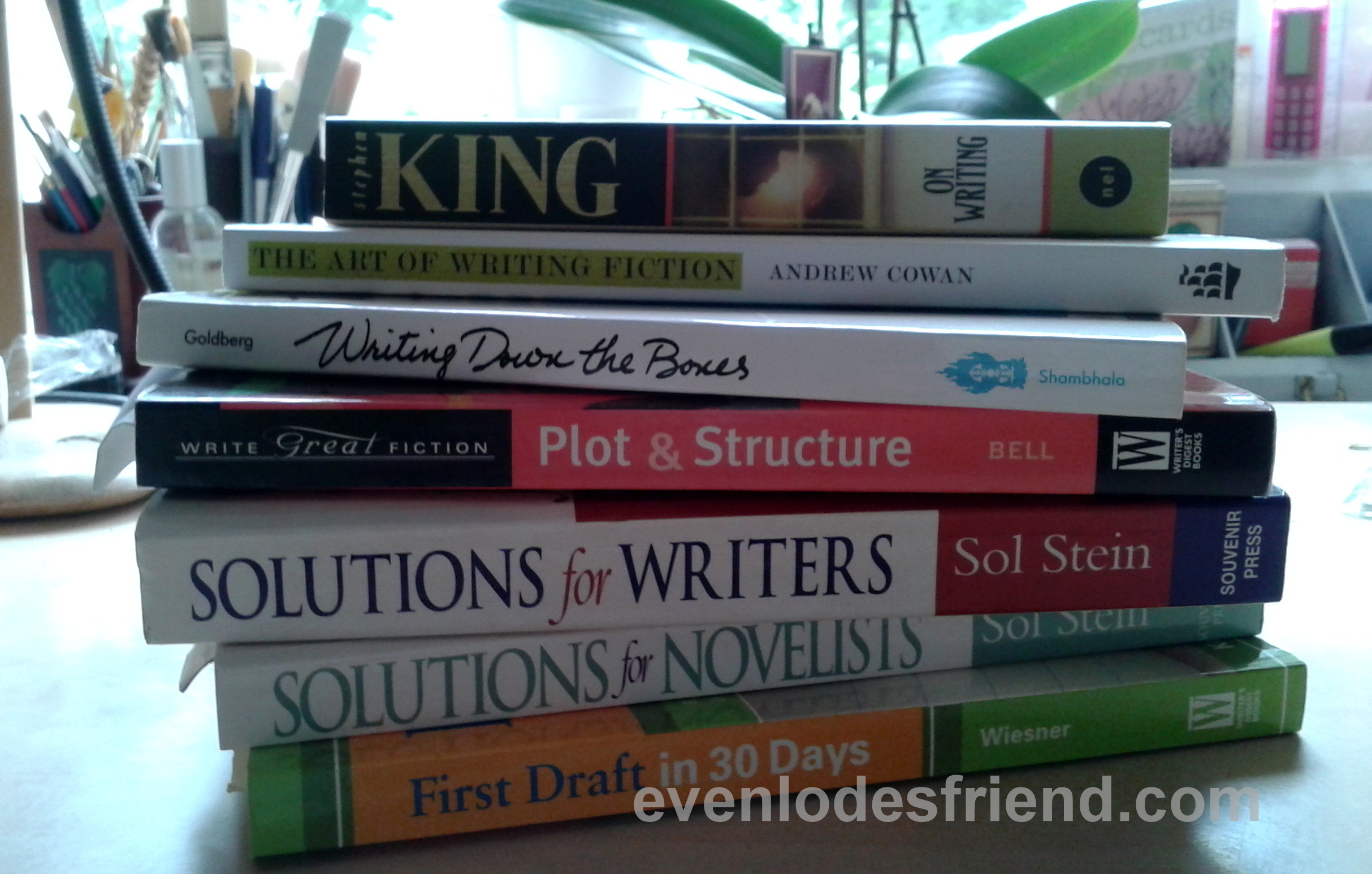
writing books

Most books on how to write will tell you this:  write what you know.

If you have some major area of expertise, they say, you should use that as a background for your novels.  Dick Francis, a famous jockey, wrote crime novels set against the backdrop of the horse-racing world, with spectacular success.  John Grisham was a criminal lawyer and politician before publishing fabulously successful legal thrillers.  Agatha Christie drew on her war work as a hospital dispenser when writing her detective fiction.  All of these authors, and many more, have made huge successes of writing about what they know.

BUT –

(And the word BUT has a bit of fairy dust in it that magically negates everything that comes before it, have you noticed that?)

I once heard novelist Rachel Cusk at a reading on the subject.  She was stridently against the idea of writing about what you know.  She said words to the effect of:

‘You know, we write fiction, and the clue is in the name.  Fiction.  It means we make it up.’

Take a moment to think about this:  the genre of science fiction would never have been invented if we only wrote about what we know.  No one has travelled across the Universe of the star ship USSS Enterprise, after all.  Fancy a world without ‘Harry Potter’ or ‘Game of Thrones’?  That would be the logical conclusion.

And what about crime?  Yes, I agree there are a number of very talented writers producing procedural crime novels who have a background in criminal pathology or forensics, but how many truly great crime writers have actually personally killed someone? (None, we hope.)

‘Write what you know’ does not, therefore, take account of the most wonderful asset we have, the thing that makes human beings extraordinary amongst all the myriad of life on this planet:

Imagination

Imagination enables us to fly beyond the stars at warp speed, fight dragons with broadswords, fall in love with Benedict Cumberbatch and have him love us back.  And all in our lunch break.  Think about it –who really wants to write about their day job when they can write about this stuff?

There is, of course, a caveat.  Sometimes you need to do research.  And research is a double-edged sword on which you fall at your own peril:

I wrote a book set in London.  I have not lived in London.  I gave it to a friend to read, and he was a Londoner, born and bred.  He asked me about the car chase – Where are they?  Where are they going?  What road are they on?  He was frustrated because he knew the city well and he could not orient himself within the action.  I had not done my research and I did not know the setting well enough to wing it.  The novel collapsed for the reader as a result.

The opposite is true.  I wrote this story, set partly in Oxford, a city I know well and visit often.  I was able to undertake the depicted walk myself, just to be sure I had the details and the route right.  The result was a story that was adored by readers who knew the city too.  I had a personal email from one who was delighted that memories of her student days had been rekindled by my work.

So, getting the details right is important.  If you don’t, you can look like an idiot who doesn’t know what he is talking about, and the credibility of your story collapses.

BUT

(Fairy dust again.)

There is such a thing as having too much detail.  The first novel I wrote was set in the Iron Age, around 230BC, on the Newbury Downs.  It is not an area I know well, though I have driven through it.  And I have no background in archaeology or prehistory, so I had to research it all myself.  It took me seven years to finish it, and I gave up doing word counts after 250,000.  I knew too much.  I had too much detail – there are things I know about Iron Age saddles that normal human beings really shouldn’t know.  It’s doubtful that any reader would care.

And yes, you always get the odd accuracy fiend who emails you to say (puts on squeaky voice) ‘Er, the spoon your hero was using in scene 23?  Well, those kinds of spoons were not invented till three hundred years after the date you posit…’ etc etc.  But those are not your average readers.  Unless you write sci-fi, in which case you had damn well know your warp cores from your improbability drives.

“The best way to become acquainted with a subject is to write a book about it.”

-Benjamin Disraeli

The point I am trying to make here is this:  Ignore the advice.

Write what you want to write.

Write what you need to write.

(And if you have to, do the research.)

I promise to talk more about research in a future post, but in the meantime, do this:

Write the novel you want to read.

Happy creating,

EF

Journal Friday: Outflow – Making Lemonade

LemonsPart of being a writer is the dance of self-acceptance.

I have to deal with a chronic illness, which has radically altered my life for the last fifteen years, and shows no sign of waning.  This means I have to manage the delicate balance between self-care and doing too much.  When I overdo it, I end up exacerbating my symptoms and have to face extended periods of bed rest and being confined to the house.  Anf brain fog.

So sometimes I can’t write.  And its not that I don’t want to, its just that I literally can’t.

As I have said before, however, that doesn’t mean I’m not writing.  In my head, at least.

Sometimes life deals us lemons, and the lemonade is hard to make.  But even when I feel like I am buried under tonnes of lemons, the dream is still there.  The memory of how fantastic it feels when I am able to write, when the flow is happening and I am submerged in a scene.

This is where my diary comes in.  At times when I can process language, when I can hold my pen, I write in my journal.  It may only be a few lines, a sentence or two, but it is self-expression, getting the feelings out onto the page, and it feels fantastic.

At times when things are tough, my journal is my life raft.

At the moment, as I struggle with another period of sickness, I am working with this book.  When I have finished squeezing every drop of goodness from it, I will tell you how I got on, a little review of sorts.  In the meantime, I offer you this quote, from the marvellous SARK, patron saint of creative women, quoted by the author, Jackee Holder:

“I love journal keeping because it has helped me to discover and uncover myself, to encourage my own bravery, sort out difficulties with other people, to invent new ways of being.”

SARK, Juicy Pens, Thirsty Paper, 2008.

Happy Journalling,

EF

How to Give Good Criticism, or ‘Do as you would be done by’

This post follows on from my earlier one, about how to take criticism.

Now, before you get defensive, criticism is a good thing.  It can help you develop as an artist in whatever field you choose to pursue.  It can open your mind, make you a bigger, better human being.

BUT

It has to be CONSTRUCTIVE CRITICISM.

Constructive criticism is given from a place of concern and interest.  It is offered by someone who cares about your work and wants you to be the best you can possibly be.

Most people don’t know how to do this, which means criticism gets a bad rap.  It is seen as something damaging and negative, something that can potentially destroy you as an artist, and believe me, it is, if you do it wrong.

This is a guide on how to do it right.

 THE ONLY RULE IN GIVING CONSTRUCTIVE CRITICISM IS EMPATHY

Everything comes from this.

Put yourself in the place of the person whose work you are reviewing.  Think about what you want to say about it.  How would you feel if someone said something like that to you about your work?  Would you feel hopeful, buoyed up, enthused, or would you be utterly crushed?

Take the time to think before you type or speak.  This is especially important if you are reviewing someone’s fanfiction or online work.  It’s so easy to plonk a few keys and fire off a comment before you have thought about it, before you have considered the impact on the person receiving it.

Don’t say what you would have done instead.  So many readers think that helpful comments should be about ‘well, I would have written it this way.’  No.  Criticism is about pointing out what doesn’t work for you as a reader.  It is down to the writer/creator to decide what to do about that.  (However, helpful suggestions are often very well received.)  Remember that this work comes from someone’s unique perspective, and that they have made many artistic decisions for specific reasons.  Those are reasons that you may not share, understand or even perceive.    Give the writer/creator your respect.

Gauge the level of criticism the writer/creator may be ready to receive.  This can sometimes be quite hard, especially if there is seems a lot wrong with a piece.  Is the writer in need of help at the most basic level, i.e. the nuts and bolts of language and grammar?  This may, of course, be because the language used is not their native language, so they are learning.  If that is so, they may be very grateful for your help.  Perhaps the comments you need to make are at a higher level, in terms of plot, pace, character, structure or dialogue.  Again, this may be a problem with linguistic mastery.  Try to choose one area to comment on at a time.  Don’t deluge someone with criticism of all major aspects of their work, or they will go to pieces.

Knowing the writer’s other work helps.  This way you can refer back to it, and they feel known and appreciated.  If someone is commenting with knowledge of your back-catalogue, they can comment in context.  They know where you are coming from, and how your work has changed over time. It’s not necessary to read everything a writer has written before you comment, but if you have read one or two of their other works, and you think they are relevant, it can be a great boost, a recognition of the progress they have made and what they do right.

Practise constructive criticism in a writers group.  You can join them online or face to face.  Watch notice boards in your local library or bookshop, or scan the pages of literary and writers magazines like Mslexia to find a good group.  Alternatively, form your own, and workshop your work together.  Make the rule that all comments must be caring and constructive.  Always ask the recipient how they feel about what was said at the end of their workshop session, so that they have a chance to talk about any comments they found difficult to handle – trust is crucial.  (I’ll write more soon about writers groups and how useful they can be.)

Always point out and praise what does work, and be positive.  The writer/creator has put a lot of time and effort into producing something for your consumption and enjoyment, and that in itself is a great achievement.

Don’t EVER get personal.  This is about the work, not the person.

If you react in a strongly negative way to a piece, ask yourself whether this is because the content is touching on your own issues and triggers?  If it is, DO NOT comment.  I suggest you spend some time writing your rant out in your journal, rather than firing it off to some innocent writer who doesn’t know about your ‘stuff’.

Some examples of constructive criticism:

(These are all actual examples of constructive criticism I have received on my work, and are offered as illustrationss of general points.)

“I’m not really sure I understand the character’s motivation at this point.  Maybe I need to see them in a scene that shows them being attacked about this issue so I know why they are reacting so defensively later on, or maybe point to some backstory that suggests this?”

“And then he said it.  The thing he wasn’t supposed to say.  The one thing I never expected from him.”  – (section of text from my story)  This feels like overwriting to me.  If it was the one thing he wasn’t supposed to say, surely it is unnecessary to add that it was unexpected from him.  You are repeating the sense here.  Just take the second sentence out, and its perfect as it is.”

“The word xxxxxx stands out as awkward here for me.  Would they really use that kind of language?  It sounds more like modern slang than a Victorian expression, and it kind of bumped me out of the flow of reading.  Could you substitute something similar but gentler?”

“(Example given)  This sentence is really long.  It has so many commas that I got a bit confused as to what you were trying to say.  It would make much more sense for me if you made shorter sentences, so that I don’t have to consciously keep track of where you are going.”

 A final note:

Remember, it takes a lot of guts to put your creative work out into the public arena.  For many creative people it feels like sticking one’s head into the lion’s mouth.  Respect that fear and the bravery that outweighs it.  Always respect and have empathy for the creator of the work on which you comment, and it will be hard to go wrong.  If we support one another’s work lovingly, we can all learn together.

Incidentally, I would love to know if you have more tips on how to receive or make constructive criticism – if you do, please comment/reply!

Happy creating,

EF

Inspiration Monday: Dreams

angrysea

Angry Sea by John Lewis Photography

Everybody dreams.  Maybe you don’t remember all your dreams, but they are there as a window into your own psyche, and to explore as a source of inspiration.  Dreams are a chance for your imagination to go completely wild, places where the impossible really can happen.

I’ve always been very fortunate to dream in vivid technicolour.  Many of my dreams are coherent stories in filmic form.  I am often aware that I am dreaming, and find myself enjoying the stories playing out inside my head.  Maybe you don’t have that capacity, but through the technique of lucid dreaming, you can develop more.  Maybe you only have occasional images, snapshots of your dreamworld.  Even these can be fodder for your art.

One Christmas Eve I had a dream.  I know it was a coherent one, I was aware of it at the time.  When I woke in the morning, I had only one image left in my memory, but it was a compelling one.  Imagine a man, looking very like Richard Armitage, tied to a chair.  A demon stands in front of him and sinks its hand into his chest, and pulls out his still-beating heart.

That was all there was.

No context.  No meaning.  Just this image.

That was where my five book series of Evenlode novels began.  Five novels, which began with one blurrily remembered image from a dream.

Here is the dream I had last night:

Two teenaged boys are living in a run-down, poverty-stricken, former industrial city in the North of England.  They roam a half-derelict, grey landscape pocked with disused steel works and the skeletons of mine engines.

One is tall, dark and skinny, the other short, stocky and blonde.  They are both outsiders, clinging together for support because they have no one else.  They are hunted by a gang of other boys who regularly attack them, and call them names.  They accuse the two friends of being gay.  That is the reason they give for their hatred.

One day, the blonde boy helps his friend through the front door of the dark boy’s parents house.  He has been badly beaten.  His father is at home.  When the father finds out the reason why his son has been beaten, he assumes the accusers are correct.  He starts to beat his son for being gay, for being weak.  His belt will make the boy a proper man, he claims.  The blonde boy stands between father and son.

‘Your son is a proper man.  A real man.  He protects me.  He takes the heat for me, because I am gay, not him.”

The blonde boy has already been rejected by his own family for his sexuality.

Later, broken and despairing, the boys walk, hand in hand, up the hill to where a huge World War Two concrete bunker stands, clinging to the top of a sea cliff above the town.  The sea is rough, the wind strong, the air full of swirling grey drizzle.  The cavernous interior of the bunker has been taken over by the council, and is being used as a reahearsal space for the city’s orchestra.  They are practising a piece as swirling as the tormented weather outside.

Together the boys walk through long dark corridors buried in the hillside, swelling music echoing around them,  until they reach the roof of the bunker, where the Ack-Ack guns were once mounted.  Together, they stand up on the narrow wall around the edge, and kiss.  And then, together to the last, they jump and fall, still holding hands, down the cliff and into the churning seas below.

Yes, it is messy and there are holes and cliches in it.  But that is what I dreamt, in its entirety, as I remember it.  It is atmospheric and tragic, and I don’t even want to think about doing a psychological reading of it.  But wouldn’t it make a great short story?  Or even a short film?

Dreams are a free resource just floating about inside your own head, begging to be used.  Don’t waste a minute.  After all, isn’t that a great excuse to sleep more?

Writing Exercises:

You can find our more about Lucid dreaming here and here.

Keep a notebook by your bed and write down your dreams as soon as you wake.  Don’t wait.  You will forget them.  Write down whatever you can remember, no matter how disjointed it may seem.  Describe what you saw in as much detail as you can.  I get enormous, almost baroque detail in my dreams.  Get as much down as possible, even if it seems too weird, complicated or just completely insane!  You never know what may be useful later.

(I find this technique especially helpful with troubling dreams or nightmares, which I have a lot.  These sorts of dreams can follow me around during the day, filling my waking heart with dread or sadness.  However, I find that once I write them out, their power over me wanes, and I don’t get the ‘after effects’.)

Now, dip into your dream notebook whenever you are looking for an idea or a writing exercise to play with.  Choose a dream, a scene, an image, or a whole story if you get them, and use it as a starting point.  Write stream of consciousness for fifteen or thirty minutes and see what comes out.  Can you use this as the start of a short story?  A screenplay?  Is there an interesting character here for you, as there was with my Christmas Eve dream?

If you are a visual artist, what colour palette comes out of this dream for you?  What striking images, silhouettes, shapes stick in your mind?  For example, in my ‘two boys’ dream, the colour palette was greys and blues, the shapes of derelict buildings were jagged silhouettes against the lowering sky.  Explore the colours you recall in your sketchbook.  What would a painting of your dream look like?

A musician might take from my dream the echoing strings of the orchestra, muffled by the concrete, and backed by the roaring of the waves as they crash against the cliff below, and turn that into some kind of soundtrack.

Where can you take your dreams?  How far can you drive your limitless imagination?

Happy dreaming,

EF

Journal Friday: How to write yourself out of a hole

Lighthouse at Dusk, Islay, Scotland

Lighthouse at Dusk, Islay, Scotland

(DISCLAIMER:  I am not a qualified counsellor, psychiatrist or doctor.  I am just describing what works for me.  If you are suffering with depression I urge you strongly to reach out and get help.  You do not need to suffer.)

I have suffered from bouts of depression since I was a child.  Depression is not having a bad day, or feeling blue, though both of those are unpleasant.  Depression is a soul-crushing, heart-lacerating misery that debilitates and destroys everything in its path.  Do not deny it or under-estimate it.

That said, over the years I have found ways to help myself, and believe me, helping yourself, feeling you have a little control over something that feels like it is controlling you, is a real relief.  Journaling is one of those ways.

So what to do if you find yourself at the bottom of the depression mine shaft?  Or even if you are just having a bit of a black dog kind of day?

How to:

Get out your journal.

Write down how you are feeling RIGHT NOW, in this moment.  As my counsellor often says, you can’t get to Edinburgh if you don’t know where you are now. (Think about trying to plan a journey that way – impossible!)

Be specific.

Stop and take the time to feel what is going on inside your body.  Do you have particular sensations associated with this low mood?  If so, where are they?  Write them down. They may be indicative of trapped emotions.

How are you feeling emotionally?  Write that down too – a list of adjectives if that is all you can face doing.

Does an image that describes how you feel come to mind?  Describe that.  For example, for me a real, deep depression feels as if my ribs have been ripped open, and my heart repeatedly slashed.  I feel it bleeding inside my chest.  Yes, it is a horrible image, but that is exactly how I feel, and describing it, in as much detail as possible, can be a huge relief.

Do not judge your feelings as you record them.  Do not judge yourself as selfish or unfeeling because you resent the fact that your husband is not doing much to help with your crying baby, or that you are angry because your boss does not recognise how hard you are working..  Have a good rant, safe in the knowledge that you don’t have to protect anyone’s feelings.  You are not being a martyr or a victim at this point.  You are just recognising how you feel.  Do not feel bad about what you write.  Admitting these feelings exist to yourself is the first step to healing, and no one else is going to see what you write.

If you don’t feel anything, write that too.  An absence is just as important.  Describe the void in as much detail as you can.  You may even find, as you progress, that you begin to pick up on little gimmers in the abyss, feelings you didn’t know were there.  Write those too.

As you write, you may find other feelings coming up from underneath the ones you are describing.  Get those down.  I often find that underneath my depression is anger, and underneath the anger lies a need not being met.  When I identify what it is I want that I am not getting, I am right in touch with the small child inside that feels unloved, whose needs went unmet.  Do not judge the need.  Simply recognise it.  Is there a way you can get what you need now, in a healthy way?  Now you know what it is, you can ask for it.

Whatever else you do, try to write daily, and get whatever miserable feelings you are having onto the page.  Once you have let them out, keep writing.  You may find more positive stuff coming through behind, and perhaps even ideas of things to do to help, comfort and console yourself.

Above all, be gentle with yourself. 

Show yourself the same compassion you would to a friend in need. (We often don’t do this, conditioned as we are to berate ourselves for the smallest failing.)

What next?

This is a process of continuing orientation and expression.  If you were on a cross-country walk, you would stop regularly to check your map and compass, to be sure where you were, to work out which was the next direction to take.

In the same way, depression is a long journey.  You need to be taking your own emotional temperature, checking your compass, as regularly as possible.  So make time to write often.

In my last spell of depression, I worked in my journal like this three or four times a day, for several days, then continued on a daily basis long after.  That probably sounds like quite a lot of effort.  On the other hand, you might take a pill three or four times a day if told by the doctor that it would make you feel better.  And this will make you feel better.

Why?  Because it gets the toxic feelings out of your body and mind, and puts them somewhere else – onto the page.

NOTE:  Do not reread what you write when you are still ill, or at all.  That would be ruminating on your feelings, and will encourage you to judge, feel guilty or ashamed.  Just get it down.  You are looking for TRUTH, not BEING GOOD.

You may find it helpful to write on loose sheets of paper, rather than in your journal proper.  This way, you could opt to burn the pages, ritually releasing the feelings, and freeing yourself.

Whether you are in the midst of a long bout of clinical depression, or just having a low spell, I encourage you to try this way of journaling.  I hope that it will help you to release your pain and move back into the sunshine.

With love,

EF