Tag Archives: Inspiration

Inspiration Monday: In Utero

(And just in case you are wondering, I am not pregnant.)

“I’ve got a story coming on.”

This is what I generally say when Husband asks me why I’m being so grumpy and uncommunicative.  Its the time when I am lost in ideas, fermenting, cogitating, incubating.

This is sometimes not an easy time for the person or people who share your life.  They may feel like you are being deliberately distant.  Its always worth explaining that you still love them and want to be with them.  If you have to go away inside your head, it is because your Muse is kidnapping your brain.  Reassure those you love that you will be back with them soon, and its nothing personal.

This is also a time to be compassionate towards yourself.  If you are absorbed in your new project, you may have new ideas flooding your skull every which way.  It can be exhilarating, but it can also be exhausting.  Remember to take a breather if you can.  It will help the details to accumulate in your head in the meantime.

If you are suffering from the ideas overload that sometimes comes with a new project, when you are overwhelmed with all the brilliant concepts for other things you could be doing as well, write them down.  Write everything down.  You can always come back to them, but at least you will have a record of them when the deluge ends and the drought sets in.

You might be so excited by your new idea that you want to get started right away, like, yesterday.  Well, maybe.  But don’t jump the gun.  Give yourself some time to think things through.  Make lots of notes – this is what your writing notebook (or journal or sketchbook) is for.

Be thorough.  Take notes verbatim from  your Muse.  Don’t rest on your laurels at 3am and convince yourself that you are going to remember that brilliant flash of inspiration, because chances are, come breakfast time, the little sucker will have sneaked off into infinity, and you will spend the next week banging your head against the wall, trying to remember exactly what it was that was so bloody good that you thought you’d undoubtedly remember it.  (This is especially important as you get older, believe me, so its a good habit to start NOW.)

It can be worth exploring around your idea too, digging around in the associated issues, examining messages linked to what your story or painting will say.  But don’t get side-tracked by research at this stage.  This is a pit with spikes at the bottom, and I for one always seem to end up falling into it.  The problem with the pit of spikes (research) is that:

a) You can lose touch with the original idea and its uniqueness to you.  I was once on a writing course with a man who was fascinated by the concept of how ‘shell shock’ was dealt with in the First World War.  He had done so much research into it that there wasn’t a thing he didn’t know.  The trouble was that all the research had led him to the conclusion that the novel he had to write was pretty much a re-run of Pat Barker’s peerless ‘Restoration’, and why rewrite a novel that has already been written far better than you ever could?

b) You can get side-tracked BIG TIME.  I got so lost in researching my first novel, which was set in the Iron Age, that it took me seven years to write the first draft.  By the end, I was so exhausted, I couldn’t face editing it, so I gave up, and it now sits in a folder on the shelf, seven years of work gathering dust.

Allow your idea to emerge without influence, or at least without any influence that isn’t already within you.

One final tip I would add is: don’t share yet.  Not even with your Significant Other.  Give yourself time to polish the corners off and get things into some semblance of order.  Honour yourself and your project with private time, in utero, so to speak.  No one else can share the link between a mother and her baby while it is in the womb, no matter how much tummy rubbing and singing to the bump takes place.  You are feeding your project baby through an umbilical cord that runs solely between you and it.  Take as much time as you need to nourish and birth it.   You will know when is the right time to bring your baby out into the light.

Happy Creating,

EF

Inspiration Monday: Gardens and Gardening

Ickworth Garden Temple - take a moment to reflect

Ickworth Garden Temple

(WARNING: photo-heavy post!)

You think gardening is for oldies, don’t you?

Not so.

Go and visit a big garden in your area, a park, a stately home if you have one nearby.  As you wander round, take the time to look at the flowers, plants and trees.  Take the time to appreciate the long vistas the designers have laid out for you to enjoy.  Think about why each plant has been positioned exactly there in the scheme.

The garden house at Ickworth House, Suffolk

The garden house at Ickworth House, Suffolk

Who has walked this path before you?  What is their story?  Read ‘Lady Chatterley’s Lover’ if you can’t think of something better, or watch ‘Downton Abbey’ to clue you in to what might have happened in a garden like this, the secret assignations between the lady of the house and the gamekeeper, the Lord and the scullery maid, or the married gentry who came to visit for shooting weekends in winter, eager to continue their private affairs without their spouses knowing, stealing away into the shady nooks of the different garden ‘rooms’.

Inside the Yew Hedge at Blicking Hall, Norfolk - who might have hidden here?

Inside the Yew Hedge at Blicking Hall, Norfolk – who might have hidden here?

As for public parks, well, imagine all the spies who have met their KGB handlers by the duck pond, the mothers who have pushed their prams through the rose beds and contemplated running away from loveless marriages, the children who have imagined faeries and elves in the trees.

If writing is not your thing, you only have to look at what Monet did with his garden at Giverny to see that gardens can be an endless source of inspiration for visual artists of all kinds.  Maybe your garden flowers could inspire a colourful quilt or embroidery.  There is so much beauty in your back garden and local park – all you need to do is use your eyes.

arbour and urn cropWhat about getting your fingers in the soil yourself?  Gardening is a true art form.  It allows you to create a complete world within the four hedges of your back yard.  You might prefer growing vegetables to flowers, in which case, google ‘potager kitchen gardens’ to see how amazing kitchen gardens can be.

Roses in my own garden.

Roses in my own garden.

There is nothing like actually getting down to business with the mulch and seeds.  Yes, it is often hard work, and it takes time and patience, but it is so incredibly rewarding, creative and satisfying.  Even if you just have a tiny balcony or window ledge, you can fill it with pots of colourful bedding plants and grow-your-own lettuce varieties.  Go to any Mediterranean village, and you’ll see what marvels of gardening can be achieved with a few old olive oil cans, some white and blue paint, and some bright geraniums!

And once the hard work is done, you can get out your deck chair, and muse.  And then maybe paint a picture or write a story about your green empire.

Happy creating,

EF

Inspiration Monday: Mad Thoughts!

Do you ever have one of those moments when you wonder WTF is going on inside your head?

I try to keep mindful of the thoughts that go through my head, partly as a defense mechanism against depression and overdoing things, but also to a degree out of sheer amusement because some of the stuff I think can be deeply bizarre.  For instance, here is yesterday’s offering:

“I don’t want her to think we’re the kind of people who don’t clean our bathroom mirrors.”

?????????????????

This raises so many questions about my sanity that I daren’t even go there.

BUT

What about using this as a creative writing prompt?

Who is the ‘her’ the speaker is so paranoid about?  A demanding mother-in-law, for example, the boss who might have a promotion available, or a rich friend, perhaps.  What sort of people don’t clean their bathroom mirrors anyway?  What kind of people are the ‘we’ mentioned?  Detach this sentence from me and my interiors paranoia for a minute, and think of all the possible short stories you could write using this moment of madness as a starting point.

There are so many little moments in life that could be writing prompts.  That is why you keep your writing notebook with you, so that you can write down the moment your mother-in-law steps over your threshold and into your new home for the first time, and the first thing she does is look at the floor and say ‘I see you haven’t hoovered today’ (you moved in two days ago.)  Just imagine all the thoughts that would come into your head then!  Or when the hostess of a dinner party you attend dispells a painfully embarassing moment by announcing, without any preamble:  ‘I like cheese.’  (What was going in inside her head?)  Or when you catch yourself wondering what it would be like to eat daffodils (answer: don’t – they are poisonous.  I looked it up.)  Or even wondering what alpacas think about.  What do alpacas think about anyway?

Your mind is a garden of unbridled surreality and whimsy.  Don’t ever think you are short of prompts.  Its all inside your head.  All you have to do is watch what is going on.

Happy Creating,

EF

Inspiration Monday: A Day Out

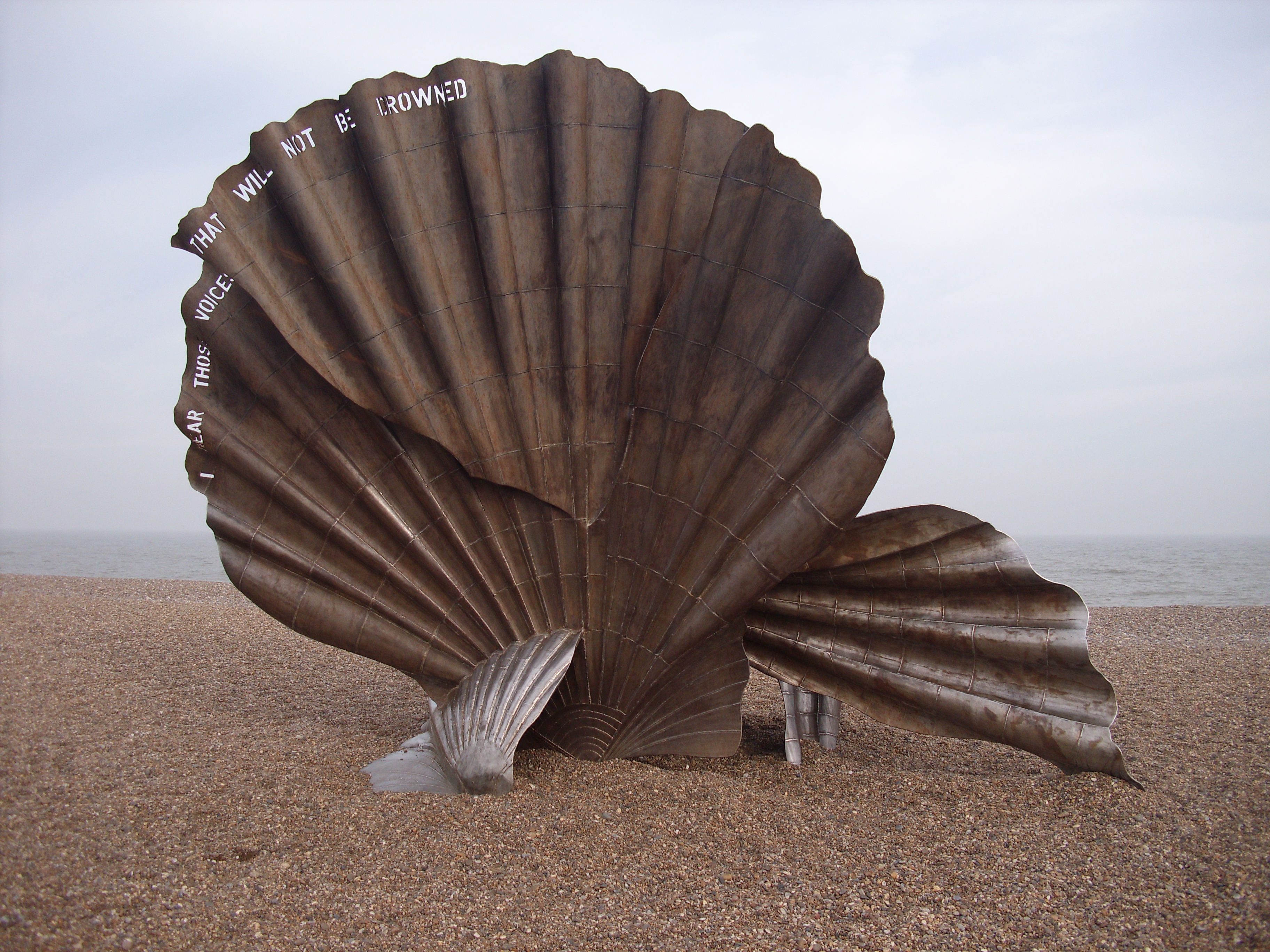
The Scallop by Maggi Hambling, Aldeburgh, Suffolk.

The Scallop by Maggi Hambling, Aldeburgh, Suffolk.

Warning:  This post has lots of pictures!

Its a lesson my mother taught me.  After my father died when I was 13, she used to take me away.  Just for the day.  Somewhere.  She would ring the school and say I was sick and we would run away somewhere.  Salisbury.  Portsmouth.  Winchester.  Even the Isle of Wight.  Somewhere that was within a day’s drive.  Anywhere that was not home, not full of memories and sadness.  It recharged our batteries, gave us the time to talk about what we had lost, and grow closer.  I have very fond memories of those stolen days.

Running away is a lesson that I have brought into my adult life.  Now, when things get a bit much, when we need to recharge, escape, or just rememebr who we are, Husband and I run away.  This weekend, we ran away to Aldeburgh in Suffolk, which is about an hour’s drive from home.  It is the town famous for its links with composer Benjamin Britten, and the music festival he set up.  It is also the seat of a number of literary festivals, and the setting for MR James’s haunting ghost story, ‘A Warning to the Curious’.  Fishing vessels work from the shingle shore, and you can buy fish straight from the boats, as well as smoked from the new smokehouse. (I recommend their smoked prawns with garlic dip, eaten straight from the packet on the beach, yum!)

Fisherman's shack where you can buy excellent fish caught fresh that morning, or crab, lobster and various local shellfish in season.

Fisherman’s shack where you can buy excellent fish caught fresh that morning, or crab, lobster and various local shellfish in season.

Since I am trying to get back into the swing of taking photographs again, I took my camera, and here are some of the results.  I hope they get your creative juices flowing.

And if you are lacking in Inspiration this week, why not plan a day to run away and just be.

Fishing boats hauled up ont he shingle shore.

Fishing boats hauled up on the shingle shore.  Is that the figure of Willam Ager running along the strand?

DSCI3684

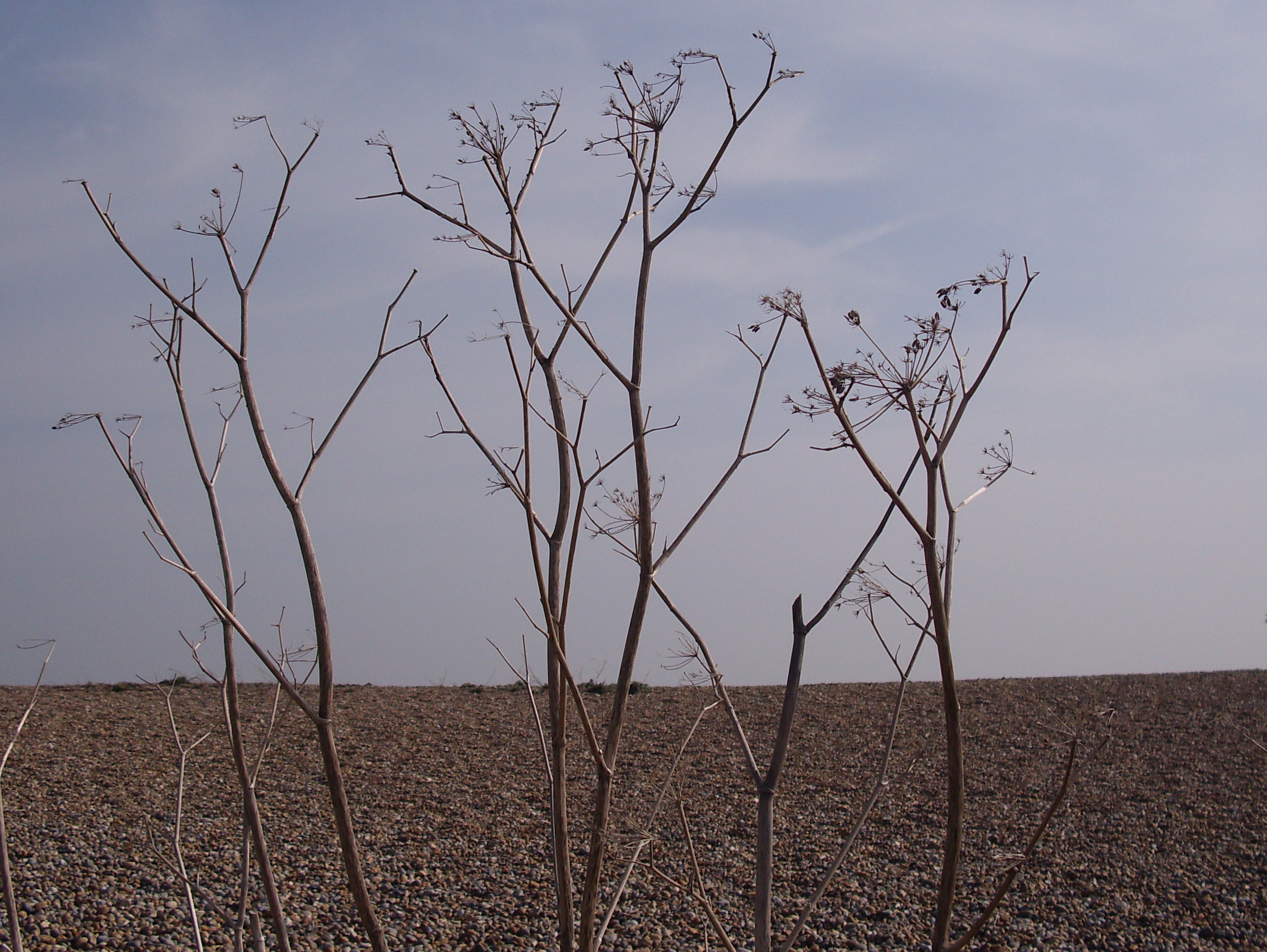
Dead seedheads by the coastal path.

Old fishing boat on the shingle in the mist.

Old fishing boat on the shingle in the mist.

The Scallop by Maggie Hambling, a local Suffolk-based artist.

The Scallop by Maggie Hambling, a local Suffolk-based artist.

The Scallop is a memorial to composer Benjamin Britten, who lived in Aldeburgh.  The words are from his opera, Peter Grimes.

The Scallop is a memorial to composer Benjamin Britten, who lived in Aldeburgh. The words are from his opera, Peter Grimes:  ‘I hear those voices that will not be drowned.’  (Are these also the voices of creativity, calling us?)

Approached from the Thorpeness (north) side, the Scallop is said to look like a knight riding a charger.

Approached from the Thorpeness side, the Scallop is said to look like a knight riding a charger.

Utterly mad cow wallpaper found in The Crown Inn, Framlongham on the way home!

Utterly mad cow wallpaper found in The Crown Inn, Framlingham on the way home!

Happy Creating!   EF

Inspiration Monday: Creativity is Catching

Top.BMPToday we had the pleasure of attending the opening of an art exhibition by a friend, Martin Battye FRSA.

Martin is a pal of my husband’s from the cricket club, but he is also a Fellow of the Royal Society of Art, and his paintings are vibrant, vigorous and exciting.  It is always a delight to get to see his work, and today’s opening was no exception.  Martin is using oil colours on paper at the moment, and his pure pigments, textures and abstract designs are fascinating.  Scattered around the gallery were also a selection of his recent sketchbooks, and for all the wonder of the major pieces, I found these the most inspiring.  They show an artist’s process, the act of creativity itself, caught as if in aspic.  They contain the genus of the bigger paintings, as well as scribbled thoughts, poignant quotes and articles cut from newspapers and magazines.

I came away aching.

I want to do that, my heart said.

It’s been so long since I used my paints, since I dared to draw.

Lately, I have been remembering the two years of my art ‘A’ level course, when I started discovering other artists, the revelation of abstract art, the earthquake of Modernist artists, architects and designers like Mies van der Rohe and Le Corbusier, Matisse and Rothko.  I felt so excited, so fascinated by their ideas and the pared-down beauty they created.  I was never able to liberate myself from the tyranny of the figurative, though, as they had, nor from my own self-abusive perfectionism.  I couldn’t, and still can’t, make a mess, try things out, paint outside the lines.

But what would happen if I DARED?

What would happen if I could BE MY OWN HERO?

The truth is that I want to create abstract art.  I want to make paintings that please me as much as Martin’s do.  I want to have his exuberance, his extravagant variety and colour, his sense of fun.

I keep thinking of Jamie Ridler’s exhortation to not judge the art you are called upon to make.  To just do it.

So I have decided to try and find out if I can recover that sense of adventure I had went I was 18 and reading about Modern Art for the first time.  I want to know if I can finally overcome the Nigel voice in my head that says I can’t get messy or paint outside the lines.  I want to find out, one tiny baby step at a time, if I can be the artist who lives inside me, safe in the knowledge that that artist will feed the writer, and vice versa.

Inspired by Martin’s creative process, EXPLORATION is my word for March.  I’m going to explore my creativity and have some fun.  I’ll let you know how it goes.

(If you are in Norwich, do visit Mandell’s Gallery in Elm Hill to enjoy Martin Battye’s wonderful work, open Mon – Sat, 10am to 5pm.)

Happy Creating,

EF

Inspiration Monday: Commuting

I’ve written already about the wisdom of walking for the creative life.

No reason why I shouldn’t repeat myself, of course.  Especially now we are in a new year, with new Intentions and new opportunities.  I have promised myself I will walk more this year.  Sometimes, this is not an easy promise to fulfil.  There are appointments to be met, after all; there is the filthy English weather (and believe me, filthy is what it is at present), and then there are my physical limitations.

Yet, in spite of the mud and the commitments and my low energy levels, I am trying to get out most days.

And there are so many things to see.  Some of the best walks I’ve ever had have been the repetitive ones to and from work, or school, the continual plodding on the pavements that sets up a meditative rhythm.  This time of year, walking home in twilight is especially evocative.  Not only can you see into other people’s houses as you pass, because many people don’t draw their curtains too early, but the landscape changes when industrial lights are switched on.

As a teenager, my walk home from our nearest bus stop was a route that skirted fields and woods.  Behind those woods, though, lay a huge industrial area, lit by massive floodlights in the dark hours.  The entire night sky glowed with this statement of manmade power over the environment.  To me, it looked uncannily like one of those landing pads on strange planets from the Star Wars films, and it fuelled my imagination continually.

Walking is not the only way to travel home from work, of course.  Sitting on a bus is great for inspiration too.  You can see so much more from the height of a bus seat, and not just into people’s windows, and thus into little vignettes of their lives.  Tableaux of office workers frozen in time as you pass their workplaces will catch your eye: someone handing over a file as the recipient reaches out to take it over a low  desk partition;  a group of besuited workers sitting around a conference table working out details of a deal; a pile of files teetering in an in-tray.  What are they talking about, these people who are so busy?  Whose lives will be changed by the outcome of that meeting, for better or worse?  What details, sinister or otherwise, are contained in those files – the potential for a fraud conviction, or the much-cherished hope of an adopted baby?

On a train, disparate people gather together and ignore one another.  They listen to hissing music on iPods and phones, tap at laptops or iPads, read books and newspapers, stare out of the window or fall asleep.  Each one has a story.  Can you be Sherlock Holmes and deduce their tale?

Viriginia Woolf, my heroine of writers, snatched up just such an opportunity in her short story, ‘An Unwritten Novel’, in which the narrator sits on a train and tries to guess the tale of a woman sitting in her compartment.  If you have never read it, I enthusiastically recommend it, not only as an example of how you can take a moment from your everyday life and make a work of art from it, but also for its fine stream-of-consciousness style and its sheer wit.  People’s occupations on trains may have changed since it was written, but the way we react to them, I should hazard, probably has not.

Creative Exercise:

How do you travel to your daily occupation?  Do you take the bus, train or Tube?  Do you cycle or walk?  Whichever you do, you may view it as a necessary evil, a time to catch up on your email, or some extra sleep.

What about reframing that view?

What if your daily commute to work, college or school became a special time set aside for creativity?

You could take a sketchbook and a biro and draw portraits of your fellow commuters.  This might develop into a whole series of painted portraits that depict your daily travels and those who accompany you on your journey.

You could compose a story about them in your head, and use it as the basis of a short story or novel, as Woolf did.

You could even go all ‘Brief Encounter’ and come up with a passionate love story between two of your fellow travellers!

(Probably best not to do this so much if you drive.  A vehicle is a life-threatening weapon, so you need to be alert and aware when you are in charge of it.  But maybe at traffic lights, you could look into other people’s cars and see what they are up to – applying mascara, fiddling with the radio, texting or picking their noses!)

What do you see as you travel?  What landscapes or buildings do you pass?  What could be going on inside that floodlit brick bunker that looks like a government establishment?  What story is being lived out on each floor of that block of flats you stomp past every morning? (I recommend Alaa Al Aswany’s superb novel, The Yakoubian Building’, for an example of this.)

Take your writers notebook and make notes of the ideas that come to you.  Make this time a time for your imagination to be unleashed.  Make a chore, a daily misery, into the highlight of your working life.

Happy creating,

EF

Its Never Too Late…

Whenever I see an article in the paper about some young person who has won an important first novel award, or got a massive advance on their first book, I have a mini meltdown.  Its not that I would take their achievement away from them.  Its just that I am now 46, and still struggling to finish a book that I am happy enough with to publish.

But how old is too old?

I could probably quote a dozen examples of authors who didn’t publish their first book until they were in their 60s or 70s.  There are always the exceptions.  I keep telling myself that its never too late to fulfil the dream of that first novel I wrote at the age of 16.  But you have to really understand the fact in your heart, as well as in  head.

Let me tell you a little story about fulfilling your dreams at any age.

The other day I went to my first Masked Ball.  I’m not a dancer by any stretch of the imagination, but we had been invited to go by friends who are.  It was an event run by the dancing school our friends attend, and as part of the entertainment, several of the school’s students danced exhibition dances.  To uproarious applause, there were paso dobles and waltzes and tangos.  (And there were lots of sparkles too, and I just love sparkles!)

Marvellous.

And then a tiny little old lady in a lacy top and a bow in her hair got up, and danced the foxtrot with her lady teacher.  And it was lovely.  She got the biggest round of applause of the night.

Then the evening’s compere told us about her.  How she had fulfilled a lifetime’s ambition recently by dancing in the British Ballroom Championships at the legendary Tower Ballroom in Blackpool.

Turns out, this lady, who reminded me a great deal of Mrs Pepperpot (if you remember her), was 86.

Eighty-six years old and still ballroom dancing.  Competitively.  Eighty-six years old and still pursuing her creativity.  Eight-six years old and still fulfilling her dreams.

How old is too old?

Ask me when I get to 87.

Happy Creating,

EF


Inspiration Monday: Support your local library

the forum-norwichI am tempted to break into my own, rather wobbly version of Petula Clarke’s ‘Downtown’ here, but slight amendments the eponymous destination.

“When you’re alone

And life is making you lonely

You can always go:

To the Library!”

Okay, it doesn’t work, but you get the idea.  The Library is your friend.  It’s your soulmate.  It’s a world of excitement and adventure cocooned within four walls.  And it’s currently free (at least at the moment it is in the UK– but David Cameron, I’m watching you!)

I have always felt a strange sense of peace amongst books.  Not for me the sudden flash of panic as the realisation dawns that there are never going to be enough hours in one’s life to read everything one wants to.  Books en masse produce in me a kind of nirvana, a bliss, a calm.  It doesn’t matter how bad things are, a library is one of the two places I can go to know peace.  (The other is the beach, in case you were wondering, but that’s another story.)  This is no coincidence.

Jeanette Winterson, in her emotionally complex autobiography, credits working her way (alphabetically – how pragmatic) through her local library with saving her life from a traumatic and abusive childhood.  Books give us the power to escape, to transcend, to find knowledge and wisdom, happiness and peace.

And more than that – Terry Pratchett notes the strange distortion that occurs when books are gathered together.  He calls it L-space, a phenomenon in which the power of knowledge bends the time space continuum so that all places and times are accessible from the magnificent Library of the Unseen University (although travelling in L-space can be dangerous!). This is really just a charming metaphor for what Winterson reports.  Libraries open up unexplored and unimagined realms for us without our ever having to leave their environs.  Although, if you have ever visited Kim’s Bookshop in Arundel, Sussex, you might agree with Pratchett that L-space does indeed exist!

Libraries have changed greatly since the days when my Dad used to take me down to our village library every Friday night with my fist full of little cardboard pockets to exchange with the kindly librarian for books that enchanted and fascinated me all week long.  Now I frequent the UK’s most popular library, the Millennium Library at the Forum, Norwich, which is housed in a breath-taking vision of modern architecture, and has the highest borrowing numbers in the country.  No wonder.  Its great.

My favourite treat is to go to the library without a time limit, and just browse, as if I were in a sweet shop.  I can wander about, dipping into sections, picking out jewels here and there like a magpie.  I can have whatever I want to try, and I don’t have to worry about how much its going to cost me.  Often I find books I have been hanging my nose over on Amazon or favourite blogs, wondering whether I should buy them – with the library I can try them out, and see if they are worth the investment.

I always make sure I browse the ‘Just Returned’ trolleys too.  This is a great way to come across books that you would never have tried otherwise, because they are shelved in sections you would not normally think to visit.  These eclectic shelves are a great way to expand your reading by picking up whatever appeals to you.

Appeal is crucial.  Sometimes I go in with the challenge to choose books on the basis of their covers alone!  This is a fun thing to do with fiction particularly, because you end up not only with a bunch of stuff you would never have found otherwise, but also you get to sample the publishers’ strategies on book design, which is a useful thing to know about if you are a writer or illustrator.

If I find a book that proves especially useful for research purposes, I always make sure I record its Class Number as well as the author and title details in my writers notebook, so that I can find them easily again.

One of my most profound library revelations of recent years is the idea that if I choose a book that it turns out I don’t like, I don’t have to keep it the full three weeks.  Yes, I can take it back the very next day, if I like.  Nobody will judge me.  Its like test driving a car.  If it doesn’t prove useful, its not the end of the world.  I used to have such an investment in choosing the right books to borrow.  But there are so many books to delight in.  Why worry?  Just try a few on for size.  Its not as if you have to pay for them.

Libraries are an enormous resource.  As are librarians.  Many of them are highly trained, and they really love it when a borrower asks them a question which is something more interesting than ‘why won’t my card work in the machine?’  They love to ferret out unusual and rare tomes, and rifle through the vagaries of the inter-library loan system.  They are usually only too happy to help you with your research questions.  There is so much knowledge and expertise on offer, and most of time we don’t even know it is there.

This week, give yourself the best treat ever.  Go and gorge yourself at the library!

Happy browsing,

EF

The Writing Life: Literary festivals

Finding your tribe as a writer, or in any kind of creative endeavour, is an important thing to do.  Being around other writers provides support and inspiration, and I think it’s a crucial thing to do.  Writing can be a very solitary activity, and its no surprise to find that many writers suffer from depression.  You try sitting on your own every day for six months of the year and see how it affects your mental health!  Its important to get out.

Literary Festivals and author signings are a really good way to fill your well and get affirmation for your work.  Maybe you won’t be able to present what you’ve written to other people, but being around those who are interested in the same things as you, undergoing similar challenges, really helps.

As a writer, you also need to gauge the market and be aware of your contemporaries’ work.  Reading is an important thing to do, and if you really love writing, you will love reading just as much!  Literary festivals give you a chance to be exposed to books you might never pick up otherwise, to hear authors speak about their work, and to ask questions about their writing process.   Think about it – a huge reservoir of inspiration and knowledge out there, just waiting for you to tap into it.  Why would you not?

Your local bookshop will probably have readings by authors scheduled, and these are worth attending because they are more intimate, and allow you more personal access.

Check the culture and review sections of newspapers, and the ads in writing magazines, as well as noticeboards in libraries, for details of the bigger events and festivals.  Some music festivals are starting to have literary strands too, so keep your eyes peeled.

My nearest festival in the one at the University of East Anglia, but its slightly different from a three day or week-long event, in that it studs two university terms with readings by authors, playwrights, poets and journalists.  This gives a wide variety of speakers over a six month period, and allows me to attend where I want, and to absorb what I learn over time.  And because it is such a prestigious centre for creative writing, it attracts some seriously big names.

I have attended events with Arthur Miller, Jeanette Winterson, Rose Tremain, Simon Armitage, Seamus Heaney, Iain Banks (need you ask!), Rachel Cusk, Alan Hollingshurst, Isabelle Allende, Richard E Grant and many others.  I went under sufferance with a friend to see Ian McEwan, whose writing I hate, only to be utterly charmed and instantly determined to reread everything he has written.  And I saw Doris Lessing the week after she had been awarded the Nobel Prize for Literature.  She was feisty, fascinating, and marvellous despite obviously being in terrible pain, and she tore the rather pompous interviewer to shreds, which was very satisfying.  At the end she received a spontaneous and heartfelt standing ovation, and I actually found myself crying.  You can’t find better inspiration than that!

Be warned, however.  Sometimes your idols can prove to have clay feet.  I went to see Graham Swift, whose books ‘Waterland’ and ‘Last Orders’ I had adored.  He read so badly, and was so miserably boring, that I felt insulted enough to vow never to read another one of his books.  And I haven’t.

Brett Easton Ellis was a writer whom I had worshipped since reading his work for my degree.  I clamoured to get a ticket to see him.  And now I can’t remember a thing about him, not even what he looked like, and certainly nothing of what he said.

I generally come away from these events feeling inspired and excited about doing new work, full of ideas and hope for the future.  It can be a dangerous game, however.  Be prepared, if you go to an author reading, to feel insignificant, and that you work is poor and will never be published.  It happens sometimes, though less often the more you write, and it will pass.

The important thing, however, is to go.  Attend events with even the least known authors, since they are often the ones who will inspire you the most.  (And one day, you might be up there too, so it adds to your own karma to support other people!)  Ask questions, and read the books.  This will enrich your own work, as well as introducing you to writing you might never have experienced otherwise.

Challenge yourself.  I don’t really do poetry, but went along with a poet friend of mine to see readings by several poets, and was enchanted.  I’ll never be a poet, but this form has opened my mind to the possibilities of language, and I’m so grateful.

Finding your tribe, and being amongst other writers is important.  It helps you feel part of a joint creative endeavour, but it also feeds your Muse.  There is a whole world of wonderful written joy out there, and literary festivals area an easy way into it.

Happy listening!

EF

Inspiration Monday: Art

I’ve talked a bit about using images for inspiration before, here.  Today, I want to say a little about the inspiration specific pieces of art can offer.

Girl with a Pearl Earring by Johannes Vermeer

Girl with a Pearl Earring by Johannes Vermeer

I hope you have seen the film ‘The Girl with a Pearl Earring’ with Colin Firth and Scarlett Johannson.  But have you read the incredible book on which it is based, by Tracy Chevalier?  Chevalier’s work is spare and beautiful, as atmospheric as the eerily beautiful painting which inspired it.

The Nightwatch by Rembrandt van Rijn

The Nightwatch by Rembrandt van Rijn

A film I sincerely doubt you have seen unless you are a particularly rabid Martin Freeman fan, or a Peter Greenaway fanatic, is ‘Nightwatching’, which deals with the events behind the making of Rembrandt van Rijn’s most famous work, The Night Watch, above.  While it is a stagey and self-aware production, typical of Greenaway’s work, Freeman’s performance as Rembrandt is devastating, for if ever there was a part he was born to play, it is this one.  Greenaway takes the making of the painting, and interweaves it with conspiracy, murder and an ironic portrait of seventeenth century Dutch life and commerce.  Add to this the tragic downfall of the artist with which the picture is associated, and you can see how a single painting can be the starting point for a many-faceted new artistic endeavour.

Coal Face Drawers by Oliver Kilbourn

Coal Face Drawers by Oliver Kilbourn

‘The Pitmen Painters’ by Lee Hall, is not specifically inspired by an individual work, but by the collective experience of a group of miners  from Ashington, near Newcastle upon Tyne, who set up a long-lived and much praised art group.  It is as inspiring a piece of theatre as I have seen, and  brings proper credit to the work of the pioneering men who took up painting against society’s expectations in the 1930s.  The fascinating painting above is Coal Face Drawers, by Oliver Kilbourn, a scene from a miner’s own life.

Rothko Seagram Murals

When I was seventeen, I visited the Tate Gallery for the first time.  The Tate Modern had not yet been created, and the fabulous Seagram Murals by Mark Rothko were at the old Tate Gallery, what is now Tate Britain.  The Murals now have an area designed to Rothko’s original specifications in the Tate Modern, but then, they were in a much smaller, but still impressive room.  I sat there amidst these vast panels of claret and black for nearly two hours, completely mesmerised.  Rothko’s huge blocks of colour have been much derided by those who dislike abstract art, but his work is about the effects of colour on the emotions, and I can definitely tell you that those paintings had an intense effect on my teenage brain that day that I will never forget.  I have never felt so calm, so peaceful, so at one with myself and the world, and I have spent my life since chasing after that feeling, hoping somehow to replicate it.

As a result I became interested not only in Rothko’s work, but in other abstract artists and their theories.  I read Kandinsky’s ‘Concerning the Spiritual in Art’, and was intrigued by the idea of the painter imbuing a work with some kind of spiritual presence.  Eventually I used this idea for a novel, in which a much-coveted and rare painting is imbued with occult properties that devastate the lives of its owners.

It is important to state that I am not encouraging you to steal other people’s art.

Proper credit MUST be given.  We must always acknowledge where we come from, and the ideas that have influenced us along the way.  That is part of being an artist, in whatever medium.

What I am suggesting here is that the great works of those who have gone before us can inspire original and unique responses of our own.  It would not be so far from the truth to say that this is what fanfiction is – and if you are sceptical about fanfiction, I refer you to the literary responses to great art that are much lauded:  Jean Rhys’s novel, ‘Wide Sargasso Sea’, which is a retelling of Charlotte Bronte’s Jane Eyre, or perhaps ‘Death Comes to Pemberley’, PD James’s sequel to Jane Austen’s ‘Pride and Prejudice’.  Milton’s ‘Paradise Lost’ is inspired by the Bible, so don’t be sniffy about your inspiration!

Creative Exercises:

Visit an art gallery.  You would be amazed what fabulous works of art are available to view in your local county town or art sellers.  Treat yourself to a big trip, and visit a major city where you can enjoy a large museum.  Take time to wander about and figure out what you like and why.  Buy postcards of your favourite pieces.  Do a bit of research about the artist and their ideas.  Salt this inspiration away for future reference in your writing notebook and your image box, or let it fizz away in your brain like a vortex, spitting out new ideas as debris as it spins.

Alternatively, you could check out the suggestions above, watch the DVD of ‘Girl with a Pearl Earring’ or ‘Nightwatching’, or read Chevalier’s wonderful novel, and see where they take you.

Happy Creating,

EF