Category Archives: Nurture Yourself

We NEED to Look After Ourselves

I was going to write some informative writery stuff this morning, but actually, after the week I have had, I feel like there is a pressing need to say something crucial:

We Need to Look After Ourselves

A dear friend of mine wrote in her blog yesterday about how she forgets to take preventative meds for her migraine when she doesn’t sleep well, and the result is, well, a migraine.  She rants in her post at herself because this miserable agony of a head storm is totally preventable.  And I really sympathise.

Because I am lying in bed right now, typing upside down on my laptop because my back is wrecked and my stomach is a painful disaster.  Both entirely preventable conditions.

1) I haven’t done any really consistent yoga since I had flu last Christmas.  I was so ill, and it took me so long to recover, that exercise didn’t seem possible.  Besides, writing has been my priority, so everything else took a back seat.  As a result, I have lost the muscle mass, flexibility and strength inside my torso that is really needed to hold me up and make my limbs work effectively.

2) My posture is just appalling, and it isn’t helped by hunching over in an inadequate office chair at my desk, or slouching on the sofa for hours on end, typing.

3)  I carry the majority of my stress in my spine, which means neck and shoulder pain unless I take time to release the tension by relaxing or stretching.

4) Its so easy to eat rubbish.  I have a delicate gut that is sensitive to all kinds of crud they put in food these days, and I have to be so careful.  But being careful is pretty much a full-time job, and I would rather be writing.  And I can’t be bothered much, either.  I mean, that chocolate ring donut?  Why not? Just one wouldn’t hurt, would it?  So I’m not careful, and then I develop terrible stomach pains, and then I can’t write. (Are you starting to see the pattern here?)

5)  Stress and anxiety play a big part in my ill health, and I know I am better when I meditate.  But I don’t.  Because it takes time, time when my brain isn’t in its dream world, playing with gorgeous men and exciting stories, and generally having more fun than in real life.  I don’t want to expend the energy on being away from my fantasies.  But when i don’t tackle my tension, I end up with debilitating headaches, back pain, anxiety attacks, insomnia and stomach flair-ups.

None of this is rocket science, as they say.  I know what does me good, but I compulsively and consistently fail to do it.  And judging by my friend’s blog post, and comments from others, I am not the only one.

Lying on my back on the bed this week, working my way through various ‘back care’ books gleaned from the library for research, it became clear to me that this back care thing is a lifelong commitment.  It requires me to be present at every moment in my body, to think about the way I stand, move, sit, lift, twist and bend.  It means getting up from my desk every 20 minutes to move around and release muscles.  It requires learning how to sit and stand correctly.

And my guts?  Well, me and my innards have been fighting a war of attrition for four decades, but I think I can say without doubt that these days, my innards are winning.  They need to get what they ask for, because if they don’t, they stop me doing what I want to do.  So I need to commit to making and eating clean, healthy, nondairy, gluten-free food AT ALL TIMES, not just when its convenient.

I know this.

What I didn’t realise is that these commitments are actually part of my commitment to being a writer.  It is as much my job to look after my body and keep it healthy and functioning as it is to back up my computer or buy ink cartridges for my fountain pen.  All that stuff about writers drinking themselves into cirrhosis and death to write great novels is frankly, and not to put too fine a point on it, bollocks.  I’ve been in pain for the last fortnight, and believe me, it isn’t fun and its not a life plan I want to pursue!

The body is not just transport, as dear Sherlock likes to point out.  It is the foundation stone of our beings, and foundations have to be strong and sure to support the growth,power and creativity of which we are all capable.

So here is my commitment:  I am writer.  That means writing.  And it means creating an environment in which writing can happen, both within my home and within my body.  It means my writing MUST be embodied.

I am making self-care part of my job.

(Because if I don’t, the rest of the job can’t happen.)

Happy Healthy Creating,

EF

Preparing for a Writing Retreat

I’m so excited.  I’m going on a writing retreat!

This weekend, my writers group is convening at a nearby conference centre for a weekend of writing and eating and talking about writing and eating some more, and maybe a little bit of dozing or walking, and then some more writing.

We normally do this once a year, but this year, we enjoyed ourselves so much we thought we’d do it again at the end of the year.  So here I am, thinking about a weekend spent solely with my friends and the Work.

Over years of doing this, I’ve found I need to do a few things to prepare myself so that I get the most out of the time:

Plan:

I usually like to sit down with my writers notebook or my journal, and think about two things:

  • where I am, and
  • where I want to be.

This year I am thinking about the goals or intentions I have set myself for this website, for my publications, and for moving my writing on to the next level.  Its one of the few truly extended, uninterrupted periods I get to just write, so I like to choose a project that I can get my teeth into, but also one that really needs to be tackled.   Something pressing.

This year, I am toying with the idea of doing NaNoWriMo, because I want to crank out a novel as fast as possible.  So I have decided to lay the groundwork on this new idea, and throw myself into it, immerse myself in it as much as I can.  In previous years, I have redrafted novels or short stories, polished specific sections of a novel, worked specifically on character, or redrawn a dodgey plot.

My goal this year is especially fuelled with the knowledge that I need to be writing something original, something other than fanfiction.  Nothing wrong with fanfiction.  Its given me marvellous confidence in my work, and I love writing it.  I just think I need push myself, to do something new.

Manage expectations: 

I’m not going to finish an entire novel in a weekend.  I may even get no further than writing 500 words.  And I am okay with that.

When I first started going on retreats, I had HUGE expectations of myself and what I could achieve.  I thought I could crank out 20,000 words in two days, a third of a novel.  I thought I could create publisher-ready prose.  The truth is that even on retreat, there is only a limited amount of time, and making really good prose takes time.  A lot of time.  I have only learnt this with experience.

There have been several retreats where I have slept badly on the first night, or felt ill, and as a result have really been unable to do anything much at all apart from eat, sleep, talk with my fellow writers, and be.  Sometimes that is what a retreat is for.  I have gained from those experiences.  These days I am ready to allow my retreat to be whatever it needs to be, and to trust that whatever happens is part of the process.

So I make plans, but I don’t get too attached to them.

Be present:

Being aware of my physical wellbeing is very important on retreat, and not simply because I suffer from chronic illness.  I need to be present in my body, so I do yoga and meditate, go for walks, stand in the shower and feel the water on my skin, and take naps.  (One friend uses the annual retreat to undulge in long, hot, scented baths because she doesn’t have a tub at home!)  This might all seem time away from writing, but it is crucial.  Self care is part of retreating.  Doing these things allows me time to think about the writing, to form scenes and sentences in my head.  But it also allows me to come to the laptop refreshed afterwards.  So it is an investment in my writing, as well as my body.

Packing: 

As a result, packing right is really important.  I always make sure I take warm, snuggly clothes, my yoga mat and yoga clothes, a hot water bottle, walking boots and, on occasion, even a teddy bear for cuddling purposes.  And because I have weird dietary issues, I make sure I take an extra supply of good, healthy foods and my favourite herbal teas too.  The centre staff are really great in catering for my diet, but there are those in-between-meals moments, when what you really need to fuel the Muse is your own favourite brand of chocolate!

Be absent: 

I get very anxious when I am away from home.  I need to be grounded in my safe environment in order for my imagination to work properly.  It helps that we have been going on retreat to the same place for years, and also that it really isn’t very far from my own home, so I feel like I am on home turf.  Other people find their imagination is stimulated by unfamiliar territory.  Mine just shuts down so that my emotional system can cope with the panic attacks.

To counter this, I take music and listen to it doggedly in order to transport me to safe psychic territory.  I put on my headphones, close my eyes and fly away.  And then I can write.

It is a major diffence to how I normally write, which is in silence.  So part of my preparation ritual is to gather music around me.  I make playlists for different characters, delve into iTunes and my CD collection,  choose music that evokes particular memories or landscapes for me, or none at all.

Allow it: 

Going on retreat is supposed to be calming, an activity to feed your soul.  Its supposed to be downtime from your usual life.  As a result it is easy to get really wound up about how good it is going to be, and then find yourself disappointed.  To feel like you just aren’t calm enough, or getting enough done, or maybe even that you are wasting time that should be spent looking after the kids, doing the washing or writing that sales report.  This harks back to managing expectations.  But it also has a deeper meaning.

you are allowed to have time to yourself

You aren’t being selfish.  Leave all your SHOULDS and OUGHTS at home.  You deserve to have this time spent solely with yourself, doing something you love.  I continue to struggle with this.  I tend to make retreat a time which is about productivity rather than identity – about being myself and giving myself what I need.  When you accept retreat as a gift to yourself, managing expectations becomes easier.  And that precious dimension of writing that no one seems to talk about – moodling – becomes possible.  Have a weekend’s moodle.  Because you are worth it.

I heartily recommend going on a retreat if you can manage it.  Maybe for a day, or even overnight.  Maybe just for an afternoon.  If you are looking for ideas and guidance, I also recommend Judy Reeves’ wonderful ‘A Writers Retreat Kit:  A Guide for Creative Exploration and Personal Expression’, which I ordered recently from Amazon in preparation for this weekend.

Now I had better get back to my packing!

Happy writing (and moodling)

EF

Outflow: Stand Still and Listen

Shadow Selfie

Shadow Selfie

You didn’t get a post this morning.  You got an empty space where your post should have been.

Sometimes, life gets in the way.

Best Laid Plans, and all that.

I am in The Red Tent.  My Moon Palace.  The Painters have arrived.  Auntie Flo is in town.  And all the other euphemisms you can think of. A weekend spent caring for my elderly and very frail in-laws followed a busy week, alongside a developing cold, has caught up with me, and now my period has arrived.  And there is no juice left.  Nothing spare.  All I can do is lie here and contemplate.  Try to withstand the OUGHTs and the SHOULDs that are crowding my brain right now, pointing their fingers in accusation because of all that is left undone.

Learning to stop is the hardest thing about my illness.

At primary school, our teachers utilised a very simple form of crowd control.  On the first day, we were instructed about the first rule of school.  If the teacher says ‘Stand Still and Listen,’ thats what you do.  You stand where you are, don’t move.  You open your ears and your mind, and wait for the next instuction.  This was ostensibly about the need for safety, but it also meant that we learnt to pay attention.

Over the years, I have forgotten the importance of ‘Stand Still and Listen’.

Today I’ve been wondering whether ‘Stand Still and Listen’ is what my ME is here to teach me.

To listen to my body.

To listen for the pain.

To listen to my life.

To listen to the world and the people around me.

To be still, and know that I Am.

I will be gone soon enough.  We all are, eventually.  Better make the most of it while we are here.  But that doesn’t mean a frenzied whirl of activity, filling every moment with busyness because we are afraid of death.  It means savouring the moment, being mindful of NOW.

I am sure I have spoken on this theme many times on this blog, and I will do so, no doubt, over and over again in future.  I struggle to learn this lesson every day.  And yet, as a writer, I need to Stand Still and Listen even more than most other people.  Because if I do not observe the world around me with quiet reverence, if I do not record it with compassion and objectivity in my mind and in my notebook, then how can I record it in my stories?  How can I make my story worlds into believable places?

Whether you are a writer, an artist, or any other sort of creative, or whether you are someone who does not see themselves as such, take the time over the next week to practise Stand Still and Listen.  Whether you actually physically stand still or not is up to you.  But take a moment to be still and aware, a moment or a day or a week, or however long you need.  Take stock.  Be in the moment.  I promise the world will grow and deepen for you when you do.

With love from the Red Tent,

EF

Gratuitous Birthday Post

Hi! Its my birthday today, and I promised myself I wouldn’t do any work.  Of course, I meant to prepare a lovely, informative and entertaining post that I could just upload in a trice, but it didn’t happen.  I am really struggling with the concept of preparing posts ahead of time.  It just doesn’t seem to work with my spontaneous side.  But never mind.  For today, I am not going to worry about it.  I’m just going to show you a little glimpse of my present haul – I’m a VERY lucky girl!

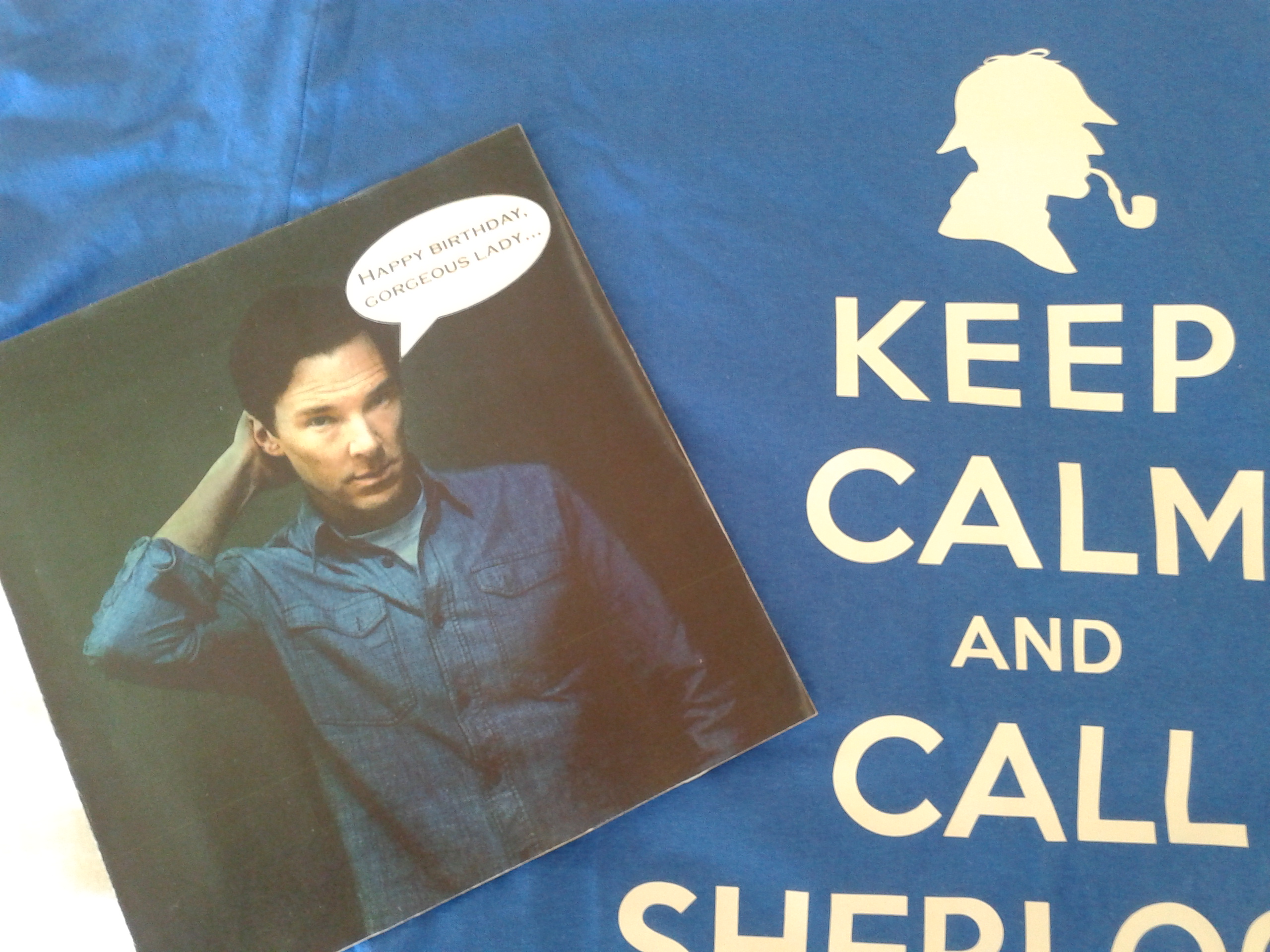
birthday prss 1Can you spot the theme?  I think you’d probably have to be a serious fangrrl like me to get the hedgehog socks connection!  (Oh, and the Benedict Cumberbatch card made by a friend says ‘Happy Birthday, Gorgeous Lady!’  in case you can’t see it in the photo.)

benny card

Anyway, I the spirit of celebrating what I have achieved in the last year, which is a lot, believe me, here is a link to my fanfiction.  If you haven’t read it before, happy reading.

Love, EF

The Wild Donkeys: A Strategy for Choosing a Creative Project

donkey

‘So, how’s the writing going?’

This from a man who is one of the Blessed Few.  A writer whose work was picked up by an agent straight from the much garlanded MA in Creative Writing at the Unversity of East Anglia.  Alumni include Ian McEwan, Rose Tremain, Hanif Kureshi, Tracey Chevalier and, well, you get the picture.  He is in glittering company.

He is also a really lovely man and a dear friend who takes a genuine interest in my work, so I rein in the envy monster and give him the polite and honest answer.

‘Fine.  Well, actually, I’m a bit stuck.’

‘Creative block?’

‘No, too many ideas.  I don’t know where to start.’

‘You should be writing a novel, you know.  I read some of your Sherlock stuff the other day.  It’s really good.’

‘Thank you.  I’ve written seven novels so far.  Writing a novel isn’t the hard part.  Its choosing which one to write that’s difficult.’

‘Well, just pick one and start.’

I love men.  Everything seems so easy to them.  And they are so good at handing out really practical advice.  (You’ll also notice that I don’t ask him how his novel is going.  That’s because I know.  I recognise that pained look.  I’ve seen it in the mirror too many times.)

OK, I know its good advice.  The right advice.

As Leonie Dawson puts it, I need to choose a wild donkey and ride the shit out of it till its done.

Every writer has a place where they habitually get stuck.  A psychological Marianas Trench on the road to getting their work into the readers’ hands, one that they tumble into every time.  For some it is grinding the words out, which for them is like sweating blood.  For others, it is coming up with the idea in the first place.  Some worry when they get to the middle because that’s always where they get bogged down, and some will spend ten years writing the first page.  We all have our Achilles’ heel.

For me, its choosing which idea to stick with.

So I have decided to take September off.  Not from writing; quite the opposite, in fact.  No, I’m taking the month off from worrying which novel to concentrate on.  I’m in a physically stuck place right now, and I need to concentrate on my health, on getting my body moving again after a summer of boom and bust energy.  I’m looking to create a smooth, even flow in my life, in my health, and my art.  I have faith that if I can manage to attain a relative level of consistency in my body, the answer will come to me.  Yes, maybe that sounds mad, but its just how my creative process works.

And in the meantime, I’m refreshing my theory knowledge, reading, working on my notebooking, and bashing out some major fanfiction.  I’m easily distracted, and having short stories and novellas on the go is a great way to handle that.  But sooner or later, I want to create something major.  Something big.  Something that shows both me and you, dear Reader, what I can really do.

Happy creating,

EF

Inspiration Monday: Support your local library

the forum-norwichI am tempted to break into my own, rather wobbly version of Petula Clarke’s ‘Downtown’ here, but slight amendments the eponymous destination.

“When you’re alone

And life is making you lonely

You can always go:

To the Library!”

Okay, it doesn’t work, but you get the idea.  The Library is your friend.  It’s your soulmate.  It’s a world of excitement and adventure cocooned within four walls.  And it’s currently free (at least at the moment it is in the UK– but David Cameron, I’m watching you!)

I have always felt a strange sense of peace amongst books.  Not for me the sudden flash of panic as the realisation dawns that there are never going to be enough hours in one’s life to read everything one wants to.  Books en masse produce in me a kind of nirvana, a bliss, a calm.  It doesn’t matter how bad things are, a library is one of the two places I can go to know peace.  (The other is the beach, in case you were wondering, but that’s another story.)  This is no coincidence.

Jeanette Winterson, in her emotionally complex autobiography, credits working her way (alphabetically – how pragmatic) through her local library with saving her life from a traumatic and abusive childhood.  Books give us the power to escape, to transcend, to find knowledge and wisdom, happiness and peace.

And more than that – Terry Pratchett notes the strange distortion that occurs when books are gathered together.  He calls it L-space, a phenomenon in which the power of knowledge bends the time space continuum so that all places and times are accessible from the magnificent Library of the Unseen University (although travelling in L-space can be dangerous!). This is really just a charming metaphor for what Winterson reports.  Libraries open up unexplored and unimagined realms for us without our ever having to leave their environs.  Although, if you have ever visited Kim’s Bookshop in Arundel, Sussex, you might agree with Pratchett that L-space does indeed exist!

Libraries have changed greatly since the days when my Dad used to take me down to our village library every Friday night with my fist full of little cardboard pockets to exchange with the kindly librarian for books that enchanted and fascinated me all week long.  Now I frequent the UK’s most popular library, the Millennium Library at the Forum, Norwich, which is housed in a breath-taking vision of modern architecture, and has the highest borrowing numbers in the country.  No wonder.  Its great.

My favourite treat is to go to the library without a time limit, and just browse, as if I were in a sweet shop.  I can wander about, dipping into sections, picking out jewels here and there like a magpie.  I can have whatever I want to try, and I don’t have to worry about how much its going to cost me.  Often I find books I have been hanging my nose over on Amazon or favourite blogs, wondering whether I should buy them – with the library I can try them out, and see if they are worth the investment.

I always make sure I browse the ‘Just Returned’ trolleys too.  This is a great way to come across books that you would never have tried otherwise, because they are shelved in sections you would not normally think to visit.  These eclectic shelves are a great way to expand your reading by picking up whatever appeals to you.

Appeal is crucial.  Sometimes I go in with the challenge to choose books on the basis of their covers alone!  This is a fun thing to do with fiction particularly, because you end up not only with a bunch of stuff you would never have found otherwise, but also you get to sample the publishers’ strategies on book design, which is a useful thing to know about if you are a writer or illustrator.

If I find a book that proves especially useful for research purposes, I always make sure I record its Class Number as well as the author and title details in my writers notebook, so that I can find them easily again.

One of my most profound library revelations of recent years is the idea that if I choose a book that it turns out I don’t like, I don’t have to keep it the full three weeks.  Yes, I can take it back the very next day, if I like.  Nobody will judge me.  Its like test driving a car.  If it doesn’t prove useful, its not the end of the world.  I used to have such an investment in choosing the right books to borrow.  But there are so many books to delight in.  Why worry?  Just try a few on for size.  Its not as if you have to pay for them.

Libraries are an enormous resource.  As are librarians.  Many of them are highly trained, and they really love it when a borrower asks them a question which is something more interesting than ‘why won’t my card work in the machine?’  They love to ferret out unusual and rare tomes, and rifle through the vagaries of the inter-library loan system.  They are usually only too happy to help you with your research questions.  There is so much knowledge and expertise on offer, and most of time we don’t even know it is there.

This week, give yourself the best treat ever.  Go and gorge yourself at the library!

Happy browsing,

EF

Planning the Perfect Home Office – Progress Report

So, as I mentioned before, Husband, in his wisdom, decided that the best idea he had ever had would be for us to swap studies.  He gets the box room at the back of the house, north facing, looking over the boiler house roof and into the woods beyond.  And I get the room at the front of the house, south-facing and a little more than twice the size, with accompanying futon and a big space to lay out my yoga mat, should I be so inclined.  Yes, I will have to share this space when friends come to stay, but frankly that doesn’t happen very often because we live so bloody far from everyone else we know on the planet!  On the other hand, my new desk overlooks the front garden, with a view down the lane and across the fields to the poplar plantation, about half a mile away.  Not only is it a great view, but I can see people coming!

So far so good.

What I was not bargaining for is the sheer accretion of junk that has built up over five years of occupancy.  There are mountains of magazines to sort through, clippings to find a home for, bills to file, and then there are the hundreds of other bits I never knew had.  A bellpull made of six gaudily decorated velour camels, given by a distant-travelling cousin.  A mug from an old work project with a cartoon on it of my own design.  Sufficient packs of playing cards to run a sizeable poker tournament – we never play cards.  Tiny audio tapes from an old Dictaphone machine, now long lost.  A bag of marbles – blamed on Husband.  A slightly used Barbie doll with complete wedding trousseau.  Empty A4 clip files and notebooks galore.  And how many packets of staples does one person really need?

(I’m not even going to mention the host of dead biros, fluff and ancient receipts for distantly deceased electronic equipment.)

It turns out that Number One on the list of activities when planning your home office is:

CONDUCT THE MOTHER OF ALL DECLUTTERINGS!

Having spent long hours toiling over heaps of useless junk, diligently throwing out anything I hadn’t looked at in six months, I then went through the following process.

Start by being proactive:  Being me, I went out and got a book from the Library on how to plan your home study.  It has lots of pretty pictures.  What it does not have is a list of things you will need.  It says you must work it out yourself.

Thanks.

Question 1 in the book:  How much storage will you require?

Answer:  How the fuck do I know?  I’m a writer!  By definition, I generate vast quantities of paper! And I draw too, so double that!

Cunning Strategy:  Make sure the Husband takes on responsibility for household filing so at least I don’t have to think about that.  I hate it anyway.  He can have it in his office so I never have to think about it again.  Plus, its one less filing cabinet to fit in.

Concern:  I have all these writing notebooks that I may need to refer to as a part of my work, so they will need to be handy.  But what do I do with all the Morning Pages notebooks and diaries?  I need to keep them because they record my life, but I doubt I shall need to drag them off the shelf on a regular basis.

Hesitant solution:  Bung them in big plastic crates with mouse-proof lids and store them in the boilerhouse?  Discard on the basis that its too risky because mice are fiendishly devious little bastards.

Sneaking suspicion:  I would rather go out and spend a fortune on funky stationery than plan any of this stuff.

Probable outcome:  I will be cheap and impulsive, go out to The Range and buy a bunch of ugly stuff I don’t like instead of working out how much I need and saving for the really nice stuff I do like, and none of it will do what I want/need it to, and then I shall not want to use my new office as a result, i.e. back to square one.

Sudden flash of determination:  I am not going to ‘cheap out’ again.  I’m going to do it right this time.  Because I deserve a nice place to create.

(Sneaking suspicion and Probable outcome persist in the back of my mind.)

Intermediate action:  Go on fact-finding mission.  In other words, hang out in posh shops looking at all the kit I can’t afford but would dearly love.  Come home feeling resentful, poor and even less determined to plan sensibly than I was before.

Current state of affairs: sulking.

Yes, I would love to be able to say I went out and bought a label maker and some washi tape and now my life is complete, but it hasn’t happened yet.  I have a desk and a chair, and three bookshelves double stacked with books, and a slightly denuded pile of Sherlock clippings, but my magnificent new working space has yet to materialise.

I’ll keep you posted.

(And if you have any tips, let me know.  Please?)

EF

Journal Friday: The Structuring Absence

elephantWhen I did my English degree, way back in the late ‘80s, Literary Theory was all the rage.  I don’t know if they even study it now, but it was the thing then.  Literary theory is the place where literary criticism, philosophy and linguistics meet.  Throw in a good handful of politics, sexual politics and psychology and you have a seething mass of academic pretentiousness that no one with a reasonable sense of humour should be subjected to.  Literary Theory goes in fashions like everything else, and the Next Big Thing then was Postmodernism, which leant heavily on Poststructuralism and the work of theorists like Jacques Derrida and Roland Barthes. We read Thomas Pynchon and Paul Auster and pretended to know what they were on about.  We were encouraged to use words like signifier (word), signified (meaning), and problematize (make something difficult).  I find it deeply satisfying that Roland Barthes’s death resulted from being run over by a milk float.  It couldn’t be more pedestrian (sorry for the pun), or ironic, could it?

Now why am I ranting on about all this pretentious bollocks when I should be talking about journaling?  Well, let me explain the one phrase that poststructuralism gave me which I still cherish today:

The Structuring or Signifying Absence

This is actually another way of saying ‘The Elephant in the Room’.  It is the thing that is never spoken of, yet which underlies and give shape to everything that happens around it.  It is the empty space which is significant, which speaks of something profound.

It is ‘that which is left unsaid.’

Take a very simple example.  In Daphne du Maurier’s novel ‘Rebecca’, the character of Rebecca de Winter and her untimely death are the signifying absence.  Rebecca structures the whole novel, and the behaviour of all the characters revolves around her, even to the extent that we never learn the heroine’s name, because Rebecca is more important in everyone’s mind, including her own.  Rebecca is a tangible presence, even though she no longer exists.

Actually, this isn’t strictly a good example because its too overt.  Take the Wooster novels of P G Wodehouse.  Set in the 1920’s and ‘30’s England, they almost never mention the Great Depression or the First or Second World Wars, and yet the fact that as readers we know that the ridiculous events are going on against this backdrop makes them all the more ludicrous.  Wodehouse does lampoon the figure of fascist leader Oswald Moseley at one point, but basically, his choice is to exclude politics.

The point of the structuring absence is this:  that what the writer chooses to exclude is just, if not more, significant than what is left in.

How does this relate to writing a diary?

I am thinking right now of gaps.  I have been keeping a journal for nearly 40 years now (ouch!), but there are plenty of gaps.  And I am sure those gaps say as much about my life as the parts where I was writing.  They usually happened for two reasons:

  1. I was having a brilliant time and was too busy living life to bother writing everything, or anything, down.  My honeymoon is a great example of this.  I was determined I was going to record every detail of our tour across the south of England, but when it came to it, I was having too much fun!  So all I have is the photos we took.  And I think that is very significant.
  2. I was in a state of such terrible depression that I was incapable of writing.  This is far more common.  There are several gaps of months in my diary during my early 20s, when I was struggling with clinical depression so profound that it threatened my life, and it was impossible for me to write at that time.  So I didn’t.

What we don’t write about in our diaries is just as significant as what we do.  Every diary entry is an act of self-censorship, whether we know it or not.  By choosing what we write about, even if the choice is unconscious, we are in fact editing, fashioning a narrative of our lives structured by our choices and the responses we have to our life events.  Just as Wodehouse chose, out of what I believe was sheer political naiveté, not to write about politics (to his great cost as it turned out), we may choose not to write about our cancer, our son coming out as gay, our struggles with debt, even though these are massive issues which shape our lives in profound ways.  We may even choose at times simply not to write at all.

When I don’t write in my diary, I am always aware that something is going on for me.  I may be in denial about some issue that is obsessing me, or I am too sick to write, which is an issue in itself.  Either way, the gaps between dates in my journal are a red flag.

But they are not a reason for self-flagellation.

When I was a kid, I thought that you had to write a diary every single day.  A lot of people believe this, but very few manage it, and most give up because of this misconception.  Don’t beat yourself up when you have non-writing periods.  Accept these empty spaces as significant, as structuring absences, and consider what they might mean for you.  Above all:

Write when you need to write.

Journal Exercise:

At the moment a big gap is developing between today’s date, and the last one I wrote in my journal.  I know why this is.  I am ill.  Staring into space or lying on the sofa watching Harry Potter yet again is about as profound as I can manage right now, and I’m okay with that.  I will go back to it when I am ready, and because I don’t make a big deal about it, I won’t be creating any blocks, so the gap will be much smaller than it would have been otherwise.

Are you creating a journal gap, a structuring absence, consciously or not?  Take some time to contemplate why this might be happening for you – you don’t have to write about it in your journal, just allow it some kind and accepting thought.  It may because you are hung up on ‘doing it right’.  It may be because there is a HUGE elephant in your life that you are simply not ready to address yet.  It may just be because you are present in your life, too busy or, what a delight, having too much fun!

Whatever is going on for you with this, make peace with it.  Be accepting of yourself.  You might even want to write something in your journal to that effect:

‘I am not writing much here at the moment and I’m okay with that.  I’ll get to it when I need to.’

You may not want to write in the ‘why’.  Perhaps that is better left until you are ready to write again.

And if you are writing regularly, and getting lots out of it, make sure you relax into it and don’t make it an OUGHT.

Happy journaling,

EF

Outflow: My Creativity Right Now

Picasso ceramicsWe are having a heatwave here in the UK, and I’m not very good in hot weather.  The result is that my brain has gone on strike, as has much of my body.  Which makes me think about ‘creative seasons’ and the Habit of Art.

My ongoing health problems taught me long ago to have peace with the days when I can’t do anything beyond lie on the sofa and practise my groaning. ( I’m getting quite good at groaning, I have to say.)  Chronic Illness is, however, a bit of an extreme way of forcing oneself to recognise one’s creative cycles, and not one I would recommend.

There are lots of creativity gurus who are adamant that turning up at the page, or the canvas, and making yourself do the work is the only way forward, and for the most part, I would agree.  But what do you do on the days, like today, when it just ain’t gonna happen?

Take note, that’s what.

I find my creativity goes in bursts, as I have mentioned before, and in recent years I have noticed that my writing seagues slowly into art in the summer months.  Writing is a great thing to be doing when the weather is cold and wet, and all you want to do is curl up in the warm.  In the summer, though, the urge to get out there into the landscape and experience the world is almost irresistible, as anyone who has ever worked through the summer in an office will agree.  Right now I am experiencing the difficult-to-ignore urge to paint rather than write.

And I am OK with that.

Yes, I am feeling a bit frustrated that I can’t settle to the writing projects I want to progress, but I can’t force it, or I will get resentful, and probably produce pages of complete drivel that I’ll hate later.  The urge to be creative is still with me, though.  It is just taking a different, more exterior form.  I want to draw, paint, decorate pottery, make cushion covers, garden, and bake cupcakes.  So that’s what I’m going to do – at least as soon as the weather cools down and my brain starts functioning again!

There is a tension between turning up to create and the creative seasons themselves, and the skill of a true creative is to be able to accept the difference between a) the resistance to sitting at the desk and working, which is procrastination and stopping oneself being all one can be, and b) the natural flow of creativity as it morphs from one season to the next.  There is much to be said for making yourself sit down to create every day, but using it as a stick to beat yourself with is not helpful.  We need to be aware of when our creativity transforms, and to trust it enough to go with the flow.  This doesn’t mean I am abandoning my writing for good, simply that I know that right now, that isn’t where my best work will come.

The image in my head to illustrate this is when Picasso discovered the provencale village of Vallauris and threw himself into the art of ceramics.  I have no doubt there were those who worried that his canvas days were over, but that was far from the truth.  Instead, he trusted his creative urges enough to know that ceramics was a road he had to walk at that point in his life.

So I am trying to emulate Picasso, and to be at peace with where my creative road is taking me.  It’s not easy, and Nigel has a lot to say about not having the gumption to get on with the novel, but frankly, STUFF NIGEL!  Lets get out in the sun, eat ice cream, and do creativity the way we need to right now!

Happy sun-bathing and creating,

EF

The Writing Life: Writers Groups

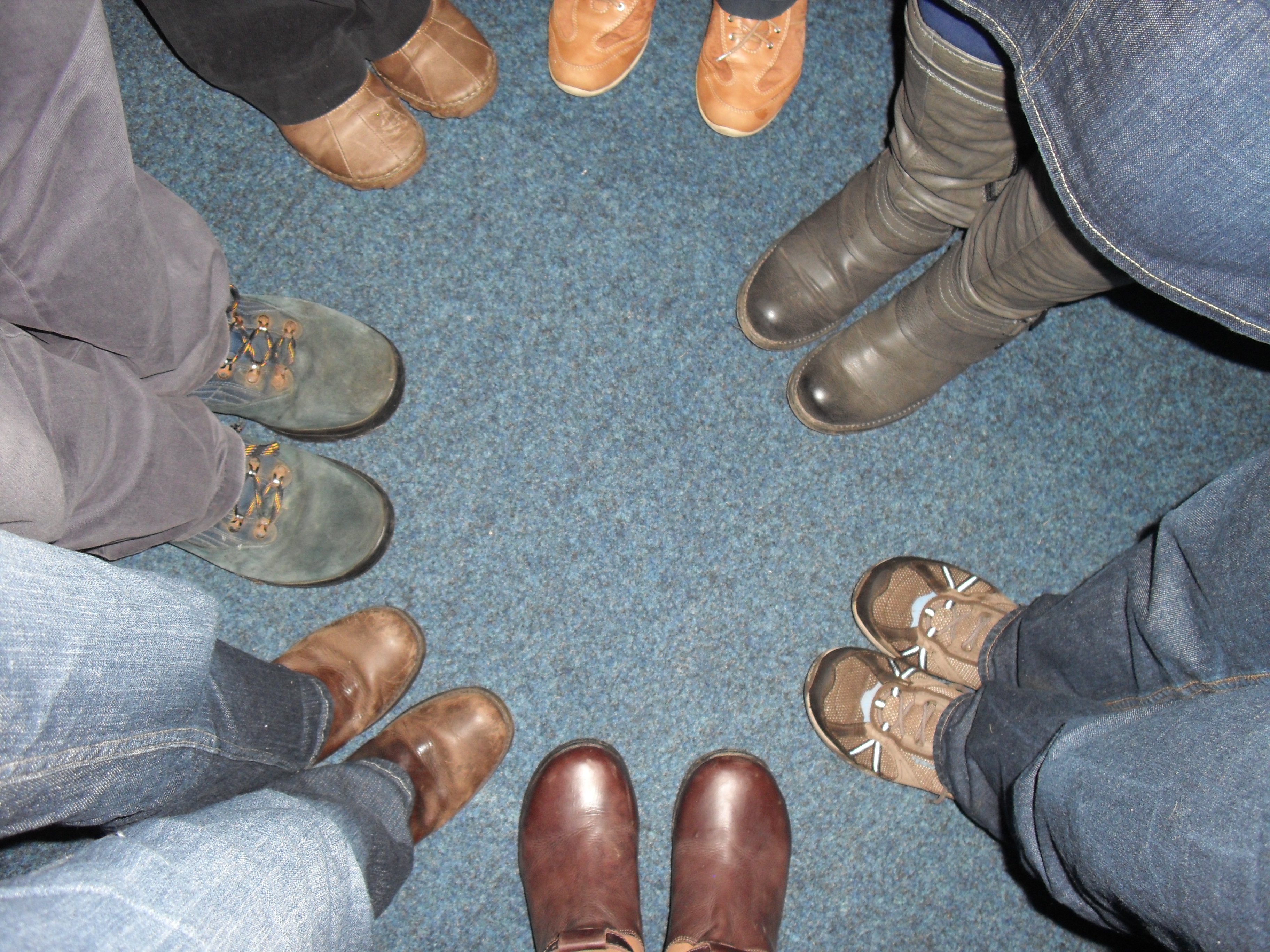
DSCI2689

I belong to a writers group.  And it’s great!

It all began years ago, when I started the Diploma in Creative Writing at the University of East Anglia.  It was the first writing course I ever went on.  I walked into the room and found myself surrounded by people like me.  It was the first time I ever felt like I wasn’t different and strange.  I had found my tribe.

Writing is a solitary occupation, so it is crucial for both your mental health and your work to socialise.  And what better way to do that than with other writers who are going through the same trials and tribulations as you are?

As part of our diploma course, we went on a weekend retreat, involving taught sessions, visiting speakers, workshopping and private writing time.  It was a huge success and we bonded.  Many of us went on to study for the Advanced Diploma in Prose Fiction, which was primarily a workshop-based course, and that further cemented the group.

Since then we have continued to meet, once a month, to share our work, our experiences, problems and interests.  And an awful lot of tea and flap-jacks!  Members have come and gone, buts okay.  There is a core group who have stuck together for over a decade now, sharing life experiences, supporting one another through MA courses and publication.  We go on annual retreats together, about which more in future.  We meet at each other’s houses, planning dates ahead and each offering to the host nights most convenient.  Hot and cold drinks, nibbles and cakes are provided to lubricate the conversation.

Based on the old course model, each member brings a piece of new writing that they have done, and we try to keep it to around 1,000 to 2,000 words in length – any longer and it takes up too much time.  You can read your own piece, or ask someone else to read it.  (It is sometimes really helpful to hear another person read it in order to pick out the parts where the writing is less fluid.)  Then people comment.  Helpful and empathic criticism is offered.  We always make sure we start by pointing out what we like about the piece.  Often, if it is part of a larger work, people will ask questions about plot or backstory.  Because we know one another’s work so well, we can refer back to earlier stories, or earlier parts of the work, and kick around ideas to find out what might be a useful improvement for any problems.  At the end of every participant’s session, they are asked how they feel about what was said, which gives them the chance to say anything that has been missed in the discussion.  We usually manage to workshop about three pieces of prose in a 2.5 hour meeting.

Not everyone may have something they want to read, or will have had time to write that month, and that’s okay too.  They contribute by commenting on and supporting the work of others.  We have prose writers and poets.  We share news of any courses or day schools that may have been attended, and often discuss what books everyone is reading too.

And of course, we do a lot of nattering and gossiping too.

Outside the regular meetings, we have been known to circulate work and meet informally for writing sessions.  We even do writing sessions over the phone.

I encourage you to find your own tribe.  You can do it online or in person.  Libraries and publications such as Mslexia and the Writers Digest often have small ads for writers groups.  Or start one yourself, as we did.  Make sure you are happy with the atmosphere and ethos of the group you join, however.  There is no point in sharing your work and then having it brutally cut to pieces.  Gaining confidence in dealing with confidence is one thing.  Bullying is quite another.  There are pitfalls with joining any group, but the advantages with a good one will outweigh any glitches.

My pals in the group have stuck by me through thick and thin and seven novels, and I am eternally grateful to them for their kind support and criticism.  And for banning me from using the word ‘massive’.  Sometimes you need that kind of pal.

Dear Bridget, Clare, Heidi, Nina, and Sally, I love you.

And now I had better get myself together and go and put some flap-jacks in the oven, because they’ll be round tonight and I haven’t written anything yet!

Happy creating,

EF