Category Archives: The Creative Process

Journal Friday: Reflecting on Creative Blocks

paintbox

So, if you read my last post, you will know that I am increasingly drawn towards drawing and painting at the moment.  This is my current creative season and I want to honour it.  So today, no doubt, you will be expecting me to deluge you with jpegs of the beautiful pictures I have been creating.

Yeah, Right.

Nigel has been hard at work again.  I have produced the sum total of zero drawings in the last two days.  Yesterday I couldn’t even bring myself to go into the study to get out my sketchbook and paints.  The blank page suddenly seems terrifying.  I can’t even doodle.  How the hell have I lost the ability to doodle, for Gods’ sakes?

Bit not good.

This, my friends, is where the journal really comes into play.  I sat down with my trusty moleskine and pen, and thought about my childhood memories of drawing.

I used to draw all the time.  It was what I was known for, amongst family and friends.  I was never without a piece of paper and a pencil.  I made little books and illustrated them.  I wrote stories and illustrated them.  I wrote stories about my favourite TV programmes, like ‘Blakes 7’ (remember that one?  I had a terrible crush on Paul Darrow) and drew the characters all the time.  (If only I had known about fanfiction and fanart then!)  I was obsessed at one point with the Tudor monarchs, and copied their opulent portraits and clothes with fibre tipped colouring pens.  Then I got into the Ancient Egyptians, and copied their sideways style of representation.  I even copied the drawings of E.H Shepherd in the beautiful edition of Kenneth Graham’s ‘The Wind in the Willows’, which my father gave me – it was his favourite book.  And I painstakingly illustrated all my school work (except the Maths, of course, because that was too serious, which was probably why I was never any good at it.)  In other words, I spent hours absorbed in transferring images from my head onto the page.

What happened?  Senior school art classes.  Hours of drawing still lives of pots and pans. Teachers who made us draw boring subjects, and never gave us any information about technique.  I’ve learn everything I have ever learnt about art and how to use paint from copying, which my art teachers said was the worst possible sin.

(But I am getting ahead of myself, I’m supposed to be thinking about my childhood drawing.)

As a kid, art was my obsession, but it requires materials, and they were in short supply.  For paper, my dad bought home gash computer paper from work, the perforated kind that comes in a concertina, with holes along the edges, and with about the same handling quality as IZAL toilet paper.  I was occasionally bought coloured felt-tipped pens but in the 1970s they were rubbish, and the black ones were invariably dried out before they were even used.  At least 25% of the pens in the pack didn’t work within about two days of having them, and you had to conserve those that did with fiendish vigilance.  There were occasional gifts of watercolour pan boxes, but they were very low pigment, and anyway, painting in your bedroom is frowned upon by most mothers because it is messy.  And there wasn’t anywhere else to paint.  What I am trying to say is that I grew up yearning for those huge bottles of poster colour paint that stood on the trolley in school.  The thought of being able to just splash paint about willy-nilly was ridiculous.  My parents wanted to encourage my artistic side, but they didn’t have the disposable income or the mindset to invest in good raw materials for it.

The result is that the scarcity of my childhood has bloomed into a scarcity paranoia in adulthood.  As soon as I was earning, I went out and bought decent art materials, but then I couldn’t make myself use them.  I have drawers and boxes full of sketchbooks, pastels, inks and paint tubes that have never been opened because I still have the mindset that they have to be conserved.  I can’t waste a thing.  To the point where I can’t use a thing.

None of this would I know and understand, were it not for exploring it in my journal.  And in my journal have come the little glimmers of a solution, a plan to tackle my stuckness with baby steps so minute that I can fool Nigel into thinking I’m not even putting pen to paper at all!  Slowly and gently, I will con myself into the belief that making a tiny drawing is safe.  And then I will con myself into making a bigger one.  Until one day I will fulfil my dream of illustrating my own novels, and making huge abstract expressionist canvases like Rothko and Pollock.  But not yet.  To begin with, I will throw out everything I learnt in art class, scrunch up my eyes and begin again, as a child.  It will be hard, but I can do it.  I did it with the writing, after all…

Journal Exercise:

Are you also struggling with a creative block?  Is there something you used to do, and would like to do again, but are afraid to?  Perhaps you are just stuck and you can’t get out of your own way.  You probably don’t even know why.

Get out your journal and take a few deep breaths.  Close your eyes and let yourself fall backwards through time. Feel yourself become a child, doing that thing you loved do and don’t do anymore, whatever it is.  Immerse yourself in that memory.  How did it feel?  What was so satisfying, enticing, transcendently joyful or just effortless about it?  How did splashing paint on paper, sewing a doll’s dress or dancing to the radio help you express yourself?  Connect with the fun, the pleasure, the satisfaction.

Now write about it.  Take time to write out all you can remember about doing that creative activity, and take the memory from as early an age as possible.

Now take another deep breath and continue to write, this time about when you stopped pursuing that activity.  What happened?  What age where you?  Was there criticism from parents or responsible adults?  Or was it competition with other children who you regarded as being better at the skill than you?  Perhaps you reached puberty and decided that form of creativity was childish and no longer for you?  Or you felt you couldn’t go any further with it because you couldn’t make a living at it?  Whatever the reason, explore your memories of it.  Be as thorough as you can.

Give yourself some time to sit with these memories, to contemplate them.  Decide what aspects are still stopping you.  Are you, like me, fearful that your work won’t be ‘GOOD ENOUGH’ (thanks, Nigel), or still carrying that fear that there isn’t paper to waste?  Will doing this activity make you vulnerable in some way?  (If so, you don’t have to show it to anybody, just keep it for yourself.)

(If some major trauma is involved, it is wise to seek professional help.  A therapist is invaluable, and those who specialise in expressive arts or Gestalt might be just what you need.  Don’t suffer flashbacks alone as a result of this exercise.  Self care should always be the first rule of creative expression.)

Think about ways to ease yourself through these issues.  Maybe taking a beginners or taster course, where everyone will be fumbling about at the same starter level, could encourage you that what you make doesn’t have to be perfect.  Perhaps an online course that you can follow in private, and at your own pace (Alisa Burke has some brilliant art and sewing courses.)  Or you could buy some kids art materials and use them with your own kids (or borrow someone else’s for an afternoon).  Watch how kids are completely free of judgement when they make art.  They are just having fun.  You can, too.  (Actually, I think I may have to borrow some children and do this myself!)

Trust that what comes up in writing your journal is from deep within, an inner wisdom that will guide you back to your creative centre.  Above all, be gentle with yourself as your formulate your action plan, and give yourself as much time as you need.  You don’t have to become Picasso or Nijinsky overnight.

Happy Creating,

EF

Outflow: My Creativity Right Now

Picasso ceramicsWe are having a heatwave here in the UK, and I’m not very good in hot weather.  The result is that my brain has gone on strike, as has much of my body.  Which makes me think about ‘creative seasons’ and the Habit of Art.

My ongoing health problems taught me long ago to have peace with the days when I can’t do anything beyond lie on the sofa and practise my groaning. ( I’m getting quite good at groaning, I have to say.)  Chronic Illness is, however, a bit of an extreme way of forcing oneself to recognise one’s creative cycles, and not one I would recommend.

There are lots of creativity gurus who are adamant that turning up at the page, or the canvas, and making yourself do the work is the only way forward, and for the most part, I would agree.  But what do you do on the days, like today, when it just ain’t gonna happen?

Take note, that’s what.

I find my creativity goes in bursts, as I have mentioned before, and in recent years I have noticed that my writing seagues slowly into art in the summer months.  Writing is a great thing to be doing when the weather is cold and wet, and all you want to do is curl up in the warm.  In the summer, though, the urge to get out there into the landscape and experience the world is almost irresistible, as anyone who has ever worked through the summer in an office will agree.  Right now I am experiencing the difficult-to-ignore urge to paint rather than write.

And I am OK with that.

Yes, I am feeling a bit frustrated that I can’t settle to the writing projects I want to progress, but I can’t force it, or I will get resentful, and probably produce pages of complete drivel that I’ll hate later.  The urge to be creative is still with me, though.  It is just taking a different, more exterior form.  I want to draw, paint, decorate pottery, make cushion covers, garden, and bake cupcakes.  So that’s what I’m going to do – at least as soon as the weather cools down and my brain starts functioning again!

There is a tension between turning up to create and the creative seasons themselves, and the skill of a true creative is to be able to accept the difference between a) the resistance to sitting at the desk and working, which is procrastination and stopping oneself being all one can be, and b) the natural flow of creativity as it morphs from one season to the next.  There is much to be said for making yourself sit down to create every day, but using it as a stick to beat yourself with is not helpful.  We need to be aware of when our creativity transforms, and to trust it enough to go with the flow.  This doesn’t mean I am abandoning my writing for good, simply that I know that right now, that isn’t where my best work will come.

The image in my head to illustrate this is when Picasso discovered the provencale village of Vallauris and threw himself into the art of ceramics.  I have no doubt there were those who worried that his canvas days were over, but that was far from the truth.  Instead, he trusted his creative urges enough to know that ceramics was a road he had to walk at that point in his life.

So I am trying to emulate Picasso, and to be at peace with where my creative road is taking me.  It’s not easy, and Nigel has a lot to say about not having the gumption to get on with the novel, but frankly, STUFF NIGEL!  Lets get out in the sun, eat ice cream, and do creativity the way we need to right now!

Happy sun-bathing and creating,

EF

The Writing Life: Writers Groups

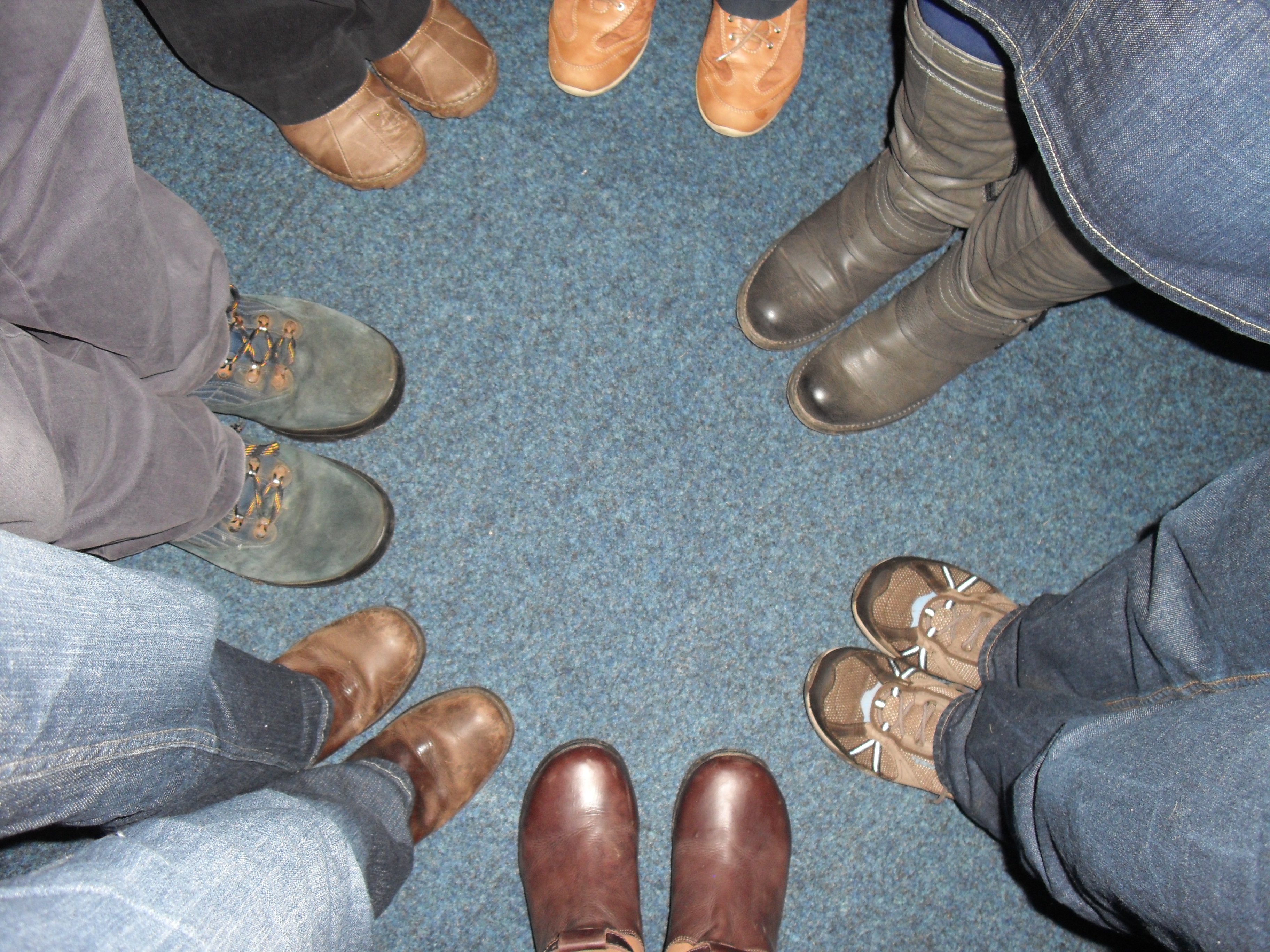
DSCI2689

I belong to a writers group.  And it’s great!

It all began years ago, when I started the Diploma in Creative Writing at the University of East Anglia.  It was the first writing course I ever went on.  I walked into the room and found myself surrounded by people like me.  It was the first time I ever felt like I wasn’t different and strange.  I had found my tribe.

Writing is a solitary occupation, so it is crucial for both your mental health and your work to socialise.  And what better way to do that than with other writers who are going through the same trials and tribulations as you are?

As part of our diploma course, we went on a weekend retreat, involving taught sessions, visiting speakers, workshopping and private writing time.  It was a huge success and we bonded.  Many of us went on to study for the Advanced Diploma in Prose Fiction, which was primarily a workshop-based course, and that further cemented the group.

Since then we have continued to meet, once a month, to share our work, our experiences, problems and interests.  And an awful lot of tea and flap-jacks!  Members have come and gone, buts okay.  There is a core group who have stuck together for over a decade now, sharing life experiences, supporting one another through MA courses and publication.  We go on annual retreats together, about which more in future.  We meet at each other’s houses, planning dates ahead and each offering to the host nights most convenient.  Hot and cold drinks, nibbles and cakes are provided to lubricate the conversation.

Based on the old course model, each member brings a piece of new writing that they have done, and we try to keep it to around 1,000 to 2,000 words in length – any longer and it takes up too much time.  You can read your own piece, or ask someone else to read it.  (It is sometimes really helpful to hear another person read it in order to pick out the parts where the writing is less fluid.)  Then people comment.  Helpful and empathic criticism is offered.  We always make sure we start by pointing out what we like about the piece.  Often, if it is part of a larger work, people will ask questions about plot or backstory.  Because we know one another’s work so well, we can refer back to earlier stories, or earlier parts of the work, and kick around ideas to find out what might be a useful improvement for any problems.  At the end of every participant’s session, they are asked how they feel about what was said, which gives them the chance to say anything that has been missed in the discussion.  We usually manage to workshop about three pieces of prose in a 2.5 hour meeting.

Not everyone may have something they want to read, or will have had time to write that month, and that’s okay too.  They contribute by commenting on and supporting the work of others.  We have prose writers and poets.  We share news of any courses or day schools that may have been attended, and often discuss what books everyone is reading too.

And of course, we do a lot of nattering and gossiping too.

Outside the regular meetings, we have been known to circulate work and meet informally for writing sessions.  We even do writing sessions over the phone.

I encourage you to find your own tribe.  You can do it online or in person.  Libraries and publications such as Mslexia and the Writers Digest often have small ads for writers groups.  Or start one yourself, as we did.  Make sure you are happy with the atmosphere and ethos of the group you join, however.  There is no point in sharing your work and then having it brutally cut to pieces.  Gaining confidence in dealing with confidence is one thing.  Bullying is quite another.  There are pitfalls with joining any group, but the advantages with a good one will outweigh any glitches.

My pals in the group have stuck by me through thick and thin and seven novels, and I am eternally grateful to them for their kind support and criticism.  And for banning me from using the word ‘massive’.  Sometimes you need that kind of pal.

Dear Bridget, Clare, Heidi, Nina, and Sally, I love you.

And now I had better get myself together and go and put some flap-jacks in the oven, because they’ll be round tonight and I haven’t written anything yet!

Happy creating,

EF

How to Write: Write what you know, or not…

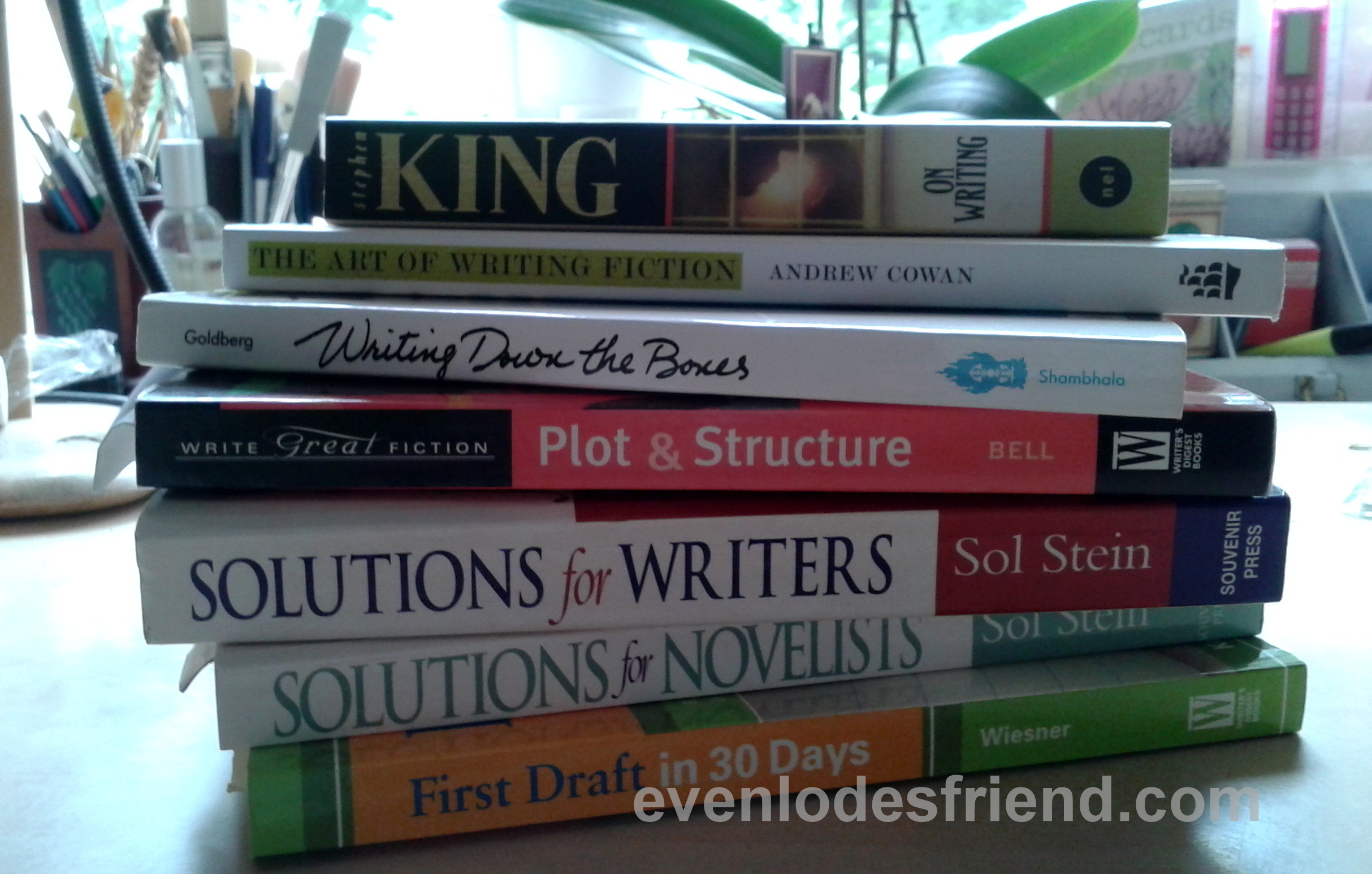
writing books

Most books on how to write will tell you this:  write what you know.

If you have some major area of expertise, they say, you should use that as a background for your novels.  Dick Francis, a famous jockey, wrote crime novels set against the backdrop of the horse-racing world, with spectacular success.  John Grisham was a criminal lawyer and politician before publishing fabulously successful legal thrillers.  Agatha Christie drew on her war work as a hospital dispenser when writing her detective fiction.  All of these authors, and many more, have made huge successes of writing about what they know.

BUT –

(And the word BUT has a bit of fairy dust in it that magically negates everything that comes before it, have you noticed that?)

I once heard novelist Rachel Cusk at a reading on the subject.  She was stridently against the idea of writing about what you know.  She said words to the effect of:

‘You know, we write fiction, and the clue is in the name.  Fiction.  It means we make it up.’

Take a moment to think about this:  the genre of science fiction would never have been invented if we only wrote about what we know.  No one has travelled across the Universe of the star ship USSS Enterprise, after all.  Fancy a world without ‘Harry Potter’ or ‘Game of Thrones’?  That would be the logical conclusion.

And what about crime?  Yes, I agree there are a number of very talented writers producing procedural crime novels who have a background in criminal pathology or forensics, but how many truly great crime writers have actually personally killed someone? (None, we hope.)

‘Write what you know’ does not, therefore, take account of the most wonderful asset we have, the thing that makes human beings extraordinary amongst all the myriad of life on this planet:

Imagination

Imagination enables us to fly beyond the stars at warp speed, fight dragons with broadswords, fall in love with Benedict Cumberbatch and have him love us back.  And all in our lunch break.  Think about it –who really wants to write about their day job when they can write about this stuff?

There is, of course, a caveat.  Sometimes you need to do research.  And research is a double-edged sword on which you fall at your own peril:

I wrote a book set in London.  I have not lived in London.  I gave it to a friend to read, and he was a Londoner, born and bred.  He asked me about the car chase – Where are they?  Where are they going?  What road are they on?  He was frustrated because he knew the city well and he could not orient himself within the action.  I had not done my research and I did not know the setting well enough to wing it.  The novel collapsed for the reader as a result.

The opposite is true.  I wrote this story, set partly in Oxford, a city I know well and visit often.  I was able to undertake the depicted walk myself, just to be sure I had the details and the route right.  The result was a story that was adored by readers who knew the city too.  I had a personal email from one who was delighted that memories of her student days had been rekindled by my work.

So, getting the details right is important.  If you don’t, you can look like an idiot who doesn’t know what he is talking about, and the credibility of your story collapses.

BUT

(Fairy dust again.)

There is such a thing as having too much detail.  The first novel I wrote was set in the Iron Age, around 230BC, on the Newbury Downs.  It is not an area I know well, though I have driven through it.  And I have no background in archaeology or prehistory, so I had to research it all myself.  It took me seven years to finish it, and I gave up doing word counts after 250,000.  I knew too much.  I had too much detail – there are things I know about Iron Age saddles that normal human beings really shouldn’t know.  It’s doubtful that any reader would care.

And yes, you always get the odd accuracy fiend who emails you to say (puts on squeaky voice) ‘Er, the spoon your hero was using in scene 23?  Well, those kinds of spoons were not invented till three hundred years after the date you posit…’ etc etc.  But those are not your average readers.  Unless you write sci-fi, in which case you had damn well know your warp cores from your improbability drives.

“The best way to become acquainted with a subject is to write a book about it.”

-Benjamin Disraeli

The point I am trying to make here is this:  Ignore the advice.

Write what you want to write.

Write what you need to write.

(And if you have to, do the research.)

I promise to talk more about research in a future post, but in the meantime, do this:

Write the novel you want to read.

Happy creating,

EF

Journal Friday: Outflow – Making Lemonade

LemonsPart of being a writer is the dance of self-acceptance.

I have to deal with a chronic illness, which has radically altered my life for the last fifteen years, and shows no sign of waning.  This means I have to manage the delicate balance between self-care and doing too much.  When I overdo it, I end up exacerbating my symptoms and have to face extended periods of bed rest and being confined to the house.  Anf brain fog.

So sometimes I can’t write.  And its not that I don’t want to, its just that I literally can’t.

As I have said before, however, that doesn’t mean I’m not writing.  In my head, at least.

Sometimes life deals us lemons, and the lemonade is hard to make.  But even when I feel like I am buried under tonnes of lemons, the dream is still there.  The memory of how fantastic it feels when I am able to write, when the flow is happening and I am submerged in a scene.

This is where my diary comes in.  At times when I can process language, when I can hold my pen, I write in my journal.  It may only be a few lines, a sentence or two, but it is self-expression, getting the feelings out onto the page, and it feels fantastic.

At times when things are tough, my journal is my life raft.

At the moment, as I struggle with another period of sickness, I am working with this book.  When I have finished squeezing every drop of goodness from it, I will tell you how I got on, a little review of sorts.  In the meantime, I offer you this quote, from the marvellous SARK, patron saint of creative women, quoted by the author, Jackee Holder:

“I love journal keeping because it has helped me to discover and uncover myself, to encourage my own bravery, sort out difficulties with other people, to invent new ways of being.”

SARK, Juicy Pens, Thirsty Paper, 2008.

Happy Journalling,

EF

Why you need to Moodle

Today, I have been moodling.

Mooching.  Pottering.  Puttering.  Loafing.  Fiddling.  Wandering.  Pootling.

It looks like I am doing nothing very important from the outside, or at least nothing creatively productive.  But that couldn’t be further from the truth.

Brenda Ueland, in her superb book ‘If you want to write’ (hardly bettered since it was published in 1938), calls creative revelations ‘little bombs’.

“You may find that the little bombs quietly burst in you when you are doing other things – sewing, or carpentering, or whittling, or playing golf, or dreamily washing dishes.” (p45)

“…So you see, the imagination needs moodling – long, inefficient, happy idling, dawdling and puttering.  Therse people who are always briskly doing something and as busy as waltzing mice, they have little, sharp, staccato ideas…but they have no slow, big ideas.  And the fewer consoling, noble, shining, free, jovial, magnanimous ideas that come, the more nervously and desperately they rush and run from office to office and up and downstairs, thinking by action at last to make life have some warmth and meaning.” (p32)

Ueland knew that we need to time to contemplate, to think and reflect, to be alone with ourselves, but also time to just let things percolate, soak in and mingle.  We may not look like we are working on our novel when we are washing up.  We may not even be thinking about it consciously.  But there it is, fizzing away behind our eyes, collecting connections, accumulating mass like a growing snowball tumbling down a mountain.

We are incubating miracles.

We need to moodle to charge our brains, to collect impressions, to drink from the well.  However, there is another reason to moodle.  What happens when the well is dry?

This comes back to self care, which I wrote about in an earlier post.  There are always going to be times of creative drought in our lives.  There will be times when life gets in the way, or when we are so busy dealing with our personal stuff that there is no energy left over to flow out into creation.

It is crucial to know that that is alright.  It happens.  It will pass.

And when these droughts occur, and to prevent them if you can, you need to moodle.  Have a nap.  Potter about.  Paint your toenails.  Fix that squeaky gate.  Go window shopping.  Give yourself a break, literally and metaphorically.  Resting will fill the well up again.

This is why I don’t really believe in writers block.  I think that either you are exhausted, or you are stopping yourself from creating out of fear.  If the latter is the case, you need to explore those fears, and work on them in your journal.  If the former, you need to let go of guilt, accept the creative season you are in, and lie around wiggling your toes until your brain is sufficiently rested, and finally ready to come up with a new ‘Aha!’ moment.

I urge you to read Ueland’s peerless book, whether you are a writer or not.  It is full of incredibly sensible advice for anyone who means to create.

I also urge you to take some moodling time this week.  Book it in your diary.  Tell the family to leave you alone in the bath tonight.  Go and lie in the park in the sun.  Not every expedition has to be an Artist Date.  Sometimes, its good just to refill the well.

Happy Moodling,

EF

Inspiration Monday: Colour

colorful-paints-WallpaperThe fact that human beings can perceive colour has been a huge influence on our development and our cultures. Colour has helped to protect us from danger, and find good things to eat.  It has helped us to define who we are in relation to others, as well as what we believe.  These days, it is as widely used in marketing and medicine as it always has been in art and fashion.  Colour blindness can prove a significant disability.

Thinking about how we respond to colour can be a rich seam to plunder for creative purposes.  The artists of the Fauvist movement, such as Matisse, and later Abstract Expressionists such like Mark Rothko, used intense shades of colour to convey and provoke emotion.  Both Matisse and Picasso made blue nudes, but look at the images they produced:

blue-nude picasso

Picasso Blue Nude 1902

blue nude Matisse 1952

Matisse Blue Nude 1952

Matisse’s vibrant cutout provokes a very different response to Picasso’s sombre meditation on grief.

Blue is the perfect colour to think about as an example.  It is culturally significant in many ways.  For example, the pigment lapis lazuli, a vibrant blue, was the most expensive pigment available to Medieval and  Renaissance artists, so was reserved for only the most important figures. Thus, the Virgin Mary is always pictured wearing a blue robe.  In Medieval England, blue was worn as an amulet to ward off ill-health, probably because of its Marian associations.  (This is why brides still wear ‘something blue’.)  In contrast, in some cultures, blue is shunned as the token of death, ghosts and bad luck.

We identify blue with calm and peace, and blue light has been used in urban areas with some success to reduce violence.  Blue can also be associated with depression – we talk of ‘having the blues’.

Conversely, red is seen as a vivid, energetic colour, associated with lust and sex.  We speak of the ‘scarlet woman’ for example.  It can also be interpreted as a warning of danger, as in ‘Stop’ signs and traffic lights.  Rooms painted red look smaller to our perception, but also warmer and cosier.  A blue room looks airy and spacious, but can seem rather cold.

Our emotional response to colour is also of interest.  We speak of ‘warm’ and ‘cool’ colours, and choose the clothes we wear by colour according to our mood.  I wear bright red all the time, but my mother accuses me of looking ‘too bright’ when I do!  My sister has such a visceral response to the colour lilac that it actually makes her nauseous.

I never really appreciated the importance of colour in the landscape around me until I moved to East Anglia.  I grew up on the south coast of England, by the sea.  There, the beaches are formed of toffee-coloured flints and broken, bleached shells.  The sea is often edged with emerald green seaweed, and is invariably the colour of cold coffee.  The crumbling sandy cliffs are the colour of ginger, and are held together by clumps of dark green gorse which turns acid yellow in spring.

The colours of the Norfolk coast are much more muted.  The beaches are pale sand, bound with dunes of khaki marram grass.  The sea is often indigo or petrol blue, and the skies are milky even in the most brilliant of summer weather.  Here, the prevailing colours are buff, dun, woad, grey.  They make the south coast seem gaudy by comparison.

As an artist or writer, you can use all this to your advantage.  The psychology and culture of colour can set the scenes for your images and stories.  Imagine a woman walking into a grey room in a scarlet dress?  (Artist Jack Vettriano uses this kind of contrast to huge effect!)  Imagine what people would be whispering behind her back.  Imagine what the response of the man she is meeting for dinner might be.

Creative Exercises:

Spend some time thinking about your own responses to colour.  What colours do you have in your home, and why?  Do they remind you of happy memories, or are they just there?

What are the colours you predominently wear?  How do you feel in them?  Go to the shops and try on garments in colours you would never normally wear.  How do they feel?  Why would you normally shy away from them?  What do you think the colours would say about you if you appeared in public in them?

Spend some time sitting on a bench in the high street, watching passers-by.  Note what colours they are wearing.  Are you drawn to them because of their colour choices, or repelled?  What do you think their colour choices say about them?  And what do you think they are trying to say with colour?

Keep your eyes peeled for colour around you.  What colour is your front door, the doctors’ waiting room, the toilet in your favourite restaurant, the plaster of the building across the road?  What shades are the trees, the earth, the sky?  What do these colours mean to you personally?  How do they make you feel?

You might like to spend some time with your writing notebook.  Choose a colour and write a word association exercise, scribbling all the words that come into your mind in connection with that colour, no matter how outlandish they might seem.  Now go back and examine what you have written.  Does your list suggest an atmosphere, a story, an image?  Play with whatever comes up as a response and see where it takes you.

There are a host of books you might like to read in connection with this subject.  Here are a few:

The Virgin Blue by Tracy Chevalier

The Colour by Rose Tremain

Colour: Travels through the Paintbox by Victoria Finlay

Happy Colouring,

EF

On Process: The Myth of the Suffering Artist

Chatterton 1856 by Henry Wallis 1830-1916(Henry Wallis’s painting of  Thomas Chatterton (20 November 1752 – 24 August 1770), who was an English poet and forger of pseudo-medieval poetry. He died of arsenic poisoning, either from a suicide attempt or self-medication for a venereal disease.)

I was going to start this post with a list of all the Creatives who have damaged themselves for the sake of their art.  I lay in bed the other night, trying to compile a list of them.  There were a lot, and those were just the ones I could come up with at 3am!

And why bother?  We know who they were.  We know the names of Rothko, Hemingway, Woolf, Pollock, Kerouac, Kinski, Dylan Thomas, and so very many others.

We conveniently don’t notice the ones like Grayson Perry, and Tracey Emin, who credit their art with saving them. (I’ve made links to autobiographies here, and I encourage you to read them, as they are enormously inspiring.)

We certainly don’t remember the millions of artists who, over the course of the last two millennia, have lived happy, healthy and fulfilling lives as well as making art of all kinds.

You don’t have to suffer in a garrett to be an artist.  You don’t have to drink yourself to death, take drugs, cut yourself, starve yourself, tolerate life in abusive relationships, live in squallor or destroy your health.  That is not what an artist is.

An artist is someone who makes art.

(Whatever kind of art that is, from writing to painting to dance.)

Just that.  Nothing else.  Just that.

Creativity is the greatest healing force in the Universe.  I know this because I have seen it and felt it for myself.  When you begin to create, you end suffering.  You will feel better.  I promise.

And yes, it will be frustrating at times, and maybe you will cry your way through every chapter, every linocut, every sculpture, every pas de deux, as you work through all the difficult feelings that come up.  Because lets not kid ourselves, people who create great art of all kinds are often driven to do so because of their own difficult pasts.

So maybe writing 500 words a day is like getting blood out of a stone for you?  There are ways to deal with that, but remember that struggle often comes from deep hurts from long ago, from entrenched behaviours that stop you being your most luminous self.  And if you write those words, every day, you will get through those barriers, and you will feel wonderful.

I promise.

I know because it happened to me.  And continues to happen.  Every day.

If you think that you cannot communicate accurately to your readers the misery and suffering of your characters without having lived it yourself, I will tell you the secret of how you can do without nailing yourself to a cross.

Three little words:

Imagination, empathy and research.  And the most important of these is IMAGINATION.

Imagine yourself in their place.  How would you feel?  What would distress you the most about their position.  Read up.  Find out how other people felt who went through similar traumas.

DO NOT TRAUMATISE YOURSELF.

Eat well.  Get enough sleep.  Value yourself.  Work at having loving and fulfilling relationships with others. Exercise.  Meditate.   See the doctor and the dentist if you need to.  Use your art to heal whatever wounds you have.  Care for yourself, and your art will be the better for it.  As will you.

Happy Creating,

EF

Inspiration Monday: Architecture

Travel Pictures Ltd

Shark House, Oxford

The Inspiration Monday series is designed to give you a selection of places to look for inspiration for whatever art you create, from writing to quilting, from dance to pottery.  There are places and things to inspire you everywhere, no matter how blocked you feel!

Alright, I confess.  I’m a bit of an architecture nut.  I’m lucky.  I live in a country that is just bursting with fabulous buildings, from the modest to the outrageous.  So much has survived from our long past, and so much is being produced now that is thrilling and new.

Architecture provides a great inspiration, even if you are not into history, as I am.  It is especially useful as a starting point for the visual arts (how about making a quilt based on architectural motifs from your local area, especially if you live in a place that has an interesting and original vernacular architecture of its own.)

For a writer, architecture can be more than just set dressing.  Think of the magnificence of the stately home, Brideshead, in Evelyn Waugh’s novel, ‘Brideshead Revisited’, a building whose ornate Catholic imagery permeates the relationships of all the characters.  Or perhaps the dark secrets represented by the rambling corridors of Manderley in Daphne du Maurier’s ‘Rebecca’, where the gothic corners hide secrets that threaten the happiness of the unnamed heroine.

Architecture is not just about the grand mansions of the rich and privileged.  The sqallid, shabby, utilitarian flats of Orwell’s ‘1984’ are just as terrifying as the monumental Ministry of Truth.  Or perhaps the rickety walkways and rookeries of Oliver Twist’s Victorian slum dwellers, or the eponymous ‘L-Shaped Room’ described by Lynne Reid Banks.

Peter Mothersole's House

Peter Mothersole’s House, Norwich

I’ve had a fascination with the building pictured above for some years now.  It’s eccentric and rather alarming pitch to one side only makes me love it more.  I’ve made it the home of one of the characters in my new novel.  In fact, it would not be so far fetched to say that this house has inspired the entire novel.

Compare the pictures below, and consider the kinds of stories that might happen in each, architecturally different, setting:

Speedies

Speedy’s, well known to all ‘Sherlock’ fans.

Greek villa

Greek Holiday Villa, Lesvos

terrace houses

Terraced Houses, Northern UK

awesome-modern-house-mediterranean-coast-1

Modernist Mediterranean house

Architecture can be the starting point for your art and writing.  It can be set dressing, atmosphere, even a character in its own right.  Using architecture as a starting point can ground your work in it’s local context, add weight to the story, place it in a particular time, economic class, religious mode or social millieu.  You can say a great deal about your characters through the kinds of houses they live in, the buildings where they work and worship, and why they choose these and not others.

Writing Exercise:  Look Up

Porch heraldry, Blickling Hall, Norfolk (NT)Porch heraldry, Blickling Hall, Norfolk (NT)

Next time you are walking around town, look up above the shop fronts.  You usually spend your time looking into the plate glass windows at all those gorgeous things you can’t afford.  You may not notice the kinds of buildings they are housed in.

In Britain and across Europe, you may see fascinating architectural details that you never noticed before, even in a street you have walked up all your life.  In other countries, you may see less history, and more the story of the way the architecture is used by it’s inhabitants, the way they have added to it, moulded it to their own needs over time.  What kind of lives are lived out behind these walls?  What stories have these beams and doorframes witnessed?

You might like to learn to read a building, to spend some time researching architecture in your area, the little quirks that are local.  In most countries you will find builders have used the materials that come to hand: wooden logs, local stone, thatch, reeds, brick of different colours, pantiles. What is local to your area?  What is the local style? What shapes do the buildings make – are they low, huddling to the ground against the weather, or do they tower above the streets, dwarfing the inhabitants, statements of power and wealth?  Can you incorporate this into your art?  What does it say about the kinds of lives people live, and have lived, around you?

Happy Creating!

EF

On Process: Your Creative Clock

Ickworth Garden Temple - take a moment to reflect

Ickworth Garden Temple – take a moment to reflect

I don’t think I have ever read a book about how to write (and I’ve read a lot of books about how to write) that didn’t stipulate that writing first thing in the morning, as soon as you get up, is the best thing to do.

Excuse my “French”, but bollocks to that.

I am not a morning person.  Not in any way, shape or form.  I never have been, and I never will be.  In addition to this apparently genetic disadvantage (my mother is terrible in the mornings too), I suffer from a chronic illness which means I need about four hours to get going for the day.  My brain doesn’t normally come online in any meaningful way until about 11am.  And if I try to get going any earlier, I am totalled for days afterwards.

Writing first thing in the morning is never going to happen for me.  Its a biological impossibility.

Ask me about 9.30pm, though.  Yep, by then I am motoring!  I have suffered from insomnia since childhood, when I lay in bed making up stories in the dark to amuse myself while everyone else slept.  I think this is when I became a writer.  I am at my most creative in the hours of darkness, when my mind flies along, pumping out ideas and exciting images like Spielberg on speed.  I even dream in glorious technicolour.

And yes, I write during the day too, but mostly not before about 4pm.  I often have a big pulse of creativity between 4pm and 6pm that is great for finishing stories, and for writing blog posts, which is exactly what I am doing now – its 5.45pm and my brain is firing on all cylinders.

Ask me to invent something at 10am, though, and you are wasting both our times.  Ask me after 10pm and you probably couldn’t stop me with a sledge hammer!

We all have an internal body clock.  Some of us are naturally larks, and some owls.  If you are honest with yourself, you know which you are, when you function best.  You might be brilliant at doing advanced maths in the morning, or you might be better checking your email or dusting the objet d’art.

This doesn’t just apply to the hours of the day, but to your annual clock too.  I find I have a bit of a manic period in March, when the sap starts to rise and I can’t sleep at all because my brain is whirring so frantically with new ideas.  I actually get breathless!  By the time April comes in, I am mentally drained, and can barely come up with an idea for something for tea until July.  July is often my time for last bursts of activity on a project that needs finishing, the final sprint.  But during the summer months, I can safely say there are better things to do than sit inside with a laptop.

Once September comes in, I start to go into my creative cave, a kind of incubation period where I sit with ideas, mull them over, do my planning.  Then during the depths of winter I engage in my deepest writing, my most productive spells, when I can turn out 2-3000 words a day at times.  I find I draw best in the first half of the year, which to me is an exterior time, a period of surging energy.  The second half of the year is for going inside, for living with the images and tales in my head.

I’ve discovered this pattern over the years, observing myself and my creativity and making notes about how I am working in my writing notebooks.  Self reflection is something that helps your creative process and there should always be space in your writing notebooks, sketchbooks and journals for considering how you work best, and what you do when.  These things are important to know, because that way you can optimise your output.   I know, for instance, that there is no need for me to beat myself up in June when I realise I’m not writing.  That’s ok.  Its not the time to do it.  June is when I am out in the world, filling my well.  I know the time will come, and that the downtime in the summer is an important resting and refuelling stop.  Knowing when not to beat yourself up for not being creative is incredibly important for your self confidence and longevity as an artist, and for your mental health.

Writing Exercise:

Take out your notebook, journal or sketchbook – whatever is your creative workbench – and spend some time reflecting on when you have produced your best work, both in terms of the time of day, and of the year.  Do particular seasons have creative resonances for you?  Are the liminal times of dawn or twilight the moments when you come up with your best ideas?  Do you write or paint great stuff in the summer months, or when you are on holiday?  Are you stupified by the cold grey winter skies, or do they encourage you to look within for brighter pictures?

Make sure you take time periodically to reflect on this subject, as it will help you build up a clearer picture of your creative clock.  I like to do it at the beginning of each month, like a review, or quarterly, at the changing of the seasons.  The more you know yourself as a creative person in this way, the more easily you will be able to use your energy for your best work, and to avoid frustration and blocks.

Happy creating!

EF