Category Archives: Writing Exercises

Inspiration Monday: Architecture

Travel Pictures Ltd

Shark House, Oxford

The Inspiration Monday series is designed to give you a selection of places to look for inspiration for whatever art you create, from writing to quilting, from dance to pottery.  There are places and things to inspire you everywhere, no matter how blocked you feel!

Alright, I confess.  I’m a bit of an architecture nut.  I’m lucky.  I live in a country that is just bursting with fabulous buildings, from the modest to the outrageous.  So much has survived from our long past, and so much is being produced now that is thrilling and new.

Architecture provides a great inspiration, even if you are not into history, as I am.  It is especially useful as a starting point for the visual arts (how about making a quilt based on architectural motifs from your local area, especially if you live in a place that has an interesting and original vernacular architecture of its own.)

For a writer, architecture can be more than just set dressing.  Think of the magnificence of the stately home, Brideshead, in Evelyn Waugh’s novel, ‘Brideshead Revisited’, a building whose ornate Catholic imagery permeates the relationships of all the characters.  Or perhaps the dark secrets represented by the rambling corridors of Manderley in Daphne du Maurier’s ‘Rebecca’, where the gothic corners hide secrets that threaten the happiness of the unnamed heroine.

Architecture is not just about the grand mansions of the rich and privileged.  The sqallid, shabby, utilitarian flats of Orwell’s ‘1984’ are just as terrifying as the monumental Ministry of Truth.  Or perhaps the rickety walkways and rookeries of Oliver Twist’s Victorian slum dwellers, or the eponymous ‘L-Shaped Room’ described by Lynne Reid Banks.

Peter Mothersole's House

Peter Mothersole’s House, Norwich

I’ve had a fascination with the building pictured above for some years now.  It’s eccentric and rather alarming pitch to one side only makes me love it more.  I’ve made it the home of one of the characters in my new novel.  In fact, it would not be so far fetched to say that this house has inspired the entire novel.

Compare the pictures below, and consider the kinds of stories that might happen in each, architecturally different, setting:

Speedies

Speedy’s, well known to all ‘Sherlock’ fans.

Greek villa

Greek Holiday Villa, Lesvos

terrace houses

Terraced Houses, Northern UK

awesome-modern-house-mediterranean-coast-1

Modernist Mediterranean house

Architecture can be the starting point for your art and writing.  It can be set dressing, atmosphere, even a character in its own right.  Using architecture as a starting point can ground your work in it’s local context, add weight to the story, place it in a particular time, economic class, religious mode or social millieu.  You can say a great deal about your characters through the kinds of houses they live in, the buildings where they work and worship, and why they choose these and not others.

Writing Exercise:  Look Up

Porch heraldry, Blickling Hall, Norfolk (NT)Porch heraldry, Blickling Hall, Norfolk (NT)

Next time you are walking around town, look up above the shop fronts.  You usually spend your time looking into the plate glass windows at all those gorgeous things you can’t afford.  You may not notice the kinds of buildings they are housed in.

In Britain and across Europe, you may see fascinating architectural details that you never noticed before, even in a street you have walked up all your life.  In other countries, you may see less history, and more the story of the way the architecture is used by it’s inhabitants, the way they have added to it, moulded it to their own needs over time.  What kind of lives are lived out behind these walls?  What stories have these beams and doorframes witnessed?

You might like to learn to read a building, to spend some time researching architecture in your area, the little quirks that are local.  In most countries you will find builders have used the materials that come to hand: wooden logs, local stone, thatch, reeds, brick of different colours, pantiles. What is local to your area?  What is the local style? What shapes do the buildings make – are they low, huddling to the ground against the weather, or do they tower above the streets, dwarfing the inhabitants, statements of power and wealth?  Can you incorporate this into your art?  What does it say about the kinds of lives people live, and have lived, around you?

Happy Creating!

EF

Inspiration Monday: On Walking

Footprints Ardnave 1Many great writers have also been great walkers.  Imagine Jane Austen striding across the Hampshire countryside around Chawton, her home village, the hem of her white muslin gown getting stained with mud, or Virginia Woolf stomping over the Sussex Downs, hands buried deep in her pockets, muttering sentences and paragraphs for her current work under her hat brim.  The Romantic poets were famous for striding around the Lake District, soaking up the epic scenery and composing all the while.

There is something meditative about walking, a rhythm that comes with stomping feet, the steady repetition of step after step over the ground.  The act of walking induces a kind of trance, a change in consciousness that opens up our minds.  When I am able to walk, I can exorcize even the foulest of moods, and I always come home with an idea, an image, a sentence at the very least.

Walking gets us close to our environment in a way that travelling by other means can’t.  You cannot see details from a car the way you can on foot.  A cat lazing on a sunny windowsill.  The colour of a starling’s wing.  A family gathered around the kitchen table, enjoying a late sunday lunch together as you pass.  On foot, you can surreptitiously peer in through windows, or linger to observe a view, a cloud or a flower.  We can even listen in to conversations we might miss otherwise:

‘Andrew, did you put the blood and bone tub back in the shed last week, because I can’t find it?’

Walking allows us to observe the world whilst being part of it.  It brings us into Flow, a place where our thoughts smoothe into a creative stream.  We can walk ourselves out of being stuck on a project, and we can walk ourselves into a new one.  Plus, it burns calories and keeps you fit and, well, and who doesn’t love that?

Creative Exercise:

Put a notebook or sketchbook and a pencil in the pocket of your jacket.  You could even take a camera.  Put on a sturdy pair of shoes and go for a walk around your neighbourhood.  Take twenty minutes, more if you have it.  Try to walk with a steady motion, a regular rhythm.  Drum out a beat with your soles. Open your mind to whatever thoughts come up.

Look around you.  What little details, or big stories to you witness?  You can scribble things down on your way, or you can stop, if you have the time, to take notes, draw a sketch or two, snap a few photographs.  You don’t have to photograph people, remember –  a wonky chimney stack or a graffitied sign might spark your interest, perhaps even an interesting pattern made by litter in the gutter.  Take the time to witness and observe.  Combine this with the meditative beat of footsteps.  A treasure trove is outside your door.  Even if you only walk and see, do that much.  When you get home, note down what you have seen for use later, and enjoy feeling refreshed.

Walk twice a week for preference, daily if you can.  Get to know your locale.  Push yourself by walking in new places.  Extend and vary your routes.  Walk whether you feel like it or not.  Especially when not.  Putting one foot in front of another gets your mind to a new place that is always worth exploring.

Inspiration Monday: Weather

I live in the UK.  We have lots of weather here.  Bucketloads of it!  It comes from having a maritime climate, caught between the cold North Sea and the Atlantic Gulf stream.  It characterizes our nation and our culture.  We are famous for it.

Since I came to live here in Norfolk, I’ve been fascinated by clouds.  Norfolk is famous for ‘Big Skies’.  It impossible to explain that until you have been here and seen the wide open spaces.  Norfolk is not as flat as everyone seems to think – Noel Coward has a lot to answer for, in my opinion – but what it does have is open vistas and large expanses of farm land reclaimed from sea.  The result is fantastic cloudscapes every day.  It colours the way people here live, and the way they view their lives. (If you are interested in how the landscape affects the people here, I can’t recommend highly enough the novel Salt by Jeremy Page.)

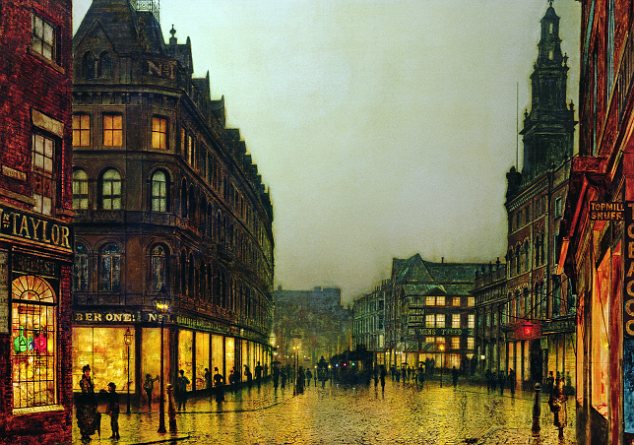
Weather gives atmosphere to writing and painting, as well as to life itself.  Just look at this image by painter John Aitkinson Grimshaw, who specialised in moonlit landscapes.

Boar-Lane-Leeds-1881This one shows a wet day, and the slick cobbles and leaden sky are so evocative.  What secret stories might be happening on those wet pavements, or behind those glowing shop windows?

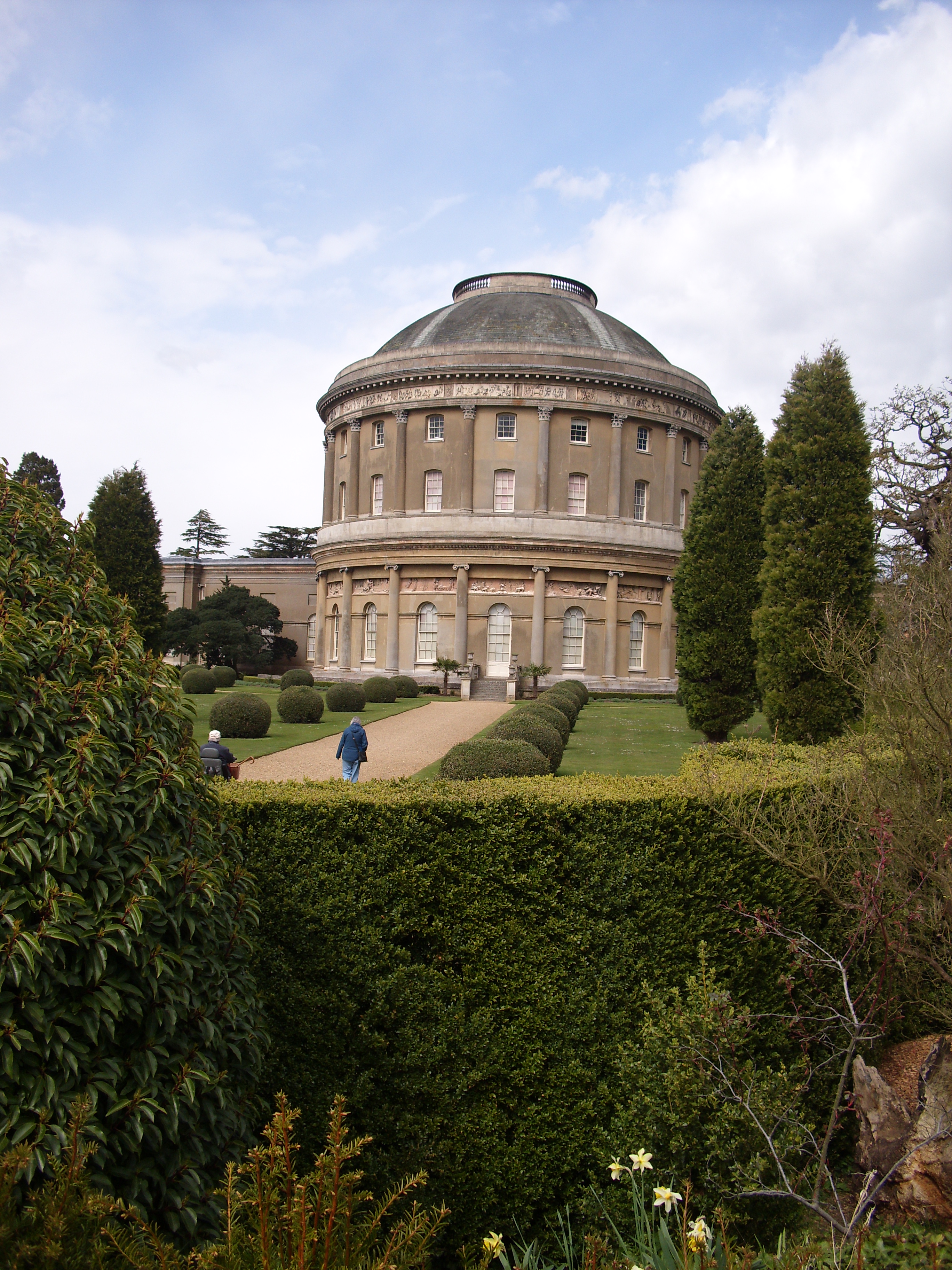
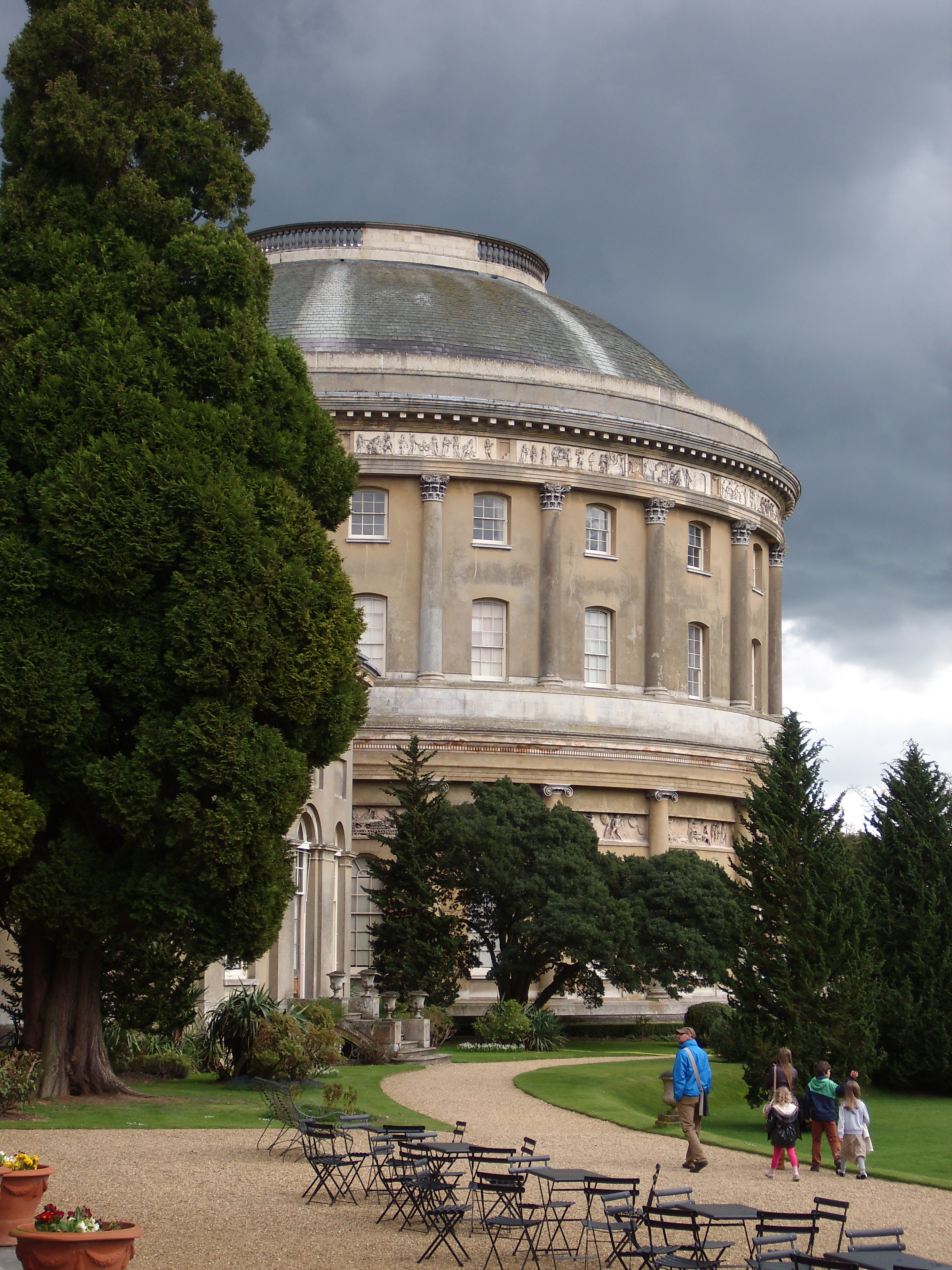
Compare these two images of the same building, the National Trust’s property at Ickworth in Suffolk.

Ickworth sunny Ickworth weather

Granted, the angle is slightly different, but look at the sky – one with glowering cloud, the other with sunshine.  The atmosphere is significantly different in each, a sense of forboding in the right-hand image that simply isn’t there on the left.

You can use weather to prompt your creative work, as Grimshaw did, or you can use it to enhance it.  You can see this is the paintings of John Constable, and the writings of Emily Bronte.

Writing Exercise:

Andrew Cowan, in his brilliant book on Creative Writing, suggests keeping a notebook solely on the weather, noting adjectives and descriptions every day for a year in order to inform your stories.  It is hard to write credibly about a snowy day in a heatwave, for example, or vice versa, so a record of what weather feels, looks and smells like can be incredibly useful!

You might not want to go quite as far as recording the weather every day for a year, but try a writing exercise where you look out of the window – or even better, go outside and experience the weather first hand.  What is the temperature like?  Are there clouds, and if so, what kind?  Is the air moist, crisp, cold, humid?  What does it smell like?  Are there ice crystals on the vegitation, or are the flowers in full and sumptuous bloom?

Record what you see, and then go a step further.  How does this weather make you feel?  What kind of events and interractions might happen on a day like this?  Is it a foggy day for furtive meetings, a dark, moonless night for dastardly deeds, or a hot and sultry afternoon suggestive of languid adultery?

You could use weather to enhance the atmosphere of a scene, or you could contrast it to add clarity to the action.  Imagine a meeting of high ranking spies in a sweltering noon, brows beaded with sweat and shirts stained dark under the arms, whilst all the time, the great business of state is being negotiated.  Spend some time in your notebook playing with weather.  Try out a scene in one kind of weather, then set it in the opposite.  What kinds of problems and interesting ideas does this raise?

Happy Creating!

Inspiration Monday: Images

DSCI3431

My Image Box

Writing exercises are a great way to get yourself going with new writing ideas.  Sometimes it is hard to think up something to write about, and this is where images can be really useful.  If you don’t have time to go out into the world and absorb the landscape, or you don’t feel like listening to music or doing something else that feeds your imagination, images of all kinds can be evocative prompts to get you going.

I keep an ‘Image Box’.  I buy odd postcards when I am visiting shops, art galleries, National Trust properties.  (I even drop leaflets into my image box, knowing the colours used in them can get my juices flowing, and I scour magazines and newspapers for pictures that catch my eye.)

Postcards don’t have to be of anything particular, the places and objects depicted don’t have to be of things you have seen or visited.  They just have to get you started.

When I am stuck, and need to write something fresh, something that comes clean out of the blue, I pull a random image out of my box.  Then I set the timer, and write for fifteen minutes on what the image suggests to me.

Here are a few pictures out of my box:

postcards

Postcards from my Image Box

(clockwise from top left) Sylvia Plath 1959, photographed by Rollie McKenna;   The Forest of Bowland from ‘Our forbidden land’ by Fay Godwin 1989;   ‘Silver Moonlight‘ by John Aitkinson Grimshaw (Harrogate Museums and Arts);    ‘A Norfolk Village’ by Edward Seago (Norwich Castle Museum and Art Gallery);    Sound II sculpture by Anthony Gormley, Permanent Installation in the Crypt at Winchester Cathedral, photograph by Roger Twigg.

These are all striking images, but what stories do they tell?  What do they suggest to you?

Writing Exercises:

1) Start collecting images for an Image Box of your own.  You might like to do it the old fashioned way, as I do, with postcards and pictures cut from newspapers, magazines and Sunday supplements.  Or you might like to use a digital version like Pinterest.  Whichever suits you.

(These days I also keep a private folder of images that I download from Tumblr on my laptop, which also feeds my imagination – I don’t use them for anything other than my own private use, so I hope I’m not infringing any copyright by doing so.)

Keep an eye out for anything really striking – a black and white, chiaroscuro portrait perhaps, or an arresting street image.  Whatever catches your eye.

2) When you have time for a writing exercise, get out your timer and your writing notebook.   Fish out a random image that appeals to you, set the timer for fifteen minutes, and write!

It doesn’t have to be a complete story, remember.  It can just be a sliver of description, a bit of character study, a list of traits or adjectives, or a bit of backstory.  What is going on in the image?  What is the place like? Are there people?  What are they doing, and why?  Is it a portrait like the one of Sylvia Plath above – forget who she is for a moment, and look at the image.  Why might this girl be wistful, a bit sad or worried?  Who could the person in your portrait be?  Why do they look the way they do? Or who is the person doing the looking, taking the picture?  What is their story?

Use your Image Box whenever you are stuck for something to write about.  I have got whole stories out of a single image, like this one, which I wrote from a fanart masterpiece by Marielikestodraw, the doyenne of gorgeous fanart.  You never know what might be sparked off.

Happy notebooking!

There’s No Time to Write! (Part 2 – in which the author comes clean about what being a writer is really like)

So today, according to my editorial calendar, you were supposed to be reading a detailed and amusing essay on why writing exercises are a great way to get yourself writing, even when there is little time.

And then life got in the way.

It does that, doesn’t it?

I am a big devotee of those home interiors and lifestyle blogs that tell you all about how to organise your cleaning equipment, how to update that hideous credenza with a quick lick of paint (here’s one I did earlier), and offer funky downloadable printouts of chore lists and records for when you last took the dog for his shots.  You know the ones?  The ones that are supposed to make you feel like your life is amazing and completely within your control, but actually make you feel like one of those weird hoarding people who live on indoor garbage heaps in documentaries.

Reading this blog, you might feel just that way too.  You may think I’ve got it all together.  That I write oodles of books and I’m so productive.  Well, I’ll let you into a dirty little secret – I’m not.

Just like the lovely ladies who write those amazing lifestyle and organising blogs, I have mess, and piles of dirty laundry, and weeds in the garden.  I get up in the morning and really don’t feel like writing.  Or there is just no time.  Like today.  I seriously did not feel like doing my Morning Pages today.  I felt ill and all I wanted to do was sleep.  I wanted to scream at anybody who came near me, and then get under the duvet and have the world just GO AWAY AND LEAVE ME ALONE THANK YOU VERY MUCH!!!!

(I’m sure you are familiar with those kinds of days.)

Sometimes it happens.  It probably even happened to Dickens.  What the hell.

I didn’t beat myself up about it.  Instead, I wrote my Morning Pages.  I scribbled three pages of growls and groans about how I have no time to do the things I want to do because I’m faffing about doing a bunch of other stuff that is urgent but not important.  In the course of those three pages, I realised that the reason why I am so crabby today is that I haven’t written a story in weeks.

I’m crabby because I am not writing.

Duh.

At this point, it becomes profoundly obvious that even a fifteen minute writing exercise has to be fitted in to today.  Otherwise I will be up before the beak for homicide!

This is why you have to make time to write:  because if you are a writer, you need to write in the same way as you need to eat your greens and take exercise.  Writing makes you sane.

The distance between sanity and insanity is the width of a pen nib.

(I wrote that years ago, it’s good isn’t it?!)

And you’d better believe it.

So join me in stopping the grumps.  Get out your writers notebook and try the following exercise.  I guarantee it will make you feel better.

Writing Exercise:

Get a timer and set it for fifteen minutes – ten, if you are really pushed.  Write down the following phrase and then finish it as a sentence.

I haven’t written anything lately because….

Let your mind tumble onto the page.  It doesn’t matter if it is a list of reasons, like that your husband ought to put the kids to bed a bit more often so that you can have some time to yourself, or that you’ve got the finish that damned presentation to give at work first thing tomorrow.  Maybe it’s that you have a character rumbling about in your head but you are having trouble with some aspect of him or her, in which case, write that down too, and expand on the problem.  If you keep on writing until the pinger goes, you may just have found the edge of a solution.

Write whatever comes to mind.  Complain, moan, plan, get excited, drone, create, wonder what subjects you are interested in.  Whatever you need to get down.   At the end of fifteen minutes, I guarantee you will have either worked out what is stopping you (and if you are anything like me, it may turn out to be that YOU are what is stopping you), or you may have come up with a plan of how to carve out some time to write, or you may even have come up with a new story idea or scene.

Whatever.  The important thing is that you just spent fifteen minutes writing.  Hooray!  Now do it again.  Maybe today.  Maybe tomorrow.  But do it.

Inspiration Monday: Landscapes

Lighthouse at Dusk

From the Yorkshire Moors in ‘Wuthering Heights‘ to the foggy twilight of Sherlock Holmes’ Edwardian London, landscapes conjure up all kinds of stories for us.  In fiction, they can be so much more than just backdrop.  Tolkein used them to illustrate the journey to the centre of Hell, contrasting the lush green of the Shire with the volcanic wastes of Mordor in The Lord of the Rings.  The closer the hobbits get to the heart of evil, the more the landscape breaks down.  Landscapes can even act as a separate character altogether.

At school, my English teacher taught us to describe landscapes in terms of what they looked like, but it is just as important to your readers to describe what they feel like too.

Paps of Jura

Mountains to me feel full of angry, untamed energy.

Adur Valley 1The South Downs, however, are softer, gentler hills, rolling and swelling banks of green pasture.  They conjure an altogether different energy.

DSCI2825

A rustic country lane in summer has a very different feeling to a city street in winter, and the stories that take place there are bound to be different.

Contrast can make your stories all the more interesting – think of that rustic country lane as  an invading tank rumbles by.  Think of the moment the Black Riders from Mordor cross the borders of the Shire, bringing war and evil with them.

The landscape in which you set your stories can enhance your theme, either with a sympathetic atmosphere, or by offering a shocking opposition to the action.

Writing Exercise:

Today is a Bank Holiday in the UK, which means many people are off enjoying the fine weather and the beautiful countryside.  If you have been out and about today, get out your writers notebook and describe the place you have visited.  Seaside or countryside, what shape was it, what colours?  What did it taste like, smell like?  What weather was happening? What plants grew there, what trees, what animals inhabited it?  Were there crowds of people, or just a lonely figure in the distance, perhaps walking a dog?  Did you see a falcon wheeling in the sky, or a rat scrabbling about in the dustbins behind a convenience store?  And what did this place make you feel?  Was it pleasant, foreboding, exciting, relaxing or scary?

Salt this description, however rudimentary it may be, away, and think on it.  What kinds of stories could happen in this environment?  Who might live here?  What problems might they face?

Next time you travel, even if it is only to the end of your road, consider the landscape you are in, and if you can get the chance, write about it.  Let the stories the land around you brings bubble up.  See where they take you.

A Little Melodic Inspiration

Where do your ideas come from?

That is the question most writers dread.  Or rave about.  Iain Banks rants about it at great length in his glorious book, ‘Raw Spirit‘:

“Leaving aside the obvious, ‘Class A drugs, actually’ or, ‘A wee man in Auchtermuchty’, I’ve sometimes wondered what sort of answer people really expect to this.”

(‘Raw Spirit’ by Iain Banks, Century Books London, 2003 p255)

And so he goes on. I asked him at a signing once about how he dealt with getting stuck in the middle of a novel, and he obviously interpreted it as me asking The Question, and didn’t take it well!

But in my mind its a reasonable question for one thought alone, and it is this:

Maybe we don’t know where the ideas come from, but how do we get our minds into the right place for them to arrive? 

Its about putting lots of mulch in the ground to make it a rich, fertile place for new things to grow.

I have an assortment of answers to this problem, but today I thought I would share one of them with you.

Music.

I make a playlist for every novel I write.  When I am sitting down to work on a scene, or with the characters, I play the playlist on my headphones, and this gets me in the mood, gets me in touch with the characters, the environment, the colours and sounds through which they move.  Often, particular characters end up being associated with specific tracks.

And sometimes, it is just one piece of music that I hear that sparks a story, or gets me in the mood to write.

Here are some to try:

Richard Hawley – Standing at the Sky’s Edge

(This is the core soundtrack for a novel I am working on at the moment)

Suede – Asbestos

(This is the ‘title theme’ for a novel about my favourite character, Evenlode.)

Fantasia on a Theme by Thomas Tallis by Ralph Vaughn Williams

(This last one I listened to for six months pretty much continually while I was writing the climactic scenes for my first novel, which was set on the South Downs in Pre-Roman Britain.)

Writing Exercise:

Get out your CD collection, or your iPod, or fire up youtube, however you listen to music.  Listen to a few tracks and see what mental images are conjured up.  What landscape can you see?  What kind of people inhabit this world? Can you see their faces?  What challenges are they facing?  Who do they love?  Who do they hate?

Get out your writing notebook and begin to set down what you can of these images.  You may need to make lists of ideas or words, or you might like to write passages of description.  You might even draw!  Note everything that comes to you, and listen again, as many times as you need to in order to get out as much as you can.

Don’t forget to write down the piece of music and the artist whose work generated the images you have found.

This exercise may prompt a whole new story, or you could use your descriptions to feed into something you are already working on, or something you have yet to write.  Nothing you write is ever wasted – it can all be recycled into new work.

Happy listening – and writing!

The Habit of Art, or How Benedict Cumberbatch Taught Me to Write

Martin Freeman and Benedict Cumberbatch in BBC TV's 'Sherlock'

Martin Freeman and Benedict Cumberbatch in BBC TV’s ‘Sherlock’


Once upon a time, I did a Diploma in Creative Writing at the University of East Anglia.  It was the first proper writing course I had ever taken.  One of the first things we were told as students was that in order to get better, we must write every day.

Writing for me has always been a very instinctive thing.  It comes in bursts. (I’ll talk about your creative rhythm in a future post.)  So I didn’t think much of this ‘show up at the page every day’ theory.  I believed that inspiration dropped from the sky and you did it, whatever it was, to manifest the story or the picture or the dance, or whatever your particular art form was.

Years later, in the midst of a story drought, the BBC TV series ‘Sherlock’ happened to me.  (I say ‘it happened to me’ because it was almost against my will that I eventually watched the reruns, having heard all the fuss people were making about how good it was the first time around.)  And what intrigued me about this version of the stories with which I was so familiar was not the modern setting, but the relationship between the two men, Sherlock Holmes and John Watson.

What would happen if two such men were devoted to one another?  What would happen if they fell in love?

The idea had not occurred to me before with any characters I had created, or anyone else’s for that matter.  And possible scenarios started to blossom inside my skull.  In the end, there were so many of them that I had to write them down, just to make room for things like ‘remember to buy light bulbs’, and other such modern survival thoughts.

Before I knew it, I was writing something new every day.  Paragraphs became pages became short stories became novellas became books.  Every day.  Thousands of words.

This is a practise.  It is similar to an opera singer or concert pianist doing scales, an artist doing studio sketches, a ballerina doing barre work.  They say it takes 10,000 hours of practise to truly master a skill.

I have worked daily.

Yes, I have written fanfiction, which some literary writers sneer at.  But I have done my 10,000 hours and more.  Fanfiction has caused me to write daily.  Through it, I have learnt more about crafting stories than I could ever have done with my hit-and-miss, inspiration method.  I have learnt the lesson that my tutors on the Diploma sought to impress upon me, and failed.

To get good, you have to practise. Daily.

You have to try things out, stretch yourself, sometimes do the same exercises over and over again from different points of view and in different styles.  But you have to practise.

In my experience, yes, discipline has a lot to do with it.  You have to show up at the page, as they say.  You have to sit at your desk.  But it is important to have some motivation too, some enthusiasm that drives you.  I’m useless at self-discipline, believe me, and I wouldn’t have done it if I hadn’t had Benedict Cumberbatch and Martin Freeman circling each other like dogs on heat inside my skull.

So my advice to you is this:  yes, show up at the page.  Every day.  Practise, practise, practise.  Write the same scenes over and over again from different angles, different perspectives, different times of day, or life.  But practise.  Enthuse, rave, drool, froth at the mouth over gorgous characters or actors if you have to, but practise.

Get the Habit of Art.  Get creative every day.

Writing Exercise:

Get out your writers notebook. (You haven’t got one yet?  See my post about why you should.)  Think of a scene from a favourite movie that really grabs you, preferably with more than one character involved.  It might be a talky scene, something emotional, or some action.  Now put pen to paper and describe it from the point of view of one of the characters in the scene who is not the hero or heroine.  Someone periferal.  Or a secondary character.

For example, Star Trek’s Captain Kirk and Mr Spock are facing off about whether to transport to a dangerous planet when the transporter machine is on the blink and they might not be able to get out quickly, but you could write it from inside the head of the security man standing on the door, watching.  How does it feel to him to have the two men in charge of his future well-being fighting over something he maybe doesn’t understand?

You might choose to write Mary Bennett’s experience of her sister Elizabeth’s first meeting with Mr Darcy, from ‘Pride and Prejudice’, or housekeeper Mrs Fairfax’s dim view of Jane Eyre’s carrying on with Mr Rochester in ‘Jane Eyre’ (Jean Rhys wrote the entire novel ‘Wide Sargasso Sea’ in this way, from the point of view of Rochester’s wife, Bertha.)  Or you could write from the mind of one of James Bond’s jilted girlfriends!

Choose a story you are attracted to and try a few scenes from an alternative angle.  See where it takes you.  And if you find yourself with something that intrigues you, stuck with it, and see where it takes you.  Every day.

(More on writing every day, and writing exercises soon.)

The Writer’s Notebook

Writers nbk planning 22-04-2013 14-59-52 3648x2736

My spiral bound writers notebook – these pages show planning for a historical novel I am working on.

Every craftsman needs a workbench.  The notebook is to a writer what a workbench is to a carpenter.  Every book about how to write will tell you that.  The trouble is that there are as many ways to keep a writing notebook as there are carpenters’ workbenches.  So I thought I would say a little bit about this most basic of skills.

Your notebook travels with you continually, wherever you are.  It is the hopper into which you throw all the useful scraps you collect on your journey through life.  It is like a memory that you carry with you – one that won’t malfunction, unless you drop it in a pond or set fire to it, of course!  This is where you scribble all your ideas, the clever sentences and metaphors you dream up, the quotes that inspire you, the snippets of conversation you overhear on the bus.  In the old days, this was called a Commonplace Book, something like a scrapbook, but one in which you record more than events.  It is a little like your journal, but more functional.  I always like to think of mine as a record of the development of my mind.

Most teachers suggest you start out with one notebook.  The important thing to know is that this is a skill that evolves, ebbs and flows.  You will find a comfortable way to do it after a while, a way that fits into your lifestyle and way of working. In anycase, to start out, choose yourself a notebook that will stand heavy use, and one that you like (otherwise you won’t be drawn to write in it.)

I use an A4 hardbacked spiral bound lined notebook by Pukka Pad, which I love.  I can fold it over, stick things into it, draw diagrams, and because the cover is plain, I can decorate it however I like.

However, A4 is a BIG size, and its not something I can just stick in my pocket and carry everywhere.  As a result, I’ve evolved a second notebook.  It is a tiny Moleskine, which I carry in my handbag. It is hardback too, so it withstands a great deal of getting knocked about, and chocolate stains.  This is my scribble place, where I note things down on the move.

DSCI3393

My baby moleskine lives in my handbag. Snippets get stuck into these, as well as overheard conversations and quotes.

DSCI3394

Just to prove notebooks don’t have to be neat, or be devoted solely to your writing life – this one also has details of some tights my mum wanted me to buy her!

This is a method of recording that I have developed over time.  It may not work for you.  You may need to keep everything in one place, in a single book, or you may need several different notebooks for different purposes.  It depends on how you work, so it will be different for everyone.  There is no one right way.  But I suggest you start with a single notebook to make life easier.

Here are some things you can do with it:

  • Reflect on where you are with your writing, and what you would like to achieve
  • Scribble down a paragraph that comes to mind
  • Record useful or inspiring quotes
  • Plan your stories
  • Write your characters’ back stories
  • Draw pictures of your characters, or collect photos of actors and actresses who put you in mind of them
  • List books you might like to read
  • Do writing exercises
  • Stick in interesting newspaper stories for future inspiration
  • Stick in inspiring pictures or postcards
  • Review books you have read, movies or TV shows you have seen, art exhibitions you have visited, music gigs you have enjoyed
  • Take notes at meetings of writers groups you attend
  • Note ideas for new stories or characters
  • Mindmap plots
  • Draw diagrams
  • Describe the weather (you wouldn’t believe how useful this can be when you are trying to write action set on a sunny August day but living through a wintry November afternoon!)
  • Doodle
  • List music that inspires you. (A playlist for every novel really helps set the mood for writing)
  • Potential character names – I came across someone called Theodicy Godbolt one day when  I was researching 16th Century British History – you couldn’t make that one up!
  • Whatever else takes your fancy – it’s your notebook!

There is one absolute that every writer’s notebook should have at the back.  A list of words and their meanings that you come across.  Every writer should be expanding their vocabulary all the time.  Come across a new word?  Write it down somewhere you can refer to it, and then you will remember it!

writers nbk sticking things in 22-04-2013 15-00-41 3648x2736

Sticking in pictures of actors who inspire you can be useful!

These are just a few ideas to get you started.  I’m going to talk a lot more about notebooking in future posts, not least because I am a notebooking fanatic, but you might like to grab yourself a pad and pen and start scribbling right now.  And if this doesn’t inspire you, maybe you might like to read this, or this, which is one of the best books on writing I have ever read.