Tag Archives: Fiction

Digging Up Jewels

diamondIts all a bit pre-Christmas mental here, and its possible you are feeling the same way, so lets share a little time avoiding writing those cards, shall we?

Lately I’ve been collecting words.

I came across this word in a novel I was reading, and fell in love:

craquelure

Isn’t that just a marvellous way to describe an old man’s face?

Then I started noticing other words when they popped up:

nurture

topaz

Words I hadn’t really thought about in years, though I knew the meanings.

plangent

planish

Words that are nice to roll around on your tongue.  Words that pop like red roses in your paragraphs.

scrum

rhomboid

As you voyage through the festive season, why not make a list of the interesting words you come across.  Its not a hard or time-consuming thing to do – I scribble mine on the scrappy little pad of paper I keep by my bed for the purposes of writing to do lists and things I have to remember in the morning.

maroon

fecund

Then I transfer them to the back page of my writing notebook when I have a moment to spare.  Easily done.

flaunt

flaxen

I’ve got a bit of a passion for F words at the moment, as you can see!

They don’t have to be on a theme or for a reason.  I collect them only because they appeal to me.  They sing out from the page.

Now I’ve got a growing resource for making my writing interesting and alluring – I’ve written a little about this before, and I’m coming back to it.  I’m thinking about creating a kind of utilitarian type prose, a la Hemingway, but studded with jewels of unusual and seductive words.

So, why not see what little jewels you can dig up?

Happy Creating,

EF

Deep Breath

The view from my bedroom window.

The view from my bedroom window.

Samhain is past, and we are well into the Mourning Moon, a time of releasing the old, and accepting our own power. Here in rural South Norfolk, we’ve had soggy and unseasonably mild weather, which has lately meant long days of grey skies and continual downpours. The last of the trees to shed their leaves, the oaks, have begun their brown weeping. The landscape is smudged khaki and brown and yellow, the edges blurred by autumn mists.
A fortnight has passed since my last post, a space during which I have been trying to recover a little of my strength, and some of my thinking capacity. The first week was one of complete surrender. After it, I felt more rested than I had in a whole year, I think.
The second was more tense, punctuated by a day-long dash to Oxford and back, to take the elders to the doctors for important assessment and treatment. Seven hours in a car, split in half by four hours of pushing a wheelchair and repeating myself every ten minutes, was enough to exhaust almost all the good will my body and I had built up between us. Since then I have been lost in a hormonal, anxiety-ridden mist, feeling OUGHTS and SHOULDS mounting up like an impending avalanche over my head. Add to that the impending doom of the Christmas season, and life-changing news from several friends, and I’m not sure I’ve come out of this much recharged.
Let’s just say, this has been a time of reassessment and reflection.
While I have come a long way in my year of ‘DARE’, I’m not sure that I can face another action word year. After ‘REVOLUTIONARY’ (2013) and ‘DARE’ (2014), I’ve attracted way too much change into my life for comfort, and I think I need a rest, thank you, Mrs Universe. I’ve decided that next year, I need a gentler world to ease my way. ‘BALANCE’ or ‘NURTURE’, perhaps. Or even just ‘EASE’. A reminder to be kinder with myself, something that, like most women, I find difficult to allow myself to do.
Tectonic shifts are happening in my creative life too. The relief I felt at giving myself a rest from blogging caused a delicious upsurge in other creative outlets. I immediately went off and made the back door curtain I’d been meaning to sew for the last six years. I’ve been hand-quilting a Christmas stocking for my guide-daughter too, which is enormously satisfying. I hope I manage to get it finished in time. Being able to sew again feels fantastic, although I had a few scary moments trying to remember how to thread my sewing machine!
I’ve decided I need to be using my journaling practise in a much more systematic way, too. I want to try a lot more guided journaling, by which I mean journaling from prompts rather than the simple stream-of-consciousness method I have always used. I’m feeling the need for more deep self-exploration, and I want to use my creativity as an integral part of the work I do with my Gestalt counsellor on a weekly basis to effect this.
I haven’t stopped writing, in the meantime, even though I haven’t been blogging. I’ve got two big fanfics on the go at the moment, great sprawling things that seem to be growing every time I look at them. My head is full of scenes stored up to be written out. That’s not a brilliant way of writing, especially when my head is so blurry. The other day, I sat down to write a scene, only to realise that of the two emotional points I wanted the characters to thrash out, I could only remember one.
A bit not good.
The result was some serious re-evaluation of my notebooking habits, which I still haven’t resolved, but hope to share with you soon.
As well as putting some conscious intention into my reading habits, I’ve been contemplating a new original writing project too. In the wake of the In/Famous Engagement, and the storm that followed it, I came to the conclusion that I needed to get away from fanfiction. And yes, I know I’ve been saying this for ages, but sometimes it takes a big event to push us to make real changes. So much is shifting in my life right now, and I want to move on to something fresh. I don’t think I’m going to be able to give up writing fanfics, nor do I honestly want to, but there is an idea knocking at my door, scratching at the wood like the ghost of Cathy in ‘Wuthering Heights’, and it won’t go away. As I used to say to my school friends:

‘I think I’ve got a story coming on’.

And finally, I’ve got some ideas for non-fiction that I want to have a go at. I think the phrase is ‘watch this space’.
Thank you, dear readers, for sticking with me through this break, and throughout this bumpy year. While I know it is only going to get bumpier for a while, I’m grateful that you are with me, listening to my ramblings. It is good to know I’m not shouting into the unresponsive darkness.
Happy creating,
EF

The Book List

Some books here are waiting to be read.

Some books here are waiting to be read.

The other day, a friend challenged me on Facebook to name the top ten books that had most influenced me in life. It was one of those things where you give your list, and then challenge your other friends.

So far so good.

But how the hell do you choose, especially as the challenge specifies you do it off the top of the head, without thinking too hard, as fast as possible. How do you choose only ten books out of all the great novels and stories you have read over a lifetime?

My list was visceral, and based largely on what I read when I was younger. I thought about the books that had made me happiest, that I have gone back to over and over again in the course of my life. And it was interesting just to reflect on my criteria for choosing, as much as anything.

So here is my list (verbatim):

“1. Finn Family Moomintroll by Tove Jansson
2. Jane Eyre by Charlotte Bronte
3. Good Omens by Terry Pratchett and Neil Gaiman
4. Lake Wobegon Days by Garrison Keillor
5. Virginia Woolf by Hermione Lee
(gosh this is hard)
5. The Count of Monte Cristo by Alexandre Dumas (kept me sane in the run-up to my wedding)
7. Antrobus Complete by Laurence Durrell
8. Persuasion by Jane Austen
9. Practical Magic by Alice Hoffman
10. Rebecca by Daphne du Maurier (obvious)”

I ended up with about 15 that didn’t quite make the grade, and if I think too hard about it, I would definitely shift a few from one list to the other.  I mean, how do you choose which Terry Pratchett?  The above was my original choice, and I think I’ll stand by it.

And then I challenged other friends. And like Japanese knotweed, lists of novels and non-fiction books blossomed out all over. Everyone had a fascinating new combination of books they raved about. Many, like Sebastian Faulkes’ ‘Birdsong’ and Camus’s ‘The Plague’, were held in common. Lots of lists were biased towards ‘we did that one at school’ books. I marvelled at the wide range of stories that had influenced my friends.

And I felt like I had barely read anything worth reading since I left college.

I suppose this is understandable. When you see a list of books, you always look for the familiar ones. And if the ones you have read are in the minority, you feel like a fool for not having read the others. Especially the significant ones. On the other hand, who the hell has read the whole of Proust’s ‘Remembrance of Things Past’, or ‘War and Peace’? (I have to say I was impressed by the number of people who had read Dostoyevsky’s ‘Crime and Punishment’. Kudos!

There are woeful gaps in my reading, despite what friends who always see me with a book might think. This is especially true these days, when I am so addicted to the quick highs offered by every morning’s new crop of fanfics. I have not read many European novels, or the Russians. I don’t know Kazuo Ishiguro or Graham Greene, Iris Murdoch or GK Chesterton. Or Kerouac, despite having a degree in American Studies. I read one book from last year’s Man Booker shortlist (Ruth Ozeki, ‘A Tale for the Time Being’), and that was because it looked like the easiest. (It was fantastic.)

Writers must read.

It is one of the basic pillars of the Craft. And you have to read the good stuff as well as the commercial, otherwise you never improve. Making this list made me realise how little decent fiction I have read in recent months. Time to get back to it.

“I mean to read myself blue in the nose.”

Virginia Woolf.

When I began my Diploma in Creative writing, we were given a list of novels and volumes of short stories to plough through as precedents, much as art students must analyse the works of the Masters, sitting in galleries for hours on end, studying Goya or Rembrandt. I found an old bookmark from those days, a list of novels scrawled on it, each title with a line scored through it as I completed it. (A couple of loose ones at the end remained unread.)

I need to do the same again.

This morning I found myself in a bookshop, gazing longingly at table after table of lovely crisp new novels. (It’s the time of year that provokes me – September draws me into bookshops still, an echo of student days of joyful bookbuying with a free conscience!) But I was good. I left the books uncaressed. I have piles of unread novels at home, you see, amongst them ‘Birdsong’, along with Tim O’Brien’s ‘The Things They Carried’, Jonothan Franzen’s ‘The Corrections’, and dozens of others, all highly recommended as quality fiction for the budding writer, and all gathering dust on the shelf. No point in buying new ones until I have ploughed through the old ones.

So I will cut a strip of paper and write a list of the books in my pile on it. And then I will begin. And each time I close the back cover a book and sigh with completion, I shall draw a careful line through the title and pick up the next.

Happy Creating,

EF


Which Notebook?

My old writers notebook

My old writers notebook

I’ve been trying to find the best way to keep a writing notebook for the last year. And by ‘right’, I don’t mean correct, I mean the system that works best for me.

I always used to keep all my notes in an A4 ringbound PukkaPad notebook, the hardback kind. I loved it. There was plenty of room on the big pages, and PukkaPad’s paper is beautifully smooth and takes ink perfectly. Their products are especially good for Morning Pages, because you can write quickly and smoothly on them.

This was fine as far as it went, but the book was too big to carry around with me easily, which meant that I tended only used it at my desk. And that meant I wasn’t noting down all the ideas I had, just the few I had when I was thinking about it. Which meant I was always trying to remember what I had thought about. And that meant, of course, that 75% of the ideas I had went AWOL. What a waste.

(I did have a baby moleskine at one point. It just felt like clutter in my handbag and I rarely used it.)

Last September, I decided I was going to get serious about my writing practise, and that meant reflecting on my notebooking habits. This was not a flattering experience.

I restarted with a cheap hardback A5 notebook, because it had to be sturdy to withstand being knocked about in my handbag. I just bought the cheapest I could find because I figured it was an experiment, and it didn’t have to be perfect. Plus, if it was too nice, I wouldn’t use it.

(That’s a trap I’ve fallen into before. Its easy to feel intimidated by a fancy notebook to the point where you can’t bring yourself to write in it, because you feel anything you do write has to be perfect. It’s a creative disaster.)

So decorated the cover so it looked like a more expensive one I was coveting at the time, and away I went.

It was really hard at first, making sure I scribbled down the thoughts I had when I had them, not trying to save them up. I added quotes I came across, stories I heard on the bus or on the radio, and took notes in book talks I went to. And I quickly filled up my scrappy little book.

And once it was full, I forgot about it.

So when I got the bug again, deciding to renew my commitment to my work, I made the mistake of going off to gorge myself on the goodies at Staples. Gods, I love Staples!
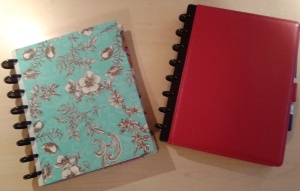
 

The ARC discbound notebook system from Staples.  The one on the left is a cover I made myself.

The ARC discbound notebook system from Staples. The one on the left is a cover I made myself.

And there I fell in love with the ARC discbound system. I came home with a beautiful leatherbound A5 notebook. And it is gorgeous. You have no idea. And because its discbound, I decided I would combine my notebooking with a blog planner. I printed out pages and punched then and fitted them in and moved them about. And my lovely ARC planner became so big and heavy that I couldn’t get it in my handbag. Which rather defeated the object. And the thing with the lovely leather binding is that you can’t just throw the book in the back of the drawer to await later pillaging for ideas. You feel duty-bound to keep using it. So you have to take the contents out, and then what do you do with them?

So the ARC notebook, no matter how delectable, was a notebooking disaster.

But I learnt from my failure. I now knew I needed the following:

  • An A5 notebook to fit in my handbag.
  • A pen loop would be useful.
  • Nothing too fancy, or I won’t write in it.
  • Nice paper is an incentive.
  • A sturdy binding to withstand handbag battery

So back to Staples I went.

And this time I came home with the A5 version of the Oxford notebook. It has a stiff plastic cover and is spiral bound, which means I can fold it flat over easily. Its got lovely paper. I can tuck a biro into the spiral binding and it acts as a pen loop. It is satisfyingly thick but the smallish size means I can fill it quickly, which pleases me and makes me feel like I’m making progress.

And I am using it. Every day. Filling it with thoughts and ideas and potential stories and snippets and all kinds of goodies that I know I can rummage through in future. I’m even using it to write bits of stories and dialogue for my fanfics, and bits of diary-like reflection on the writing process for my novel.

People, its working!

It goes with me everywhere, my little friend. And it is still evolving. I could probably write another post along the same lines as this one in six months’ time, and I’ll probably tell you something completely different. I think the notebooking requirements you have change with you as you go on in the craft. But for me, this is where I am now, and I think I have finally found a way to record my brain on paper in a meaningful and useful way.

I encourage you to explore using a writers notebook if you write, but to do it, too if you pursue any other kind of creative art. A sketchbook for an artist fulfils the same function. It allows you to explore your creative interior, push the boundaries of your ideas. Its useful to keep a little notebook in your pocket or bag just to scribble down random ideas and thoughts you have, regardless of what art you do.

Be gentle with yourself as you find out what works best for you. From little cardboard-bound exercise books to luxurious Paperblanks, there will be something that fits your life. Think about your lifestyle and what your requirements are. I recommend that you start cheap so you feel like you can make mistakes. There is no wrong or right. Its just what works best for you. You just have to find it.

If you want a beginners guide to keeping a writers notebook, click here.

I’ll no doubt have lots more to say on the subject in coming posts.

Happy creating, EF

The White Princess Problem

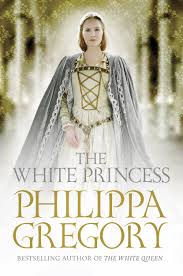
the white princessI’m undergoing quite a lot of shifts in my creative work these days, and as a result, I’ve been reflecting on my reading habits.

Bit not good, as Sherlock would say.

I read woefully little fiction. My bad.

If you want to be writer, you need to read. And read lots. And I do read lots. Its just that most of what I read could be loosely classed as ‘self help’ and history. Let me explain:

A little while back, everyone was raving about Philippa Gregory’s Cousins War novels, which tells the stories of the women involved in the Wars of the Roses, during the late Medieval period. I’d read Gregory’s ‘The Other Boleyn Girl’ when it first came out, because I’d read something similar by Jean Plaidy as a girl, and liked it well enough. I tried the first book in the series, The White Queen, but couldn’t get on with it. So, on the basis (again) that I had read something similar by Jean Plaidy, I decided when The White Princess came out, with its plot about Elizabeth of York, mother of Henry VIII and wife of Henry VII, that it was for me. I bought the book and settled down for a good read.

What a miserable book.

I have clawed my way wretchedly through it. I’ve only got a few chapters left, but every time I pick it up, I am seized with a bout of miserable gloom and depression that can go on for days. I just can’t stand it. I’m determined to finish the beastly thing, just on the basis that I refuse to let it beat me, but dammit if it isn’t the most spirit-crushing book I have ever read. And I’ve read ‘Middlemarch’! Now everyone is telling me that I must read Hilary Mantel’s ‘Wolf Hall’, and I just know that’s going to have the same effect on me.

Is it any wonder that I return repeatedly to Terry Pratchett’s Discworld books?

I want a book to entertain me, and leave me panting for more. I want to be riveted by every turn of the page. Its not that I don’t want conflict. I love conflict. Conflict is what makes a plot irresistible. Without it, fiction is just a mushy mess.

But why does every book that gains acclaim have to be so bloody depressing?

Is it so much to ask for something to be a bit witty? Is it so hard to make a book hopeful in some way?

Maybe it is that I read mostly first thing in the morning, to help me wake up and while I wait for the day’s medication to kick in, and last thing at night before I sleep. What you read first thing can set the tone for your day, which is why I try to choose something uplifting. And late at night, you want to read something that will help you sleep, not leave you lying awake worrying about death and betrayal and being hung, drawn and quartered.

I have a heap of novels that friends have lent me. They seem to be mostly about the Second World War and the Holocaust, which doesn’t bode well. I tried reading Kate Mosse’s ‘Labyrinth’, but it felt too cheesy, and worryingly like Dan Brown’s ‘Da Vinci Code’, which is the only book I’ve ever actually physically thrown at the wall in disgust because it was so badly written. (How that man has the gall to teach creative writing beats me!) I love historical fiction, but I want to read good work that is recently published. And I’m fine reading contemporary set books. Why is it so hard to find something that isn’t going to make me want to slash my wrists?

Maybe I’ll just see if I can get the latest Alice Hoffman from the library. I used to read her. She was good. But if you have any recommendations that fit the ‘positive’ bill, please leave a comment below. I’d love to hear about your favourites.

In desperation,

EF

UPDATE: went to the library and found Andrew Miller’s ‘Pure’. First few chapters are beautifully written, even if it’s a dark story. I’ll let you know if I’m inclined to slash my wrists at any point.

The Perils of Getting Lost

There is no SatNav system for the artistic life.

Most of the time, we creative people complain about the problems of not being able to get into the Zone.  Not being able to find the door into the imagination.  Not being able to make our art.

Or we complain about not being able to get out of our own way.  We get hung up on the avoidance tactics and displacement activities we use so we don’t have to think about the empty page, the blank canvas.

Be honest, how many loads of washing have you done to avoid that novel you’ve been meaning to write?  How many drawers and cupboards have you cleaned out as an excuse to get away from your easel or your desk?

Seriously, its amazing how interesting cleaning can become when you need to be doing something else.

However, one of the perils of the artistic life that we rarely talk about, let alone complain about, is that of getting lost.

Lost in your imagination.

Lost in that place where the stories never end.

Lost where the romance and the passion and the adventure and the danger go on and on, and there is never, never washing to be done, unless it is in a picturesque stream with the sun sparkling on its surface, and requires both hero and heroine to divest themselves of their clothes in as romantic/modest/passionate (delete as appropriate) way as possible.

Suddenly you will wake up one morning and realise that you have been trapped on the island of the Lotus Eaters, so lost in the pleasures of your mind that you have forgotten to live.

Marriages founder this way.  Bankruptcies are forged, friendships lost, loved-ones go unmourned.  It happens all the time.

We lose ourselves constantly.  Often it is complusive shopping, gambling, drinking, eating or other drugs that claim us.  Addictions can be apparently harmless.  Surfing the internet seems harmless enough, until you realise you have lost days and weeks of your life doing it.  We lose ourselves in meaningless busyness, in rushing round fulfilling empty tasks, in competing with friends and neighbours, in acquiring the latest TV, sofa, car, clothes.  Modern life encourages us to find an addiction to dull the ennui.

Being present is hard.  Its even harder if you have an over-active imagination.  It is so much nicer to be lost in a story than facing the reality of life.  Doing the work of living.  Being real.  It is so easy to slip away and not come back.

Lately I have been away.  In the last couple of days, I’ve realised that life is tugging at the hem of my skirts, wanting me back, needing my attention.  I’m fighting it.  I don’t want to come back.  I want to stay in my fantasy world.

But life needs living.  We only get one go.  The art needs making, yes.  But our lives are our art too.

Don’t forget to live as well.

Happy Creative Living,

EF

PS – You might like to know that I have a new story out, The Retirement Party, a ‘Lewis’ romance, which you can read here at AO3 and here at FF.net.

Retreat Debriefing

The house is cold and damp, and the fridge is empty.  Coming home from a retreat can feel a bit like being marooned on the shores of real life after a blissful dream.  It is wonderful to have your own space, and three two-course meals a day, plus a continual stream of tea and cake, laid on for you.  I feel as fat as a walrus.  Two and a half days with nothing to do except write, and talk about writing with your writing friends – it’s hard to beat.

As idyllic as it sounds, it can come as a bit of a shock to start with.  I woke up on Saturday morning and immediately plummeted into a panic attack of ‘Oh, Gods, I can’t do this!’  The day stretched out before me, packets of emptiness between appointments with the dining rooms.  Just me and my four walls, my pen, paper and laptop.  Suddenly writing was inescapable.  No more displacement activities.  There are only so many indulgent baths and long, breezy walks you can have before you can no longer avoid the inevitable contact of nib with paper.

By about 11.30am on Saturday morning, I had done every displacement activity available to me, and there was no choice but to get down to it.  I opened a fresh page of my notebook and off I went.

And it was wonderful.

I wrote and wrote and wrote.  I didn’t judge or edit myself.  I put down everything that came into my head, page after page of it.  Story after story fell onto the paper.  My two favourite pens ran out in the course of the weekend.  By afternoon tea at 3.30pm, I had 12 pages of A4 paper covered with my spindly scribble, and I had discovered things about my new hero that I had never dreamt of.  By supper time, I had two pages of polished script to read out at our evening meeting, where we gather to share our progress so far.  On Sunday morning, again about 11.30am, I started again, and by lunchtime had an idea of what research I would need to do, and a list of indigenous names for my characters, gleaned from the one book I had bought with me for research purposes.  By tea time I was exhausted but happy.  I had worked so much out.  I had a better idea of what needed doing next.  And I had learned to write lying down on my back (which became necessary because my back has really been playing up the last few days, and sitting up proved a nightmare).

I felt a bit dazed when I got home.  I stared at the telly for a couple of hours and then went to bed.  This morning, when I woke up, I felt slightly hung-over.   Just as you can eat and drink too much, it seems you can write too much too.

So I am having a bit of a day off.  I am just lolling about, digesting the weekend, getting my head around this week’s diary appointments, catching up on the laundry, and reading comforting books.

Tomorrow I will start again.  I will get back to my blank A4 pages and start downloading backstory with my biro, and my soul will soar.  In the meantime, I think a little time on the yoga mat may be what my back needs!

Happy creating,

EF

On Process: Too Many Ideas, Too Little Time

Usually creative people complain about creative block.  I don’t.  For the most part, I have the opposite problem.  Too many ideas.  Not enough time to execute them.  I have this constant fear that I shall die suddenly without sharing all the pictures in my head.  That would be a great incentive to work if it weren’t for the fact that my poor health is a huge brake on my capacity to work.

And then there is the fact that I have the mind of a butterfly.

The Buddhist masters often refer to the concept of ‘Monkey Mind’.  This is what your mind does when you try to meditate, and your thoughts bounce around like gibbons, and feel impossible to control.

Welcome to my world.

Actually, that is not entirely true.  I can be deeply committed to one idea for a short period of time.  The most I can normally manage is about three months.  Then I bounce off to find another sparkly thing.  Most of the time, I come back.  Occasionally, I manage to actually finish something.  Occasionally it gets shelved for good, or the idea gets incorporated into something new, because its too good to waste.

I’ve been socialising a lot this summer, and people have repeatedly asked me the same questions:

‘How’s the writing going?  What are you working on at the moment?’

Below is the honest answer (i.e. the one I don’t give nice people at parties because its too complicated to explain, especially if they’ve never met me before.)

The things I am currently working on:

  • A series of short stories about John and Sherlock in a stable relationship
  • Finishing a work about Sherlock’s pursuit of public sexual humiliation because of his guilt about his faked suicide.
  • A novella about a Viking Princess
  • My novel about Victorian sexuality, currently titled ‘The Butler Did It’ (Please could somebody suggest a better title, I’m getting desperate!)
  • My journaling ebook

Other ideas I have churning about in my head include:

  •  A possible novella about a young man getting over the death of his male lover in a road accident
  • A short story based on a line from a deliciously naughty Johnlock fanfic I read the other day, The Red Box by Cleo2012
  • The third Evenlode novel (vampire gangsters ahoy!)
  • A Loki fanfic set after the end of Thor 1

(And this is before I have even begun to tell you about the paintings I want to make…)

I was explaining this smorgasbord to a friend, and she said ‘How on earth do you handle all that?’

The answer is, ‘I have no idea.’

I suppose I have a good memory, but the older I get, the more I am going to need to employ my writing notebooks to record all this.  The truth is that ideas are far easier to come by for me than the wherewithal to execute them.  And there just isn’t enough time in my day to get all this done, and execute my duties as wife, friend, aunt, guidemother, part-time carer to elderly, sick in-laws etc etc. and still protect my health.

Triage is necessary.

I just have to grab one sparkly thing and run with it for as long as I can.  I have to choose the most important thing to me at the time.

Most creative people complain about creative block, but the other side of the coin is equally disabling, and I know for a fact I am not the only one who experiences this problem.  Choosing which is the best idea to work on.

If you have any ideas on how best to deal with idea overspill, please let me know in the Replies section.  I’d love to know what you do.

Happy Creating,

EF