Be Open. Don’t Try So Hard.

On Ardnave Beach, Islay, which I am yearning for dreadfully at the moment.

On Ardnave Beach, Islay, which I am yearning for dreadfully at the moment.

Lately, I keep coming back to the same thought:

Be present.  Turn Up.  Be still and open.  Don’t try so hard.

I was watching Jamie Ridler’s morning vlog, in which she talked about how people strive so hard to find their Life Purpose.  We make such a BIG DEAL out of it.

What if we just let it happen?

I’m not saying you can just expect your art to pop up out of nowhere.  You have to be present, make yourself ready.

You do your core practises.  Your morning pages.  Your writing exercises. Your artist dates.  Your scales or your practise sketches.  Your barre exercises.  You make sure that you are ready when the inspiration comes.

When I used to read about writers who sat down at their desks in the morning and stayed there for an alotted number of hours, regardless of whether the work came or not, I used to think they were mad.  It seems like working too hard. It seems like self-punishment.

Maybe you don’t just have to sit at your desk.

Maybe you can cultivate a mindset of being open.  Where ever you are, and whatever you are doing.

Maybe we are all trying too hard.

Forcing it just doesn’t work.  Every writer who has ever been blocked knows that.  But if you keep up the practises, the ideas come.  They come because your mind is constantly in a place where it is curious and open, and like a lamp in the darkness, it attracts the fluttering moths of inspiration.

So keep her steady as she goes.  Turn up for your daily creative habits.  Relax into them, and don’t panic.

The work will come.

Happy Creating,

EF

Help will come

Life Org kit I was working on my Life Organiser last night for the first time in a couple weeks (it’s been a hell of a couple of weeks), and the quote at the top of the page for Week 43 in Jennifer Louden’s book just jumped right out at me:

A thunderbolt illuminates your heart: it isn’t your job alone to fulfil your dreams and give birth to your yearnings. You can relax and ask for help, and help will come.

It was that last sentence that jumped off the page at me.

Help will come.

Help will come.

All you have to do is ask.

Lately, I haven’t been asking. Actually, let’s be honest here, I have the greatest difficulty in asking for anything, ever. It’s one of the hardest lessons I have had to face with chronic illness. Sometimes, you just can’t be perfect and do it all. Or maybe, do any of it. You have to ask for help.

Whether I need to ask for help cleaning the house because I’m too exhausted to push the vacuum cleaner, or I need help from my Muse because frankly, ain’t nothin’ goin’ on in my storyworld, it is really, really hard to admit I need help.

Usually, I do the passive-aggressive woman thing of wearing myself out, reducing myself to a stressy heap of tears and vitriol, and then Husband put his hands on his hips and says in a despairing tone: ‘well, you only had to ask.’

I’ve been feeling really stressed for the last few days, and not very well at all, and if I was one of those organised bloggers who writes their posts weeks in advance, I would have had a bunch of spare posts backed up to cover me for the times where my brain goes blank. But I‘m not. I’m a ‘fly by the seat of my pants’ kinda gal, and I really like being able to write what I need to write when I need to write it. I need my posts to feel current for me, otherwise they come out creaky and preachy. Or at least, I think so.

So I didn’t write on Monday. I just couldn’t.

Instead, I had a bit of a meltdown.

On Tuesday, I decided to trust to the Muse. You could say that I asked for help. I trusted that some inspiration would come along. I listened. And while I was listening, I got down to a few other things, including my Life Organiser.

Bingo!

The action became the lesson. Trust. Ask. (Keep busy while you are waiting.) Help will come.

And it did.

If you are struggling with your creativity right now, ask for help.

Maybe you just need Grandma to come and look after your baby for an hour so you can write or read a book by yourself. Maybe you need someone to hoover the carpet, which will give you enough time to do something for yourself, something creative.

Or maybe you need to ask the Universe for help, to look up to the sky and say ‘Please could you send me some inspiration, because right now, I’m a bit blank.’

Then listen.

(The listening part is the important bit.)

As I mentioned in a recent post, silence helps.

If you can’t find silence, do something that will allow your Muse to speak. Morning pages; perhaps, a walk around your neighbourhood with your camera; a few writing exercises. Do your Life organiser, or read a book. Allow yourself to be open. Make peace with your temporary stuckness, but act in a way that will allow whatever message your Muse has for you to come through.

Help will come.

Your job is to be gently open to it.

Happy Creating,

EF

Friday Quickfic: Don’t tell me what to do unless you’re naked!

John and Sherlock - Martin Freeman and Benedict Cumberbatch in BBC's 'Sherlock'.

John and Sherlock – Martin Freeman and Benedict Cumberbatch in BBC’s ‘Sherlock’.

Sometimes a story pops into your head that is just begging to be written.  Sometimes, you just can’t help it.  Sometimes, you just have to be naughty.  Sometimes, being a tiny bit wicked is the only way to make the world seem a better place.  ‘Bawdy’, Atlin Merrick once called me.  I take it as a complement.

So, in celebration of that spirit, I offer you today’s slice of naughtiness.  I haven’t written a Sherlock fic in quite a while, so it was a nice little self-starter.  I hope you like it.

A Taster:

“The incriminating words were out of his mouth, and then he couldn’t swallow them back, couldn’t reel them in. They seemed to float in front of his eyes for a moment, a skein of humiliation, the letters glowing a wanton scarlet.

He never did this. His will was of iron. No sentiment. No human weakness. No Freudian slips. And above all, no desire.

And then those secret little daydreams that he had been nurturing, hiding them away even from himself, unfurled a frond, a delicate tendril that encircled his tongue like a noose and tripped him over.”

You can read ‘Don’t tell me what to do unless you’re naked’ here on AO3, or here, on FF.net.

Happy Creating,

EF


Inspiration Monday: Silence

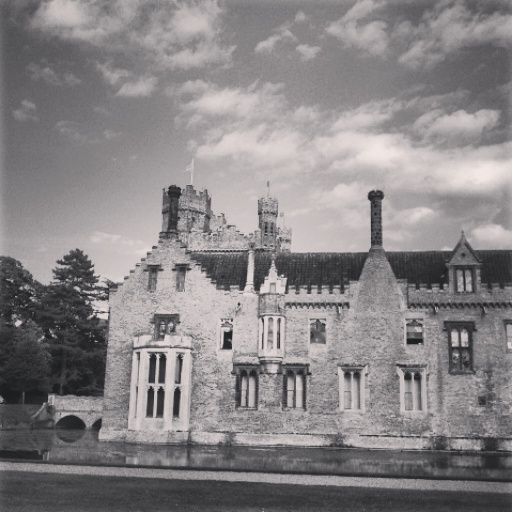
pat oxburgh b&w

Husband sitting in the partially ruined church at Oxburgh, Norfolk

I was reading the chapter on silence in Christina Baldwin’s book ‘Life’s Companion: Journal Writing as Spiritual Practise’, and it immediately rang bells for me. I have a particular reason for this. Let me explain:

One of the symptoms of the chronic illness with which I live, ME/CFS, is sensitivity to noise. Some days are better than others, but there are everyday sounds in modern life that can create physical agony for me. And no, I’m not kidding.  I mean, I get actual pain. A cold electric current feeling up and down my spine and a nauseating icy pain in the back of my skull. Unpleasant to say the least.

For the first three years of my illness, I couldn’t listen to any music with a beat at all. Every thud of bass was like a knitting needle jabbed into my neck. No pop radio, no rock, no hand jiving in the car to the Stone Roses or the Pet Shop Boys. No Elvis.  No Beatles.  Nothing.

I couldn’t listen to anything much. Mozart and Bach worked, a little Handel mixed in. Beethoven proved too noisy, as did anything after him, although I did find I could handle some Vaughan Williams. Opera was right out, so goodbye to my favourite tenor, Placido Domingo. I just couldn’t bear to listen to him anymore.

Most of the time, though, any kind of noise was painful.

So for three years I avoided places where the music was piped, and had to ask friends who listened to music perpetually to turn down their stereos, which was mortifying because they just didn’t understand.

I adjusted to a world without music.

I learnt a different way of listening.

I listened to the birds, the ones that make pretty sounds, and the ones that don’t. I learnt I could set my watch by the rooks in the tree opposite the house. (They all get together and start shouting at one another at 3.30pm, no matter what time of year it is.) They’re funny, like one of those noisy markets where everyone is shouting about their wares.  I’m rather fond of rooks now.

I learnt to hear the vegetation around me too, the creaking trees and rustling shrubs, the fresh new spring leaves and the rattle of the dried autumn ones.

And the animals. The scuttle of mice in the undergrowth, the mewling squeaks the rabbits make, the scrabble of the squirrels on the roof tiles. The buzz of the mason bees under the window in the summer, the drone and thump of the hornets throwing themselves against the window, attracted by the light, in autumn.

I came to realise how much noise pollution we endure, day after day, the constant onslaught of a life lived with continual racket, the radio, the TV, the iPod, the piped music, the slot machines, even the roar of conversation echoing in the cavernous, sound-reflecting spaces of shopping malls. And how much we use recorded sound to blot out our minds, to stop us thinking too much.

The Christian mystics said that prayer is talking to God, but it isn’t much use if you don’t listen for when He speaks back. To hear the Divine, we have to be in silence. This is just as important when the voice that speaks inside us is the big, blousy, shriek as when it is the almost inaudible whisper. The practise of creativity demands that we listen. Sometimes, we have to listen hard, and without distractions.

When did you last spend time in silence? Do you make space for a little quiet time daily? Do you relish that moment when the kids are in bed, and you can sit down at the kitchen table with a glass of wine, take a deep breath, and just listen to the noises the house makes around you as it settles for the night? Or do you fill every waking hour with a constant cacophony to drown out the voices inside your head that are telling you the life you are living is not fulfilling you?

Out of the quiet comes not only spiritual fulfilment, spoken of in all religions, but human creativity. Out of silence come the stories we tell, the fantasies and day dreams that grow into novels, plays, paintings, films, concertos and ballets.

When we cultivate stillness, when we listen, we give our brains space to breathe. And yes, sometimes we then have to face up to the uncomfortable truths of our lives. But often, we have the opportunity to tap into wells of creative inspiration previously unknown to us. Our Muse’s voice can be heard.

You don’t have to take a vow of silence to benefit from stillness, and I’m not saying you should give up the joy of music. (I’m back on it now, and believe me, its one of my greatest inspirations.)

Listen to yourself.

What I am suggesting is that you take time daily to be in stillness. To listen to the sounds of the world around you instead of filling the void with canned synthetic noise. To listen to yourself. It may only be ten minutes, or the time you spend in the bathroom every morning, or half an hour before bed without the telly on. You don’t have to meditate, although that is good too. No, this is a different idea, a way of being quiet with ourselves, a way of listening for the inspiration to come. I know you lead a busy life, no doubt, and that quiet in a city is hard to find. But I assure you, it is there. You can find it. And when you do, immerse yourself in its balm, as often as you can, and allow it to feed your creative life.

Happy Creating,

EF

Journal Friday: Returning to the Journal

VW desktop

This time of year (autumn) is always a time of new starts for me. Husband is a University lecturer, which establishes a certain kind of seasonality in our house – we live according to the academic year, just as we have since we were kids. And on top of the usual stationery-buying frenzy I get at this time of year, I find myself stopping to reassess where I am too.

In truth, its always good to stop off on the seasonal journey to think about where you are in your life, and where you want to go. Life coaches encourage us to do this on a quarterly basis, and to be quite frank, I think it’s a good wheeze. It is hard enough to find time in a busy life to stop and think, but like the prayer bell in the monastery that reminds the inmates to focus on God at regular intervals, the seasons are an automatic prompt to stop and take stock.

This year has been a time of huge shifts for me, changes in my role as wife, care-taker, aunt, friend and woman. I have felt new currents in my creative life starting up, the drive to take my photography more seriously, the sense of a new mission, a new message in my work. It is a time of change, of departures.

Pagan theology tells us that autumn is the time to reap the harvest of what we have sown during the productive seasons of the year – not only of Spring and Summer, the active months, but also of the deep, dark percolation of the Winter that preceded them, before we go down into the dark once more, into that time of thinking, rest and meditation. We need to think about what we have achieved, assess the fruits of our labours, celebrate them, and prepare to settle into a time of productive hibernation during which we can incubate our hopes and dreams for the future.

Well, hooray for the journal, then!

I have been taking time to settle back into my journal-keeping, and to use it in a more constructed way. I have never really used the technique of guided journaling before, by which I mean writing from prompts designed to explore the psyche.   I’ve always been more of a ‘stream of consciousness problem solver’ kind of diarist. In the midst of upheaval, especially during the summer months, I find it hard, therefore, to keep up such a regular journal commitment, because it often takes time to write and write until you’ve found the answer.

Recently, though, I have decided to be more conscious about what I am doing with my diary. I have set out to explore myself and different aspects of my life in a structured way, in the hope that it will guide me to new paths, and help anchor me through the current storms. I’m using visual means too. Nothing fancy. (I’m still pretty blocked about my drawing.) I’ve been collaging instead. Gala Darling’s ‘Radical Self-Love Bible’ Programme has been invaluable with this, a plethora of prompts and eye-candy to help you explore yourself on paper, through collage and writing. I’m not much good at discipline, of course, and though I am half way through the programme now, my ‘bible’ is pretty lightweight. I tend to fall back on my familiar old notebook on a day to day basis, but Gala’s approach is challenging me just enough to make me think about where I am going with my diary, and that’s enough right now.

Journal Exercise:

This weekend, I am planning to retreat to my journaling practise and do some conscious assessment. I’m going to take time to recognise the enormous changes I have gone through, and the achievements I have made so far this year. I am going to consider my intentions for the coming dark months, and work on an emotional strategy for handling Christmas, which is always a difficult time for me. I mean to use my journal to ground myself in who I am, and who I want to be. And to think about where I am going.

If it proves a productive, positive exercise, I ‘m going to repeat it on a seasonal basis.

Would you like to join me?

Why not take this weekend, or some time during it, to sit down in a quiet place with your journal, and think about where you are in your life, and where you want to go.

  • What have you achieved in the last nine months?
  • What ‘babies’ have you birthed, literal, creative, emotional or otherwise?
  • What are you most proud of?
  • How are you feeling right now, physically and emotionally?
  • How would you like to feel?
  • What small, achievable steps can you take to move towards these intentions?
  • What flashpoints can you identify in the coming three or four months? Can you explore why they affect you? What could you do to ease your path through them?
  • How can you celebrate yourself at this point in your life?
  • What creative voices are calling you right now?

If you find the idea of a more conscious journaling practise interesting, you might like to explore Tristine Rainer’s seminal book, The New Diary.

If you want more guidance about deciding where you want to go in life, take a look at Danielle LaPorte’s The Firestarter Sessions, and The Desire Map.

Kate Courageous’s wonderful website is full of rich wisdom and worth exploring.

Happy Journaling,

EF


Losing myself amongst the ‘Woolves’

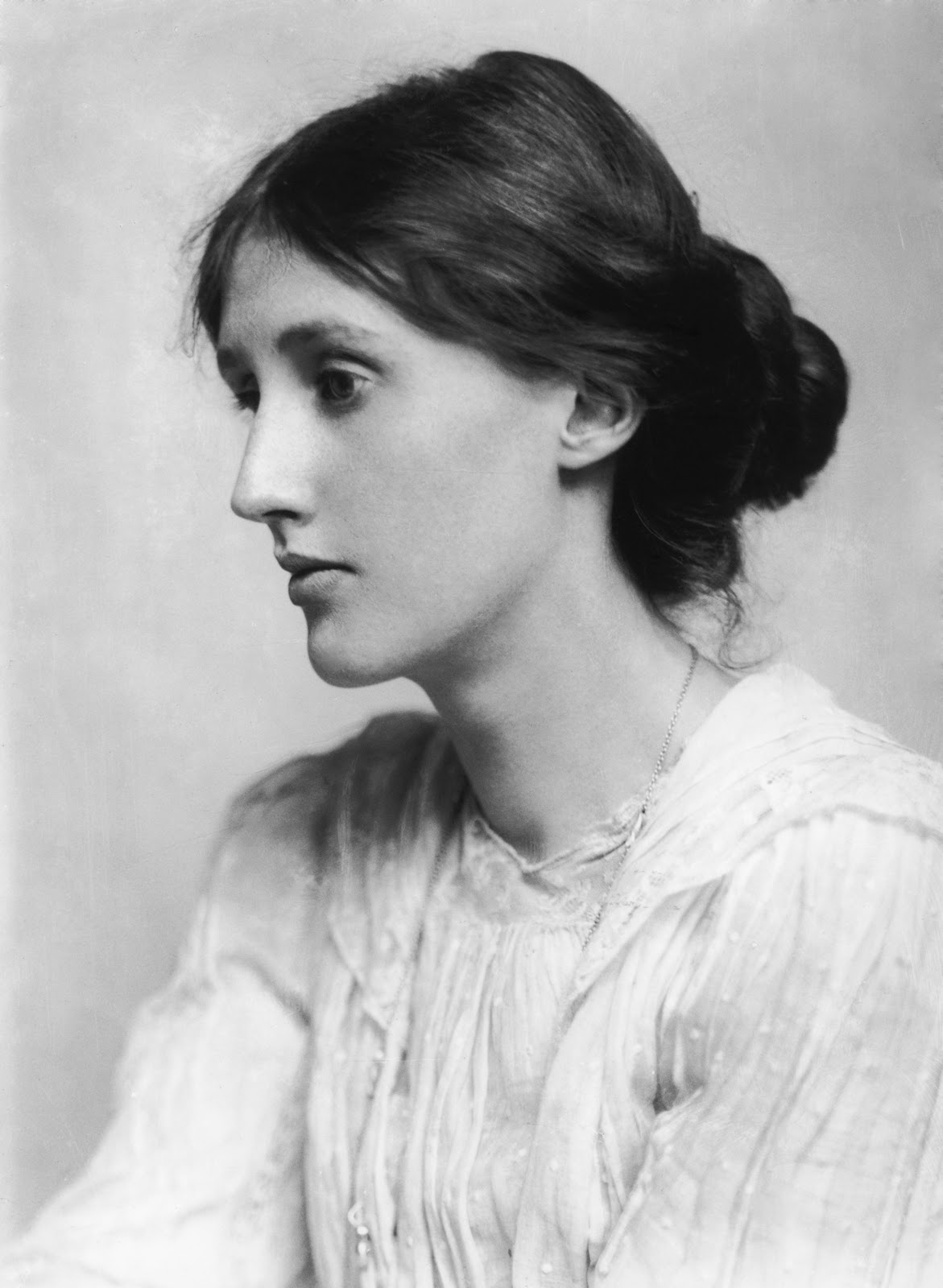
Virginia Woolf as a young woman.  I keep a copy of this portrait on my desk.

Virginia Woolf as a young woman. I keep a copy of this portrait on my desk.

So I spent Monday in London, escorted by my wonderful fangrrrl niece Amelia, at the ‘Virginia Woolf: Art, Life and Vision’ exhibition at the National Portrait Gallery.  And it was wonderful.

We saw innumerable portraits and photographs, but I think the personal papers were the most moving.  There were pages from her diary describing the bombing of Leonard and Virginia Woolf’s Tavistock Square home in October 1940, the original manuscript of ‘A Room of One’s Own’, love letters from Leonard written before their marriage,  and most moving of all, the little note she left for him when she set out to drown herself in the River Ouse in 1941.

One of the things that particularly struck me was that Woolf bound all her own notebooks and manuscripts, having taken bookbinding lessons in her teenage years as some kind of therapy for her mental illness.  The result was that she could make the perfect notebook for her own needs – which is, for a stationery addict like me, absolute nirvana.  Her books are big, too, slightly larger than A4, leaving plenty of space for her to explore her ideas.

Another interesting detail for me was that the page from her diary about the bombing had no crossings out on it at all.  My diary is a veritable Somme of scribblings-out, but she wrote a stream of consciousness with a self-assurance that seems absolute.  She had no doubts about what she was trying to convey.

The original copies of her books, published by the Hogarth Press, which she ran with her husband, still with their book jackets designed by her sister Vanessa Bell, look crisp and radical even now.  Amelia (a bookseller) and I both commented on the fact that the many editions of the novels for sale in the gallery shop had an assortment of different covers, none of which were so attractive, expressive, and frankly Modern-looking, as the originals.

Woolf is my writing hero for so many reasons.  She battled mental and physical illness, misogyny, and childhood sexual abuse to become one of the greatest novelists of the 20th century, reinventing the novel form in a way that would be emulated and built upon in succeeding decades.  She was self-educated, too, and could read Greek and Latin, despite the fact that her parents refused to send her to school as they did her brothers, a fact she railed against.

She is often criticised for being classist and racist, but I would argue that she was a product of her time, and it is to her credit that she did so much to counteract the snobbery and distrust of the working classes, which she inherited from her social millieu, through her political work.

Virginia Woolf was a great writer and feminist, a patron of the visual and applied arts, and a creative giant,  as well as a truly great human being who overcame enormous adversity to achieve what she did.  If you cannot get on with her novels, I wouldn’t judge you, but I urge you to dip into her enlightening and often witty diaries for inspiration on how to live a creative life despite so many difficulties.

Happy Creating,

EF

Unexpected Attack of the Killer Critics

“Well, it smacks of arrogance to me,” she said, when I explained to her what a blog was.  “To assume you have something to say that anyone would want to read.”

After that, I admit I lost track a bit of what she was saying, distracted by the fact that the word ‘ARROGANT’ seemed to be written above our heads in flashing red neon capitals.

And then was somehow branded on my forehead.

This, from a long-time friend, someone I have known for many years through both ups and downs, hers and mine.  I thought she knew how much my writing meant to me,  I thought she understood,

Of course, it all comes from fear.

Fear that the world is changing, and she doesn’t understand it.

It is fear that makes a person, however intelligent, assume that because they don’t understand something, it has no value.  The irony of this position is that it puts the fearful person in the centre of their universe, which is as good a definition of arrogance and egotism as I have seen.

Driving home, I realised my heart was hurting.  I looked up at the sun piercing shafts of silvery light through the evening rainclouds (“God speaking”, as my mother says whenever she sees such a sky) but I couldn’t see the beauty of it.  I was hurting too much.  But it won’t stop me, her criticism.  I will make lemonade.

Why?

Because I can’t not write.

Regardless of whether anyone thinks that what I have to say has merit (and I know some of you do because you kindly subscribe, favourite, like and comment, for which I am eternally grateful), I will go on writing because I am compelled to write.

Because its my job.

It’s my life’s work.

Its what I do.

I don’t get paid for it – not yet anyway, though I have hopes.  Some friends still don’t get that, either.  Their measure of success comes in pound notes.  They can’t understand my ‘failure to monetize’.  They don’t understand that to me, success means averaging 400 readers a day of my fanfiction, over 400 subscribers to this blog, or on some days, just managing to write two or three coherent sentences.

My critical friend doesn’t understand the compulsion to be creative, to have a voice.  She doesn’t get that if I don’t write every day, I turn into the Evil Twisted Passive-Aggressive Psycho-Bitch from Hell.  And she doesn’t understand that:

EVERYBODY HAS THE RIGHT TO SPEAK THEIR OWN TRUTH.

So if you take nothing else away from my work, and from my complaining about my thoughtless friend, or why money-oriented people don’t understand creativity as an end in itself, please take this:

SPEAK YOUR OWN TRUTH.

IT IS YOUR RIGHT.

This is my message to you, and whether it has merit or not, it is my life’s work to say it, over and over again.

Happy Creating,

EF

Inspiration: Sucking up History

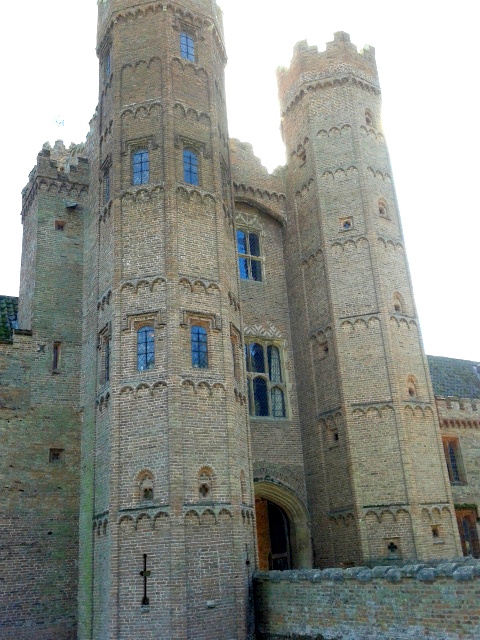
20140927_135032As a special treat last weekend, Husband took me to visit a local National Trust property, Oxburgh Hall.

Built about 1482, Oxburgh was the home of a well-connected family who hung onto their Catholic faith throughout a period in English history when it was dangerous to dissent from the religious line the Crown laid down.  Oxburgh’s inhabitants  suffered as a result, passed over for lucrative posts at Court, closely watched for sedition and treason, and restricted from certain occupations as well as from celebrating their religion openly.

The result of this (relative) penury is that the building escaped the zealous passion for updating property that characterised the aristocracy, and many of its original features remain intact, including the King’s Room and the Queen’s Room, authentic Tudor bedchambers in the tower house that spent many years used only as storage spaces!

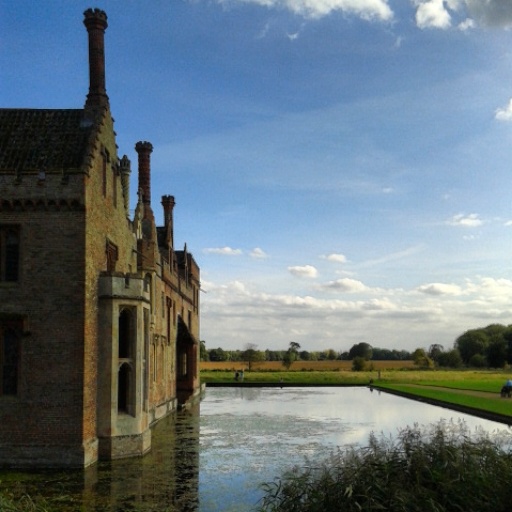
Oxburgh Hall:  The Moat

Oxburgh Hall: The Moat

Oxburgh appears to float on its moat, which cannot be drained as the 500-year-old elm wood posts which support the foundations would crumble were they to dry out.  It still has the barleysugar chimneys and characteristic towered gatehouse that recalls the Wars of the Roses.  Inside the sombre portraits of nuns, the needlework sewn by Mary, Queen of Scots in her years of captivity, and the Priest Hole, where illegal Catholic priests had to hide from government troops, speak of a dark history of dissent and risk, of members of the family living in fear for their lives, simply because of their religious beliefs.  Oxburgh was a particular target during both the Reformation and the Civil War.  And yet, despite this, the little rowing boat that floats beside the steps on the moat is  named ‘Le Boat sur le Moat’, so the family still kept their sense of humour!

I started wondering what it would be like to live through that?  Never to be able to trust your neighbours, your servants, even your family?  To live constantly in the shadow of the block?  To live in fear of the next knock on the door?  To question your beliefs every day because they challenge your personal safety and that of those you love?  To always be regarded as ‘Other’?

Oxburgh Hall

Oxburgh Hall

The history around us gives us an opportunity to look at our own lives through a different lens.  What happened in England in the 15- and 1600s is not really much different to what is happening in parts of the world now.  Being inside a building where these things happened, seeing and touching the belongings of people who lives through such terrifying times, brings the realities home in a much more deeply felt way.  If we do not live under such stresses ourselves, we can never truly understand what they mean, but we can imagine.

I live in a house that was built in the 1880s.  Its just a little country cottage, the middle one of a row, the kind that are common in the UK.  It was originally built as two houses, one up-one down dwellings with an outside wash house, coal hole and privy each.  The men who lived here worked for the local Lord as farm workers or gamekeepers, and got the house as part of the deal.  Their women kept the house, cooked the meals, raised the children, and spread their washing out on the pasture behind the houses to dry on wash day every week.  The children would have walked across the fields to school each weekday, and worked alongside their parents when they got home.  They would have worshipped at the medieval parish church whose tower can be seen from our livingroom.  How different the lives of those souls would have been from mine.

Inspiration:

Think about historic buildings and places near where you live.  try to visit one or two if you can.  They don’t have to be as old as Oxburgh to count.  What about a coffee shop built in the 1930s, during the Depression, or a 1950s diner?

Take some time to soak up the place.  Think about the people who have lived and worked there.  How would the community have reacted or been affected when the building was put up?  They might have had to sacrifice their own land or homes, for instance, or they might have objected on moral or economic grounds.  How would it have felt to visit this place in those days?  What kind of day to day issues would have been on the minds of those who lived here?  What stories are concealed in their lives?

Take some time to write a few pages, answering these questions.  It doesn’t have to be historically accurate, but it helps.  Use the building or place as an entrance into someone else’s life and see where it takes you.

Happy Creating,

EF


Tip of the Week: Reading Notebook

20140929_171214

I have a lousy memory. It is partly because of my ME/CFS, which affects my cognitive functions, but mostly, I reckon its just that I have a lousy memory. This is not necessarily manifested in forgetting to put the rubbish out on the appointed day when the bin men visit, missing someone’s birthday, or forgetting to buy bay leaves or toothpaste while at the supermarket, that being the main thing I went out for. Everybody does that.

No, I forget whole ideas.

Once upon a time, I knew what Hermeneutics meant. Actually, I knew quite a lot about it. Husband frequently re-explains it to me (he’s an academic, so he uses words like that all the time!). It doesn’t stick.

I’ve read dozens of books on Tudor history and the Bloomsbury Group and the Anthropology of Religion, and the theory behind abstract art.

And I’m buggered if I can remember any of it now!

The trouble is that I forget anything I haven’t written down.

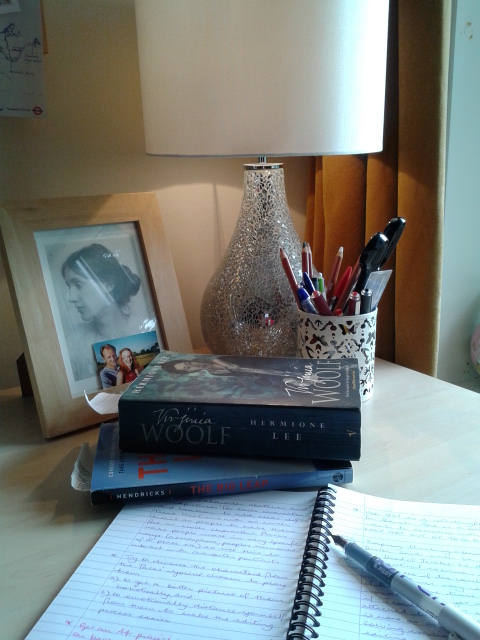
But then I read Hermione Lee’s masterly biography of Virginia Woolf, and there discovered the answer:

The Reading Notebook.

Woolf was a self-educated woman who earnt a great deal of her literary reputation in the early years of her career by reviewing other people’s books. She read widely and voraciously. In order to organise her thoughts on what she read, she kept a reading notebook.

A notebook, with a margin ruled on one side, in which she inserted the date and the page of whatever book she was reading, the title of which of course was also included. And then beside the page number, she might include a quote or a reflection of her own. This allowed her to keep a record of her own thoughts and how what she was reading linked with what she already knew, or her own opinions. When the time came to write a review, she would look back over her notes and use them to craft a response to the book in question in her own elegant style.

This is such a simple solution. It not only allows you to write down what is essentially an aide memoir on the subject of any book, but also means you can track your own ideas and responses to what you read. You can literally see how your own opinions develop.

I have begun to adopt this habit, and I have to tell you that it really, really helps.

I can remember what I have read, because I have made notes on it.

I am able to reflect on what I am reading, and think about my own response, rather than just letting the text flow through me, unapprehended.

I suppose this is a little like the practise of Lectio Divina, a form of mindful, contemplative reading of scriptures and religious texts which has been practised by Benedictine monks, and others, for centuries.

Yes, it can be a bit time-consuming, but I think that if you are reading something really important to you, it is worth the effort, because it helps the brain to incorporate the new information into already existing neuropathways. And fitting new information into the networks of what you already know is a method proven by psychologists to be effective for learning.

Pages from my reading notebook.

Pages from my reading notebook.

The only way to know, of course, is to try it out. Start with a cheap little notebook. An ordinary exercise book is good. I like the A5 kind because it fits in my handbag. Get out your ruler and put margins on the first few pages, if your notebook doesn’t already have them. Make sure you write down the details of which book you are writing about – title, author, edition etc. I also like to include the library reference and which library I got the book from, if appropriate.

You don’t have to write something after reading every paragraph. Just make a note when something jumps out at you. Scribble in your thoughts. Don’t be precious about how it looks. It’s a workbench for your own use, remember.

I have to say that I am getting great results with this method. I really like scribbling down thoughts as I go along in a book, especially when it is non-fiction, which I tend to read a lot of. Yes, it takes a little extra time, but I find its worth it.

Take a leaf out of Virginia Woolf’s book and try it out for yourself.

Happy creating,

EF


Inspiration (Wednesday): Patterns

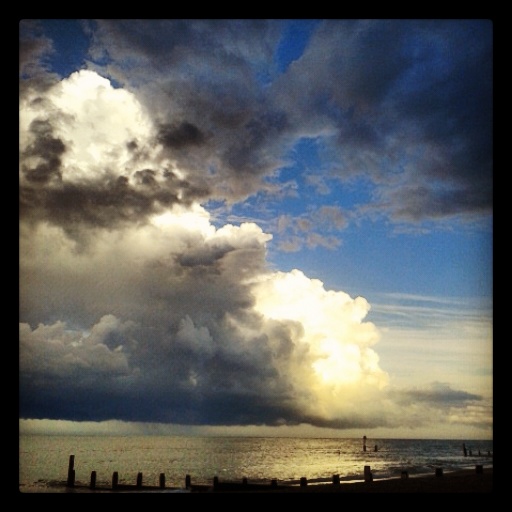
Gathering Storm off the Suffolk coast.

Gathering Storm off the Suffolk coast.

Early this summer, I discovered Instagram.

Wow.

I love it.  I can make pictures now that look  how I want them to look.  Moody and intense.  Landscapes and architecture, life’s little details and self portraits. I’m an addict.

I get my interest in photography from my father, who was a passionate photographer.  In the fifties, he developed his own pictures in the bathroom of the flat he shared with my mother near Trent Bridge in Nottingham.  His little snaps of my siblings as babies, taken in black and white, developed into a fascination with seacapes that filled the weekends later in his life, when I tramped along the beach with him and his camera, looking for shots.

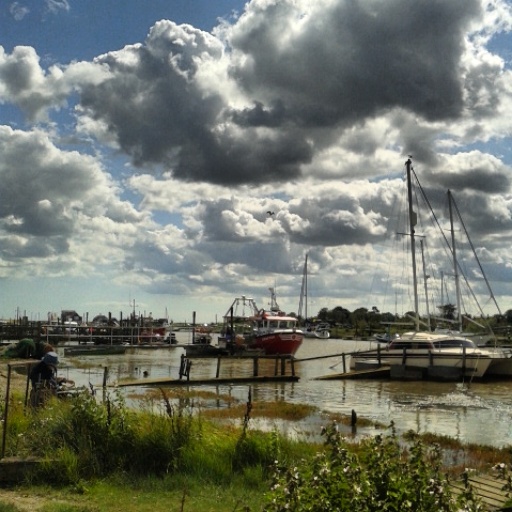
Southwold Harbour

Southwold Harbour

When I began my Art ‘A’ level after his death, my mother bought me a basic 35mm SLR camera, and I took lots of shots with black and white film, learning to develop them in the college dark room.  That was how I grew to share my father’s addiction for monochrome images.

He would have loved Instagram!

Sunset over Cambridge

Sunset over Cambridge

Looking back through the shots I have taken this summer, I’ve noticed a pattern developing:  a penchant for skies.

I love clouds.  The pictures I have been taking have brought this habit of staring at the sky to my own concrete notice.  I’m amazed to discover just how often I do it!

Sometimes, you have to look back at the backlog of work you have created in order to see the things you are interested in, the subjects that keep popping up in your work.

To a certain extent, lots of pictures of clouds are not really a surprise.  I live in Norfolk, known in the UK for it’s ‘Big Skies’.  The landscape here is fairly flat (although not as flat as Noel Coward would have had us believe), so there are plenty of chances to witness panoramic cloudscapes.  Living out in the countryside helps too.

Instagram has proved a great tool for me, not least because it has helped me see this interest in clouds as a new creative avenue.  I want to be taking lots more interesting skies in the future, and I’m saving up for a new camera, something a little more sophisticated than my trusty Samsung camera phone (love it though I do).

Gathering Storm at Sunset, Overstrand.

Gathering Storm at Sunset, Overstrand.

This week, why not take time to look back over your recent creative endeavours, and see if you can pick out any patterns or themes in your work.  Are you writing songs in a particular key?  Are you finding yourself drawn to crochet in fluffy alpaca wool instead of ordinary DK?  Are your paintings going through a ‘Blue’ period, like Picasso’s did?

And if you can pick out some new themes, how can you pursue and expand them?

(Don’t forget to follow me on Instagram for more of my photographic adventures!)

Happy Creating,

EF